The unemployment rate in the Czech Republic remained stable at 3.8 percent in August, unchanged from July. This is slightly higher than last August’s rate of 3.6 percent. However, the number of job vacancies rose for the first time since March, with an increase of 1,221 month-on-month, according to the latest data from the Labour Office of the Czech Republic. The Labour Office notes that a stable unemployment rate is typical for the summer months, as employers tend to avoid major staffing changes during the holiday season. By the end of August, 3,232 people had started new positions in educational institutions, making education the sector with the highest number of new employees. The wholesale trade, catering, and hospitality sectors followed but with a significantly lower number of new hires. “At the end of August and the beginning of September, we always see an influx of recent graduates and young people registering with the employment office. In August, they made up four percent of all job seekers, the same proportion as in 2022 and 2023,” said Daniel Krištof, Director-General of the Labour Office. Krištof emphasized that school leavers and young people who did not get into further education or secure a...
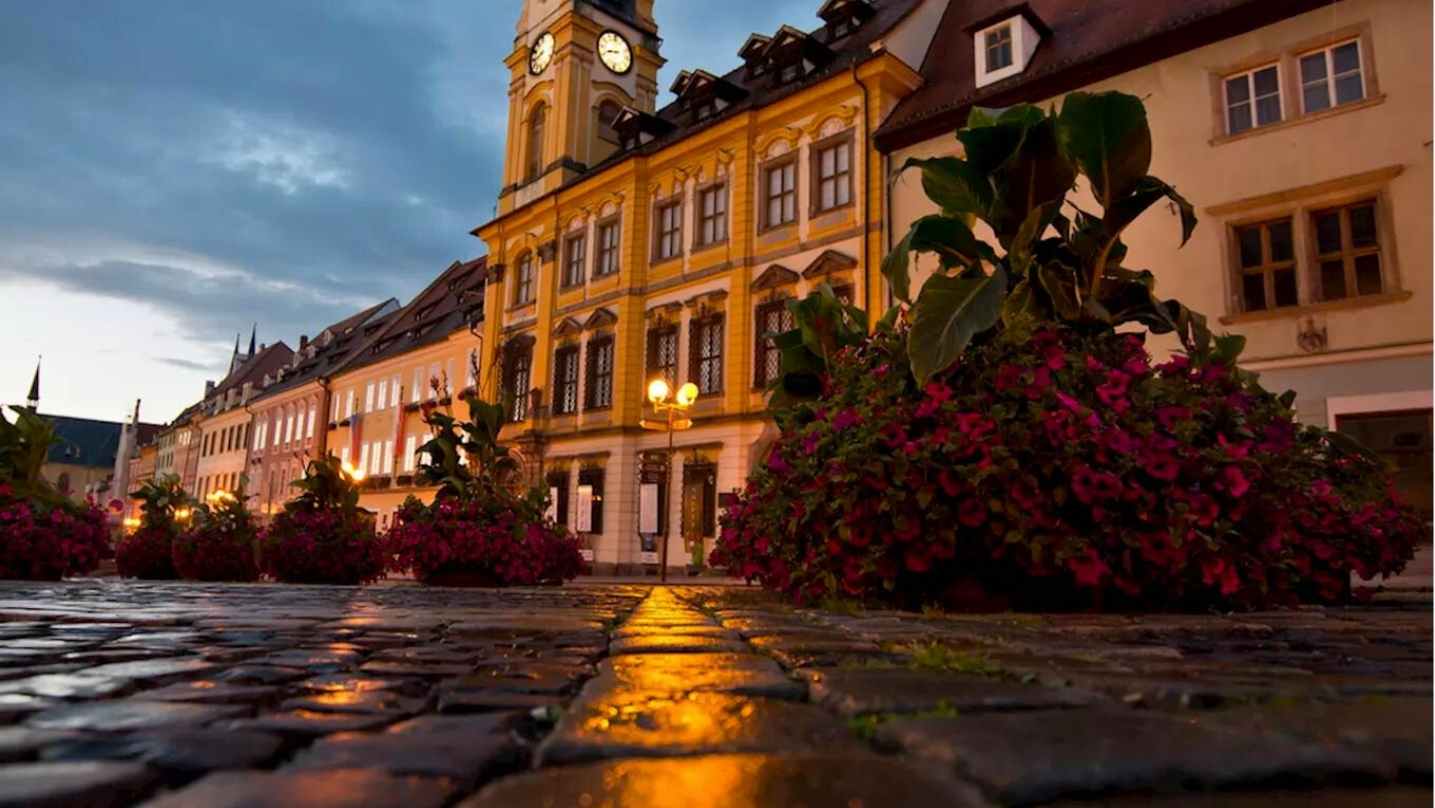
In Česká Lípa, a group of wild boars caused quite a stir when they unexpectedly wandered into a local theatre during a live performance. The seven boars made their way through the historic town centre, seemingly taking in the sights before entering the Jiráskovo Divadlo Theatre, where the opening of the new season was underway. The surprising encounter took place on the evening of Thursday, September 5th. “We were hosting our first performance of the year when the boars suddenly appeared,” joked Mayor Jitka Volfová. “We laughed, saying they came to check out the theatre that’s been nominated for the Building of the Year 2024 award — and perhaps to sample the new bar as well.” Despite the amusement, police were unable to determine where these unexpected theatre enthusiasts had come from. The effort to guide them back to the forest took about an hour. “The boars were initially driven out of the theatre by staff members,” explained a representative from the local law enforcement. “By that time, municipal and national police patrols, along with city forestry staff, were already searching for them. The herd was eventually escorted out of the city and back into the forest.” Fortunately, the unusual...
airBaltic has confirmed that two of its aircraft, named Kunda and Püssi, will be operating on the new direct Prague-Vilnius route starting on March 30, 2025. The announcement was made on Friday, September 6. However, these aircraft will not have a fixed schedule for Prague flights. Instead, their use will vary, depending on the carrier’s operational needs at any given time. “The plan remains unchanged. All airBaltic A220-300 aircraft will be deployed according to operational requirements and will be available on all routes across the airline’s network,” the airBaltic press office told Novinky. In August, airBaltic held an online vote allowing the public to choose names for all 48 of its aircraft, with voters selecting from a list of real Baltic cities. Due to the efforts of Czech internet users, the Estonian city of Kunda won the first place (in Czech, “Kunda” is a vulgar term for female genitalia). The Estonian city of Püssi, whose name can also provoke giggles in Czech, secured the second position. The first of these newly named aircraft are expected to take flight in early 2025. Would you like us to write about your business? Find out more
A girl attacked her classmates with a knife at an elementary school in the western Czech town of Domazlice, injuring two, police said on Tuesday. “At the moment, our forces and resources are at the Komenskeho 17 elementary school in Domazlice, because according to initial information, one of the pupils there attacked her classmates with a knife. Two children were injured and their parents have already been informed. We apprehended the suspected girl within minutes,” the police said on social media X in the morning. The two injured children were not in life-threatening condition and were taken into care by paramedics, the police said, adding that one child who was in shock was also handed over to medics. “Currently there is no danger to anyone and a large number of police and criminal investigators are working on the scene,” the police added. The school said on its website that it suspended classes in the upper grades of the school due to “an extraordinary event.” “Students were instructed to leave school safely. All children are safe. Classes in the lower grades are continuing as scheduled,” it said. Responding to the incident, Education Minister Mikulas Bek said on X that violence in...
The Czech Republic is making a bold move into space exploration, with plans to invest billions of crowns into projects aimed at launching its own satellites and even sending a Czech astronaut to the International Space Station (ISS). Aleš Svoboda, a seasoned military pilot, is poised to become the first Czech to reach the ISS. In just a few years, he will gaze down on Earth from an altitude of 350 kilometers. “Aside from being a childhood dream, this mission is a natural progression in my career,” Svoboda shared. Before reaching orbit, Svoboda will undergo intense endurance training in Germany, including survival courses designed for emergency landings in harsh environments like deserts or mountains. This rigorous preparation will cover everything from winter survival tactics to advanced diving skills. Svoboda’s mission is set to take place within the next five years. Currently, scientists are selecting the research projects he will participate in, which could range from 3D printing to pioneering cancer treatment methods, according to Václav Kobera, the coordinator of the Czech Space Journey project. The cost of sending a Czech astronaut to the ISS is estimated at around two billion crowns. However, Transport Minister Martin Kupka (ODS) argues that the...
In the second week of September (7-15th) European Heritage Days (EHD) will be held in the Czech Republic. Take advantage of this unique opportunity to visit interesting sights that are otherwise inaccessible! European Heritage Days’ goal is to make the most interesting monuments of all kinds available to the general public, i.e. architectural, archaeological, sacral, technical, as well as museums, galleries and libraries and even other areas in which incredibly extensive collections of movable cultural heritage are kept. In the context of the European Heritage Days various accompanying events – lectures, concerts, town festivals, as well as competitions and other cultural programs are held. The event will take place under the patronage of the Association of Historical Monuments of Bohemia, Moravia and Silesia. About 800 state-protected sites are expected to join the event. Most of them (but not all) will be free of charge for the days of the festival. These are not only castles, palaces, churches, monasteries, museums, theatres, old houses, gardens and villas, but also industrial buildings – factories, mills, breweries, craft workshops and mines. In 2024 the main theme of the festival will be ‘Sights unite the world’. A rich accompanying program awaits visitors – classical music...
In response to rising costs, major Czech grocery chains are now offering substantial discounts on fruit and vegetables. Here’s a look at how you can take advantage of these deals. Kaufland is spearheading the initiative with its new “Don’t Feed the Basket!” campaign. The chain is setting up dedicated discount stands in all its stores, featuring reduced-price fruit and vegetables. According to Kaufland, “The so-called discount displays will be gradually installed in all stores. These displays will showcase discounted items from the fruit and vegetable sections. Initially, the stands will feature originally packaged goods from Kaufland’s suppliers, with discount details and final prices clearly labeled on the packaging.” Similarly, Lidl has rolled out its own savings program. Through the “With Lidl We Save on Food” initiative, Lidl offers bundles of fruit and vegetables, such as three kilograms for just CZK 25. Additionally, Lidl stores have special corners dedicated to discounted items that are approaching their expiration dates. Billa has recently joined the trend with its “We’re Not Throwing Away” campaign. This program provides bags of fruit and vegetables intended for immediate consumption. According to spokeswoman Dana Bratánková, “These items are often at a higher ripeness level, which would typically lead...
Starting in 2025, Czech municipalities may get the powers to determine the number of short-term rental permits on their territories, following the approval of draft law amendments by the country’s government that still need to be passed in the Chamber of Deputies and the Senate. The passing of the new legal changes would affect the operations of platforms, such as Airbnb and Booking, where most of these properties are advertised to tourists. Also, in terms of cities, this will most likely affect Prague more than any of the other municipalities, since it’s the capital that gets the most visitors due to its unrivalled size and popularity. According to the Institute of Planning and Development (IPR), the short-term rental offer is highly concentrated in the historical centre of Prague, with landlords owning multiple apartments making up 80 per cent of the total listings. As recently as last April, there were roughly 8,000 apartments for short-term accommodation in the Czech capital. The Czech authorities are specifically irked by the opaque nature of platforms like Airbnb, which refuse to share internal data about the tourist numbers. That’s a problem as it can be an obstacle when it comes to proper law enforcement, such...
Müller, a prominent German retail chain known for its drugstores, toys, and other consumer goods, is preparing to expand further east. The company plans to open its first store in Slovakia this year, with the Czech Republic likely to follow. However, entering the Czech market won’t be easy, as it is already dominated by established players such as dm, Teta, and Rossmann. The recent entry of the Polish drugstore chain Hebe has further intensified the competition. In mid-August, Müller announced its intention to continue expanding into Slovakia, where it has already registered a dedicated internet domain. “Müller has successfully operated in neighboring countries like Austria and Hungary for many years, and also has positive experience in Slovenia and Croatia, making it well-prepared for its entry into Slovakia,” the company stated. However, the company’s ambitions appear to extend beyond Slovakia. Müller has posted a job opening on its website for an expansion manager for both Slovakia and the Czech Republic. Many in the Czech retail industry expect Müller to enter the Czech market soon, although the company has not confirmed when this might happen. Zdeněk Skála, managing director of analytics firm Skála a Šulc, agrees. “While the market is saturated with...
Natalie Stichová, a 23-year-old Czech gymnast, tragically fell to her death after plunging nearly 80 meters down Tegelberg Mountain in Bavaria, Germany, on August 15. The incident occurred during a sightseeing visit near the iconic Neuschwanstein Castle, known for inspiring Walt Disney’s Sleeping Beauty. The accident reportedly took place while Natalie was attempting to take a selfie at the edge of the mountain, hoping to capture the perfect shot with the picturesque castle in the background. According to a friend who spoke to Czech media, Natalie was standing dangerously close to the edge when one of her legs appeared to slip, causing her to fall. The friend, who wished to remain anonymous, said: “We will never find out whether she slipped or whether a piece of the rock edge broke off.” Natalie was accompanied by two friends and her boyfriend, David, at the time of the fall. Police described the route as a “challenging climb.” Despite the severe injuries from the fall, Natalie initially survived and was airlifted to a hospital by helicopter. However, after six days in critical condition, her family made the heart-wrenching decision to take her off life support on August 21 due to irreversible brain damage....
Founded in 2019 and led by CEO Dominik Gazdoš, Bookbot sells second-hand books, ensuring that unwanted books quickly find new readers and owners. Its offerings include literary classics, bestsellers, rare finds, cult comics, young adult novels, and specialist publications. Bookbot carefully photographs each book in high quality so customers can easily assess their condition. With an organised inventory, they can prepare books for viewing or ship them immediately. After its foundation and a rapidly unfolding success story that made Bookbot the biggest seller of second-hand books in the Czechia, Bookbot expanded to Slovakia in 2022, to Austria in the summer of 2023 and to Germany in the fall of 2023. In total, Bookbot has sold more than 5 million books since it was founded. While many are being sent traditionally via mail, Bookbot offers two additional ways for customers to hand in their used books: in Vienna, Bookbot cooperates with Thalia, Europe’s leading book retailer, whose stores operate as drop-off points for books, while in both Vienna and Berlin, Bookbot offers the “Book-Bote” service that picks up books directly from people’s homes during self-chosen pick-up slots in cooperation with sustainable urban logistics expert DODO. A new €4 million Series A...
A recent comprehensive study of 53 countries has revealed that the Czech Republic is one of the least welcoming places for expats globally. Foreigners cite a lack of tolerance among Czechs as a major issue, compounded by rigid authorities and a difficult language. But is the situation truly as bleak as it seems, or is there more to the story? The Expat Insider 2024 report, conducted by the InterNations community, which connects expats across 420 cities worldwide, evaluated various aspects of life abroad across five indices. These included factors such as Ease of Settlement, Quality of Life, and Essentials for Expats’ Lives. InterNations surveyed over 10,000 expats, ranging from young professionals to retirees, from diverse socioeconomic and cultural backgrounds. The goal was to gather their perspectives on life in their host countries. This year, the Czech Republic was ranked as the 15th worst country for expats. This marks a dramatic drop of 18 places from the previous year. According to InterNations, the Czech Republic is the seventh most difficult country for expats to settle in. The country performed particularly poorly in terms of cultural acceptance and how welcomed expats feel. Out of the 53 countries surveyed, the Czech Republic ranked...
Don’t have an account? Register
Already have an account? Log In
How Would You Like to Promote Your Business? PR ArticleDisplay bannersVideo productionNewsletter adsJob ListingsInfluencer Marketing
Your Email
We will come back to you within 24 hours with our proporsal