If you’re looking for a family-friendly day trip from Prague, Mirakulum in Milovice is one of the Czech Republic’s largest outdoor amusement parks for children. Rather than focusing on rides, the park is built around active play. Children can explore a large wooden castle, underground tunnels, climbing structures, rope courses, slides, trampolines, water features, and a range of playgrounds spread across a large outdoor area. The park, located just 40 kilometers from Prague, is designed for families to spend an entire day outdoors, with picnic areas, restaurants, shaded spots, and plenty of open space. View this post on Instagram A post shared by Mirakulum (@park_mirakulum) A single admission ticket covers all attractions inside the park, so there are no additional charges once you’re in. Mirakulum is also preparing a major expansion. A new wooden roller coaster is expected to open in 2027, adding the park’s first large-scale ride attraction. More information, including opening hours and ticket prices, is available on Mirakulum’s website. Would you like us to write about your business? Find out more
Marriage numbers in the Czech Republic have fallen to their lowest level this century, continuing a trend that shows no sign of reversing. In 2025, 42,548 couples got married, according to the Czech Statistical Office. The figure marks a new low and follows several years of gradual decline. The trend is not new, but its direction is becoming more pronounced. In 2013, 43,499 marriages were recorded, a long-time low at the time. A decade later, 2024 saw around 44,500 weddings, briefly interrupting expectations of a steady recovery. The question increasingly raised in Czech society is why fewer people are choosing marriage. One factor is the changing role of marriage in society. Living together without marriage has become standard, and having children outside marriage no longer carries social stigma. Same-sex couples are openly accepted, and long-term relationships are increasingly viewed as valid without formal registration. This shift has reduced the pressure to marry, according to life coach Aleš Kalina, who says that fewer weddings do not automatically mean weaker relationships, but rather different forms of partnership. Practical considerations also play a role. Marriage still offers legal advantages, including inheritance rights, tax benefits, and clearer arrangements regarding children, but many couples see...
Czech law enforcement has opened a criminal investigation into four individuals and one company suspected of human trafficking and the exploitation of young women through social media platforms, including OnlyFans. The case is being handled by the National Centre against Organized Crime. Investigators say the group is believed to have targeted young women, many of them newly adults and in difficult financial or social situations, and to have used coordinated manipulation tactics to recruit them into producing erotic content. According to the police, the suspects approached victims and persuaded them to create explicit photos and videos. The women were then asked to sign contracts under the guise of artistic representation. In many cases, the victims did not have access to the accounts that were created in their name, nor control over the content or personal data used on those profiles. Authorities say the material was subsequently monetised through paid subscriptions. Investigators also found that pressure was applied on the women to produce increasingly explicit content over time. According to the findings, threats involving financial penalties and contractual fines were used as a form of coercion. Police estimate that the group generated at least 3.6 million Czech crowns from the activity....
The Czech Republic has improved its position in the latest EU Prosperity Index 2025, ranking 14th out of 27 member states. This marks its strongest result since the index was first published in 2022, when the country placed slightly higher at 13th. At the top of the ranking are Sweden, Denmark and Finland. Greece remains in last place, followed by Bulgaria and Slovakia. The country’s overall improvement was driven mainly by the “State of the Economy” indicator, which rose five places year-on-year. With a ninth-place result in this category, the Czech Republic now ranks among the ten most economically stable EU countries. The development reflects easing inflationary pressure and a shift in income distribution. The share of gross national income in GDP increased from 95% to 99%, suggesting that a larger portion of wealth generated in the economy remains within the country. Despite these gains, the index highlights persistent structural weaknesses. Housing remains one of the main pressure points. The Czech Republic ranks 23rd in the EU in this area. The average price of an apartment equals 13.6 annual salaries, and around 10% of households spend more than 40% of their income on housing costs. Digitalisation also continues to lag...
The average salary in Czechia has climbed above the €2,000 mark, placing the country ahead of Slovakia and narrowing the gap with Poland in the race for higher wages across Central Europe. According to a new analysis by consulting firm Forvis Mazars, employees in the Czech private sector earn an average of €2,024 per month this year, equivalent to roughly CZK 48,967. That represents a year-on-year increase of 9 percent, making the Czech Republic one of the fastest-growing wage markets in the region. Among the countries of the Visegrad Group (V4), only Poland reports higher average earnings. Polish private-sector wages reached €2,156 this year, up 8 percent compared with the previous year. The Czech Republic’s performance places it ahead of Slovakia, where the average monthly salary stands at €1,569. Wage growth there has been considerably slower, rising by just 3 percent over the past year. Hungary recorded growth comparable to the Czech Republic. Average private-sector salaries increased by 9 percent to €1,948, according to the report. The findings come from Forvis Mazars’ annual review of tax systems and labor market indicators across 22 countries in Central and Eastern Europe. The report highlights the continuing upward pressure on wages across the...
At first glance, the Czech labour market may look balanced. There are tens of thousands of job vacancies and hundreds of thousands of registered job seekers. But this picture is misleading. Employers are not looking for “available workers” in general, but for specific people with specific skills, shifts and locations. That is where the real shortage begins. The Czech labour market has been operating under this pressure for years, even if it is still often described as a temporary issue. In reality, it is becoming a structural feature of the economy, writes Tomáš Surka, managing partner of Orienta Czech. According to Labour Office data, there were more than 94,000 vacancies in the Czech Republic at the end of April 2026, alongside over 364,000 registered job seekers. On paper, this should be enough. In practice, it is not. Companies struggle to match candidates with the requirements of production, logistics, healthcare, construction and hospitality. The gap becomes clearer when looking at broader estimates. The Ministry of Labour and Social Affairs has previously indicated that employers are searching for nearly 250,000 additional workers, with around one in five companies reporting that labour shortages limit their operations. The problem is not only recruitment. In...
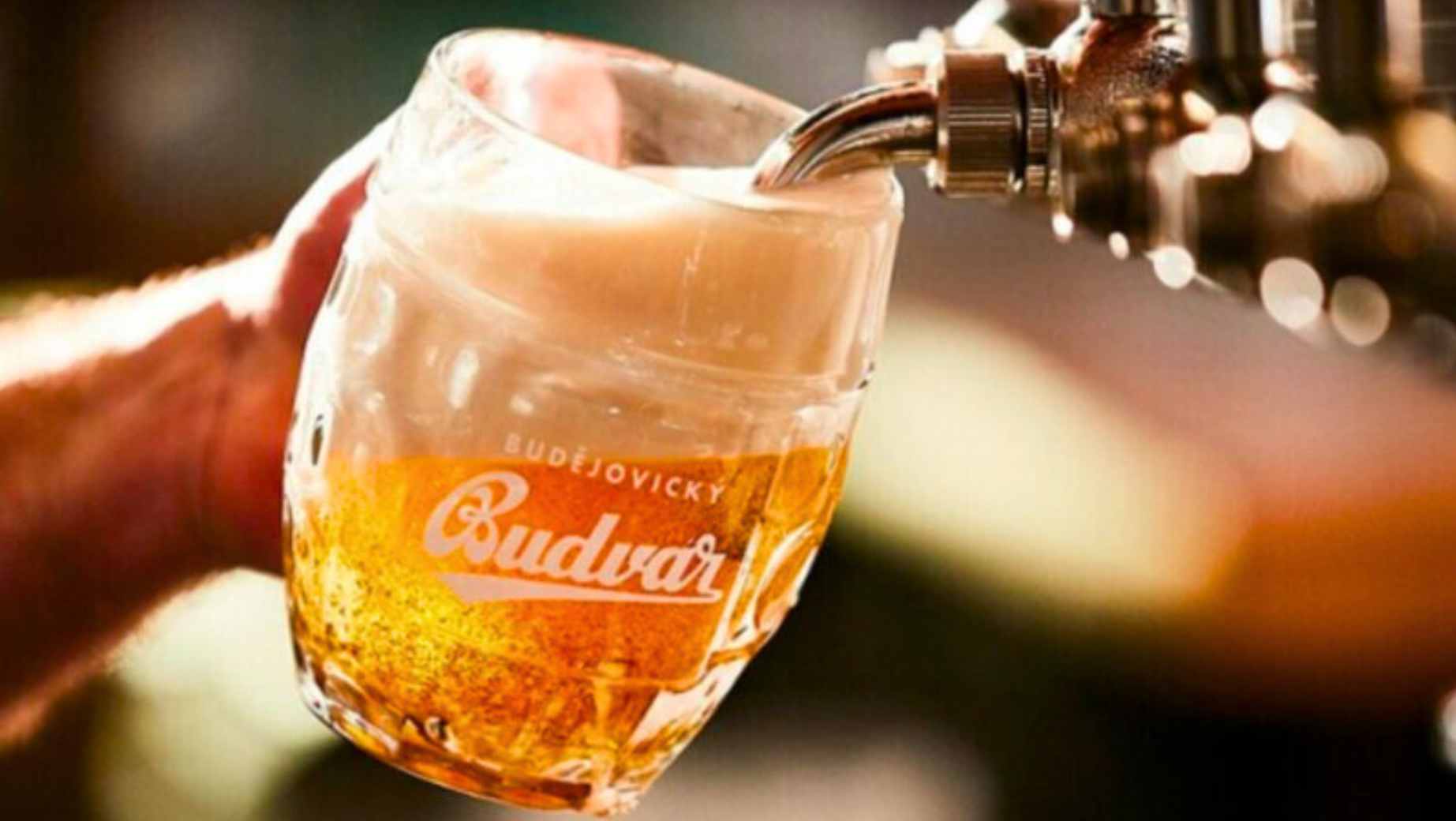
Walk into any Czech pub and ordering a “desítka” (ten) or a “dvanáctka” (twelve) is as natural as asking for a coffee. But that could change. The European Union is advancing a proposal to standardize beer labeling across member states — a move that could make the Czech degree system, rooted in 19th-century chemistry, obsolete. Under the draft regulation, the traditional measurement based on degrees Plato (°P) — which indicates the richness of the original wort before fermentation — would be phased out in favor of a simpler label showing alcohol content. If the plan moves forward, implementation could begin around 2031. The Plato scale has deep roots in Czech brewing. It was developed in the mid-1800s by Karel Napoleon Balling, a chemist who went on to serve as rector of the Prague Polytechnic. For Czech producers, the system is not just a technical standard — it is a cultural inheritance. “This has been our traditional method of taxation for roughly two hundred years,” said Tomáš Maier, an economist at the Czech University of Life Sciences in Prague. “I see no reason to change it. It is certainly not in the interest of the Czech brewing industry.” The proposal raises...
Data released by the European Union Agency for Fundamental Rights in its Roma Survey 2024 put a number to what many already knew: one in three Roma across the surveyed EU countries reported facing discrimination within the past year. In the Czech Republic, the figure is worse. The discrimination cuts across daily life — job applications rejected, barriers in healthcare, unequal treatment on public transport, exclusion from private services and educational opportunities. The survey documents a pattern that advocates have described for years but that mainstream policy has been slow to address. The findings came into fresh focus around International Roma Day on April 8, when President Petr Pavel received around twenty Roma community leaders at Prague Castle. Pavel estimated that roughly 250,000 Roma currently live in the Czech Republic, a number he framed as a reason — not an excuse — for urgency. Full integration of this community, he said, is a condition for building a genuinely tolerant and functional society. What Czechs Think — and Where They’re Wrong Public opinion data adds another layer to the picture. A survey by the Public Opinion Research Center conducted last August found that more than half of Czech respondents believe Roma...
Despite headline inflation holding below two percent at the start of 2025, Czech households are feeling a very different reality. A new survey by Ipsos found that nearly two-thirds of households — 65% — are spending more each month than they were a year ago, with food prices and a broad rise in the cost of goods leading the way. The findings point to a growing divide along income lines. Among households earning up to 30,000 Czech crowns per month, nearly one in three respondents — 29% — reported a significant jump in expenses. In households earning above 70,000 crowns, that figure drops to just 8%. “Most households are dealing with rising costs, but the pressure is hitting those with lower incomes hardest,” said Jaroslav Ondrůšek, chief analyst at Home Credit. Women and people between the ages of 45 and 53 are also among those reporting the steepest increases. Where the Money Is Going Respondents were clear about what is driving their costs up. Nearly two-thirds pointed to food as the primary factor. Around 42% cited a general rise in the price of goods, while 40% named higher energy, transportation, and service costs as the main pressure on their budgets....
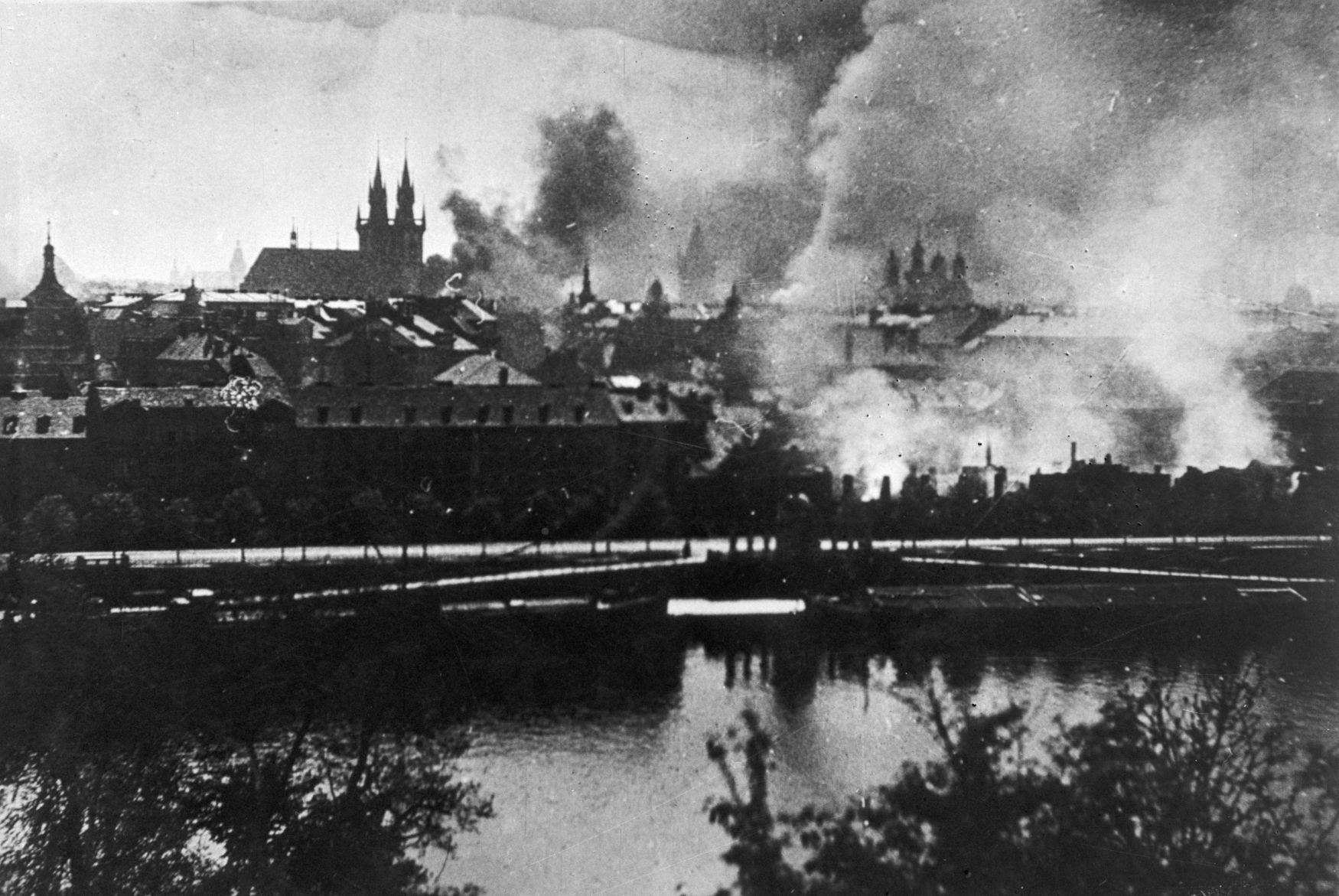
Liberation Day is a national holiday celebrated in the Czech Republic on 8 May each year. This is the same date as the celebration known as V-E Day, VE Day or Victory in Europe Day that is celebrated across much of Europe. As the names suggest, the day signifies the victory of the Allied forces against the Axis forces at the end of World War II in 1945. In particular, the Czech Republic celebrates Liberation Day as the day its people were freed from Nazi rule. The day was originally celebrated on 9 May, but this was changed in 1989 to 8 May. Some people call the holiday Liberation from Fascism Day. On May 8, with Allied troops approaching from west and east, the Czechs negotiated a cease-fire with the Germans. The situation was now critical; the Czechs lacked the machinery and the weaponry to continue fighting the Germans, and the city’s Old Town was in flames. Part of the cease-fire was a guarantee, from the Germans, that the city would not be harmed further. The Czechs knew that, with help on the way, the cease-fire would be far more beneficial to them than it seemed on the surface. “To...
The Czech Republic is often presented as the country with the lowest level of poverty in the European Union. According to data from Eurostat, around 11.5 percent of people were at risk of poverty or social exclusion last year, compared to an EU average of 20.9 percent. This places the country ahead of neighbors such as Germany, Austria and Poland. In Germany, the share stood at 21.2 percent, while Austria reported 18.8 percent and Poland 15 percent. Slovakia recorded 16.7 percent. At first glance, the figures suggest a strong position. The Czech Republic has ranked near the top of this indicator for years, reinforcing the image of a country with relatively low inequality. Yet economists and social analysts say the data does not fully capture how people actually live. The Eurostat indicator defines poverty as earning less than 60 percent of the national median income. In practical terms, that threshold was about 19,090 crowns per month for an individual in the Czech Republic last year, and 24,817 crowns for a single parent with a young child. The measure also considers whether households can afford basic needs such as heating, holidays or unexpected expenses. But critics argue the method focuses too...
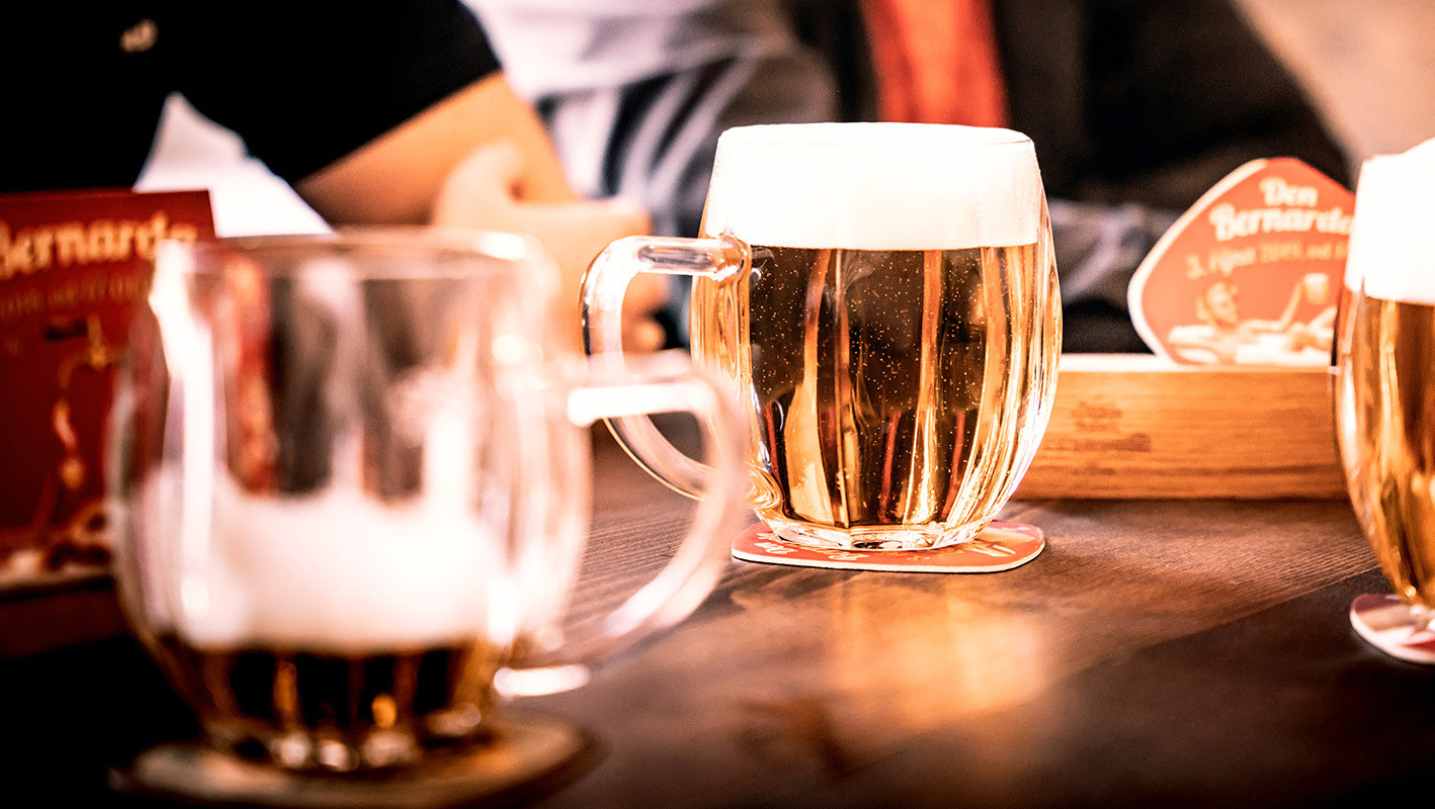
Beer production in the Czech Republic has fallen to its lowest level in 15 years, reflecting a broader shift in how and where people drink. Data from the Czech Association of Breweries and Malteries show that breweries produced 19.96 million hectoliters last year, down 4.3 percent from the previous year and well below pre-pandemic levels. Consumption is also declining. The average Czech drank 121 liters of beer last year, a drop equivalent to eight large beers compared to the year before. The figures point to a deeper change in behavior, especially among younger people. Beer is no longer treated as a default part of social life in pubs. Instead, younger consumers are choosing non-alcoholic options, fruit radlers and specialty beers. Overall consumption is lower, but more selective. Brewers say the shift reflects a growing focus on lifestyle and moderation. Drinkers are paying more attention to quality and variety rather than volume. Interest in non-alcoholic beer has risen steadily, while demand for stronger, traditional lagers has weakened. Non-alcoholic beer, once a marginal category, has become one of the fastest-growing segments. Production reached 1.68 million hectoliters last year, with consumption more than doubling over the past decade. Industry representatives say this is...
Don’t have an account? Register
Already have an account? Log In
How Would You Like to Promote Your Business? PR ArticleDisplay bannersVideo productionNewsletter adsJob ListingsInfluencer Marketing
Your Email
We will come back to you within 24 hours with our proporsal