Sinatra Tribute Pairs Frank Sinatra Classics With 1930s Dining at Prague's Mánes
Partner article


Prague Morning
 Follow us on Google Discover
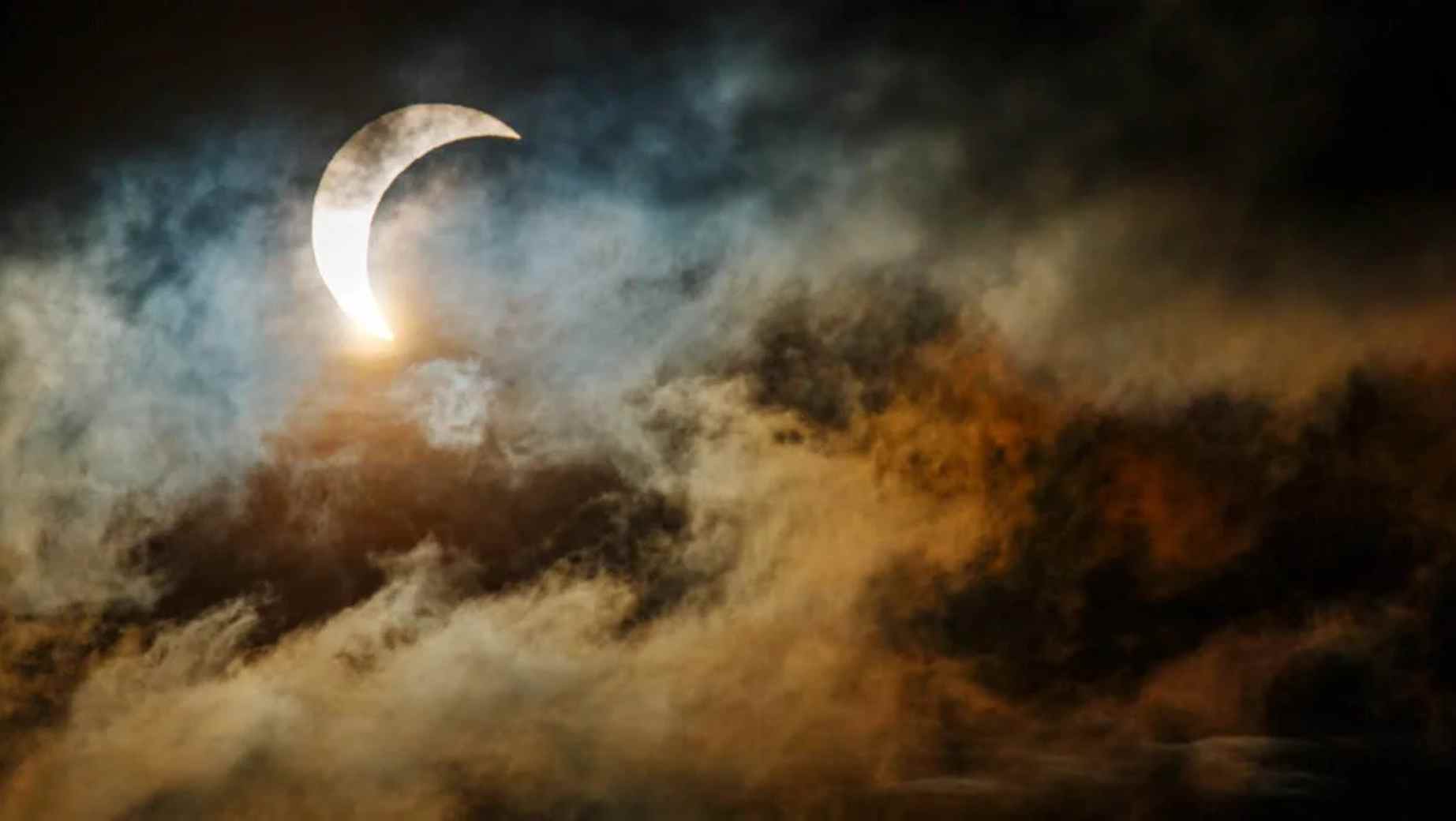

The Czech Republic is set to experience its most impressive solar eclipse in decades on August 12, when the Moon will pass between the Earth and the Sun.
Astronomers say it will be the country’s most significant partial solar eclipse until 2075, making it the standout astronomical event of 2026.
While Czech observers will see most of the Sun obscured, those traveling to parts of Spain, Iceland and Greenland will witness the eclipse in its total phase.
Researchers note that it will also be the closest total solar eclipse to the Czech Republic until 2081, making it a rare opportunity for both amateur and professional skywatchers.
The path of totality will cross Greenland, Iceland, northern Russia, the Atlantic Ocean, Spain, and a small part of northwestern Portugal. Across much of Europe, including the Czech Republic, the event will appear as a partial eclipse.
The eclipse will unfold during the evening as the Sun approaches the horizon.
The phenomenon is expected to begin shortly after 7:19 p.m. CEST, reaching its maximum around 8:11 p.m. In southern and western Bohemia, the Moon will cover more than 86 percent of the Sun’s visible surface.
Astronomers say viewers may witness an unusual effect during the event. As the eclipse reaches its peak, daylight will fade before sunset, followed by a brief increase in brightness after the Sun dips below the horizon, before normal twilight begins.
In eastern parts of the country, however, the Sun will set before the eclipse reaches its maximum, meaning only part of the event will be visible.
NASA stresses that observing a partial solar eclipse without proper eye protection can cause permanent eye damage.
Anyone watching the eclipse should use certified eclipse glasses or approved solar filters. Ordinary sunglasses do not provide adequate protection.
Looking directly at the Sun without protection is safe only during the brief period of totality, and only for observers located inside the narrow path where the Sun is completely covered by the Moon. Everywhere else, even a small exposed portion of the Sun remains dangerous to view.
Would you like your story featured here? Get in touch with our team at [email protected]





Already have an account? Log In