Prague is preparing a bid to host the 2029 European Figure Skating Championships, with the O2 Arena expected to serve as the main venue if the Czech capital wins the right to stage the competition. Prague City Council approved the candidacy on Monday following an approach from the Czech Figure Skating Union. The proposal comes several months after Prague hosted the 2026 World Figure Skating Championships in March. City councilor for education and sports Antonín Klecanda (STAN) said the success of that event helped encourage the city to pursue another major international competition. “The response was very positive, and other countries asked whether another event of this kind could be held in Prague,” Klecanda said on Monday. “We reached an agreement, and today we approved our candidacy to host the European Figure Skating Championship in 2029.” The 2026 World Championships attracted a record number of spectators for a figure skating world championship, according to Klecanda. He also said international visitors had responded positively to Prague’s role as host city. The city has not yet determined when the 2029 championship would take place. The date will be discussed at a later stage, while Prague currently expects the competitions to be staged...
The Pickles Prague Festival will take place on September 19-20 at the Prague Exhibition Grounds, bringing together producers, food enthusiasts and visitors interested in pickled and fermented vegetables. The festival will run from 10 a.m. to 6 p.m. and will focus on the wide variety of vegetables preserved through pickling and fermentation. More info here. Visitors can expect everything from traditional pickled cucumbers, peppers and beets to less familiar varieties from the Czech Republic and abroad. Alongside tastings and opportunities to buy pickled products, the programme will include workshops and educational talks covering pickling techniques, fermentation, the nutritional aspects of fermented vegetables and the role of preserved foods in different culinary traditions. The event will also feature live music throughout the day, while a dedicated children’s area will offer activities for younger visitors, making the festival suitable for families as well. Admission to the Pickles Prague Festival is free. Promote your business to thousands of expats in Prague Find out how.
The Alternative for Germany (AfD) has secured a major victory in the Saxony-Anhalt state election, prompting different reactions from Czech politicians. While some have congratulated the party and called for dialogue with its leaders, others have warned that the result reflects the growing strength of political extremism. The result has also renewed debate in the Czech Republic over migration, security and how mainstream parties should respond to the AfD. Martin Kupka, chairman of the Civic Democratic Party (ODS), described the result as a warning for Europe. He said democratic parties could not counter extremist movements simply by labeling them or ignoring issues that concern voters. “Democratic parties must offer clear solutions: a tough migration policy, security, less regulation and no populist waste of public money,” Kupka said. He added that the Czech Republic should avoid following the same political path. Vít Rakušan, leader of the Mayors and Independents (STAN), similarly said the election should serve as a lesson for Czech politicians. According to Rakušan, mainstream democratic parties risk losing voters when they leave issues such as migration and social problems to populist movements. Rather than focusing solely on the AfD’s success, he said, democratic parties should develop practical and sustainable...
One of the world’s most sought-after producers and the king of the high-tech minimal genre, German DJ Boris Brejcha, is returning to the Czech Republic. As part of his Reflections world tour, he will perform at Prague’s O2 Arena on Friday, October 2, 2026. For electronic music fans, one of the highlights of the season. Boris Brejcha, whose identity is inextricably linked to a mysterious Venetian mask, promises a show full of spectacular lighting and a breathtaking visual spectacle. He is recognized worldwide as a creator and pioneer of the “high-tech minimal” genre. The concert will be the artist’s only performance in the Czech Republic. Official ticket sales have already begun. Tickets are available exclusively through the official Ticketmaster and Ticketportal sales networks. Where did the iconic mask come from? At the age of six, Brejcha suffered serious injuries in a plane crash. He sustained severe burns to his face and body. Music became his escape, and he began producing it on his own at the age of twelve. He launched his official career in 2006. He made his debut at the Universo Paralello festival in Brazil, where he was inspired by the local carnival and chose his iconic Joker...
Netflix has begun filming its new series based on Dan Brown’s The Secret of Secrets, bringing Harvard symbologist Robert Langdon back to Prague. The production officially started in the Czech capital this week, with Netflix releasing a first look at Morgan Spector as Langdon and Rebecca Hall as scientist Katherine Solomon. The series is currently untitled and does not yet have a release date. Netflix has now added five more actors to the production. Mamoudou Athie will appear as Michael Harris, Ben Levi Ross as Alex Conan, Anamaria Marinca as Dr. Gessner, Richard Sammel as Karl Muller and Elena Saurel as Susan Housemore. The series is being developed by Carlton Cuse, who co-created Lost and later worked on Jack Ryan, Locke & Key, Bates Motel and Five Days at Memorial. Cuse serves as co-creator, showrunner, writer and executive producer. Emma Forman is also an executive producer for Genre Arts, alongside Cuse and Brown. Brown is involved in the project as a co-writer and executive producer. The novel takes Langdon through several recognizable parts of Prague, including Charles Bridge and the Klementinum, as he searches for answers following Solomon’s disappearance. Netflix says the television adaptation will combine scientific ideas, historical mysteries...
The Prague Planetarium in Stromovka will host a new series of chamber concerts combining live music with projections of the universe from September 2026. Called Niche Nites, the series will feature 10 concerts between September 2026 and June 2027. Each performance will be accompanied by visuals projected across the planetarium’s 22-metre-wide dome, with the imagery responding to the music in real time. The programme will take place on the final weekend of each month. Rather than staging repeated performances, each musician or group will appear at the planetarium only once, giving every concert its own programme and visual design. The series will open on September 25 with cellist Terezie Kovalová, whose work combines classical music with pop, alternative and electronic influences. Other performers confirmed for the programme include guitarist and composer Michal Pavlíček, who will appear with singer Bára Basiková, pianist and composer Beata Hlavenková, and singer-songwriter Lenka Dusilová. Further names will be announced by the organisers in the coming months. Producer and dramaturg Michala Komrsková said the project is intended to present established Czech musicians in a more intimate setting than the large concert halls where they usually perform. The planetarium’s technology will play a central role. Its dome...
Prague is offering a packed lineup of free events this September, from an air show and science festivals to a rare public viewing of the Czech Crown Jewels and a celebration marking a local brewery’s 15th anniversary. Here are some of the best events taking place across the Czech capital this month. Free Sightseeing at Historic Sites The National Heritage Institute will open selected state-owned castles, chateaux, monasteries and other historic sites to visitors for free on Sunday, September 27. Most of the properties managed by the institute will take part, although the tours and routes available will vary by location. Free admission will cover standard tours and selected additional routes. Capacity is limited, so visitors must book a free ticket online in advance for a specific time. Prague 10 Science Festival The Prague 10 Science Festival returns to Gutovka on Saturday, September 12. From 10 a.m. to 6 p.m., 25 stations will offer visitors the chance to take part in chemistry experiments, explore LEGO robotics, play math games and learn more about nature, technology and the human body. The program will also include workshops, a competition, a toy and plant swap, and a science show by Michael Londesborough. DJ...
A woman suffered serious burns during an emergency cesarean section at Prague’s Bulovka Hospital on Aug. 25, hospital spokeswoman Eva Stolejda Libigerová said. The cesarean was performed because of an acute obstetric complication. The woman’s condition is now stable and she does not require intensive care, the hospital said. She is recovering in a standard ward with her newborn. The hospital is investigating the incident as part of its internal procedures for reviewing patient safety and the quality of medical care. It said it would take appropriate measures once the investigation is complete. Fire broke out during surgery According to information obtained about the incident, medical staff were attempting to control bleeding toward the end of the operation when a fire broke out involving a surgical device. The device was reportedly being used shortly after the patient’s skin had been treated with a disinfectant. The woman suffered second- and third-degree burns to her inner thighs, sides, lower abdomen and genital area, according to the available information. Two days after the operation, she was transferred to the Burns Medicine Clinic at University Hospital Královské Vinohrady for treatment. She was later returned to Bulovka Hospital’s postpartum ward. The circumstances surrounding the fire,...
Restaurant group Ambiente is preparing to open its 35th establishment, with a second location of its Pult beer concept set to launch in Prague’s Holešovice district in mid-September. The new venue will be located on Tusarova Street and will follow the concept of Pult in Prague 1, which opened in the Celnice building in 2021. While both locations will focus on Czech lager, the new Holešovice branch will introduce a different food concept and its own selection of beers. The original venue serves beers from six breweries, with an emphasis on precise storage, serving and temperature control. A different approach to food Food will be one of the main differences between the two Pult locations. The original Pult in Celnice focuses largely on smaller dishes and snacks. The Holešovice restaurant will instead offer a more substantial menu designed specifically to accompany beer. The menu is expected to focus heavily on Czech beef, including several versions of steak tartare and steaks. Unlike many restaurants where the kitchen closes earlier than the bar, the new Pult plans to serve food until closing at 1 a.m. The restaurant will have space for around 130 guests. Another new destination for Holešovice The opening comes...
With cooler temperatures and autumn colours arriving, September and October are among the best months for cycling in Czechia. The country’s extensive network of marked trails makes it easy to plan anything from a relaxed day trip to a multi-day adventure. Here are seven routes worth considering this autumn. 1. Prague–Mělník–Litoměřice One of the easiest options for Prague residents is to head north along the Elbe. The route passes through Mělník, known for its vineyards and historic centre, before continuing towards Litoměřice. Along the way, cyclists can see Roudnice Chateau, Mount Říp and the historic fortress town of Terezín. Mělník is particularly appealing in September, when its wine season is in full swing. 2. Znojmo Wine Route For a combination of cycling and wine, South Moravia is hard to beat in autumn. The 63-kilometre Znojmo Wine Route connects vineyards and villages around Znojmo and is suitable for cyclists of different abilities. September and October are also the region’s main wine-harvest season, with numerous wine and burčák events taking place. 3. Mikulov and Pálava The Mikulov Wine Trail offers another relaxed way to explore South Moravia. The route takes cyclists through vineyards and the countryside around Mikulov, with the Pálava hills...
Building a TikTok audience from zero can be frustrating. Even well-produced videos may struggle to attract attention when an account has only a handful of followers. This slow beginning encourages some creators and businesses to purchase followers in the hope of making their profiles appear more established. Follower count can influence first impressions. When visitors discover a profile with an existing audience, they may be more willing to watch its videos, explore older content, or follow the account themselves. However, purchased followers cannot replace engaging videos or genuine interaction. Low-quality services may also deliver inactive accounts that disappear quickly or create an unnatural gap between follower numbers and actual engagement. Anyone considering this approach should understand how follower services operate, what they can realistically provide, and which warning signs suggest that a seller should be avoided. Why Creators Purchase TikTok Followers New accounts frequently face a credibility problem. Viewers have little information to judge whether the creator is worth following, so the visible follower count becomes one of several signals they use to make that decision. A larger audience can make a profile appear more established. This is particularly relevant for businesses, influencers, musicians, and other new TikTok creators trying...
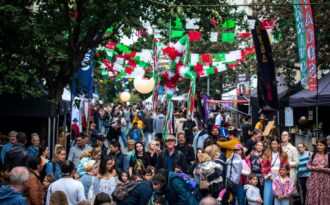
Americká and Záhřebská streets in Prague’s Vinohrady will turn into a pedestrian festival zone on Saturday, September 12, for the 15th edition of Zažít Americkou jinak. From 10:30 AM to 9:30 PM, the streets will host a full-day programme of live music, dance, workshops, design, food and activities for children. The festival is free to attend. A major part of this year’s programme will focus on Mexico and Latin American culture, including a celebration of Mexican Independence Day. The main programme will take place on the La Calle Mexicana Stage, hosted by DJs Roxana Velasco and José. Visitors can look forward to performances by Studio Anyo, traditional Mexican music, a piñata, a dance workshop and appearances by Mexican musicians Razcarmelo and Andrea Viruega. One of the highlights will be El Grito, the traditional ceremony marking Mexico’s Independence Day. The event has become an annual gathering point for the Mexican community in Czechia and festival visitors. The programme will also feature Mariachi Azteca de Praga, described as the first authentic mariachi band based in the Czech Republic. The evening will continue with international acts including Faustina Calavera, a ten-member band from Wrocław combining Latin American cumbia, Balkan brass and ska, followed...
Don’t have an account? Register
Already have an account? Log In
How Would You Like to Promote Your Business? PR ArticleDisplay bannersVideo productionNewsletter adsJob ListingsInfluencer Marketing
Your Email
We will come back to you within 24 hours with our proporsal