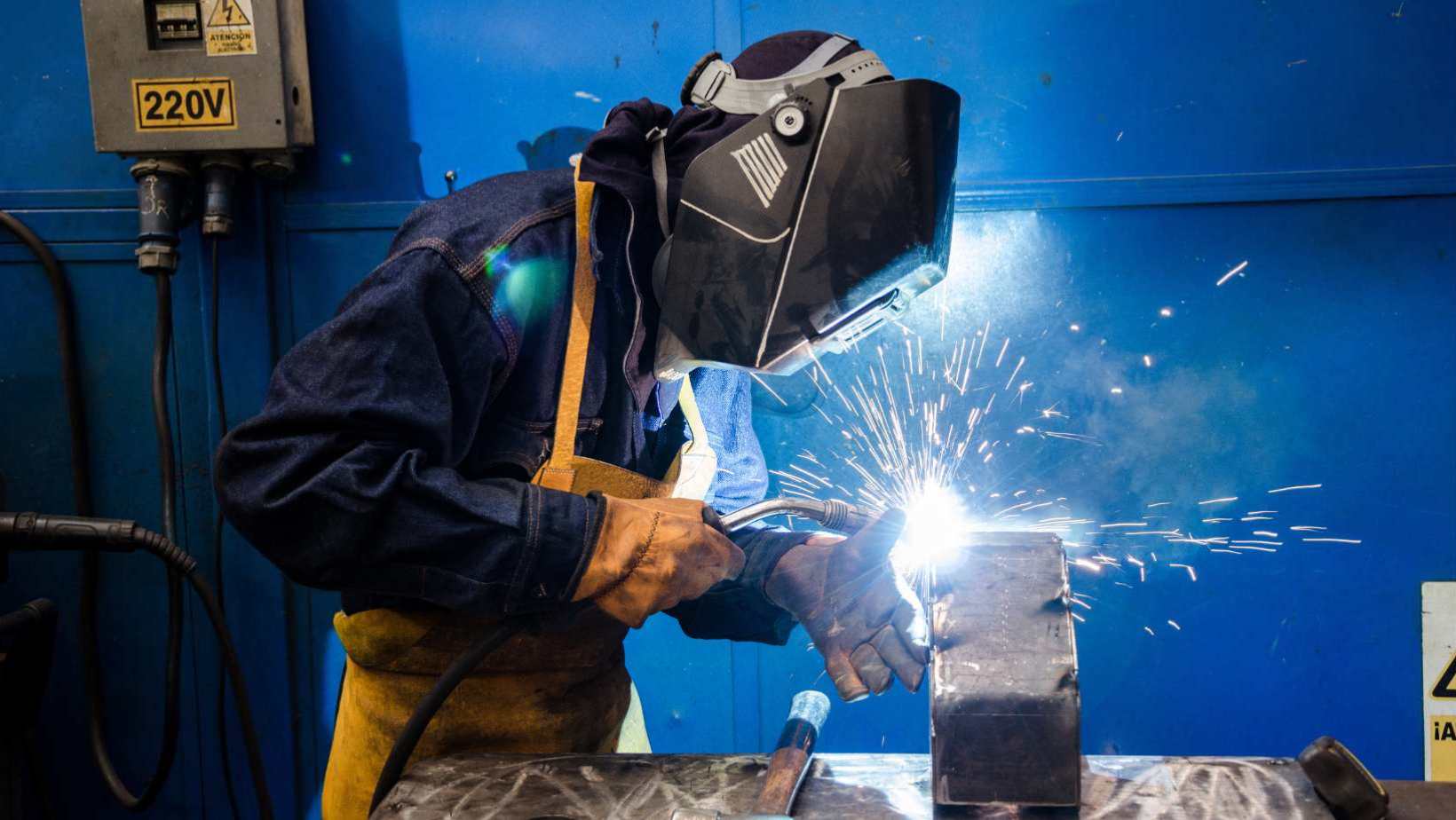
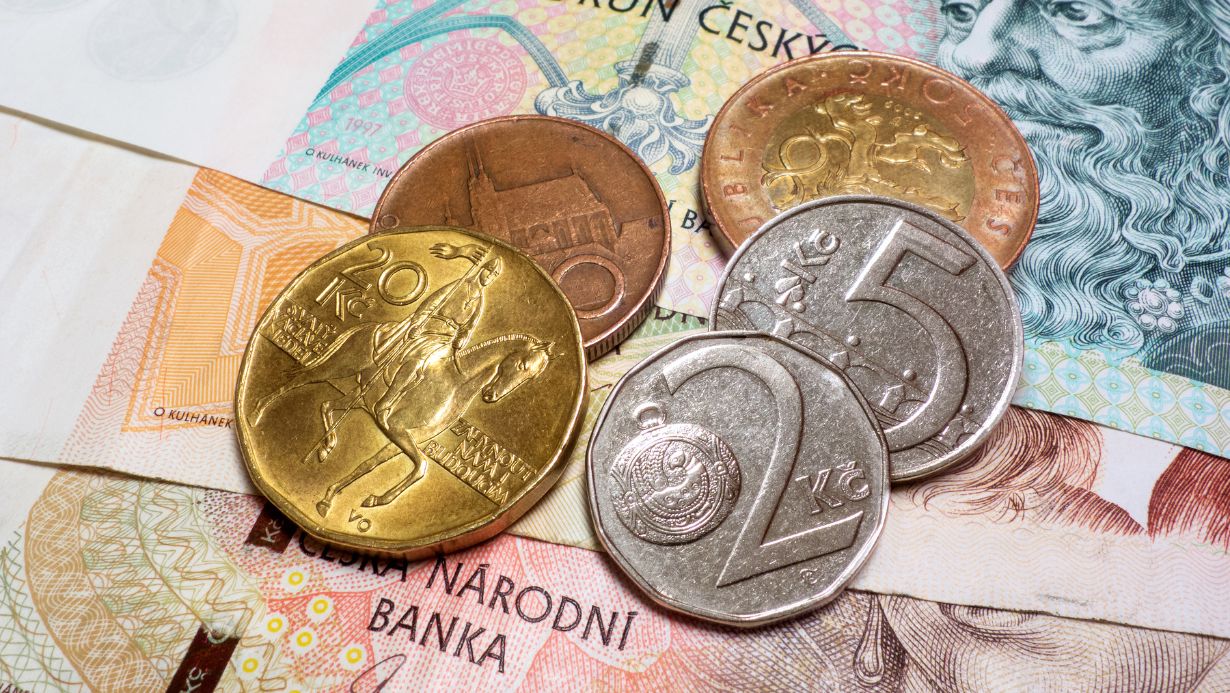
The Czech economy has entered 2026 facing one of the tightest labor markets in its modern history. Employment is at a record high, unemployment remains close to the floor, and yet employers across the country say they cannot find enough people to keep operations running. Over the past two years alone, the workforce has expanded by roughly 200,000 people. Almost all of that growth has come from abroad, with Ukrainian workers playing a central role. What was once seen as a temporary fix has become a structural pillar of the economy. Without foreign labor, many companies say they would already be forced to cut production or services. A demographic dead end Behind the shortage lies a problem that cannot be solved quickly. The pool of domestic workers is shrinking as the population ages and fewer young people enter the labor market. At the same time, demand for goods and services continues to rise. Construction firms, restaurants and social-care providers are among the sectors already working at full capacity, with orders piling up faster than they can be completed. Managers describe a simple reality: there is work, but no one left to do it. The result is higher costs, longer delivery...
Prague authorities will begin a wide-ranging round of fire safety inspections in nightlife venues this week, following a fatal blaze that broke out during New Year’s celebrations at a club in Switzerland. The checks will focus on places that attract large crowds after dark, including clubs, bars, music venues, discos and wine bars. Officials say the move is meant to prevent a similar tragedy in the Czech Republic. Interior Minister Lubomír Metnar said the inspections are a direct response to the Swiss incident and aim to ensure that safety rules are not only written on paper but followed in daily practice. “This is about prevention,” he said, adding that the goal is to make sure people can go out knowing basic safety standards are being met. The minister has tasked Fire and Rescue Service Director General Vladimír Vlček with overseeing the campaign. Over the coming months, fire officers will check whether venues are properly equipped with essential safety features such as fire extinguishers, clear escape routes and functioning alarm systems. Inspectors will also review whether staff are trained to respond in case of an emergency. The inspection programme is set to run from January 12 through August 31 and will...
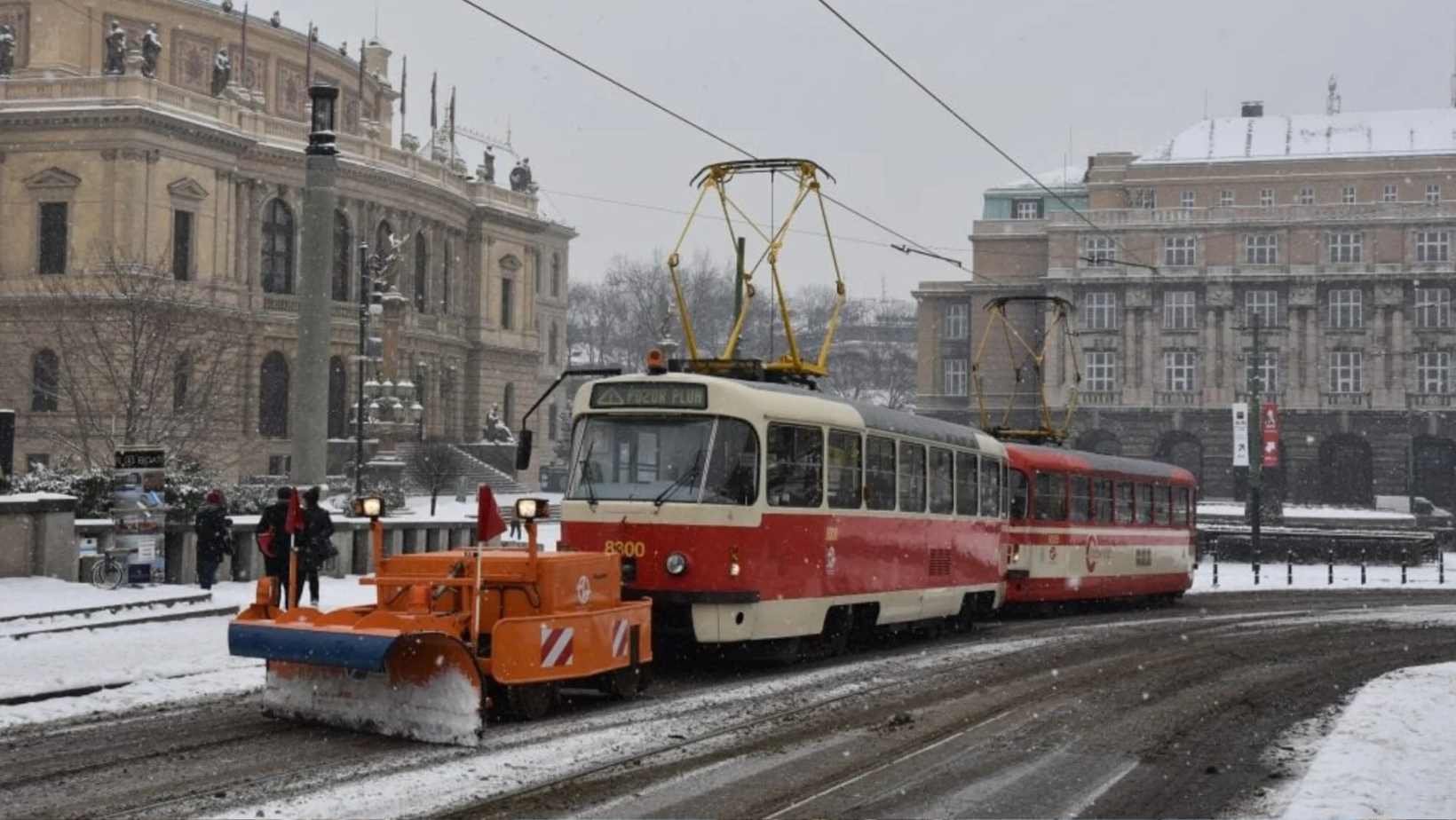
Heavy snowfall has returned to Prague, bringing up to ten centimeters of snow in recent days and putting pressure on public transport across the city. To keep tram services running, the Prague Public Transport Company has sent specially adapted trams equipped with snow plows onto the tracks. Photos and videos of the unusual vehicles have quickly spread on social media. The trams are fitted with front-mounted blades that push snow off the rails as they move through the city. At the moment, three of these machines are in operation, deployed mainly on routes where regular trams struggle in deeper snow. Their use has become more important with the arrival of newer low-floor Škoda 15T trams, which face difficulties once snow on the tracks exceeds about five centimeters. While every depot has basic equipment to deal with winter conditions, standard tools are often not enough when snowfall is heavier. In those cases, a special vehicle comes into play: a modified T3 tram chassis fitted with a wide steel blade. The structure is weighted with concrete to improve stability and effectiveness, according to Martin Brejša, head of technical inspection for new vehicles at the transport company. Operating them is not routine work....
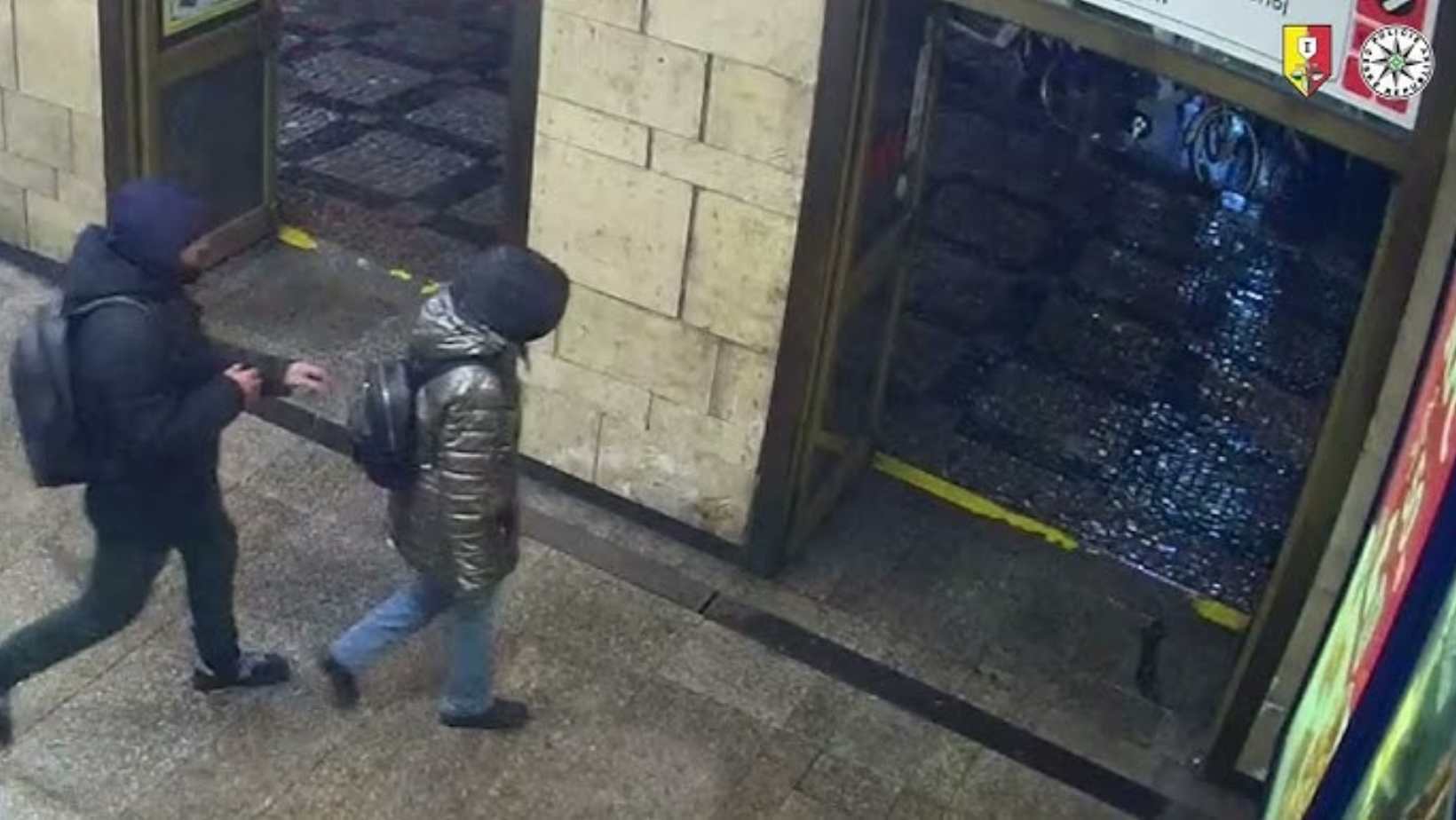
Police have closed the case of a 36-year-old foreign national who systematically targeted seniors on public transport, stealing wallets and attempting to drain victims’ bank accounts. According to detectives, his method rarely changed. He would press himself against seniors during peak hours, then quietly remove wallets from handbags or backpacks. The crimes were not limited to Prague. Officers later linked the man to several thefts in Brno, where he worked busy underground passages near train stations. These areas, often filled with commuters and travellers, offered the same cover as crowded metro platforms in the capital. Police estimate that the value of the stolen cash and belongings exceeded CZK 100,000. After taking the wallets, the thief also tried to use the victims’ payment cards to withdraw more money. Police spokesperson Richard Grdina said that if all those attempts had gone through, the total losses could have risen by another CZK 200,000. Forensic specialists eventually identified the suspect, leading to his arrest and a swift court process. The court found the man guilty of multiple thefts and handed down a suspended sentence. He avoided prison time on condition that he complies with court rules, but he must fully compensate the victims for their...
For many young people across Europe, leaving the family home is no longer a natural step into adulthood. Rising rents, expensive mortgages and unstable incomes are changing how an entire generation lives. In the Czech Republic, this shift is becoming increasingly visible. According to the latest data from Eurostat, more than a quarter of Czechs aged between 25 and 35 still live with their parents. The figure stands at 25.9 percent and continues to grow. Similar patterns can be seen across the region, especially in Central and Eastern Europe, where housing costs are rising faster than wages. The trend is even more pronounced in neighbouring Poland. Almost 40 percent of single people aged 25 to 35 there still live in their parents’ homes. Over the past decade alone, that share has increased by ten percentage points. Among Poles aged 18 to 34, nearly seven out of ten have not yet moved out. Within the European Union, Poland now ranks fifth in this category. Experts say the reasons go far beyond individual choices. Sociologist Vojtěch Bednář points to a mix of low incomes and long-term uncertainty. Young people today, he argues, grow up in an atmosphere shaped by warnings about economic...
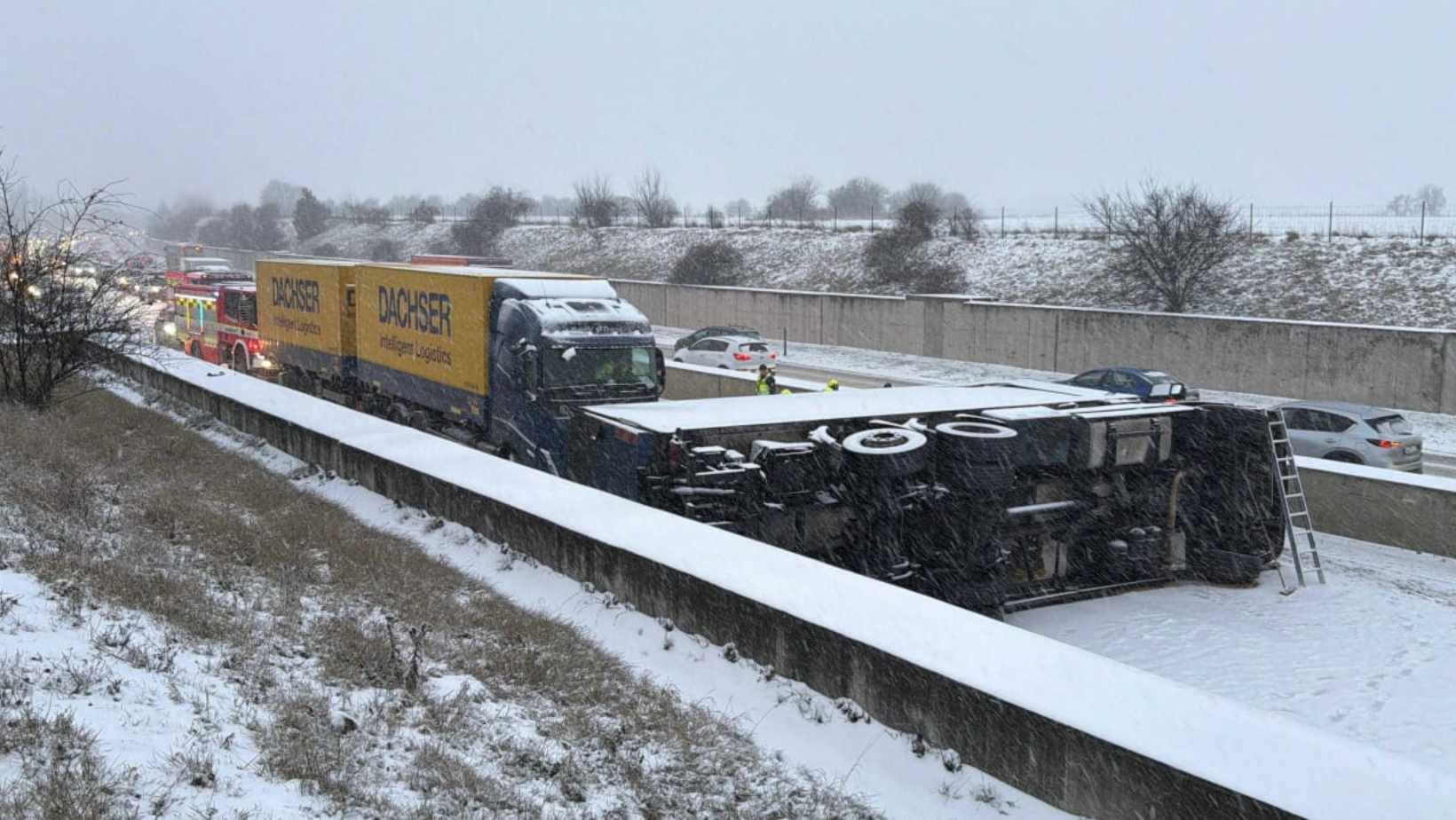
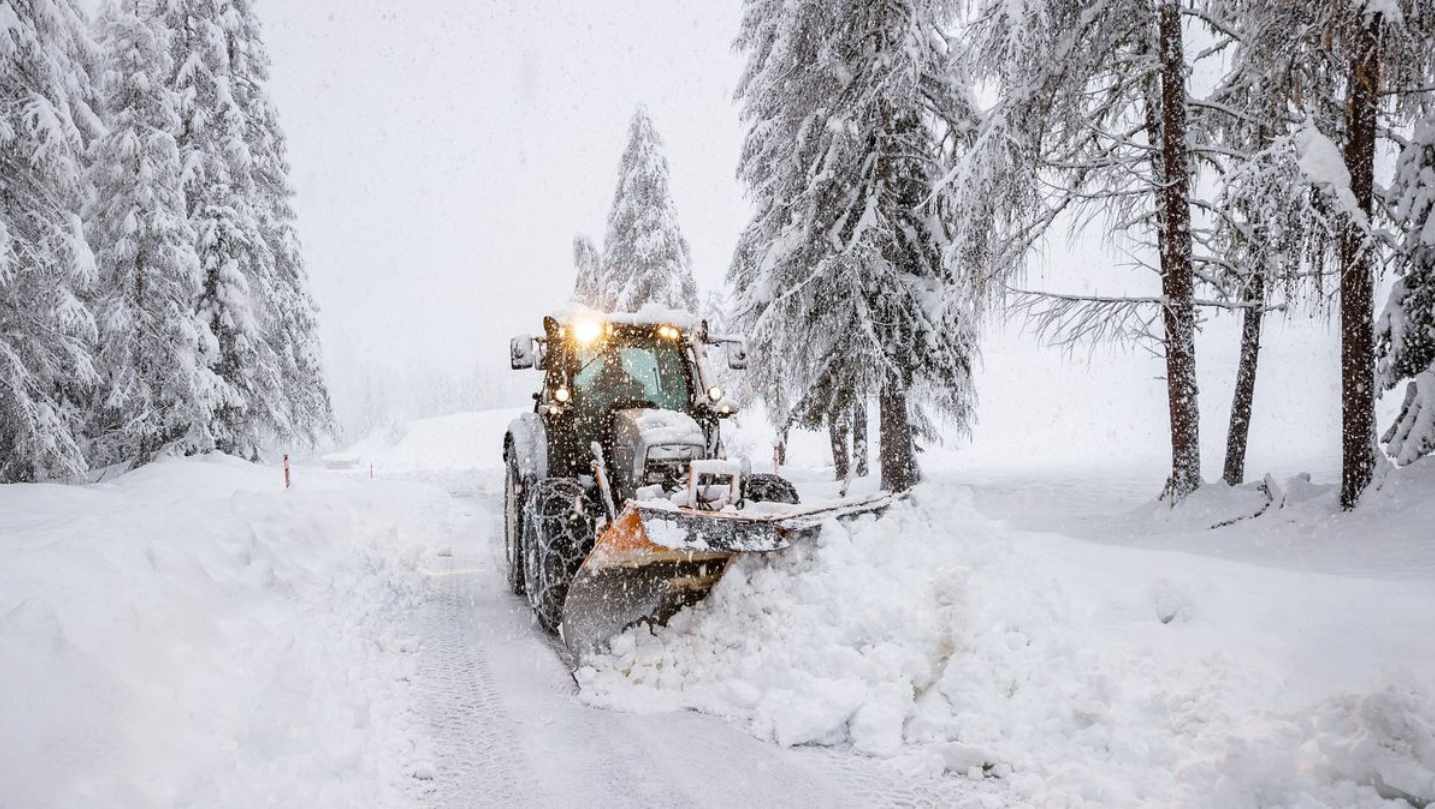
Heavy snowfall sweeping into the Czech Republic from Bavaria has brought widespread disruption to roads across the country, triggering dozens of traffic accidents. Police said early Friday that conditions were deteriorating fast, with emergency services dealing with incidents in nearly every region. The most serious situation unfolded near Prague Airport, where a truck overturned and blocked both lanes of the D6 motorway. The crash brought traffic to a halt in both directions and caused knock-on delays for drivers heading toward the capital. Public transport in the area was also affected, as buses struggled to navigate icy roads. Elsewhere, the D5 motorway became another trouble spot after a series of crashes involving heavy vehicles. Police closed a stretch of the road in the Tachov district between kilometres 144 and 136 in the direction of Prague, where multiple trucks were left stranded. Further along the same route, another lorry stalled near kilometre 112, adding to already long delays. Conditions have been particularly difficult in western Bohemia. In the Pilsen region, police reported that some secondary roads were impassable in places, with snow and ice making even short journeys risky. Officers said the number of accidents had risen sharply since early morning, most...
Energy Demand Surges Amid Severe Frosts Due to severe frosts, gas and electricity consumption in the Czech Republic has risen sharply. Distributors report that gas consumption over the past week was roughly a quarter higher than during the same period last year. Electricity demand also increased, prompting the Temelín nuclear power plant to raise output from 1,086 to over 1,100 megawatts. Foreign Minister Challenges Presidential Authority New Czech Foreign Minister Peter Macinka stated unequivocally that the president has no real authority in forming the government. After President Petr Pavel again refused to appoint Filip Turek as Minister of the Environment, the leader of the Motorists Party said the movement would not nominate another candidate and would continue to push for Turek. The party insists that responsibility for cabinet formation lies with parliament, not the president. Czech Mortgage Rates Tick Up By early 2026, interest rates on new mortgages in the Czech Republic have increased slightly for the first time since last summer, averaging 4.94%. Banks continue to act cautiously amid inflation risks and economic uncertainty, and no major changes in rates are expected in the near term. Hepatitis A Deaths Spike in Czech Republic In 2025, 36 people died from...
For the first time in nearly a century, a reigning world chess champion will take part in a competitive tournament on Czech soil. Nineteen-year-old Dommaraju Gukesh is set to headline the 8th Prague International Chess Festival, bringing top-level chess back to the city in a way it has not seen since the interwar period. The festival will run from February 24 to March 6. Gukesh will compete in the closed Masters section, where he is scheduled to play nine classical games against an elite field that includes Czech grandmasters David Navara and Thai Dai Van Nguyen. For Czech chess, the appearance of the world champion marks a rare moment. “This is something our chess community has waited decades for,” said festival director Petr Boleslav. “Having the reigning champion here gives the event a weight it has not had in generations.” Alongside the Masters tournament, the festival will also host open competitions expected to draw around 400 players. Navara, the country’s most accomplished active player, knows Gukesh well. The two have faced each other three times, with the Czech grandmaster holding two wins and one draw. Their most recent encounter came in Prague in 2024, before Gukesh claimed the world title....
The Czech state debt has climbed to its highest level in history, nearing 3.7 trillion crowns, and economists warn that the trend is becoming increasingly hard to reverse. In just six years, the figure has more than doubled, turning public finances into one of the most pressing political and economic issues in the country. The impact of this growth is no longer abstract. Spread across the population, the current debt equals roughly 337,500 crowns per person. At the end of 2019, that figure stood at about 153,500 crowns, meaning the individual burden has more than doubled in a short period of time. Finance Minister Alena Schillerová has acknowledged that the situation is deteriorating. She recently pointed out that the share of state debt in gross domestic product has risen again, crossing the 43 percent mark. Only a few years ago, it stood closer to 42 percent. Forecasts suggest the ratio will continue to increase unless major changes are made to public spending and budget planning. Economists are increasingly vocal in their concerns. David Marek warns that the current path is unsustainable. In his view, debt is rising steadily without a clear plan to stop it, and the longer the trend...
The Czech Republic continues to hold its ground as one of Central Europe’s most attractive retail destinations. Last year, forty foreign brands made their debut in the country, confirming a steady inflow of international players despite ongoing economic uncertainty across the region. According to a market overview by Cushman & Wakefield, the number of new entries remained in line with recent years, though slightly below the exceptional peak of 2024, when 47 brands arrived. Food and drink lead the expansion Restaurants, cafés and fast-casual concepts once again dominated the list of arrivals. The most closely watched launch was the American burger chain Five Guys, which opened its first Czech outlet in Prague’s Máj department store. Other fresh names on the local dining scene included the health-focused dean&david, Mediterranean restaurant Koykan and Seven North, which opened inside the SiR Prague hotel. Live-music fans gained a new venue with the Piano Bar at Savarin Palace, while several specialty brands introduced new flavours to the market, from Italian aperitif Ciao Spritz to German cinnamon-roll concept Cinnamood. Supermarket chains also played a role in expanding the country’s culinary offer. Sushi Circle and Yuzu from Germany, along with France’s Mai Sushi, entered the Czech Republic...
Inflation in Czechia held at 2.1% in December Consumer prices in Czechia rose by 2.1% in December, the same as in November. This is according to a preliminary estimate released on Wednesday by the Czech Statistical Office (ČSÚ). The inflation rate was slightly above that of the eurozone, which stood at 2%, according to Eurostat data. The Czech National Bank holds record amount of gold in reserves The Czech National Bank (ČNB) purchased 20.4 tonnes of gold last year, a figure similar to that of 2024. By the end of the year, its reserves reached a record 71.6 tonnes, according to data released by the Bank on Wednesday. At the end of 2025, the value of the gold reserves stood at $10.1 billion and gold accounted for 5.76% of the total value of Czechia‘s foreign exchange reserves. Czech Republic Will Continue To Run Ammunition Initiative, Says Babis The Czech Republic will continue to coordinate the Ukraine ammunition initiative, but will not contribute any further money to the scheme, Czech Prime Minister Andrej Babis (ANO) wrote on social media yesterday after a meeting of leaders of the ‘Coalition of the Willing’ – countries committed to supporting Ukraine. Babis said he made the decision...
Cold weather is set to remain across the Czech Republic in the days ahead, with meteorologists warning that winter conditions will not ease anytime soon. While temperatures may rise slightly toward the end of the week, cold weather is expected to stay, with more snow on the way — including up to 20 centimeters in some mountain areas. According to the Czech Hydrometeorological Institute, freezing temperatures will dominate the country through at least Thursday. Even though mornings have been slightly milder than earlier in the week, daytime temperatures are expected to stay below zero in most regions, keeping icy conditions firmly in place. On Friday and Saturday, some areas may briefly see temperatures rise above freezing, but the cold will not let up for long. This, however, will not bring real relief. Instead, it is likely to be accompanied by snowfall and, in some areas, mixed precipitation. Meteorologists warn that rain combined with snow, or even freezing rain, could affect parts of southwestern Bohemia outside the mountain regions, increasing the risk of icy roads and sidewalks. The most intense snowfall is expected in the Bohemian mountain ranges, where up to 20 centimeters of new snow could accumulate by the weekend....
Don’t have an account? Register
Already have an account? Log In
How Would You Like to Promote Your Business? PR ArticleDisplay bannersVideo productionNewsletter adsJob ListingsInfluencer Marketing
Your Email
We will come back to you within 24 hours with our proporsal