September 28 is a public holiday in the Czech Republic, marking Czech Statehood Day and the feast of St. Wenceslas. This year, the holiday falls on a Monday, giving many people a three-day weekend. For anyone planning to spend the day in Prague, however, there are two practical questions: which shops will be open, and what can you do around the city? Where you can shop on September 28 Under Czech legislation regulating retail opening hours, shops with a sales area of more than 200 square meters must close on September 28. The restriction applies throughout the day and covers large supermarkets, hypermarkets and home improvement stores. Smaller shops with sales areas of up to 200 square meters are exempt and can open at their owners’ discretion. Petrol stations and pharmacies can also operate. Other exceptions include shops located at airports, railway stations and bus terminals, as well as retail outlets inside healthcare facilities. Why September 28 is Czech Statehood Day The holiday commemorates Prince Wenceslas, a member of the Přemyslid dynasty who became one of the central figures in Czech history. Wenceslas was killed by his brother Boleslav I on September 28, 935, in Stará Boleslav. His death later...
Reaching the Client Centre for residence-related questions in Czechia requires patience. More than 2,000 calls are received every day, so some waiting time is unavoidable. However, you can significantly reduce your waiting time by calling during less busy hours, which are published through the authority’s official channels. It is also worth having your identification document number ready before calling. This can speed up the process, particularly if you are calling to book an appointment. Those who do not want to wait on the phone can use other ways to get in touch. Answers to many common questions are available in the Frequently Asked Questions section of the Information Portal for Foreigners (ipc.gov.cz). If your matter is not urgent or your question is more complicated, you can also contact the centre by email at [email protected]. The current status of your application can be checked online using the dedicated service on the same portal. When it comes to appointments, most bookings can be made through your personal account on the Information Portal for Foreigners. You only need to book by phone in three cases: to provide biometric data, to inspect your case file, or to collect a residence card as an...
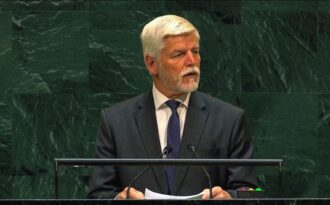
Czech President Petr Pavel has warned that NATO may eventually need to shoot down Russian aircraft or drones that deliberately violate the alliance’s airspace. Speaking to Fox News Digital in New York during the U.N. General Assembly, Pavel said Russia was testing NATO’s readiness and could interpret continued restraint as a sign of weakness. “There might be the time when we will have to shoot down some of these planes or unmanned vehicles that are testing our readiness,” Pavel said. Pavel said the alliance needs to distinguish between accidental airspace violations and deliberate incursions in which an aircraft ignores warnings to leave. “If it is deliberate and the violator doesn’t respond to our measures, then we will have to act, because otherwise Russia simply would push further on,” he said. His comments came after a series of incidents involving Russian aircraft and drones near NATO territory. On Wednesday, a Russian Mi-8 military helicopter briefly entered Polish airspace after crossing from the Kaliningrad region. According to Poland’s Armed Forces Operational Command, the helicopter travelled around 300 metres into Polish territory and remained there for 42 seconds. On Thursday, Romania also scrambled two F-16 fighter jets after an unidentified aerial target entered...
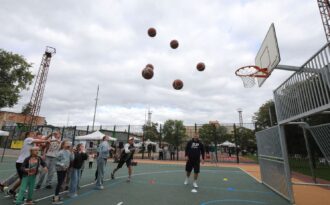
A new sports complex has opened in Riegrovy Sady, giving residents of Prague 2 access to a refurbished court, parkour equipment, a climbing wall and an outdoor fitness area. The facility, next to the TJ Sokol Královské Vinohrady building, was officially opened Tuesday afternoon. The renovation and installation of new equipment cost CZK 8.7 million, excluding VAT. The site is intended for people of different ages and can be used for several sports. The refurbished court is suitable for football and basketball, while the new equipment includes a parkour area, climbing wall and a small fitness zone. The project forms part of the district’s longer-term plans for Riegrovy Sady. Officials said the upper section of the park has lacked sufficient space for outdoor sports and exercise. The sports area occupies land that until last year was used by two unauthorized structures, the Ice Magic ice sculpture exhibition and the Containall sports and cultural center. The district is also considering a much larger project for the site. A multifunctional hall for sports and cultural events could eventually replace the current outdoor facility. Petr Janů, deputy chairman of TJ Sokol Královské Vinohrady, previously said the goal was to create a building designed...
Prague taxi drivers could soon be required to demonstrate their knowledge of Czech and the city’s geography. The Chamber of Deputies approved the change on Wednesday as part of an amendment to the Road Traffic Act. The legislation does not automatically introduce testing in Prague or other Czech cities. Instead, it would give municipalities the authority to impose such requirements. Under the amendment, municipalities could test taxi drivers on their legal rights and obligations, their Czech language skills to the extent necessary for the job, and their knowledge of locations within the municipality that are relevant to taxi services. The bill now goes to the Senate. What the new rules could mean for taxi drivers The issue has been debated in Prague for some time, particularly as the taxi industry has changed with the rapid growth of app-based services. Pirate Party leader Zdeněk Hřib introduced a more detailed proposal in May. That version included specific provisions defining what drivers could be required to know and what would fall outside the scope of the tests. For example, the proposal said drivers should not be expected to demonstrate encyclopedic knowledge of Prague’s landmarks. Transport Minister Ivan Bednárik of the SPD, however, argued...
More than 240 children and 10 adults have developed gastrointestinal symptoms in connection with a suspected Salmonella outbreak at a school in Prague’s Újezd nad Lesy district. Masaryk Elementary School, which has around 1,100 pupils, is being temporarily closed while health authorities investigate the source of the infection. The school’s kitchen and cafeteria will also undergo thorough disinfection. Salmonella has so far been confirmed by laboratory tests in four children, according to Petra Batok, a spokesperson for the Prague Public Health Authority. Officials are continuing to investigate how the infection entered the school. The first cases were reported earlier this week. The largest number of illnesses has been recorded among upper-level pupils and children attending Montessori classes. Classes for those groups were cancelled on Wednesday, while all pupils have been given Thursday and Friday off. Food samples taken from the school cafeteria have been sent for laboratory testing, with results expected on Friday. The final number of people affected is not yet known. Health officials are collecting additional information through questionnaires completed by parents and adults who visited the cafeteria. The Prague public health authorities have described the incident as an epidemic. Prague emergency services have received 55 calls from...
Prague commuters should expect changes to metro and tram services from Saturday, September 26, through Monday, September 28, as maintenance work affects Metro Line C and tram routes in Libeň. Metro Line C will be suspended between Pražského povstání and Chodov for the entire long weekend. Trains will continue running between Letňany and Pražského povstání, while the southern section between Chodov and Háje will operate as a shuttle service. Four stations will be affected by the closure: Pankrác, Budějovická, Kačerov and Roztyly. Passengers can use replacement bus XC, which will run between Pražského povstání and Chodov via all four stations. Hundreds of railway sleepers to be replaced The closure will allow Prague Public Transit Company (DPP) workers to replace several hundred wooden sleepers with concrete ones. Once the work is completed, around 17,000 of the approximately 20,000 original sleepers between Florenc and Kačerov will have been replaced. DPP said the work is scheduled during long weekends because the materials used to secure the new sleepers need more time to harden than a standard weekend allows. Tram services suspended in Libeň Tram services will also be disrupted between Palmovka and Ke Stírce from early Saturday morning until 6 p.m. Monday. Several lines...
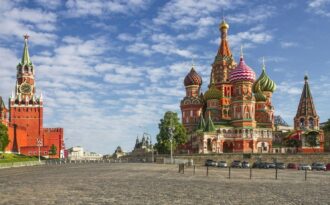
A judge at Moscow’s Tverskoy District Court sentenced a Czech man to 13 days in jail on Tuesday for staging a protest on Red Square. Identified as Michal Plamenek, the man was arrested for holding up a sign in English next to Lenin’s Mausoleum on Sunday afternoon, the court’s press service said in a statement. No details were provided as to what was written on Plamenek’s sign, but the court press service said a judge ruled that the inscription was “aimed at discrediting the Russian Armed Forces.” Police officers arrested Plamenek because Red Square directly adjoins the Kremlin, where protests are banned. He allegedly refused to listen to a request by officers to accompany them to a police station and resisted arrest. A judge found Plamenek guilty on three separate administrative counts of discrediting the Russian military, violating protest rules and disobeying a police officer. He was also fined a total of 60,000 roubles, around CZK 15,000. The Czech Foreign Ministry said its embassy in Moscow has been providing the detained man with consular assistance from the outset. It declined to comment further because of the sensitivity of the case. Promote your business to thousands of expats in Prague Find...
The legendary Gipsy Kings by André Reyes will perform in Prague this November, bringing their distinctive mix of flamenco guitar, rumba and Latin rhythms to Lucerna Great Hall on November 29, 2026. Led by founding member André Reyes, the group will perform some of the songs that made the Gipsy Kings famous around the world, including “Bamboleo,” “Djobi Djoba” and “Volare,” alongside newer material. The concert is being presented by Gotobeat and will begin at 7 p.m. Tickets are online here. From southern France to the world The Gipsy Kings’ story began with the Reyes family and their musical roots in the south of France. André Reyes was one of the founding members of the group, which went on to combine traditional flamenco with rumba, Latin rhythms and pop influences. Their energetic guitar playing and Spanish-language songs helped turn rumba flamenca into an international sound. Tracks such as “Bamboleo” and “Djobi Djoba” became global hits, while their version of “Volare” introduced the group to an even wider audience. Music associated with the Gipsy Kings has sold more than 60 million records worldwide, making the group one of the most successful international acts to emerge from the flamenco-rumba tradition. Their music...
District heating plants across the Czech Republic are beginning to supply heat as temperatures drop, with conditions for the start of the heating season now being met in much of the country. Some plants have already begun providing additional heat during the colder morning and evening hours. The first systems to respond were mainly in mountainous parts of northern and western Czechia and in the Vysočina region. Other heating plants are expected to gradually start operating in the coming days, depending on local temperatures and weather forecasts. Since 2010, district heating systems have generally started supplying heat after September 20, although the exact timing varies considerably from year to year. If temperatures rise again in late September or early October, heating can be suspended. Under the standard rules, heating is normally interrupted when the average outdoor temperature exceeds 13°C for two consecutive days and the forecast indicates that temperatures will continue to rise. Last winter was colder than average The previous heating season placed greater demands on heating systems than the years immediately before it. According to figures from the Czech District Heating Association, the season was 4.9 percent colder than the previous year. It was also 3.2 percent colder...
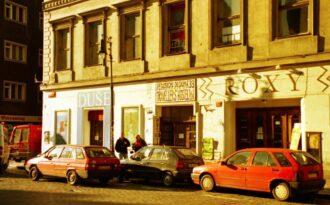
A new book documenting the history of Prague’s Roxy club and the alternative cultural scene that grew around it is seeking public support ahead of its planned publication this autumn. Titled Kopneš do plechovky a dva dny se tančí (“Kick a Can and Dance for Two Days”), the book looks at Roxy’s development from its beginnings in the early 1990s to its current role in Prague’s music scene. A crowdfunding campaign to finance the publication has been launched on Donio.cz. Rather than focusing solely on the history of one nightclub, the project examines the people, artists and cultural movements connected with the venue. More than 40 musicians, promoters, artists and other figures associated with Roxy contribute their memories and perspectives. Roxy opened in 1992 and quickly became an important venue for alternative music in Prague. Over the years, its programme has covered genres including hardcore, house, trip-hop, hip-hop and drum’n’bass. The book is the result of almost five years of research by cultural journalist Ondřej Horák. He examined thousands of archival documents, located previously unpublished photographs and interviewed nearly 50 people connected with Roxy and its history. The campaign will also feature newly created artwork. Graphic designer and typographer Jozef...
In the first year of the Friendly City Index, Prague ranked second among Central and Eastern European metropolises. Yet only 13.82% of residents can reach most daily destinations – work, schools, shops, or healthcare – within 15 minutes. The best metropolises in the region remain closer to “30-minute cities.” Young Czechs are closest to the ideal: 34% of those aged 18–24 said they can reach everyday destinations within 15 minutes. Middle-aged people, especially 45–54, scored the worst at 14.7%. Smaller Czech cities outperform Prague. Olomouc (36%), Ostrava (29.7%), and Brno (21.8%) all ranked better in their categories. Compact urban structures and shorter distances explain much of this advantage. Polish cities also dominated the rankings, including Krakow, Szczecin, and Lublin. Among metropolises, Warsaw leads with 15.9%. In other categories: Krakow (30.3%), Split (44%), Rijeka (53.3%), and Zadar (53.6%). Riga ranked worst at 9.8%, while Zagreb scored only 20%. The smaller the city, the better the accessibility Around 10–15% in metropolises, 30% in large cities, 40%+ in medium-sized cities, and over 50% in small cities. Even cities with metro systems like Prague or Bucharest show little improvement, confirming that compactness and urban structure matter more than infrastructure alone. Transport habits In Central...
Don’t have an account? Register
Already have an account? Log In
How Would You Like to Promote Your Business? PR ArticleDisplay bannersVideo productionNewsletter adsJob ListingsInfluencer Marketing
Your Email
We will come back to you within 24 hours with our proporsal