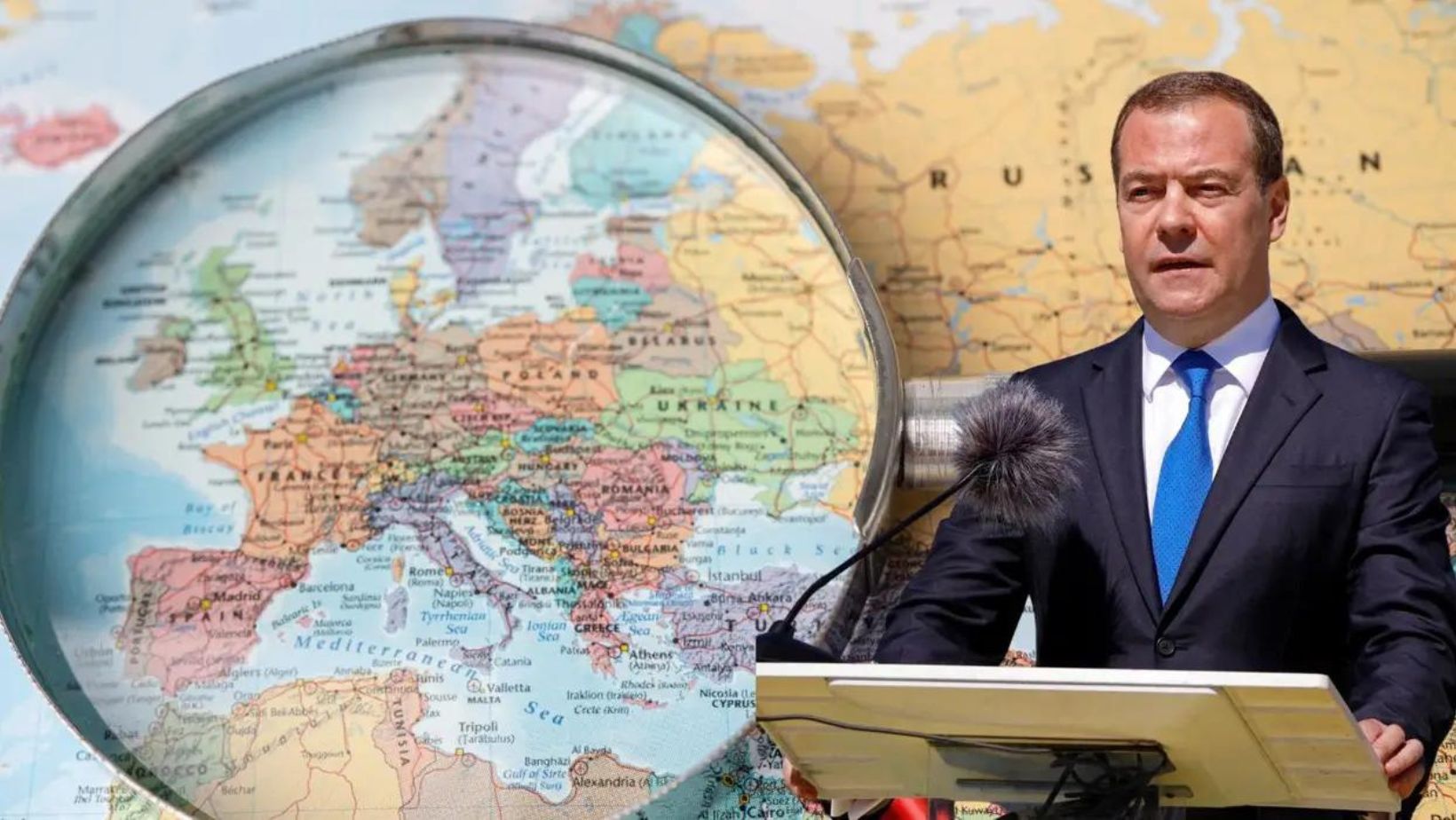
Ukraine’s state-owned military enterprise Ukroboronprom and the Intergovernmental Agency for Defense Cooperation (AMOS) under the Czech Ministry of Defense signed an agreement to establish a joint defense industrial cluster. The initiative would involve joint Ukrainian-Czech production of military vehicles, ammunition of various calibers, development of maintenance hubs, as well as technological cooperation through joint research centers. The plan would pool manufacturing capacities of Ukrainian and Czech defense companies, coupled with broader international financial support. “The Czech Republic will become a reliable industrial support for the Ukrainian defense and the defense industry,” said Tomáš Kopečný, Deputy Minister of Defense of the Czech Republic. As previously reported, Oleksii Reznikov, Minister of Defense of Ukraine, announced that the defense industry of Ukraine has established the production of 122-mm and 152-mm artillery shells. New artillery shells for Soviet-era systems have already been tested. Reznikov also emphasized that Ukraine currently does not plan to produce 155-mm ammunition for modern artillery systems. On November 5, Ukrainian President Volodymyr Zelenskyy thanked the Netherlands, the United States, and the Czech Republic for providing Kyiv with 90 T-72 main battle tanks. xosotin chelseathông tin chuyển nhượngcâu lạc bộ bóng đá arsenalbóng đá atalantabundesligacầu thủ haalandUEFAevertonfutebol ao vivofutemaxmulticanaisonbetbóng đá world cupbóng đá...
The Czech economy is set to grow by 2.4 percent this year, although it is “currently going through a mild recession,” Finance Minister Zbyněk Stanjura (ODS, ECR) said on Wednesday. According to the ministry’s November macroeconomic forecast, the country’s gross domestic product (GDP) could increase by 2.4 percent in 2022, after growing by 4.2 percent year-on-year in the first half of the year. The estimate is 0.2 percent higher when compared to the ministry’s August projection. Growth should be driven by fixed capital investment and increased inventory accumulation, the ministry said. However, the forecast estimates that the economy will go through a slight recession in the second half of the year and early next year. In 2023, it will contract by 0.2 percent, the ministry has predicted. “GDP could be more or less stagnant in 2023. Households will continue to face the impact of high inflation next year, so their real consumption should fall slightly. Government consumption and gross fixed capital formation will continue to be pro-growth, but weaker year-on-year inventory accumulation will slow the economy noticeably,” the ministry said. Czech Finance Minister Zbynek Stanjura described ongoing high inflation driven by unprecedentedly high energy prices as the “main economic problem...
The energy company ČEZ will increase the price of heat from power plants and heating plants by an average of 20 percent next year. The increase in prices is mainly due to higher costs for allowances and production. According to the Heating Association, an organisation promoting the interests of Czech heating companies, the rise in prices will affect almost four million customers in the Czech Republic, which amounts to a little under half the country. ČEZ supplies approximately 7,500 customer points, including over 132,000 households, non-residential premises, and dozens of industrial enterprises, hospitals, schools, and other institutions. The increase is mainly due to rising costs, which include the price of fuel, materials, repairs, and carbon dioxide emission allowances. According to ČEZ, the cost of producing heat or buying it from suppliers accounts for approximately 80 percent of the price, and the total amount depends on the source of the heat and the fuel used to produce it. The increase for next year will average 123 crowns per month. For the owner of a standard 3+1 flat, this will mean an increase of about CZK 256 per month or CZK 3,074 more per year. Almost 9.5 percent of the company’s heat is produced from biomass, 8.5...
The Chamber of Deputies approved a bill which, if approved by the Senate and signed by the president, will impose a 60% windfall tax on the profits of energy companies and banks deemed excessive. The Czech government hopes the windfall tax for energy, oil and mining companies and banks will raise €3.5 billion next year. Revenues will go directly to the national budget and are expected to cover costs related to national caps on gas and electricity prices. “I have proposed a rate of 60% for the years 2023 to 2025,” Finance Minister Zbyněk Stanjura (ODS, ECR) told Czech lawmakers on Friday (4 November). Just a few hours after the Chamber of Deputies approved the text, EPH, one of the country’s largest energy companies, decided to move its subsidiary company EP Commodities, which specialises in trading in energy commodities, abroad. EPH, owned by Czech billionaire Daniel Křetinský, said in a press release that it agrees with the need to use part of the profits generated by energy companies to help people because of the emergency but believes the bill goes too far. Experts warn that the legislation could push other companies out of Czechia as the proposed windfall tax rate...
The Czech Industry Ministry has proposed revenue caps on wholesale power prices ranging from 70 to 230 euros per megawatt hour, depending on the source, a legislative document shows. The ceilings are based on the European Union’s agreement to take revenue from electricity producers exceeding 180 euros per megawatt hour to fund national schemes compensating customers for soaring power prices after Russia’s invasion of Ukraine. Member states can move the general ceiling in both directions depending on the type of power plants and their running and investment costs. The revenue cap is expected to raise more than 117 billion euros across the EU, while the Czech Finance Ministry has estimated it would raise 15 billion crowns for the Czech budget next year. The Czechs opted to take 90% of the excessive revenue rather than the full 100% allowed by the EU regulation, which the industry ministry said was to keep producers motivated to supply at times of high demand. The proposal lowers the general 180 euro/MWh cap, above which the revenue will be taken by the state, to 70 euros for the country’s nuclear power plants, which are operated by state-owned utility CEZ. The ceiling for renewable sources will be...
From January 2023, prices for water and sewage services in Prague will increase significantly. The price increase for this service will be 18.5%. According to the new tariff, the cost of a cubic meter of tap water (including sewage) will go up by 20 CZK to 128.13 CZK, compared to the current price. The company estimates that in 2021, the average Prague resident will spend about 113 liters of water daily. This means that today, each citizen of Prague is paying about 12.22 crowns a day or 4,460 crowns a year for water and sewerage. From the new year, the cost will rise to 14.48 crowns a day or 5,285 crowns a year. That is an increase of 825 crowns per person per year. According to Pražské vodovody a kanalizace (PVK) spokesman Tomáš Mrázek, the company was forced to take this step because of increased costs. Particularly, the price of chemicals, construction work and materials, as well as electricity went up noticeably. It should be noted that PVK is foreign-owned. It is 51% owned by the French firm Veolia and 49% by the PVK. The length of the water supply network it operates is 4,444 km and the sewerage network is...
The eurozone unemployment rate declined slightly in September, a sign of a resilient labor market even as an economic recession looms. The eurozone jobless rate fell to 6.6% in September from a revised reading of 6.7% in August, according to data from the European Union’s statistics agency Eurostat released Thursday. The reading matched economists’ consensus forecast in a poll by The Wall Street Journal. The number of unemployed people fell by 66,000 in September to 10.99 million, the statistics agency said. The youth unemployment rate–among people under 25–rose to 14.6% in September from a revised reading of 14.4% in August, Eurostat said. The eurozone unemployment rate stands at a record-low level. Economists expect joblessness to increase as the region’s economy falls into a recession around year-end, but any rise in unemployment is likely to be modest. Czechia continues to have the lowest unemployment rate in the whole of the European Union, according to newly released data by the European statistics agency Eurostat. The unemployment rate dropped to 2.2 percent in September, compared to 2.4 percent in August. The country has had one of the lowest unemployment rates in the EU for several years now. xosotin chelseathông tin chuyển nhượngcâu lạc...
European households are feeling the pain from higher gas and electricity prices, but some nations are worse off than others. The average price of electricity in the European Union rose sharply year-on-year in the first half of the year, but the Czech Republic saw the biggest increase, amounting to 62 percent, according to data published on Monday by the European statistical office Eurostat. Analysts ascribe the 62 percent rise to speculation on the energy exchange and limited state action. According to ENA analyst and executive director of the Association of Independent Energy Suppliers Jiri Gavor, the statistics for the first half of the year show that unlike other EU countries, the Czech government avoided across-the-board forms of aid. Electricity prices rose steeply despite the fact that Czechia exports electricity and the CEZ Group is one of the largest energy groups in Europe, having produced 55.9 terawatt hours of electricity last year. Behind the Czech Republic was Latvia with an increase of 59 percent and Denmark at 57 percent. Russia’s invasion has significantly influenced energy prices upward, with European households paying €25.30 for 100 kilowatt-hours (kWh) in 2022, while in the same period last year, it was €22 per 100 kWh. Household customers...
According to an analysis by Sodexo Benefity, lunch in a restaurant in September cost CZK 172 on average, CZK 5 more than in August and CZK 15 more than in January. People spent the most money on a lunch meal in a restaurant in Prague, at CZK 195. On the other hand, the cheapest price, on average CZK 153, was paid in establishments in the Olomouc region. “Given that the annual inflation rate reached 18 percent in September, and experts expect it to fall below the 10 percent mark by the middle of next year at the earliest, it is certain that people in Prague will pay an average of CZK 200 for lunch later this year. And with a high degree of probability, Central Bohemians will join them,” said Jan Michelfeit of Sodexo Benefity. At the beginning of this year, the average lunch cost CZK 157. The cheapest in September was in the Olomouc Region (CZK 152.6) and the Vysočina Region (CZK 154), the analysis showed. “Lunch prices have been rising continuously for the twelfth month in a row. They headed upwards in autumn last year, shortly after all covid restrictions were relaxed,” Michelfeit pointed out. The price is...
Andrej Babiš, former Prime Minister and leader of ANO, confirmed yesterday that he will run in the upcoming presidential election in January 2023. Speaking to TV NOVA on Sunday evening Mr. Babiš said the government’s inaction at a time of crisis had led him to accept the challenge. He said he would ask the party leadership to officially support his candidacy on Monday. General Petr Pavel would win the first round of the presidential election according to the latest election model from the Median agency. Pavel is polling at 25.4% support, with Babis at 23.5%. Economist Danuse Nerudova follows in third, with 10%. The poll also indicated that Pavel would win the second run-off round, with 59%. Support for Pavel has been increasing over time, while support for Babis has been stagnating. Respondents were asked which of two candidates they would prefer in the second round, in a variety of scenarios, and Babis would also lose against some other candidates. However, Median stressed that many voters have not yet made their final decision, and so the final result could be different. Senator Pavel Fischer stood at 8% in the poll, union leader Josef Stredula 7.5%, Senator Marek Hilser 5.5%, and...
Czech inflation, while likely to stay high until year-end, is near its peak and should not rise much further before dropping in 2023, central bank board member Karina Kubelkova said in a newspaper interview to be published on Monday. Kubelkova, who joined the board in July, said while a rise in domestic demand would signal the need for a further tightening in monetary policy, this was not materialising. “Latest data show that people are ceasing to spend and consumption is beginning to slow, and is even declining in some market segments,” she told daily Lidove Noviny in her first public remarks since joining the board. The bank halted a previous cycle of rate hikes under new Governor Ales Michl, who also took his post in July, and signalled rate stability for an extended period. The bank had raised its main rate to 7% by June this year, while inflation reached 18% year-on-year in September. Wage growth surprised on the upside in the second quarter, Kubelkova said, though she added she was not as worried as some of her board colleagues about a wage-inflation spiral, as she expected a compromise in wage talks between employers and unions. Kubelkova said the central...
The Czech Republic and Germany are close to reaching an agreement on sharing gas in times of emergency, Czech Industry Minister Jozef Sikela said on Monday, as the countries seek to bolster energy security amid dwindling supplies of Russian gas. “I believe we have made significant progress in this issue, and that we will be able to close our mutual deal soon,” Sikela said in a joint news conference with German Economy Minister Robert Habeck in Prague. Bilateral pacts are a part of European Union plans to cope with any gas supply shock, although deals have been slow to materialise. Sikela said the two countries had defined conditions under which they would start sharing gas as well as what compensation the Czech Republic would pay Germany for use of the mechanism, without disclosing further details. Germany had been a large destination and transit country for Russian gas supplies before Moscow began reducing exports to the European Union in the wake of its invasion of Ukraine and subsequent sanctions from Brussels. The Czech Republic was nearly entirely dependent on Russian supplies via German routes, but it has diversified supplies, like other EU countries. The landlocked country continues to receive nearly all...
Subscribe for our daily news
Don’t have an account? Register
Already have an account? Log In
How Would You Like to Promote Your Business? PR ArticleDisplay bannersVideo productionNewsletter adsJob ListingsInfluencer Marketing
Your Email
We will come back to you within 24 hours with our proporsal