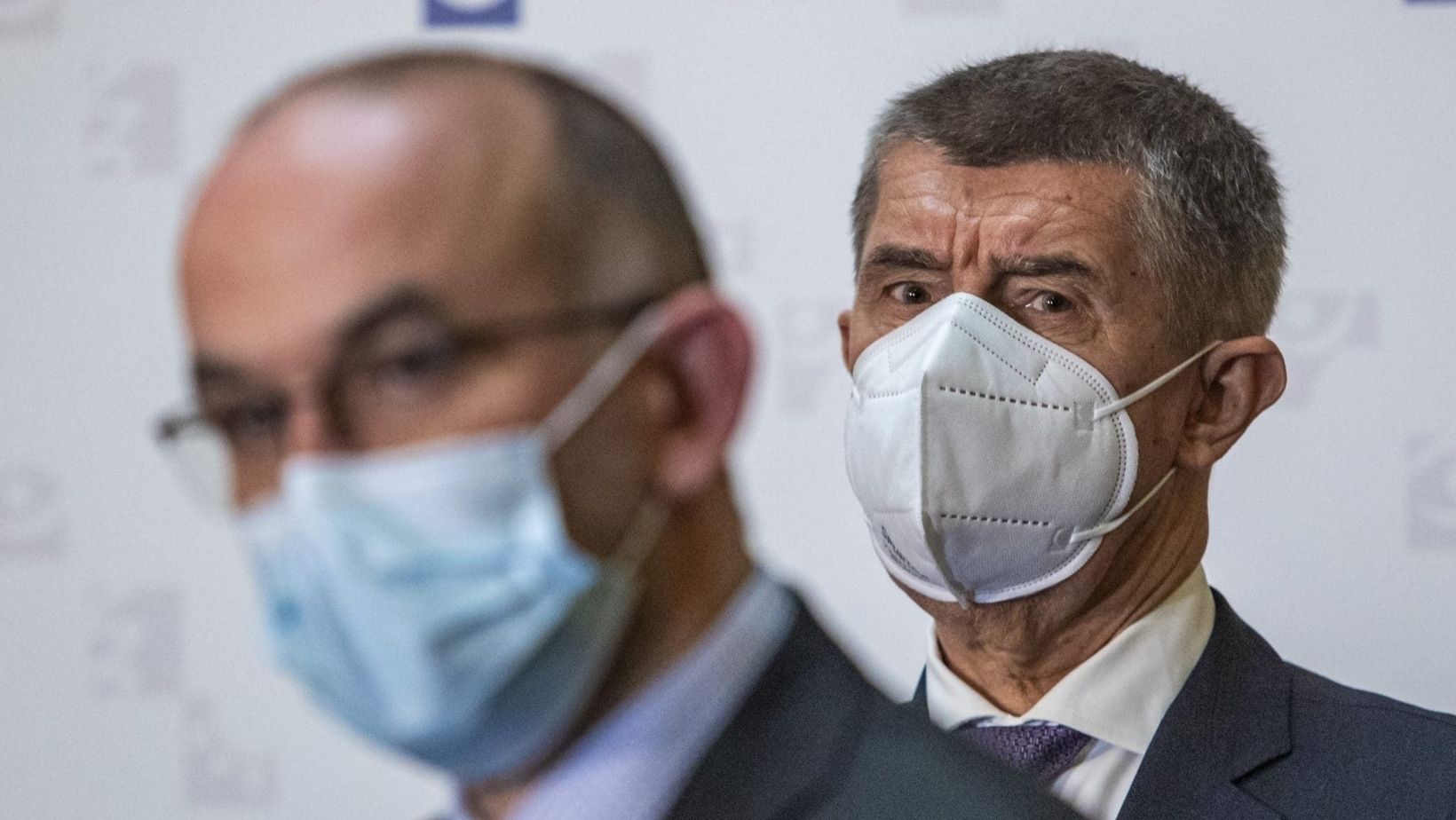
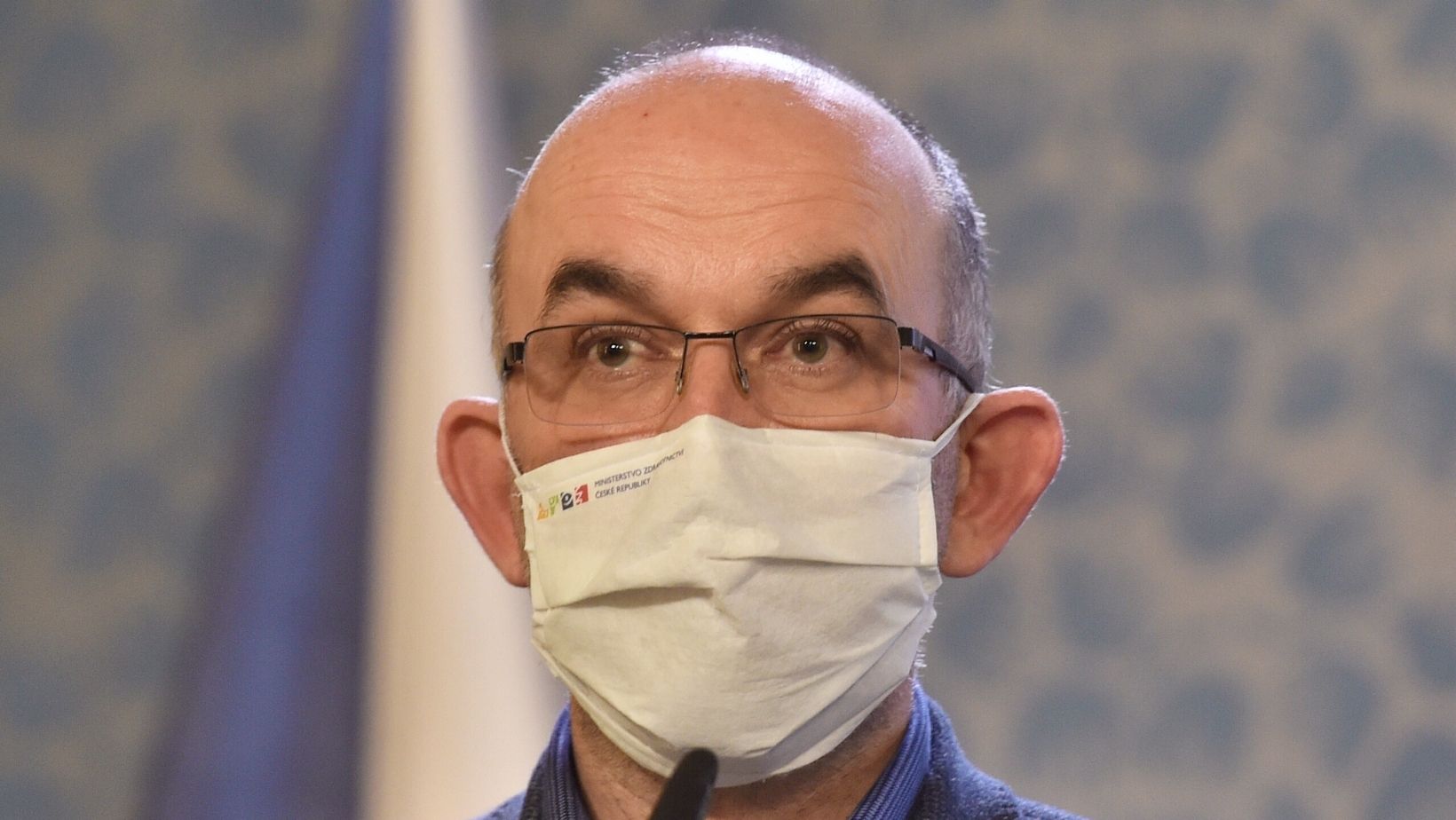
Two ministers are due to end up in government on Wednesday. According to CNN Prima NEWS, Prime Minister Andrej Babiš (ANO) plans to dismiss both the Ministry of Health, Jan Blatný, and the Minister of Education, Robert Plaga. The rumor was confirmed to the editors by two credible sources. Blatný should be replaced by Petr Arenberger, director of the University Hospital in Prague-Vinohrady. Karel Rais, member of the Chamber of Deputies, and rector of the Brno University of Technology from 2006 to 2014, should be the new Minister of Education. The PM has been increasingly critical of Mr. Blatný’s performance in office, particularly over poor communication. A number of leading experts have also left the ministry under Jan Blatný. Blatný has clashed with the Prime Minister and President Milos Zeman on the prospect of using the Russian Sputnik V vaccine without the approval of the European Medicines Agency (EMA). Babiš also had problems with the Minister of Education for a long time, annoyed that during the coronavirus crisis, Plaga was allegedly not supporting teachers and parents. The government’s back-and-forth approach to coronavirus measures has taken a toll on the Czechs. “Many people are fed up and tired of the political...
The consultation group of the Ministry of Education, Youth and Sports, which consists of representatives of schools, opposed Prime Minister Andrej Babiš’s criticism of the plan to partially return children to schools from April 12. According to the group, the plan was discussed, among other things, by the Government Council for Health Risks, which Babiš personally participated in. April 11 is likely to mark the final day of the state of emergency in the Czech Republic. All schools, with the exception of schools for children of paramedics, firefighters, or police officers, have been closed in the country since March 1. From April 12, however, children from the first grade of primary schools will return to offline learning, and preschoolers will go to kindergartens. During the first weeks, primary school pupils should expect rotational learning: they will learn distantly and at schools alternately every week. Prime Minister Babiš told in an interview with Český rozhlas on Friday that he did not comprehend why only a part of children would return to schools and kindergartens. He also criticized the proposal of the expert group under the Ministry of Health to open schools according to the pandemic situation in individual districts. The consultation group of...
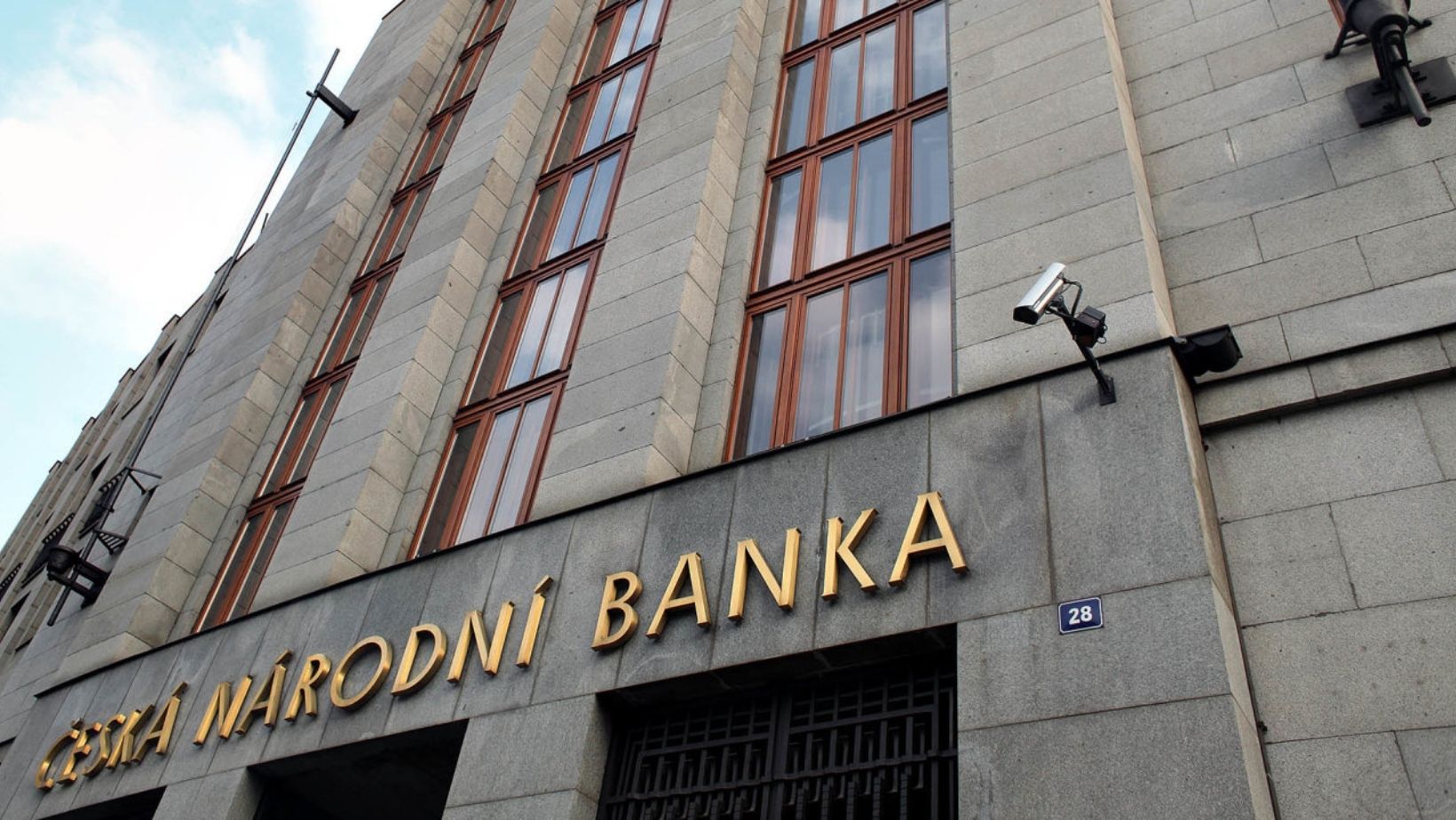
Green mortgages are a concept devised to encourage and reward homeowners for buying and investing in energy-efficient homes. This could be through offering lower interest rates or higher levels of borrowing, the rationale being that if customers have lower bills, they are less likely to default on a mortgage payment. As Hospodářské noviny reports, if the property meets environmental requirements, the applicant could obtain a cheaper loan. This trend of so-called green banking is already evident in industrial halls or warehouses. In the middle of the year, Komerční banka will likely start to offer a green mortgage, while Raiffeisenbank and Moneta Money Bank, are also preparing preferential financing for sustainable housing and green projects. ČSOB already provides green loans. Householders must purchase new homes that are very energy efficient and low emission and they must meet sustainability requirements “above and beyond” current new housing market standards to be able to benefit from the green mortgage. The reasoning behind promoting green mortgages is that owners of energy-efficient homes might be less likely to default on their payments. Since energy efficiency lowers energy use, energy-efficient homes should have lower bills. This might make the homeowners less likely to default on their mortgage payments because...
Jan Blatný, Czech Minister of Health, claimed that the state of emergency, extended by two weeks on Friday, must be accompanied by all the restrictions which had been approved before the vote. Furthermore, Blatný added that the rigid enforcement of these restrictions must linger in order to ensure a smooth transition to normalcy in the country. The minister hopes that this renewal of the state of emergency will be the last one. On the TV show Questions of Václav Moravec premiered on Sunday 28th Blatný asserted that without diligent compliance with all the precautions currently in force, the government would have to act resolutely. “The moment we succumb to some false illusion or a feeling that the measures do not have to be observed, drastic changes may happen that no one wants,” said the minister. “All other steps assume that at least until then [April 12th] all the precautions remain in force,” he added. Blatný warned that otherwise, the epidemic situation could start to deteriorate again. The precautions mentioned by Blatný included a restriction on free movement which was reintroduced at the end of January. Due to it, neither citizens nor foreigners can travel between districts without a compelling reason....
The Czech parliament on Friday extended a state of emergency giving the government extra powers to fight the COVID-19 epidemic until April 11. The cabinet hopes that will be enough to reduce infections to a more sustainable level and start slowly reopening schools and ease curbs on movement. Over the past week, the daily cases dropped to 7,600 on average from 12,200 in early March, when the government introduced a harsher lockdown and implemented widespread testing at workplaces. Hospitalisations stood at 7,965 as of Friday morning, down from the peak of 9,462 recorded on March 15. The Health Ministry has said that wider easing of restrictions should come only when hospitalisations drop to around 3,000. Prime Minister Andrej Babis said on Friday that with the number of new cases and other figures slowing down, some easing, like pupils’ return to schools, might be possible when the current extension of the emergency state expires. “I firmly hope that this will be the last lockdown,” Babis said in the debate before the vote. “After Easter, based on the situation, which I am convinced is going in the right direction, we will announce some dates for reopening of schools and other measures,” he...
Based on the information from the Czech Statistical Bureau, confidence in the Czech Republic’s economy grew by 2,4 points from 87.4 in January 2021 to 89.7 in February. While a higher confidence level is displayed mainly among entrepreneurs, consumer’s confidence decreased. However, the economy is yet to recover its level of confidence from February 2020. Entrepreneurs’ confidence in the Czech economy grew to 90.6 points in February, increasing across all industries except trade. Notably, the confidence value for entrepreneurs in manufacturing rose to 97.1 points, for entrepreneurs in construction to 114.6 points, for entrepreneurs in services to 81.9 points. On the other hand, the confidence level among consumers decreased by 3.5 to 85 points. Consumers fear the deterioration of the economy and their financial situation. The number of people expecting the growth of unemployment and rising consumer prices in the next 12 months increased. The compounded confidence indicator for the whole of the Czech economy had been stable between 2014 and the beginning of last year, hovering around 100 points. The COVID-19 pandemic caused the indicator to drop below 80 points in April – a value last seen during the economic crisis in 2009.
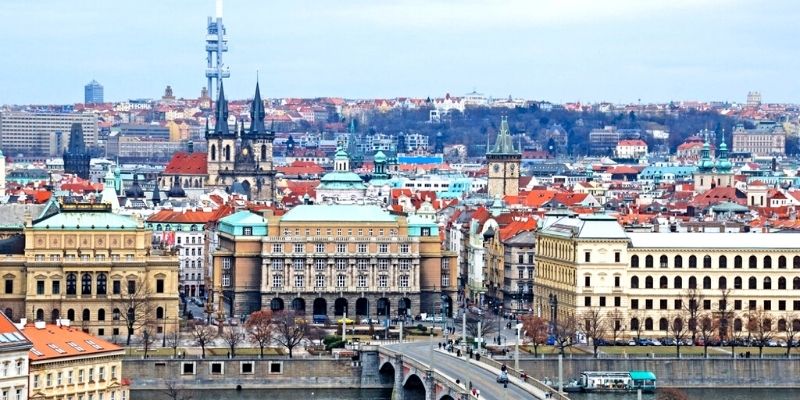
In the ranking of world financial centers, Prague placed behind Warsaw and Bratislava, as it fell ten ranks to 76th place. New York, London, and Shanghai remain in the lead, according to a study published by the Global Financial Centers Index (GFCI) based on research from the China Development Institute (CDI) in collaboration with the London-based consulting company Z / Yen Partners. CDI and Z / Yen Partners surveyed 126 financial centers and eventually ranked 114 in the 29th edition of the index. The placement is determined by 143 criteria provided by third parties, including the World Bank, the Economist Intelligence Unit (EIU), the Organization for Economic Co-operation and Development (OECD), and the United Nations. Of the Central European capitals, Warsaw did the best this year thanks to its 61st-place ranking, but it also lost four places compared to the last edition. Bratislava came in 66th place but advanced 21 places higher than last year. Budapest was the worst in 85th place, although it also jumped 16 places ahead. Regarding European cities, in addition to London, Frankfurt am Main and Zurich also made it to the ten most competitive financial centers. They placed ninth and tenth.
Small and medium-sized companies can now receive free professional support to help them recover from the effects of the COVID crisis DoToho! is a new Czech platform aimed at providing small and medium-sized businesses in Prague with support from experienced mentors and experts. The program is free of charge and its ultimate goal is to help restart the Czech economy after COVID. According to a press release by the City of Prague, Mayor Zdeněk Hřib voiced his support for the program: “When I walk through the city centre, I am offered a sad view of closed places without customers. The loss of income also had a significant effect on the construction sector. I believe that selfless professional help for entrepreneurs within the DoToho initiative! will help them to cope with the situation and start their business again.” How does it work? Small and medium-sized businesses have been identified as those which have a turnover of 3-300 million CZK and at least 3 employees. These preferably Prague-based companies are now given the chance to sign up to the DoToho! program to receive professional advice, support, and training. Each company will be assigned a mentor who will provide them with the help they need two hours a week for two months. The mentors...
The European Commission said on Tuesday it allocated a EUR 1 billion (CZK 26 billion) loan to Czechia under the Support to mitigate Unemployment Risks in an Emergency (SURE) instrument to help the country in its job preservation efforts. The financing will help the country cover unexpected costs to preserve employment, such as rob retention programs that the country has introduced as a response to the coronavirus pandemic, the Commission said in a statement. The loan to Czechia is part of a financial package worth 9 billion euro that also includes loans to six other EU member states – Croatia, Spain, Italy, Lithuania, Malta, and Slovakia. This financial support is specifically targeted to assist member states to address sudden increases in public expenditure in response to the Covid-19 outbreak. This was designed to preserve employment, including self-employment and other related measures. It is a 15-year Loan. Specifically, the SURE instrument acts as a second line of defense, supporting short-time work schemes and similar measures, to help the Member States protect jobs and thus employees and self-employed against the risk of unemployment and loss of income. Loans are underpinned by a system of voluntary guarantees from Member States. Each Member State’s...
Czech Prime Minister Andrej Babiš’ governing party ANO has faced its first defeat in opinion polls since the last general elections held in 2017. According to a Kantar survey published by Czech Television, the Czech Pirate Party (Greens/EFA) took the lead with 22%, while ANO got 20.5%, with Pirates outcome set to be even higher, at 34%, when paired with their ally, the Movement of Mayors and Independents (EPP). The newly formed centre-right alliance reached 17.5%. The survey was conducted between the end of February and the start of March, when Babiš’ government imposed tighter COVID-19 restrictions, including the complete closure of schools and a ban on movement between Czech districts. The popularity of the Czech PM and his party has been dwindling since the beginning of the outbreak in March 2020. Speaking to Deník N, Kantar analyst Pavel Ranocha said the ANO party is losing voters to the Movement of Mayors and Independents, formed by municipalities’ leaders, who already had success in the October 2019 general elections.
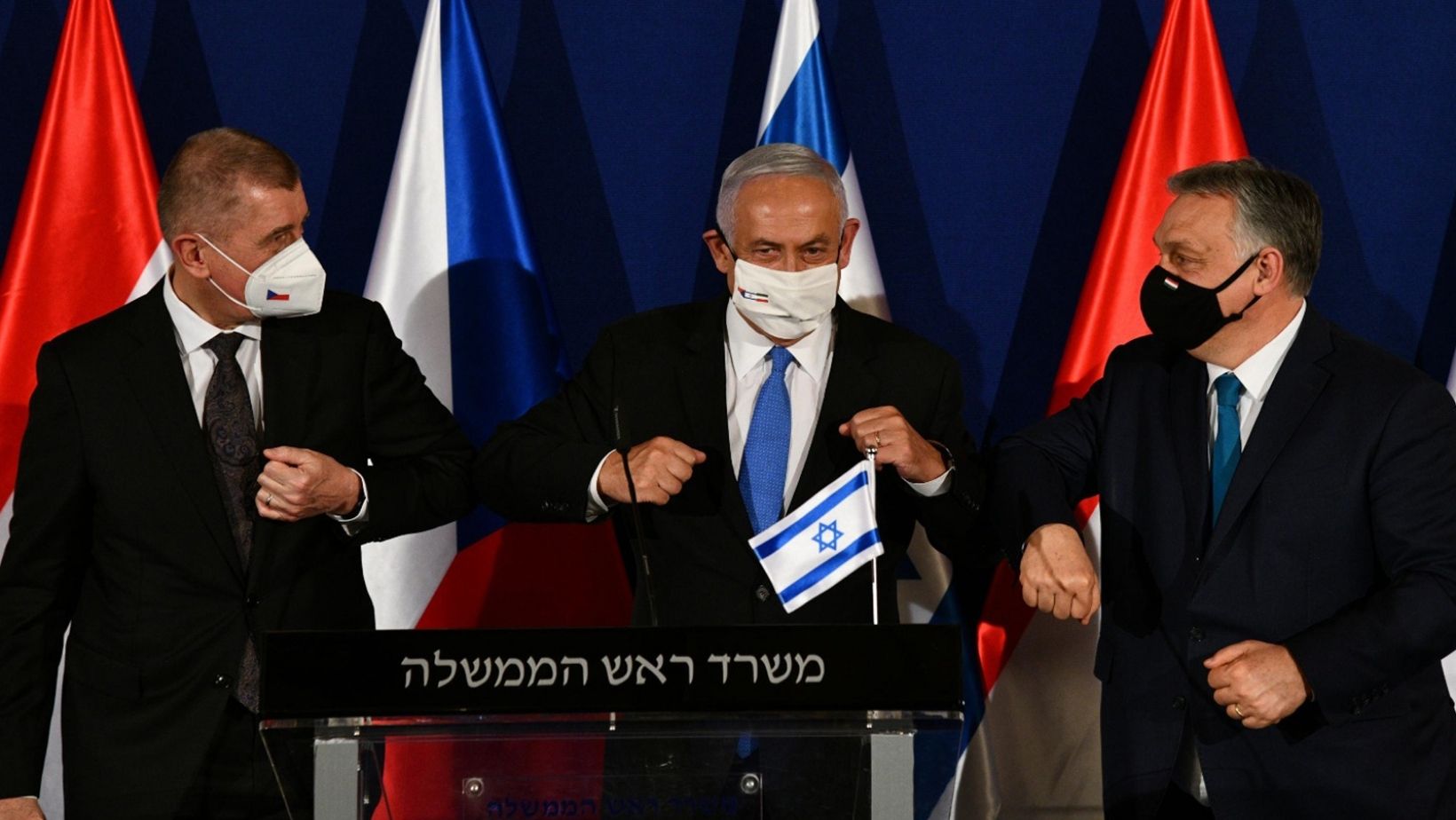
The Palestinian Authority and the Arab League on Saturday (13 March) condemned the Czech Republic’s opening of a diplomatic office in Jerusalem as a violation of international law. Prague opened a Jerusalem branch of its Israel embassy, which is located in Tel Aviv, on Thursday. The inauguration was attended by Czech Prime Minister Andrej Babis, two weeks after Israel sent 5,000 Moderna COVID-19 vaccine doses to the Czech Republic under a “vaccine diplomacy” program that later came under legal scrutiny and was frozen. The Palestinian Foreign Ministry called Prague’s move “a blatant attack on the Palestinian people and their rights, a flagrant violation of international law,” and said it would harm peace prospects. In Cairo, Arab League Secretary-General Ahmed Aboul Gheit said in a statement: “The legal status of Jerusalem will be affected by the decision of one country or another to open representative offices. East Jerusalem is an occupied land under the International law.” Jerusalem’s status is one of the thorniest issues in the decades-old Israeli-Palestinian conflict. Israel annexed the eastern part of the city in a move not recognized internationally, and regards all of Jerusalem as its capital. Underlining that the Jerusalem office was not an embassy, the...
The company is investing nearly CZK 4.5 billion in a new plant in the Plzeň region. The multinational Ball Corporation, the largest manufacturer of fully recyclable beverage containers in the Czech Republic, is expanding its activities here. The company is building its second production facility in the Plzeň region and is also planning to construct a development centre. It is investing nearly CZK 4.5 billion in the new plant and equipping it with the latest automated technologies. In addition to that, it is offering high-skilled engineering jobs. The company plans to put the plant into operation in autumn 2022. “We plan to install sophisticated automated equipment at the facility, leveraging the latest modern technologies to minimize environmental impacts, and strengthened by our recent commitment to 100% renewable energy to cover our operations in Europe,” said Gerhard Mayer, vice-president of Ball Beverage Packaging EMEA. The investment in the amount of nearly CZK 4.5 billion is part of the company’s broader strategy to increase investments throughout EMEA (Europe, the Middle East, and Africa). At the same time, the company has begun assembling a technology team, which will further develop and improve its automated and semi-automated production lines. “With CzechInvest’s assistance, we are...
Don’t have an account? Register
Already have an account? Log In
How Would You Like to Promote Your Business? PR ArticleDisplay bannersVideo productionNewsletter adsJob ListingsInfluencer Marketing
Your Email
We will come back to you within 24 hours with our proporsal