Worse access to homeownership, a shortage of apartments for rent. But also, an economic cooldown, frozen growth of salaries, and inflation. Czech people who don’t live in a home they own will have to prepare for a significant increase in housing costs. This might reach such a degree that Prague could follow the “American rent” scenario – rent which is so high that a family spends most of its income on it. The turning point might arrive mainly at the moment when citizens of Prague stop considering renting as a temporary solution. Even though in recent weeks it might have seemed that prices of rental apartments could be going down, the opposite is more likely. That’s because the current decrease is related to a specific type of real estate and represents a local, and most likely temporary, anomaly. And it won’t depend only on the speed with which mass tourism returns to Prague. This is because the highest number of people to date is looking for rental apartments and the demand is higher than the number of newly vacated apartments; logically, this leads to an increase in price, especially in big cities. Bezrealitky, a portal through which a vast majority...
Czech people are learning to buy even their basic consumer goods online. E-commerce won’t be returning to its pre-pandemic tracks The ongoing pandemic is motivating both retailers as well as consumers to take advantage of the capacities of e-commerce. The share of e-commerce in the Czech GDP will increase to as much as 2.7%. Companies no longer expect the situation to return to its pre-coronavirus state; shopping online will become the standard even for those types of products that had been bought exclusively in brick-and-mortar stores. Closed shops, restaurants not operating. At first, losing the option to shop in brick-and-mortar stores seemed to represent a significant obstacle for many customers. Fortunately for them, and for many companies as well, the alternative to traditional shopping already existed – and therefore shopping and transactions shifted online on a mass scale. “From the customer’s point of view, this is a completely natural development. Customers have learned to easily procure those commodities which they used to purchase in retail store online. This confirms the fact that e-commerce is fully capable of replacing classic retail services,” says Michal Šejba, the regional manager of the Exactly company. According to Shoptet.cz data, e-commerce related to food, delivery,...
A divisive new monument to Soviet leader Lenin was unveiled in Germany on Saturday.
Czech Republic continues to remain ranked 33rd on an annual World Competitiveness Index compiled by Institute for Management Development (IMD), the international business school said on Tuesday. Singapore has retained its top position on the 63-nation list. Denmark has moved up to the second position (from 8th last year), Switzerland has gained one place to rank 3rd, the Netherlands has retained its 4th place and Hong Kong has slipped to fifth place (from 2nd in 2019). Arturo Bris, Director of the IMD World Competitiveness Center and Professor of Finance, says, “The benefit of small economies in the current crisis comes from their ability to fight a pandemic and from their economic competitiveness. In part these may be fed by the fact it is easy to find social consensus.” Looking for a job in Prague? Visit our new job section! Overall, the latest rankings show a decline for Asia’s key economies, with the region’s biggest economy, China, dropping from last year’s 14th place to 20th this year. Malaysia fell five places to 27th, Thailand fell four places to 29th, Japan fell four places to 34th, and Indonesia fell eight places to 40th. For China, whose economic growth rate fell to a...
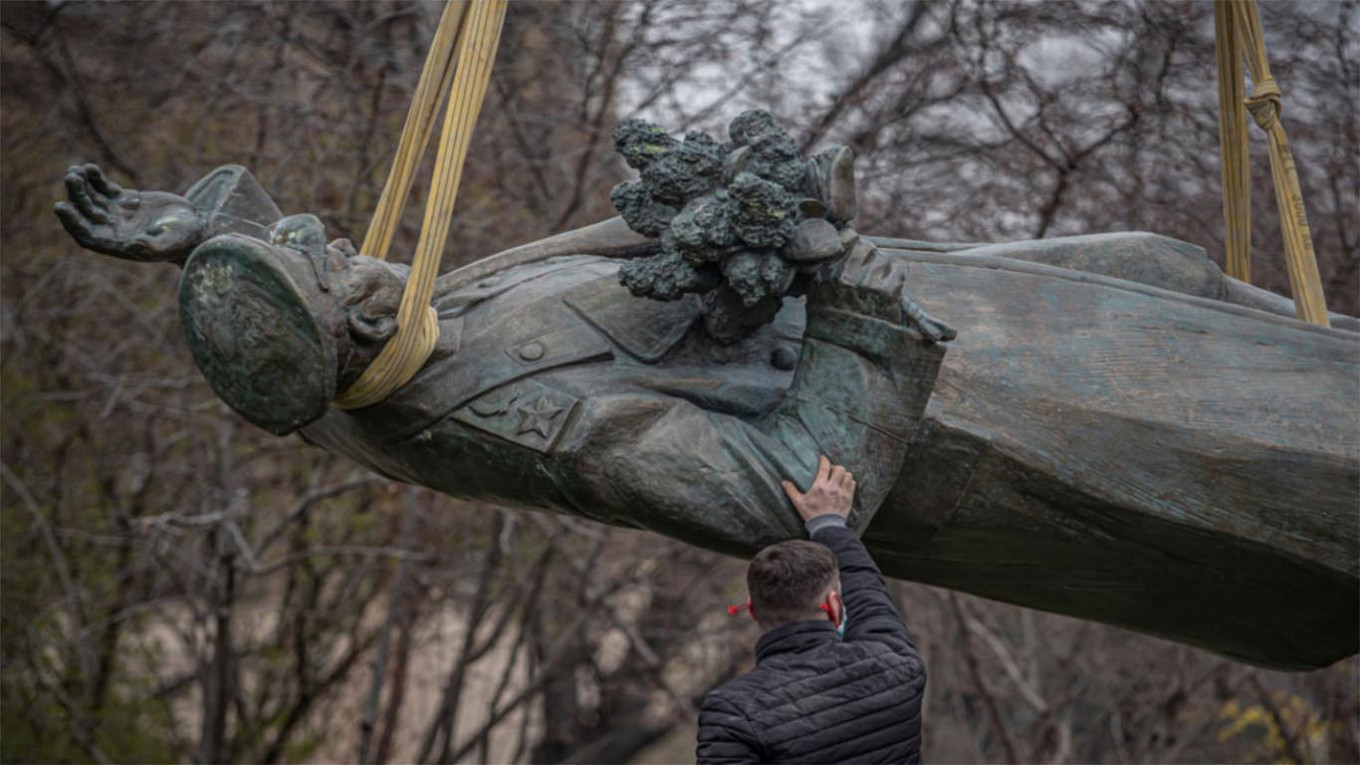
Russia on Monday declared two Czech diplomats persona non grata in a tit-for-tat move to expulsion of Russian diplomats from Czechia. Czech ambassador Vitezslav Pivonka was summoned to the Russian Foreign Ministry to be notified of reciprocal measures, the ministry said in a statement on its official website. The Czech diplomats must leave Russia with their families within June 17, it added. The ministry said the ambassador was told that Moscow considers the Czech government’s step as “provocative” and “taken without any grounds”. Earlier this month, the Czech Republic expelled two employees of the Russian Center for Science and Culture in Prague, who have diplomatic status, claiming that “they were trying to harm the relations of the two countries.” Looking for a job in Prague? Visit our new job section! The Czech move has been associated with recent media reports alleging that a Russian spy had been sent to poison Czech politicians, who ordered to demolish a monument to World War II hero, Soviet Marshal Ivan Konev. Russian Foreign Minister Sergey Lavrov called the allegations of poisoning “absurd”, asking why Czech intelligence authorities, mentioned as a source in the reports, would allow a spy to enter the country with poison....
The current pandemic motivates retailers and consumers to use the capacities of e-commerce. Its share in the Czech GDP will increase to 2.7%. Companies no longer expect a return to the situation before coronavirus, shopping online will become standard even for goods that were bought exclusively in brick-and-mortar stores. Closed shops, non-operating restaurants. At first, the loss of the opportunity to shop in brick-and-mortar stores seemed to be a significant obstacle for many customers. Fortunately for them, many companies already had an alternative to traditional shopping – and so mass purchases and transactions moved online. “From the customer’s point of view, this is a completely natural development. Customers have learned to easily find online the Commodities they used to shop for in retail stores. The fact that e-commerce is fully capable of replacing classic retail services is thus confirmed, “says Michal Šejba, regional manager of Exactly. According to Shoptet.cz data, e-commerce in the area of food, distribution and other delivery services is growing at an unusual rate, by up to 420%. Internet sales during quarantine are also used by many others. Across industries, the number of newly established e-shops has doubled in recent weeks. “Also for retailers themselves, online business...
Two Russian diplomats are being expelled by the Czech government amid a hoax poison plot against three Prague politicians. The government in Prague says infighting between Russian embassy staff resulted in one of them sending details of the fictitious plot to Czech intelligence. In response, the three mayors were initially given police protection. Russia condemned the expulsions as an “unfriendly act”. The expulsion was announced on Friday by Czech Prime Minister Andrej Babis, who described the move as “appropriate and adequate”. “We are interested in having good relations with all countries, but we are a sovereign state and such actions are unacceptable on our territory.” He gave no more details about the new information. “The government has offered an explanation, but we still don’t see the full picture,” said Ondřej Kundra of the Czech weekly Respekt, the journalist who broke the original story about the plot. “It’s hard to imagine the government would expel two Russian diplomats just because they said nasty things about each other.” Was there a plot? Details of an apparent plot first emerged in Czech weekly, Respekt, which reported that a Russian agent had travelled to Prague with a suitcase containing the highly potent toxin, ricin....
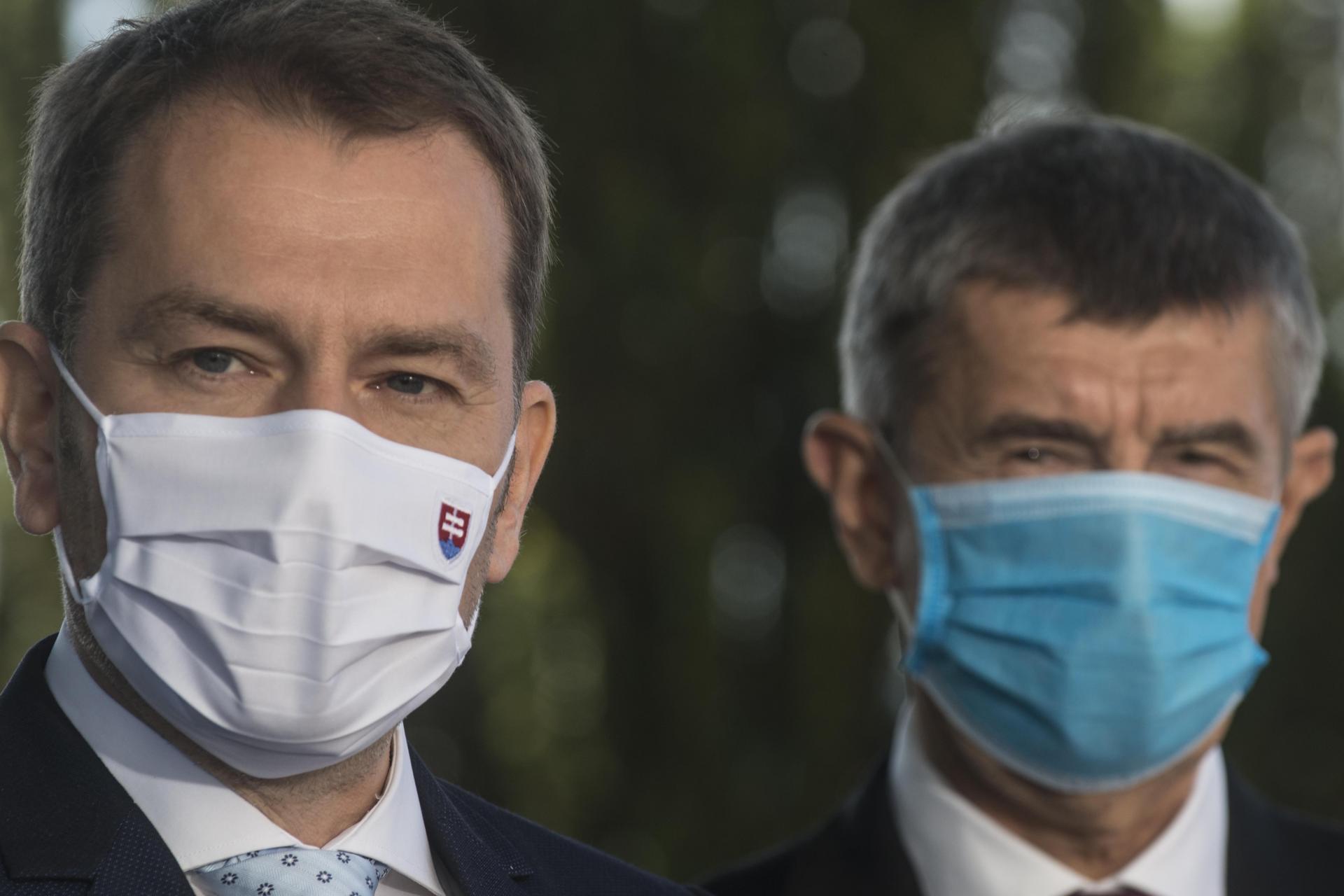
Czech Prime Minister Andrej Babis on Wednesday slammed the EU’s massive 750-billion-euro post-virus recovery fund, arguing that it favoured members prone to racking up excessive debt. “The recovery fund criteria are tailor-made for countries which have not been as responsible in terms of debt, budget discipline or unemployment,” Babis told reporters after talks with his Slovak counterpart Igor Matovic in Prague. The EU introduced its “Next Generation” recovery fund last week, but the bloc’s biggest-ever stimulus package immediately triggered criticism from member states inclined to tight spending. In an article in Wednesday’s edition of the broadsheet daily DNES Babis criticised the volume of the fund, the criteria for payments and the fact that it will provide members with loans. DNES is owned by his sprawling Agrofert food, chemicals and media holding. The business mogul-turned-politician also said the EU’s budget for 2021-2027 should not change its parameters because of the fund. Central Europe’s post-communist countries including the Czech Republic, Hungary, Poland and Slovakia are due to discuss the EU plan on June 11, ahead of a European Council summit on June 19. Matovic said he expected the meeting, to be held in the southeastern Czech town of Lednice, to offer a...
In today’s overwhelmingly data-driven environment, we get tons of data to look at every day – from the COVID-19 death count to the numbers about businesses that never returned to the market. But for those businesses willing to navigate through the pandemic, there is a different sort of data to look at. Consumer behavior is, probably, one of the biggest areas (except for aviation business, maybe) that’s seeing the highest turbulence and shifts, and that dramatically impacts ecommerce and consumer demand. With the Czech Republic being one of the first-responders to the coronavirus outbreak in Europe, it’s probably one of the most interesting countries to look at in terms of shifts in people’s consumer behavior. And, thus, we can spot early on the changing e-commerce trends. So, after looking at worldwide ecommerce and consumer trends, here at SEMrush, we’ve compiled some CZ-specific data to pinpoint the changes in consumer behavior. These insights are designed to help businesses in their ecommerce practices to best meet the shifted consumer demand. So, be sure to pay attention to! Ecommerce Market & COVID-19 Impact in the Czech Republic With 52% of consumers taking social distancing seriously, it’s not surprising to see more people shopping...
The economic situation of Czech companies is deteriorating as an impact of the coronavirus (COVID-19) outbreak, with 70% reporting a drop in orders in May and June, twice as many as in April shows a survey carried out by the Confederation of Industry and Transport of the Czech Republic among 242 companies in May. Most of them would appreciate the government Antivirus employment support programme to be extended until the end of August, while they say tax relief packages have not yet had any positive impact. “The nature of the coronavirus crisis is unprecedented. Many companies lost a large part or all of their sales overnight and had to increase expenses on protective equipment, hygiene measures, logistics and higher stocks. Companies suddenly lost some of their employees who stayed at home with their children or could not travel from the neighbouring countries,” commented the president of the confederation Jaroslav Hanak. “[The companies] are losing contracts and a source of future income. In such a situation, it is essential that the state gives companies the certainty that support from approved programmes will continue to come in. This will give them space for a faster recovery and return to normal,” he added. The...
A representative of the Smartwings Group, which owns Czech Airlines, says its collapse could threaten up to 60,000 jobs.
Ambassador of the Republic of Turkey to the Czech Republic Egemen Bağış released a statement following Armenian Ambassador’s comments published on Prague Morning on 25 May 2020. “As Ambassador’s comments contain serious accusations against Turkey, we kindly request you to publish below statement in Prague Morning for the sake of fairness and objectivity,” says Mr. Bağış. “The Embassy of the Republic of Turkey strongly condemns the Armenian Ambassador’s statement published on Prague Morning on 25 May 2020. The United Nations deplores the hate speech as well as inciting hatred against individuals or groups based on race or ethnic origin, religion, disability, gender, and age. What was done by the Armenian Ambassador is a publicly announced incitement to hostility. These efforts aiming at spreading prejudice and baseless fear among the people against certain people, be it Turks and other nation, are prohibited by international rules, norms, and standards. The comments amount to a flagrant violation of our common responsibility to promote tolerant societies and reveal a clear sample of online hate speech. We strongly denounce the efforts to try to smear Turkish people with unfounded claims and 18th-century stories,” says the Ambassador. “Turkey strongly rejects the accusations such as those of...
Don’t have an account? Register
Already have an account? Log In
How Would You Like to Promote Your Business? PR ArticleDisplay bannersVideo productionNewsletter adsJob ListingsInfluencer Marketing
Your Email
We will come back to you within 24 hours with our proporsal