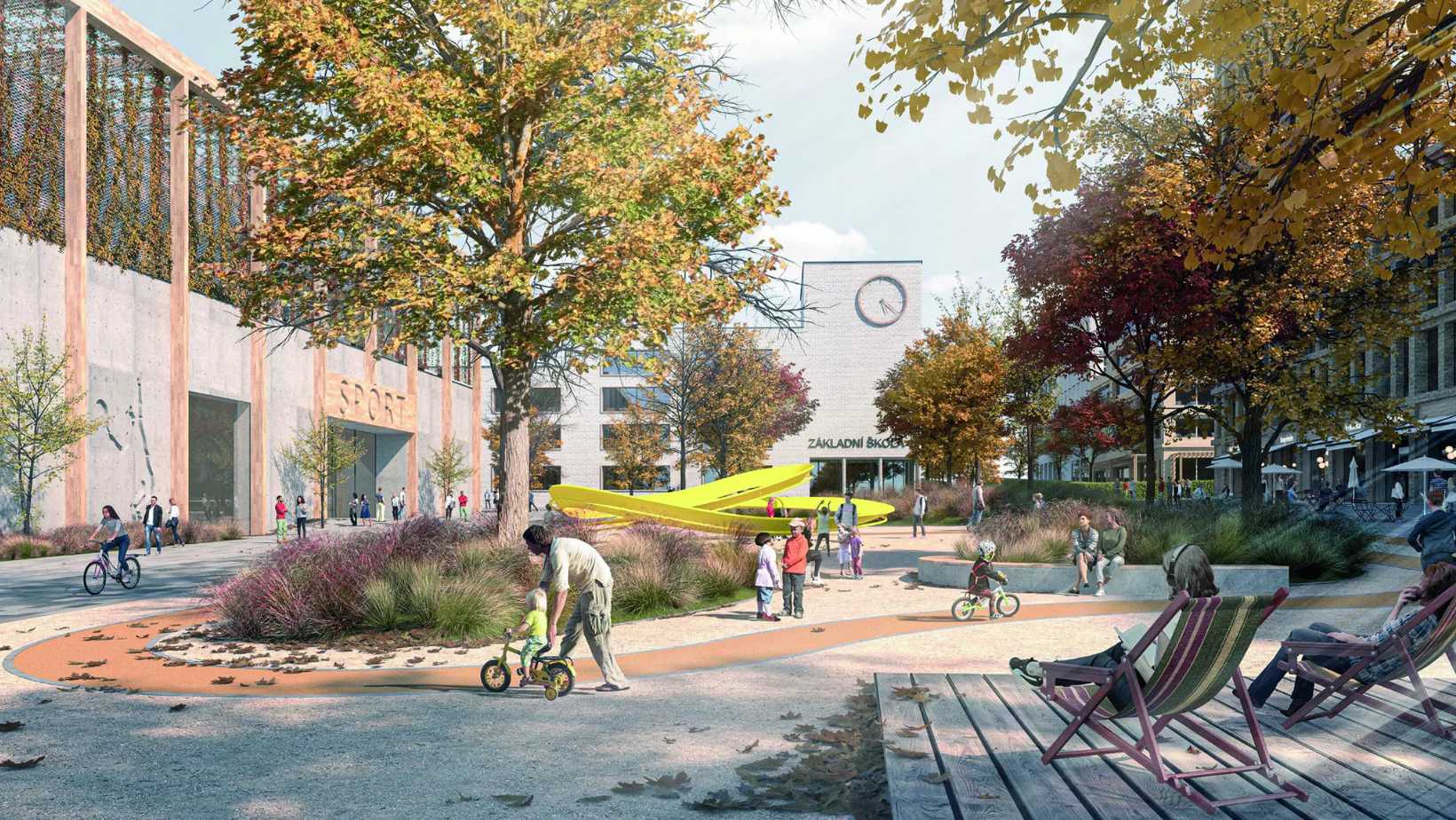
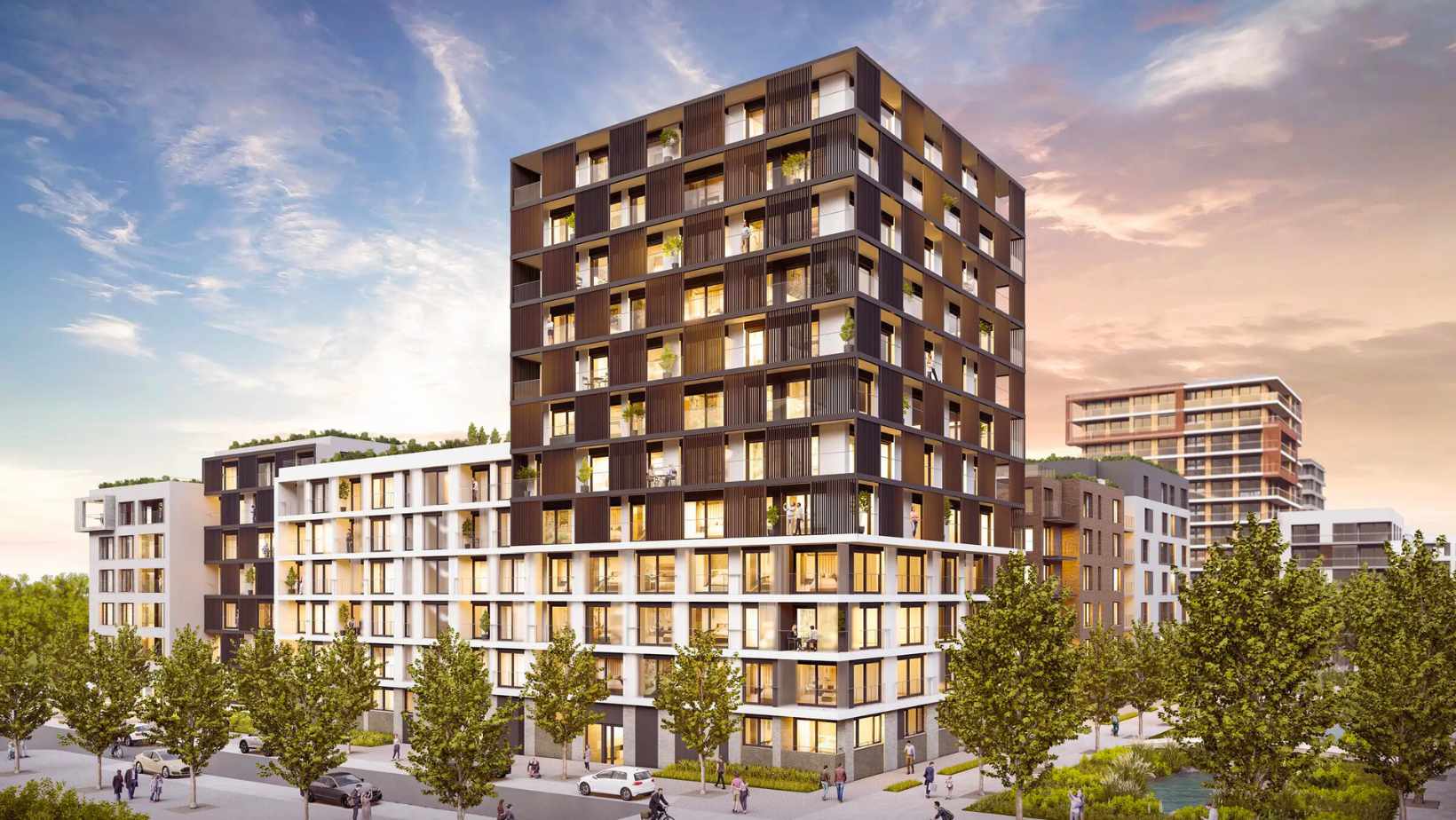
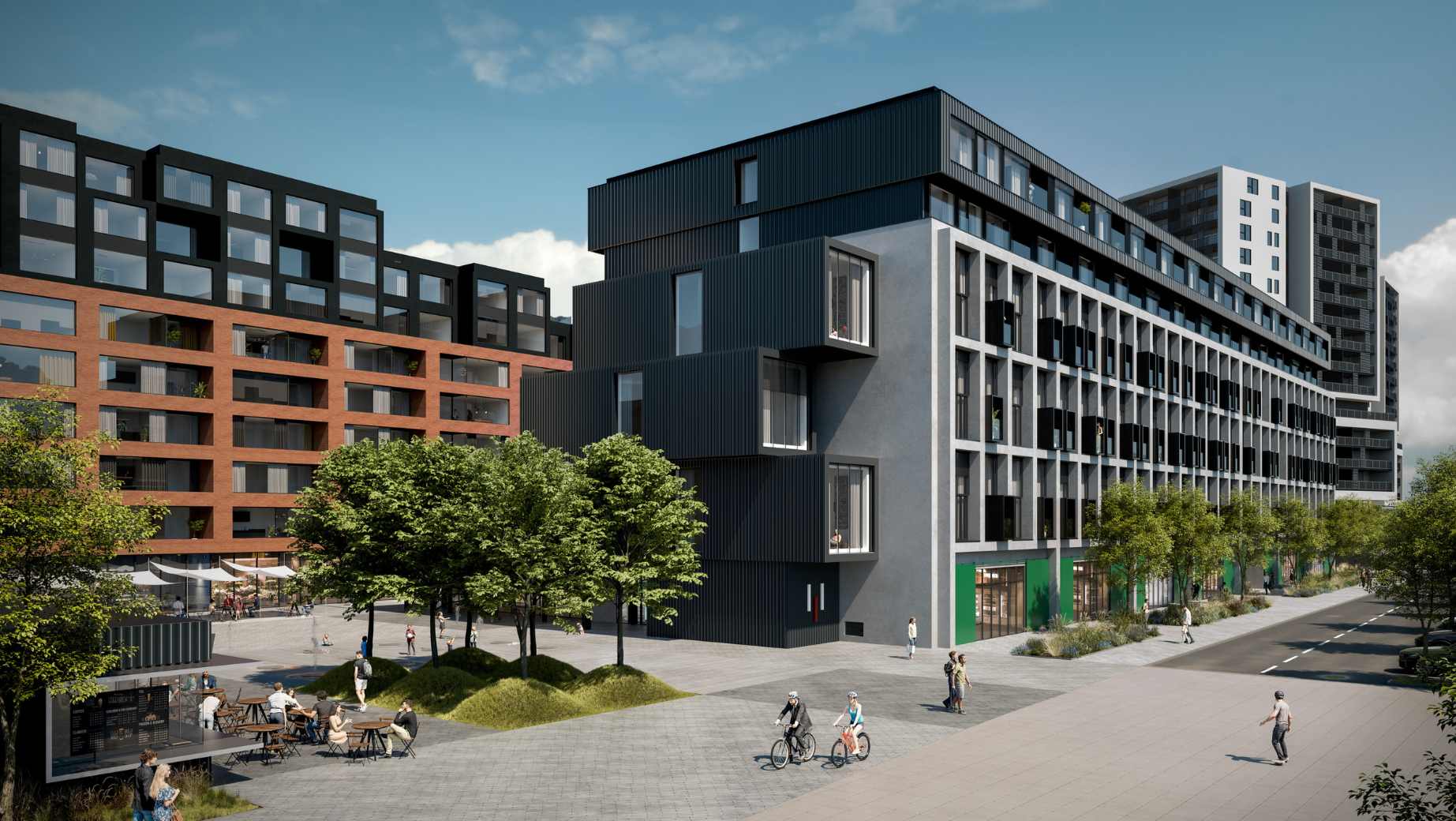
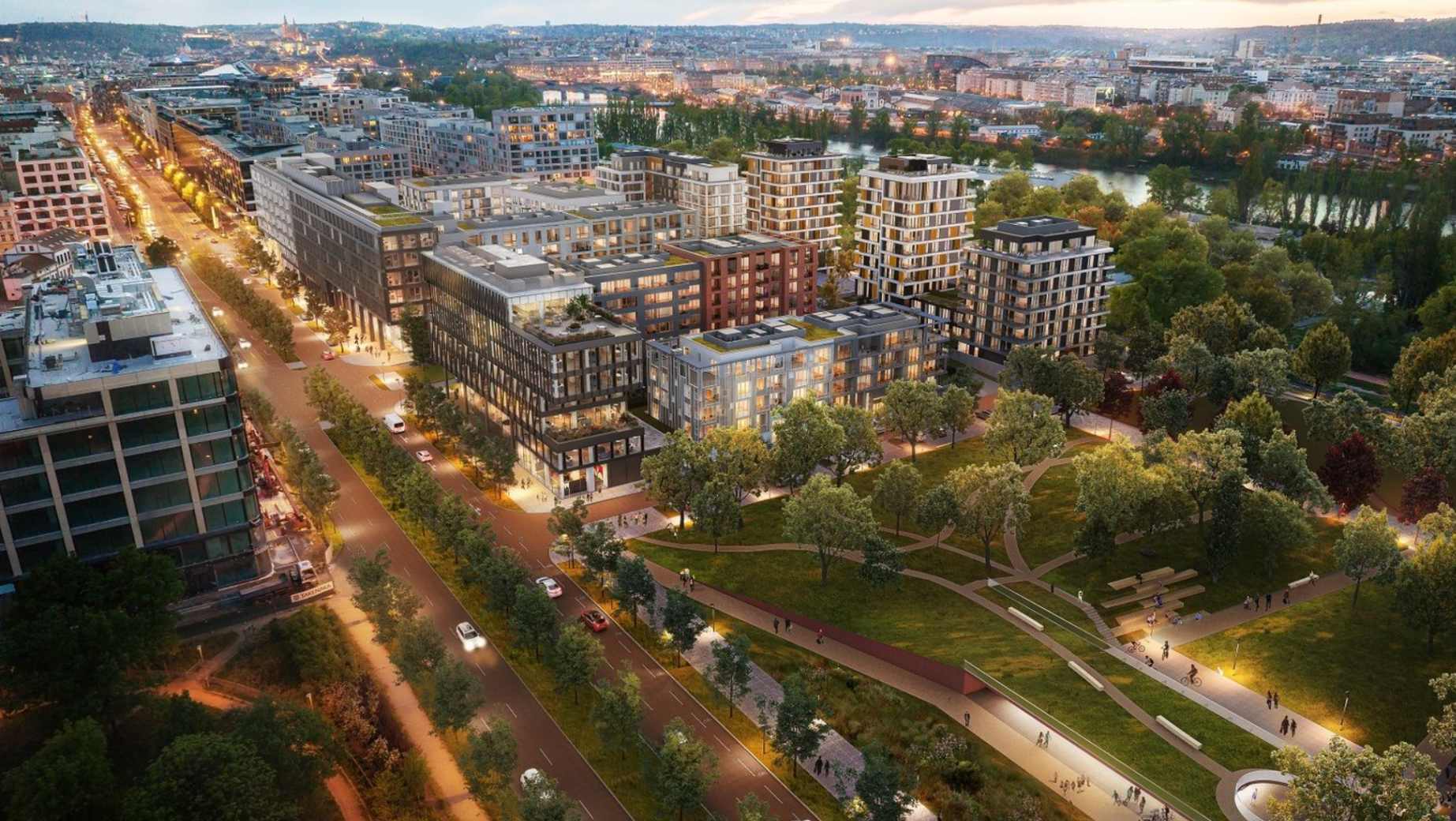
The streets and parks of Rohan City, a new district taking shape along Rohanské nábřeží in Prague’s Karlín, will be named after renowned philosophers from both Czechia and abroad. A new square, set to become the central hub of the area, will bear the name of French thinker Simone Weil, one of the most influential philosophers of the 20th century. A Tribute to Great Thinkers The Sekyra Group, the developer behind Rohan City, is leading one of Prague’s most ambitious urban transformation projects. The company’s founder, Luďek Sekyra, envisioned naming the new streets to honor prominent philosophers who have shaped moral and political thought. “I am pleased that our proposal to commemorate key Czech and Western philosophers has been accepted. These individuals have played a crucial role in shaping our civilization, influencing discussions on values, freedom, morality, and justice, both through their work and personal convictions,” said Luďek Sekyra. Famous Names in Karlín The streets parallel to Rohanský nábřeží, which borders the Rohan City project, will be named after philosophers J. L. Fischer, Jan Sokol, Immanuel Kant, Jacques Derrida, John Stuart Mill, and Roger Scruton, legendary supporters of domestic dissent. The streets perpendicular to them will commemorate Emmanuel Levinas, Radim...
As housing costs in Prague continue to rise, policymakers are looking abroad for solutions. Poland’s approach to residential development has emerged as a potential model, with significantly shorter approval processes and policies that encourage large-scale construction. In Warsaw, developers can secure building permits in as little as six weeks, whereas in Prague, the process can take up to 13 years. Poland’s streamlined regulations and proactive government involvement have led to a substantial increase in housing supply, creating a competitive market that has kept property prices more affordable. A key factor behind this success is the Lex Developer Law, which allows developers to build in restricted areas in exchange for investing in public infrastructure such as schools, nurseries, and transportation networks. This policy has accelerated residential expansion while ensuring that new developments contribute to community needs. The results are evident in Warsaw, where the housing market is thriving. Developers like the Czech Trigema led by Radek Menšík have praised Poland’s system for its efficiency and incentives. According to project director Fialková, competition among developers is so intense that companies must actively attract buyers, keeping housing prices in check. In contrast, the Czech real estate market remains plagued by bureaucratic delays and...
A major transformation is coming to Florenc, one of Prague’s key transportation hubs. The project has attracted unprecedented international interest, with 157 architectural studios from 33 countries competing to design four new residential and commercial blocks. The winners are expected to be announced this autumn. The project focuses on a strategic site west of the Florenc bus station, a key transit point in Prague. The area is bordered by a major roadway, a railway line to the south, and Na Florenci Street to the west. The current competition builds on a previous urban design contest that established the layout of streets, building blocks, and height regulations. Four Architectural Competitions for Four Blocks At the end of last year, Penta Group launched four parallel architectural competitions for the planned blocks. The development will be primarily residential, but will also include shops, offices, and potentially a hotel. “This new district will bridge the heart of Prague—bustling with business and tourism—with Karlín, a neighborhood known for its livability and work-life balance,” said David Musil, head of Penta Real Estate, about the Florenc 21 project. City officials and representatives from Prague 1 and Prague 8 have also praised the investor’s approach. A jury of...
After more than 25 years of delays, a long-vacant lot near Prague’s Agnes Monastery is finally being transformed. The location, once planned for the controversial “Marshmallow” project by architect Zdeněk Fránek, will now feature a high-end residential building—also designed by Fránek. A Historic Site with a Complicated Past For decades, the vacant land at the intersection of Kozí and U Milosrdných streets in Prague 1 remained undeveloped. In the early 2000s, Italian investor Augusto Razetto proposed a new development, but bureaucratic hurdles and public opposition halted progress. Fránek’s initial design, nicknamed the “Marshmallow,” faced strong criticism, preventing the project from moving forward. Now, after nearly a quarter-century of negotiations, the project has secured final approval. “Building in Prague’s Old Town is an immense challenge due to strict permitting rules. But this location, combined with a premium architectural design, makes Rezidence U Milosrdných a truly unique rental property,” said Jiří Vajner, CEO of Creditas Real Estate. The six-story building offers 27 fully furnished apartments ranging from 2+kk to 4+kk layouts. Additionally, it features two commercial spaces, underground garages, and storage units. Monthly rents start at 45,000 CZK. A Design Chosen Through Architectural Competition The final design was selected through a closed architectural...
The redevelopment of the historic Nuselský Brewery is drawing to a close, promising a new district that blends history with modern living. The project will feature over 120 apartments, along with a variety of shops, cafes, and restaurants. The transformation of the former brewery site has reached a critical stage, with Metrostav, the construction company leading the project, reporting that more than three-quarters of the work is complete. The focus is now on finishing the facades and interiors, ensuring the blend of historic charm and modern design remains intact. The brewery complex covers an area equivalent to three football fields and comprises seven buildings, the oldest dating back to the late 17th century. Once the reconstruction is finished, the development will offer apartments ranging from small studios to spacious lofts over 100 m². The ground floors will be home to retail spaces, including cafes, restaurants, and even a Czech Post office. A key feature of the new district will be a small public square that connects the site to the surrounding area. A new footbridge over the Botič stream will link Nuselský Brewery with Křesomyslovová Street, providing better access for residents and visitors alike. A Time Capsule Discovery During the...
In recent years, mid-term rentals have gained significant traction, particularly among corporate clients and international tenants. This trend is part of the flexible living concept, which enables individuals to live temporarily in various cities and countries without long-term commitments. The rise in demand for mid-term rentals reflects a shift in the housing market, providing a practical solution for business travelers, remote workers, freelancers, and students. In cities like Prague, however, this segment is still developing and has yet to fully match the range of options available in other European metropolises. Despite its growing popularity, mid-term rental options remain limited in Prague, where short-term rentals and long-term contracts dominate the market. What is Mid-Term Rental and Why Is It Attractive? Mid-term rental refers to leases that last anywhere from 30 days to 12 months. This type of rental is particularly suitable for people visiting Prague for work assignments, internships, or corporate projects. For tenants like international employees, freelancers, and students, the need for fully furnished, comfortable accommodation is crucial. Mid-term rentals provide a cost-effective alternative to expensive hotel stays while offering the convenience and quality not always available in short-term vacation rentals, which are often designed with tourists in mind. Prague’s...
Buying a home is increasingly difficult for Czechs. High mortgage rates and rising house prices complicate the situation. Last year, the Czech Republic dropped in the international rankings, making domestic housing the least affordable in Europe. “The affordability of owning a home in the Czech Republic remains poor and it doesn’t look like it will change yet,” said Miroslav Linhart, a senior partner in Deloitte’s financial advisory department. Deloitte’s Property Index survey calculates the average income and the cost of a new 70-square-meter apartment. In the Czech Republic, it takes 13.3 annual salaries to buy such an apartment, the same as last year. The Czech Republic now ranks alongside Slovakia, where people need to save for 12.7 years. In contrast, in Denmark and Norway, it takes less than five annual salaries to buy a home. Among cities, Amsterdam is the toughest for purchasing a flat, requiring around 15 years’ wages. Prague is the second most expensive, where buyers need 13.5 years’ worth of savings. Renting Instead of Owning Expensive housing particularly affects young people, according to Martin Lux, a sociologist at the Institute of Sociology of the Academy of Sciences. “Many young people live in rented accommodation or stay with...
The Czech apartment market is experiencing a significant rebound, with sales of both new and older apartments surging across major cities. In Prague, developers sold a staggering 2.5 times more new apartments in the first three months of 2024 compared to the same period last year. This surge follows a historically slow period for sales in 2022 and early 2023, attributed to high mortgage rates and economic uncertainty. Despite the recent increase, 2023 still marked the second-worst year for new apartment sales in Prague’s history. However, prices have shown signs of stabilization, with the average price per square meter seeing only a slight increase of 1.2% compared to the end of 2023, Hospodářské noviny reports. Brno’s apartment market also saw a significant boost, exceeding the expectations of many experts. Sales doubled compared to the previous year’s quarterly average, driven by mortgage rate reductions and pent-up demand. While prices haven’t reached the heights of 2020-2021, analysts predict a gradual upward trend in the coming months. According to the analysis of the company FérMakléři.cz, which is available to the editors of FAEI.cz, an older apartment in Prague can currently be bought for an average of CZK 125,400 per m2. Roughly three months...
How do you define what is a real property price? It surely is not what you see online on sreality.cz or other web servers. Most statistics you can find work with advertised prices, or the last known advertised prices of real estate, rather than the real hard data. The real price for the purpose of this article is how much was the property really sold for, and for that, you need to go to the land registry. Getting the data from the land registry can be done by anyone, however, it requires certain know-how and a visit to the land registry in person, via their website, or through other services like valuo.cz where you can purchase data on the real prices from your neighborhood. Valuo has collected data for a few years now and compares advertised prices with actual prices from the land registry. If you would have guessed the real prices are lower than advertised, you are correct. But by how much are they lower? It is common practice that real estate agencies set the prices a bit above the expected price of the owner just so that they have some room for negotiations. In recent years, the average...
Wondering how to sell a property burdened with a mortgage in the Czech Republic? There’s no need to worry – it’s a common scenario in the real estate market. Selling a property with an outstanding mortgage does come with its specifics, but that doesn’t mean it’s impossible. What are your options when selling a property with a mortgage, and what should you prepare for? There are several ways to go about selling such a property. However, the first step is always to obtain a mortgage balance statement from your bank, detailing the remaining mortgage amount by the time of the property transfer. You might visit a bank branch, but nowadays, most banks in the Czech Republic offer remote services – a call or filling out a form on the bank’s website might suffice. What’s crucial in this step is how high the fees for early repayment will be. If the transfer coincides with the end of your fixed interest period, the fees will be minimal. In most cases, though, the sale won’t be timed perfectly with the interest period’s end, and it’s often unnecessary. If your mortgage contract was signed after December 1, 2016, or you renewed the fixed interest...
Selling a cooperative apartment in the Czech Republic follows different rules compared to selling a personally-owned apartment. But don’t worry—though it might seem like there’s more to navigate than selling a regular flat, it’s not a complex process. What do you need to arrange for a successful sale of a cooperative apartment? How do cooperative apartments in the Czech Republic differ from individually-owned ones? The biggest distinction lies in the owner—while the ownership of a personally-owned flat is registered under a specific individual’s name, with a cooperative apartment, the housing cooperative is the owner, and you are a tenant of this cooperative with a membership share in it. This means that when selling, you have different rights and obligations compared to a “regular” apartment owner. So, how does the sale of a cooperative apartment in the Czech Republic work? Notifying the cooperative Since you’re not the owner of the cooperative apartment, you also need to involve the cooperative in the sale. Therefore, it’s advisable to consult the statutes to understand the conditions under which you can sell your membership share within the cooperative. Discuss your intention to sell with the cooperative and determine the conditions for transferring the share. These...
The Monetary Board of the Czech National Bank (CNB) has reduced the key interest rate by half a percentage point to 5.75 percent, reaching a level last seen in mid-June 2022. Both the market and analysts were expecting a half percentage point decrease, so the Monetary Board’s decision should not have a significant impact on the exchange rate of the crown, stated Jakub Seidler, Chief Economist of the Czech Banking Association. According to Seidler, a decline in interest rates can now be expected for both corporate loans and deposits, as well as mortgages. “The central bank’s decision only confirms the established trend and market expectations, which have already been reflected in longer-term market rates. These rates began to decline at the end of last year due to expectations of faster rate cuts by central banks.” From my point of view as a mortgage advisor, given rates have finally dropped under 5%, I think later this year the trend will surely continue. This will help revive the real estate market which, over the last two years, has experienced the lowest interest in a long time. What is a bit surprising is the amount of interest in purchasing properties we are experiencing...
Don’t have an account? Register
[swpm_registration_form level=”6″]
Already have an account? Log In
How Would You Like to Promote Your Business? PR ArticleDisplay bannersVideo productionNewsletter adsJob ListingsInfluencer Marketing
Your Email
We will come back to you within 24 hours with our proporsal