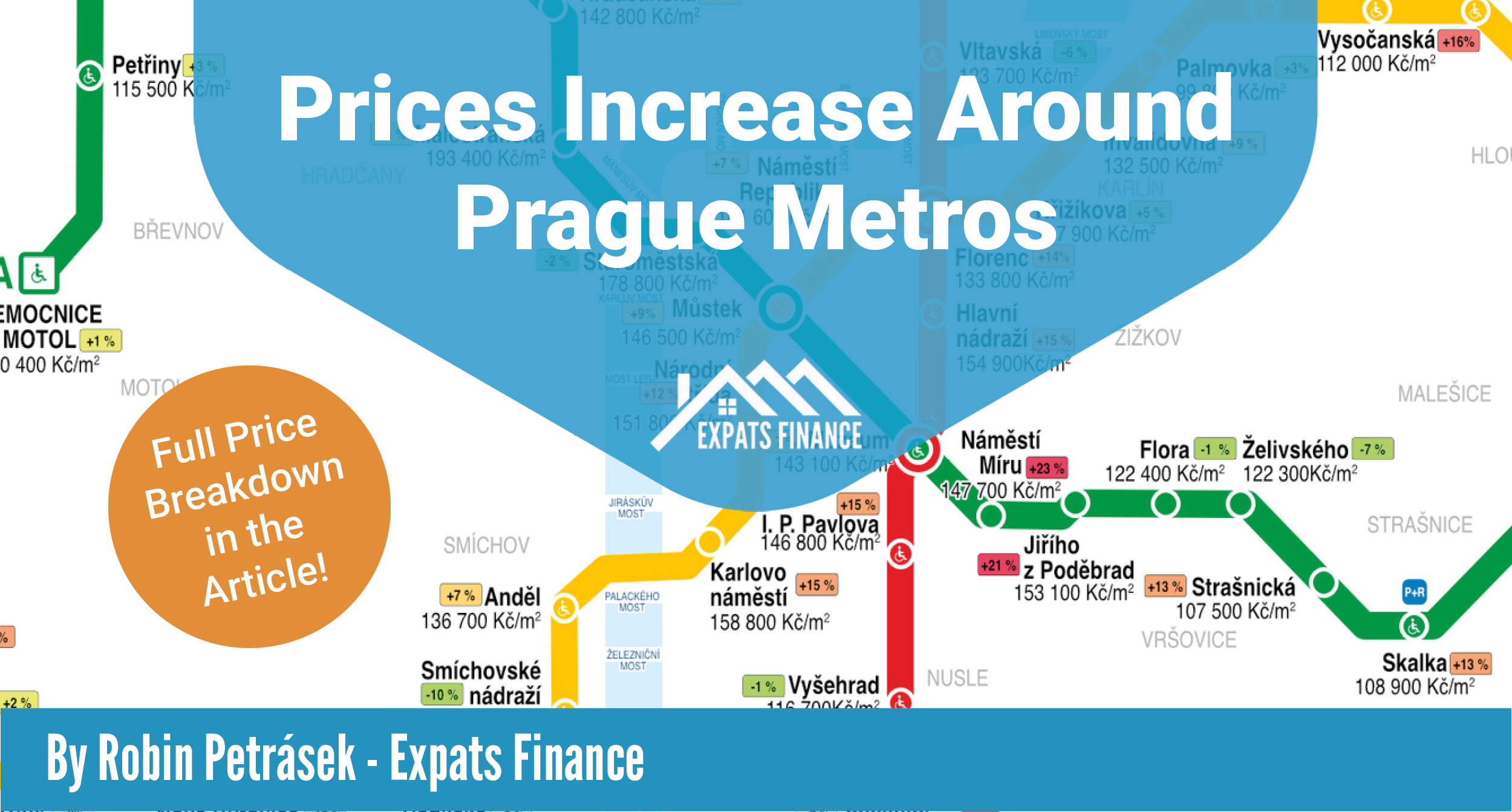
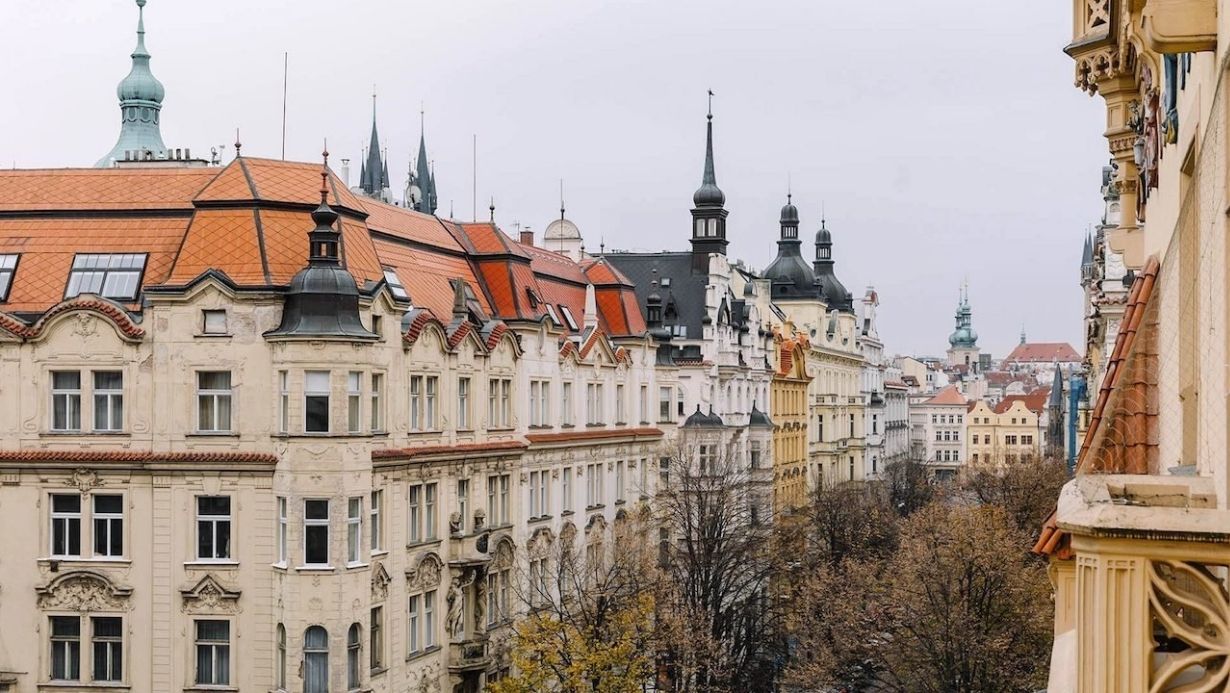
Over the past seven years Valuo, a company specialising in property valuation and related data collection, has meticulously tracked price trends within the Prague metro area. Its efforts have revealed a remarkable 68% increase in prices along the green line (Line A), where figures soared from an initial 79,000 CZK/m² to over 130,000 CZK/m². This sustained growth highlights the unwavering demand for housing near metro stations. Valuo’s analysis has been instrumental in providing insights into the real estate market. It focused on 80 m² apartments in personal ownership that have undergone full renovations. Leveraging data from finalised offers on real estate platforms, Valuo has offered a clear picture of the selling prices—a task not feasible with land registry data alone, which often lacks detailed information on the condition and floor area of sold properties. In its selection, only apartments located within a maximum of 1km from the nearest metro station were considered. An exception was made for the Letňany station on the red line (Line C), which is less densely populated and therefore the radius was expanded to 1.5km. Despite the uncertainties of 2022, 2023 showcased Prague’s resilience in maintaining high property values. According to Valuo’s findings, most locations around...
If you’re buying or selling property in the Czech Republic, you’ll come across the term “escrow of funds (úschova peněz)” or “escrow of the purchase price (úschova kupní ceny).” What does these terms mean, and why should you always make use of escrow? Let’s take a closer look at this article. In general, when selling or buying property in the Czech Republic, you can choose from three basic types of escrow for funds. These are: Lawyer’s escrow Notary’s escrow Bank escrow There’s also a special fourth category, which is the real estate escrow, meaning funds are held directly by the real estate agency. Each type of property escrow has its own advantages and disadvantages when selling a property. So what are they, and what factors should you consider before deciding on the one that suits both the seller and the buyer? Do you really need it? Are you wondering why escrow of funds is important when selling an apartment, house, or land? Well, the reasons are quite crucial, even though the buyer and the seller usually have different motivations for choosing the right type of escrow. In the Czech Republic, escrows are mainly used because there’s a gap of approximately...
Are you thinking about selling an apartment, family house, or land in the Czech Republic, but are unsure about all the steps you need to take for a smooth transaction and to get the best price? In this article, we’ll guide you through the process of selling property. Right from the start, it’s important to mention that if you decide to sell property in the Czech Republic entirely on your own, that is, without the help of a real estate agency, you’re in for a quite challenging time. Many people believe that selling “by themselves” will lead to higher profits because they won’t have to pay for a real estate agent’s services. However, this is rarely the case. Even after paying commissions etc., a reputable real estate agency can help determine a better value for your property, promote it effectively, and find suitable buyers, leaving you with more money. The important factor here is that you must work with a quality, reputable real estate agency. However, if you do decide to try and sell your apartment, family house, or land on your own, let’s explore how to sell property without involving a real estate agent. Setting the price The first...
On Thursday last week (February 8th), the Czech National Bank lowered the inter banking rates by 0.5%, to what is now the lowest rates since June 2022. It was about time… In December, they lowered it 0.25% and now, with the lowering of 0.5% to the current rate of 6.25%, I think it sets a clear trend of lowering rates that I believe will continue until the end of the year. What does it mean in real life? Long story short, cheaper loans and less interest on savings accounts. With lowering the rates, the Czech National Bank wants to stimulate the flow of money into the economy, rather than encouraging people to let money sit in a bank account or avoid borrowing due to high interest rates. Lowering rates should mean the opposite to stimulate the economy Did the interest rates already drop? No, not yet but we can expect it very soon to happen. Right now (as of 13.2.2024) you can still find savings accounts which provide more than 6% on savings but I suspect it will not last for very long. Similarly, mortgage banks haven’t reacted to this recent lowering yet. It typically takes a few days or...
When dealing with a Czech real estate agency, you’ll likely come across the term ‘exclusive contract‘ (exkluzivní smlouva). It‘s important to understand the implications of these kinds of contracts and what you need to take into consideration before entering into one. In this guide, we’ll delve into the details of these contracts and give you insights into how to set them up correctly. Let’s get started. What is an exclusive contract? Essentially, an exclusive contract means that you, the seller, must cooperate only with the real estate agency with which you have entered into the exclusive contract, and for the entire period of the contract. Disadvantages of an exclusive contract Limited cooperation For the seller, this type of contract is a ‘bet on one card‘. If the real estate agency turns out to be incompetent, you cannot simply terminate your cooperation with them, because you are tied in until the end of the contract. This can be especially annoying if you are in a hurry to sell your property. Penalties and sanctions Any exclusive contract with a real estate agency will include various restrictions, sanctions, and penalties. These are intended to force the seller to maintain their cooperation with the...
Developers are set to complete thousands of flats in Prague this year, all at prices below the city’s average. According to Deloitte data, the average price per square meter in the fourth quarter of last year was CZK 152,600, but the completed flats are expected to be around ten percent cheaper. Central Group, the largest Czech residential developer, plans to finish 1,100 flats this year across projects in Prague 3, Prague 8, Prague 9, and Prague 10. An additional 1,500 apartments may be included in the sale, contingent on permitting processes. Skanska is in a similar position, completing 208 apartments this year in projects in Kbely and Modřany. Renata Vildomcová, a spokeswoman for the company, shared that over 73 percent of flats in the Albatros Kbely project have been sold, with an average price of CZK 123,000 per square meter. Developer Finep plans to complete 500 flats this year in fully sold-out projects with prices starting from CZK 82,000. Finep spokesman Tomáš Heček explained that the lower prices are due to selling most of the apartments before completion, reflecting a different economic situation. Looking ahead, Finep aims to start construction on 26 apartment buildings and 2,150 flats in various projects...
Owning property in Prague or the Czech Republic is the goal of many. To live in a city with such a rich history, beautiful architecture, work opportunities, and safe and clean (mostly) environment is surely very nice, but once you accomplish this dream, you might ask “What’s next”? Then you remember a holiday destination in the Canary Islands, or a house in Croatia, perhaps a flat in your home country, or maybe property in Spain or France? If you do not have the cash to pay for it from your own sources, the logical question is “Can the bank pay for it”? The answer is YES, but… Czech banks will not use properties abroad as mortgage security or collateral since they do not understand the local laws and can only help if you can provide sufficient collateral here. Let me work with the basic assumption, that you are financially stable with above-average income, you already bought a property in Prague a few years ago, and you know what you are doing. I will also not discuss the investment potential of these holiday homes, since that is another topic to be covered and probably not by me. Let me explore how...
Just as nature has its more favorable seasons, so the property market is similar. There are months when property sells well and months when the demand is very low. Therefore, it pays to plan ahead when thinking about going to market. A poorly chosen period means a slow sale at a lower price, whereas a well chosen period can result in a quick sale at a higher price. If you plan to sell real estate in the Czech Republic, you can schedule your sale based on the advice I’ll give you in this article. When is the best time to sell a property? Well, in the Czech Republic, the best time for selling homes is during the spring. The next good option is late summer. But remember, it’s not set in stone – other things matter too, like the type of property you are selling. If you’re looking to put your property on the market, March is a great month. That’s when a of potential buyers start actively looking. Usually, there are more people wanting to buy houses than there are houses available, creating a competitive atmosphere that might speed up the selling process and maybe even get you a...
This is a frequent question we get from clients who plan to invest in property in the Czech Republic, whether that’s an investment in apartments, apartment buildings, land or commercial real estate. The answer is very simple: if you plan to own the property for a substantial time, then in the vast majority of cases it is much better to buy the property in your name, primarily because of the income tax savings you’ll make should you decide to sell the property at some point in the future. Let’s take a look at a simple and also very common example. In 1992, two different entrepreneurs got the idea to buy an apartment building in Vinohrady in Prague. At the time, buildings such as these sold for about 1 million crowns. From today’s point of view, this is a ridiculously small amount of money, as the value today would be closer to 100 million crowns. However, at that time, buying real estate was not very common; rent controls were in place, buildings were in a very bad condition, etc. In this example, the first of our two entrepreneurs decided to buy a building for a company that he founded solely for...
About two years ago, buying a property was quite challenging. If you were looking to purchase a property then, you might remember there were often multiple interested parties and most properties were sold very fast, often resulting in bidding wars. I believe now we are seeing signs that we could be returning to that situation. The main reason for the drop in real estate transactions in 2022 and 2023 was the soaring interest rates. The Czech National Bank (CNB) increased the rates during 2021 and 2022 and banks followed with increasing mortgage rates, which is best shown in the graph below. As a direct result, there was a massive reduction in mortgage production. Some months saw a drop of 80% year-on-year! This in turn led to significantly fewer property purchases and many regions suffered a drop in prices. At some point, prices were down 20% in areas such as Cerny Most in Prague, or Ostrava. The reason for this was simple: People who needed mortgages to purchase a property were thinking about the costs of the monthly repayments. If the rates went up from 2% to 5.5%, for example, monthly repayments increased by roughly 50%. For the same mortgage,...
Earning income of a rental property is a popular form of passive income. If you, as an individual, are involved in long-term property rentals, taxation can be quite straightforward. In the right circumstances, you might not even need to pay tax on this income. However, income from short-term accommodation rentals is always considered a business activity, subject to stricter regulations, and often incurring higher taxes than income from property rentals. How to Determine if Your Rental Activity is a Business? The Income Tax Act defines so-called rental income and applies taxation when you, as an individual, engage in the long-term rental of your own property. For this income, you can either apply a flat 30% cost deduction, or actual costs. If your income exceeds 20,000 CZK per year, you must file a tax return. Any other form of property rental, such as providing accommodation services, is considered a business activity and requires a trade licence and compliance with other state-imposed conditions. This includes properties held as business assets, short-term rentals, or using platforms like AirBnB and Booking.com. These activities are identified by financial authorities as business operations in the accommodation services sector. Tax Returns: A Mandatory Requirement If you rent...
In this article, I‘ll introduce you to the topic of commissions so that you have all the information you need when dealing with a Czech real estate agency. I’ll guide you through what the normal amount of commission is in the Czech Republic, what it includes, and to who and when you need to pay it. The commission charged by Czech real estate agencies and agents varies, and it is usually influenced by factors such as the property’s value and the confidence of the agency or agent. Typically, there’s a standard commission that’s considered reasonable. Along with the basic percentage, it’s important to account for the statutory VAT at 21%, which is added to the commission. So, if the commission stands at 3% + VAT, the overall commission totals to 3.63%, with 0.63% being the VAT portion. Here’s what you can generally expect in terms of commission amounts: • Typically, for real estate valued between CZK 3,500,000 and CZK 15,000,000, the commission ranges from 3% + VAT to 5% + VAT. • Regarding properties priced between CZK 2,000,000 and CZK 3,500,000, the usual commission is from 4% + VAT to 5% + VAT. • For real estate valued between CZK...
Don’t have an account? Register
Already have an account? Log In
How Would You Like to Promote Your Business? PR ArticleDisplay bannersVideo productionNewsletter adsJob ListingsInfluencer Marketing
Your Email
We will come back to you within 24 hours with our proporsal