Sinatra Tribute Pairs Frank Sinatra Classics With 1930s Dining at Prague's Mánes
Partner article


Prague Morning
 Follow us on Google Discover
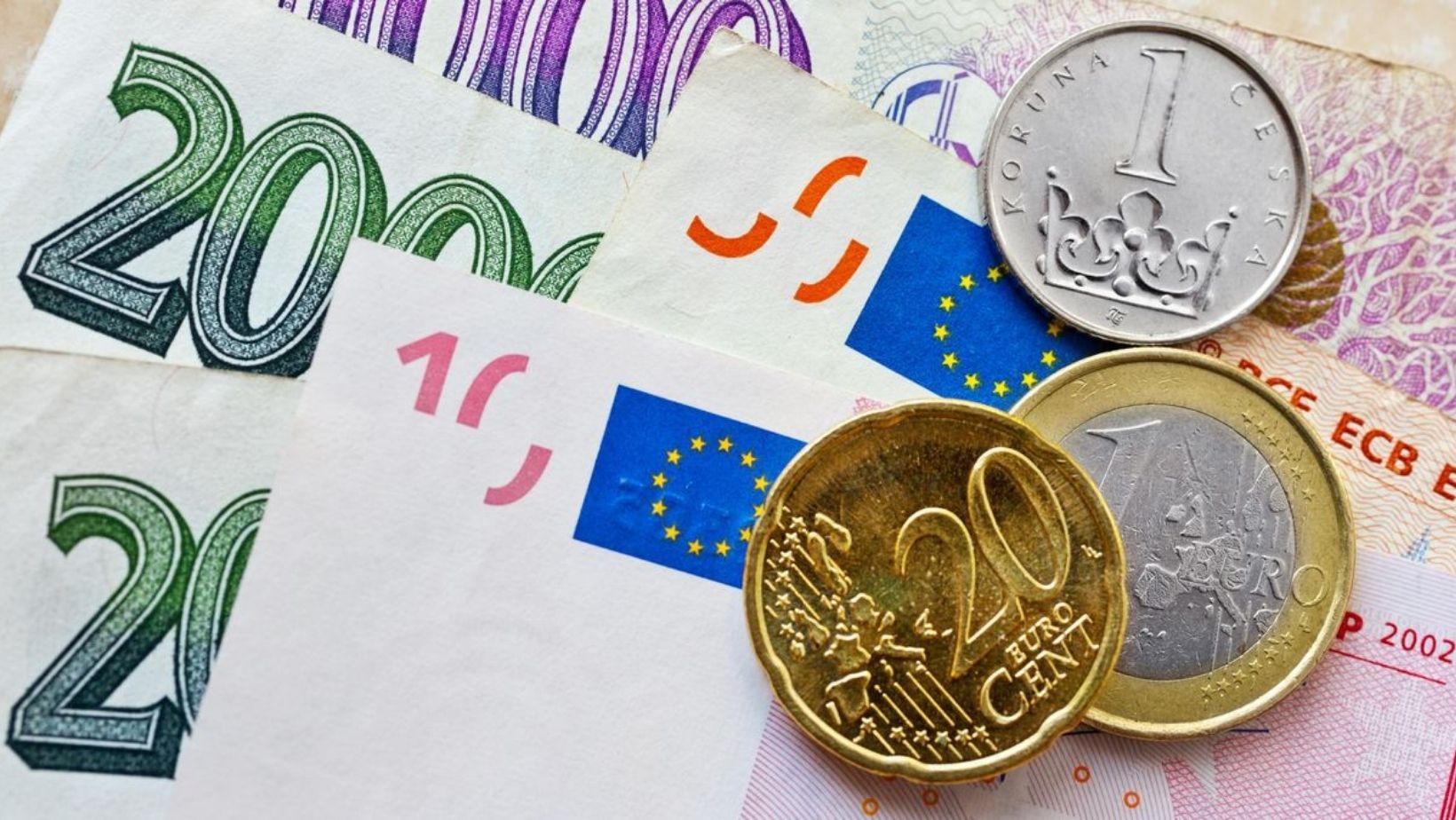

The Czech Republic already fulfils nearly all economic conditions required to adopt the euro, according to a new Convergence Report published by the European Commission.
The report suggests that the remaining obstacles are no longer economic, but political and institutional.
The report evaluates EU member states outside the euro area on their readiness to join the single currency. After Bulgaria joined the eurozone this year, 21 EU countries now use the euro. Denmark remains outside due to an opt-out agreement. The assessment therefore focuses on five countries: the Czech Republic, Poland, Hungary, Romania and Sweden.
The Czech Republic stands out among them. The Commission concludes that it meets three of the four main economic convergence criteria, placing it among the most prepared countries alongside Sweden.
Inflation has returned below the reference threshold after several years above target. In May, the annual average fell to 1.9%, below the benchmark level of 2.7%. The Commission expects it to remain within the required range through 2027.
Public finances also comply with Maastricht rules. The general government deficit stood at 2.1% of GDP in 2025, while public debt reached 44.3% of GDP. Both figures remain below the official limits.
Long-term interest rates also meet the criteria. In May, the annual average was 4.5%, below the reference value of 5.1%.
Despite improved performance, the Commission states that the Czech Republic is not yet ready to adopt the euro. The reason is not economic strength, but missing institutional steps.
Czech legislation is not fully aligned with euro area rules. More importantly, the country has not joined the Exchange Rate Mechanism II (ERM II), a mandatory stage before euro adoption.
ERM II requires a country to keep its currency stable within a defined band for at least two years. Entry into the mechanism depends on a joint political decision by the government and the Czech National Bank. Without it, the formal path to euro adoption cannot begin.
A 2024 report by the Government’s National Economic Council recommended that any decision on ERM II entry should be made early in a government term. The aim would be to complete the entire preparation process within a single mandate. The Commission’s findings reinforce the view that the key obstacle is now political will rather than economic readiness.
Beyond formal criteria, the Czech economy is already deeply connected to the eurozone. Around two-thirds of Czech exports go to euro area countries, while more than three-quarters of foreign direct investment comes from eurozone investors.
The financial sector is also closely linked to Western European banking groups. As a result, economic cycles in the Czech Republic closely follow developments in the euro area.
Would you like your story featured here? Get in touch with our team at [email protected]





Already have an account? Log In