Sinatra Tribute Pairs Frank Sinatra Classics With 1930s Dining at Prague's Mánes
Partner article


Prague Morning
 Follow us on Google Discover
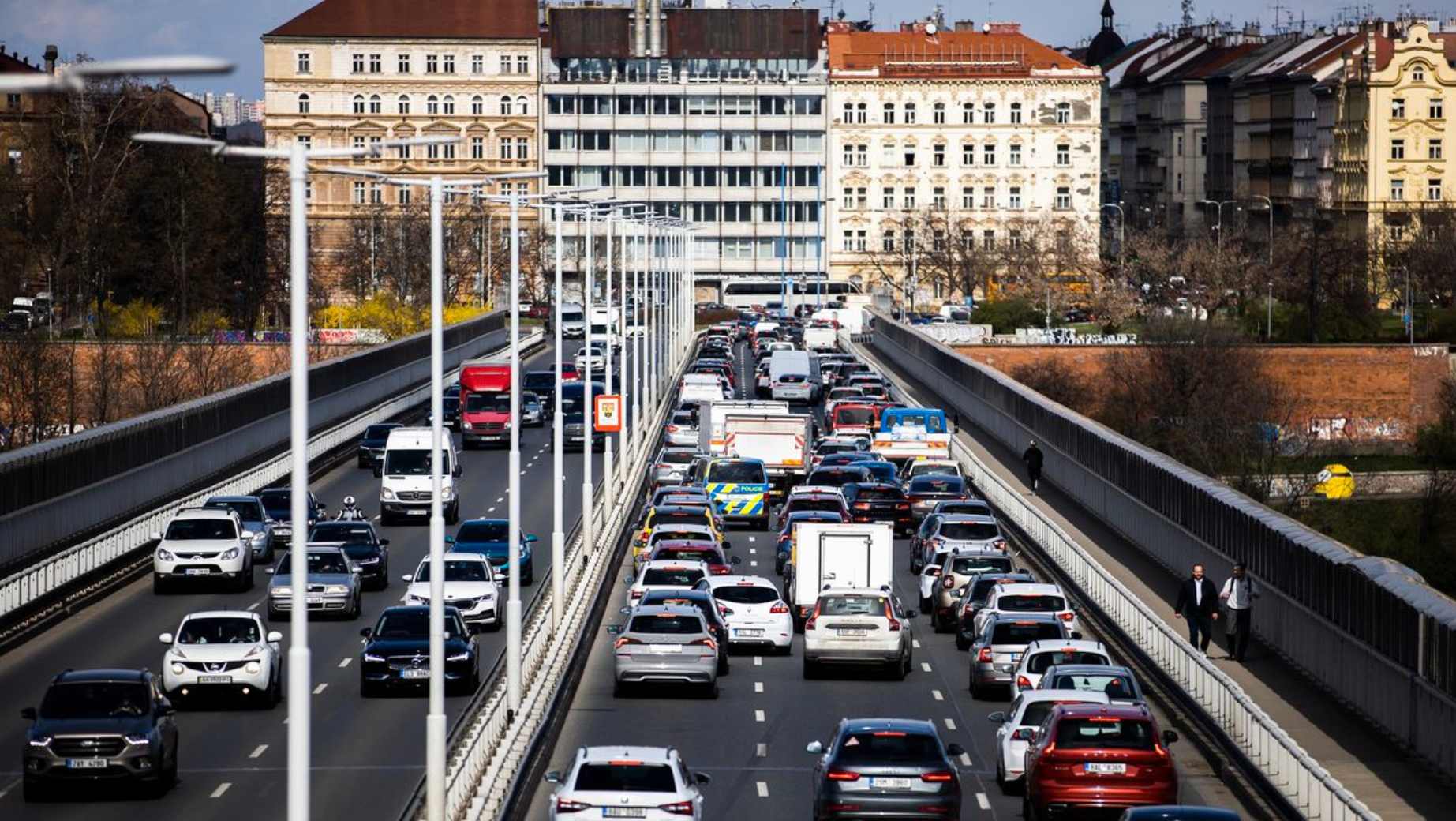

With roughly one million on-street parking spaces serving a city of 1.4 million people, streets in many neighborhoods increasingly resemble open-air parking lots.
Experts say the problem is not driven by a single factor but by a combination of population growth, suburban expansion, changing lifestyles and decades of planning decisions.
The Czech capital now has 756 registered passenger cars for every 1,000 residents. Thirty years ago, there were around 300 fewer vehicles per 1,000 inhabitants. While the number of registered cars briefly declined after reaching a peak in 2021, it has been climbing again ever since.
Although Prague officially has around 1.4 million residents, its transport network serves far more people than that.
According to anonymized and aggregated mobility data provided by O2 Dataclair, about 460,000 additional people travel into Prague on a typical busy weekday. In practical terms, the city’s daytime population grows by roughly one-third every working day.
The data includes all forms of transport, but the additional demand also places heavy pressure on Prague’s road network.
The city still applies minimum parking requirements for new developments. Residential projects generally must provide at least one parking space for every 85 square meters of gross floor area, although requirements vary across different parts of the city, with fewer spaces required in the historic center and more in suburban districts.
Revoluční Street is a perfect example. Since the Palladium shopping center opened its underground garage with around 900 parking spaces in 2007, roughly one-third of vehicles using the street have been heading directly into the garage.
“If those parking spaces did not exist, many drivers simply would not make the trip. We’ve seen that pattern repeatedly in cities abroad,” said said Václav Novotný, head of the Transport Infrastructure Office.
Novotný argues that residents should be able to choose freely between driving, public transport and cycling, depending on their needs.
However, expanding Prague’s cycling infrastructure remains difficult in densely built-up neighborhoods. Creating protected bike lanes often means removing parking spaces or reducing road capacity for cars, making such projects politically challenging. As a result, many new cycle routes consist only of painted lanes that attract relatively few inexperienced cyclists.
Public transport also has yet to fully recover from the coronavirus pandemic. Before Covid-19, Prague’s metro carried around 440 million passengers annually.
Despite passenger numbers rebounding in recent years, neither the metro nor the tram network had returned to their 2019 levels by 2024.
Would you like your story featured here? Get in touch with our team at [email protected]





Already have an account? Log In