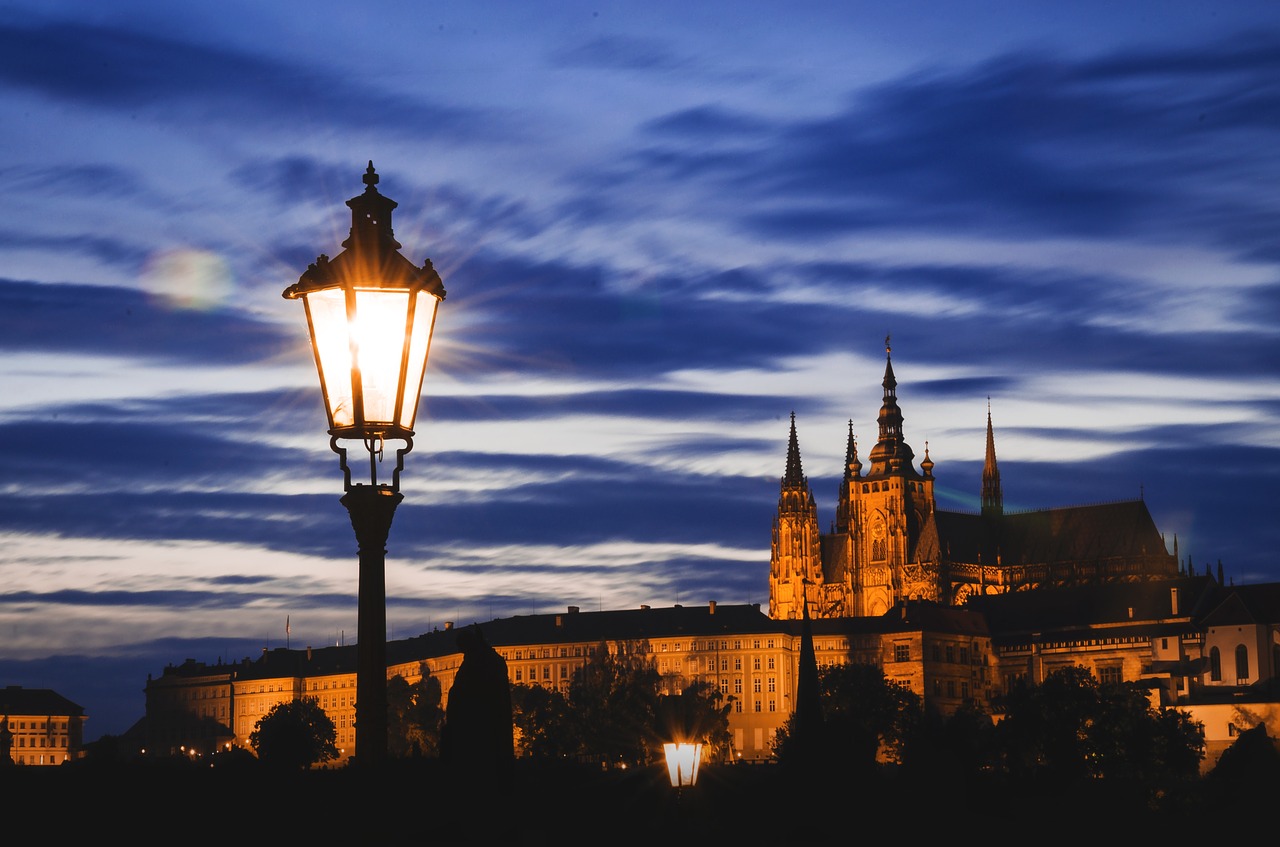
Seventeen years ago, Prague decided to return to the romantic gaslighting at the historic centre, and today there are about 700 gas lamps.
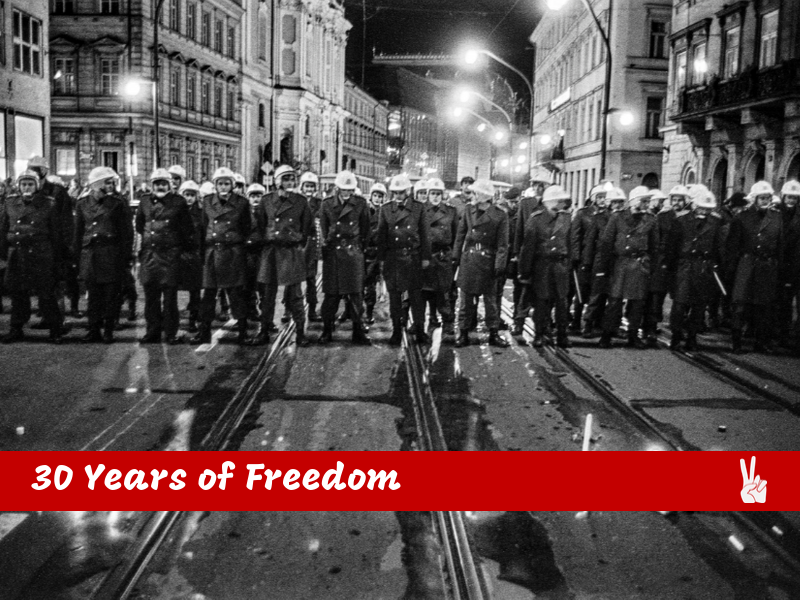
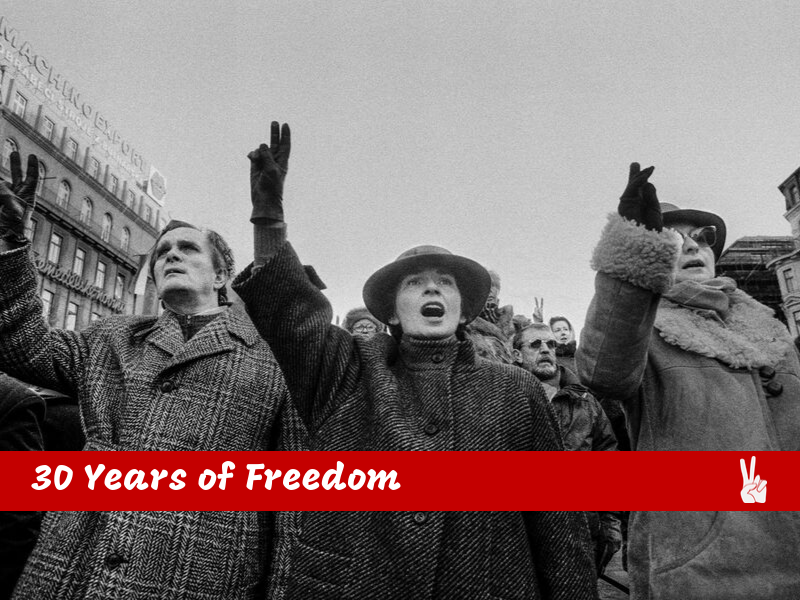
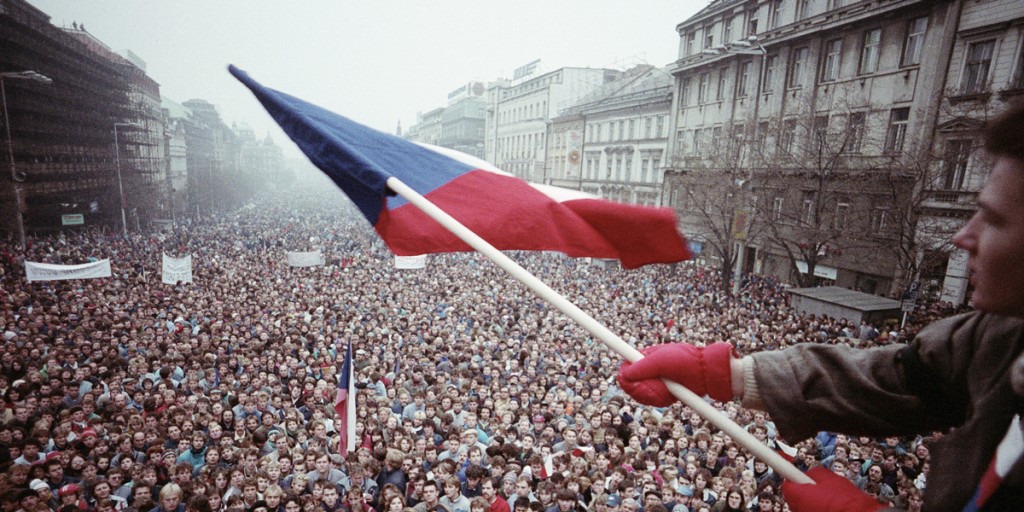
A photography exhibition bringing to life some of the 1989‘s most dramatic moments. The pictures capture not only the Velvet Revolution but also what lead to it. They are also showcased pictures taken on the street of Berlin and Bucharest. Opening time: daily 11:00 – 19:00 Admission fee: adults CZK150 students under 26 years CZK70 seniors over 65 years CZK70 a family ticket (2 adults + 2 children) CZK350 children younger 10 years old for free Address: Old Town Hall – Cloisters and Knights’ Hall, Staroměstské náměstí 1. About Jan Šibík Jan Šibík is one of the Czech renowned documentary photographers. He was born on April 15th, 1963. At the Czech competition of news photography, he won 40 awards in a few categories, including the main award for the photography of the year. He won three awards at the Fuji Press Photographer, including the main awards in 1997. He has also received the first prize from the city of Pilsen for the extraordinary support of democracy and human rights. In 2007 he was awarded the UNHCR award for “the photography or series of photographies, which are showing the problems of refugees in the best possible way”. He organized the humanitarian...
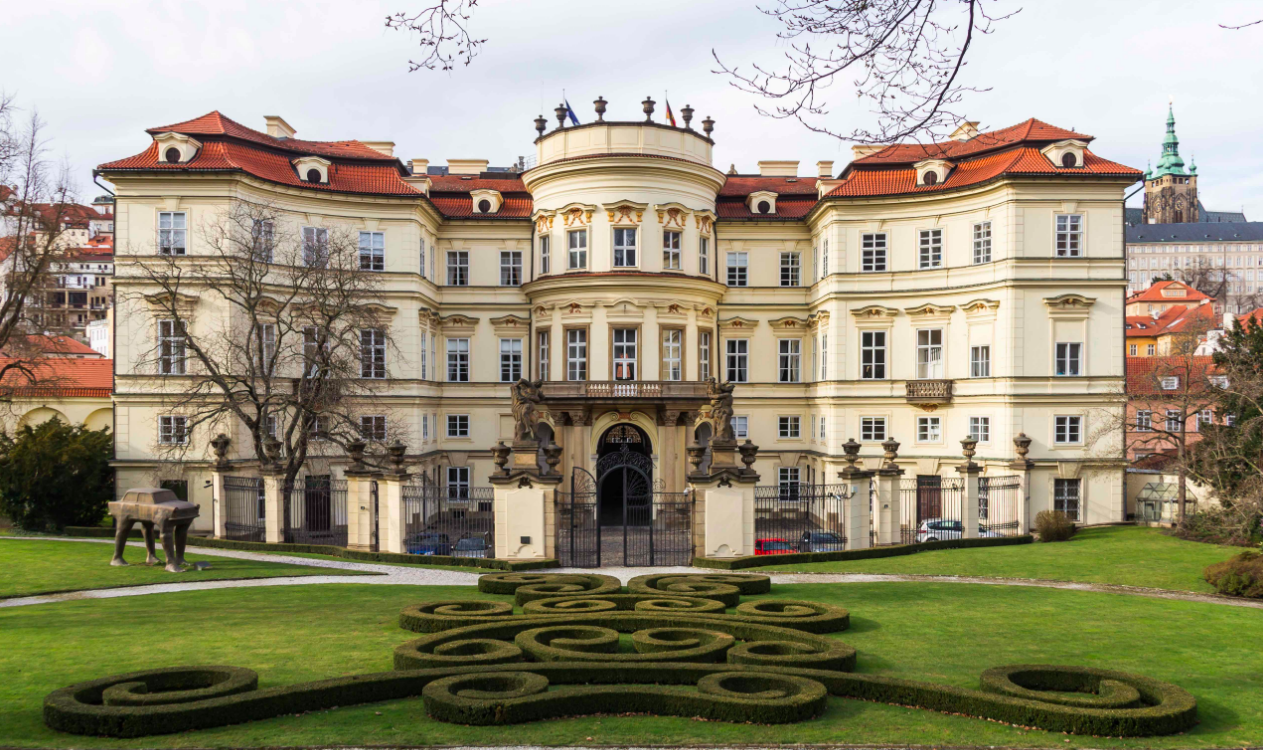
On Saturday, September 28, you can visit the Lobkovický palác, usually closed to tourists, for free. From 14:00 to 19:00, guests will be able to explore the interior of the Baroque palace, built in 1702. The event will commemorate the 30th anniversary of the Velvet Revolution and is called the “Path to Freedom”. The German embassy organizes an exhibition and talks with witnesses of those events. A detailed program can be found here. Lobkowicz Palace is one of the most important High-Baroque buildings in Prague. It was projected by famous Baroque architect Giovanni Battista Alliprandi and there is a large decorative garden behind it. It has been a seat of the Embassy of the Federal Republic of Germany in Prague since 1973. It became an important place in 1989: thousands of citizens of the former GDR could move to the FRG from this palace at the time. The palace was planned with two facades: those of street side and the more impressive garden front. The Lobkowicz family acquired the palace in 1753, and it was given its Late-baroque appearance by Ignác Johann Palliardi in 1769. The garden (partly open to the public), which stretch the Petín Hill, was restyled in...
From September, 27 till October, 20 The New Russian Film Festival will be held in the Czech Republic and represent the best examples of Russian cinema. The program includes more than 30 new Russian films in different genres, as well as meetings with people making Russian cinema diverse and interesting. In Prague, The New Russian Film Festival will start on the 27th of September and last until the 6th of October, 2019. Citizens of Brno, Ostrava, Zlín, and Pilsen will be able to see the movies from the 10 to the 20 of October 2019. Official Festival website The opening film and special guests The guests of the Festival will have an opportunity to walk the red carpet with movie stars, make the most spectacular selfies, attend the premiere of the announced film and enjoy the banquet dishes from famous chefs at the opening ceremony of the Festival at Cinema City – Slovanský dům in Prague. The opening ceremony will be visited by the head of Mosfilm, film director and actor Karen Shakhnazarov, director Pavel Lungin, actor and director Alexander Galibin, actors Natalia Vdovina and Anton Momot. The soviet basketball player Ivan Edeshko, known in history for the “golden pass”,...
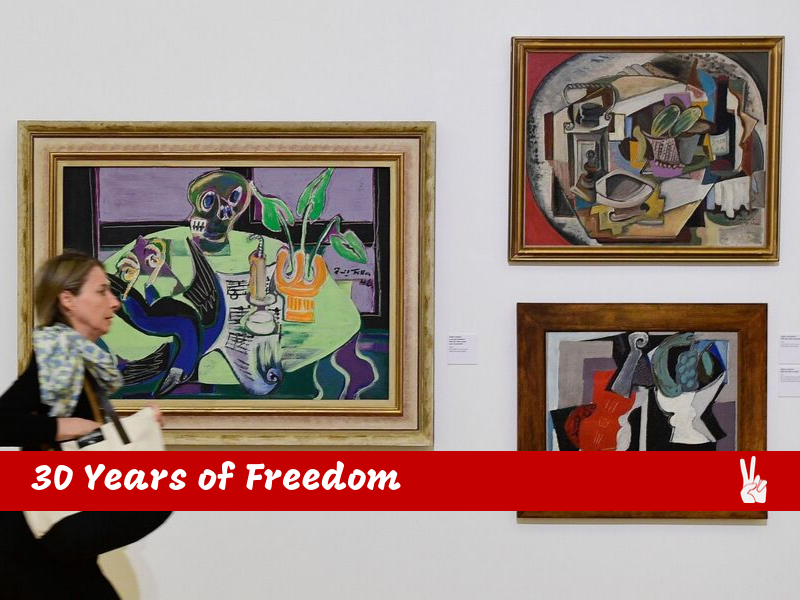
The Steadfast – From Franz Kafka to the Velvet Revolution is an exhibition presenting 30 unbreakable and unbroken authors of Czech art in 1918-1989. The exhibition The Steadfast – From Franz Kafka to Velvet Revolution runs in Prague’s Municipal house until October 6. In cooperation with the Aleš South Bohemian Gallery and the Museum of Czech Literature, the curators Zuzana and Eugen Brikcius prepared a unique exhibition for the thirtieth anniversary of the Velvet Revolution. The exhibition will feature 30 steadfast visual artists, among other things through their exclusive verbal expressions whether they are verses, diary notes, quotes, or interviews. The showcased artists include Otto Gutfreund, Jindřich Štýrský, Toyen, Josef Čapek, Mikuláš Medek, Stanislav Kolíbal, Eva Kmentová, Karel Nepraš, and Jiří Kolář. Some of the most valuable items on display include a work by the Jewish artist Peter Kien, paintings by Mikuláš Medek and objects by Zbyněk Sekal, and an original Kafka’s letter to his parents. It’s on loan from the Literary Archive in Prague. The writer Franz Kafka has inspired a wide range of the presented artists, inclusive of the exhibition’s curators, by his metaphysical work, critical thinking, and responsible social attitude.
The exhibition in the Summer Palace and the surrounding garden is devoted to the year 1989. Almost 70 Czech, Slovak, and several foreign photographers offer their authentic testimony about what happened before 30 years in the time when the countries of the so-called Socialist Bloc began to move towards democracy and freedom. Visitors will see pictures of Jindřich Šreit, Viktor Kolář, Vladimír Birgus, Pavel Štecha, Herbert Slavík, Jan Šilpoch, Karol Kállay, Andrej Bán, Dana Kyndrová, Miroslav Zajíc, Jaroslav Kučera and others. “It is a selection of truly unique moments that often do not need any further words or explanations,” a castle spokesperson commented. “They accurately reflect the unique atmosphere, enthusiasm, hope, determination, and desire for freedom. Outside and inside, there are screens showing the most important events.” “We contacted dozens of photographers from all over the country and the preparation took exactly one year,” commented photographer Kučera, who came up with the idea of organising such a large exhibition. “And it was necessary to do it now, on the 30th anniversary, while we still have the power to complete such a big project,” he added, referring to the fact that the exhibition was put together by those people that experienced the Velvet Revolution first...
Screenshot, opening in September 2019, is best described as a screening room, where you not only appreciate a smooth screening in one of the historical undergrounds of Prague, but also a space that offers you much more. Located at Petrské Náměstí, Screenshot provides a cozy hangout to meet up friends or new people, a bar with signature cocktails and exhibition space. All, to share film and togetherness. Screenshot sees itself as a two-way street. It intends to familiarize you with aspects of Czech culture and cinema but also introduces Prague to Art from beyond its borders. Our initial step towards this path begins with a screening program of 50 masterpieces of Czech cinema with English subtitles; This is an extraordinary program comprising films from 1930’s onwards, each with unique storytelling depicting different aspects of Czech culture. Concurrently Screenshot is opening its doors by exhibiting controversial artwork of California based Iranian artist Forouzan Safari. This black and white digital artwork not only carries cinema as a theme but also touches upon hidden features of the life of an Iranian woman. Screenshot’s founder Payam Razi who is based in Prague for the past 13 years, brings his background in both film making...
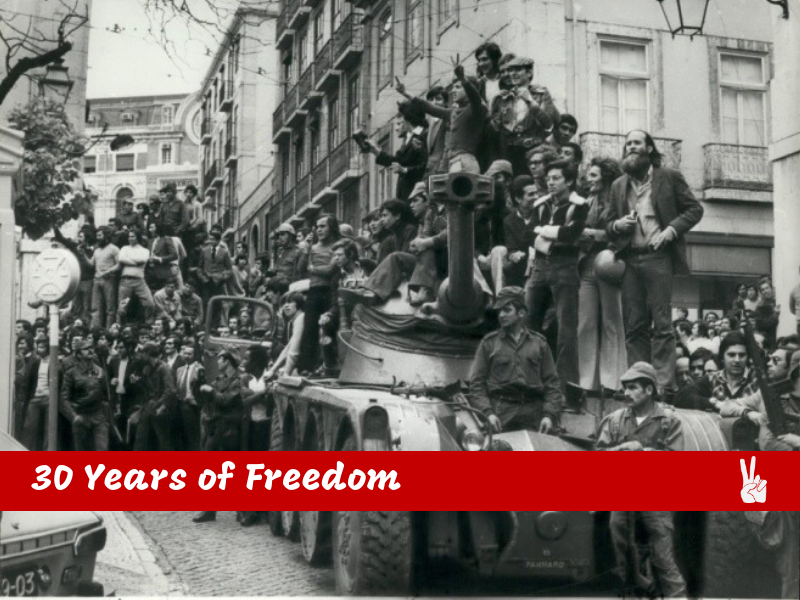
Portoguese and Czech artists are celebrating democracy and freedom of expression won by the revolution of the two countries in the exhibition “Carnations and Velvet”, at the Municipal Library of Prague, which lasts until September 29. The curatorial project Carnations and Velvet / Art and Revolution in Portugal and Czechoslovakia for the first time presents Portuguese art in the Czech lands and Slovakia. The common starting point is the year 1968, the time of the Prague Spring in Czechoslovakia and the spring of Marcelo Caetano in Lisbon. This year brought about first hopes for the end of the existing undemocratic regimes – the hopes that were thwarted by the Soviet occupation in Czechoslovakia and by the continuation of the colonial war in Portugal. The years 1974 and 1989, the dates of peaceful revolutions, brought freedom to both countries. The Carnation Revolution took place on 25 April 1974, and the Velvet Revolution in Czechoslovakia on 17 November 1989. The project features works of Czechoslovak artists, the legendary personalities who were of crucial importance for the formation of contemporary art in their diverse responses to the totalitarian regime, namely Adriena Šimotová, Eva Kmentová, Květa Válová, Jitka Válová, Jiří Kovanda, Petr Štembera, Karel Miler, Jan Mlčoch,...
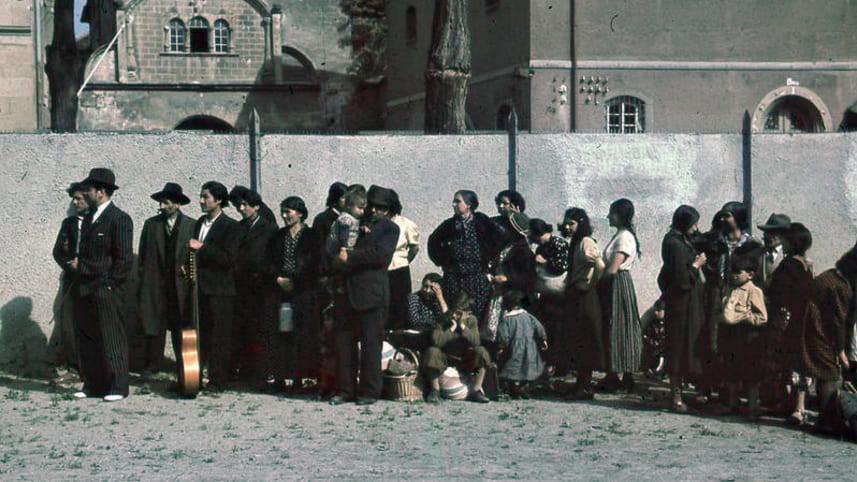
Archaeologists have uncovered a mass grave at the site of a former Nazi concentration camp in the Czech Republic, the Museum of Romani Culture said Wednesday. The remains of Romani adults and child Mass grave discovered dating back to 1943 were uncovered at the Lety concentration camp, where Roma people were incarcerated during World War II, the museum said. A DNA sample taken from a woman buried at the site is being checked against relatives to confirm her identity, it added. The Lety camp was set up by the Nazis in 1940 during their occupation of Czech territory and was operational for three years. More than 300 members of the Roma community died there as a result of inhumane camp conditions, and hundreds of others were later deported to the Auschwitz death camp and murdered there. During the 1970s, a large factory pig farm was constructed near the site of the Lety camp. It was closed in 2018 as the result of widespread protests.
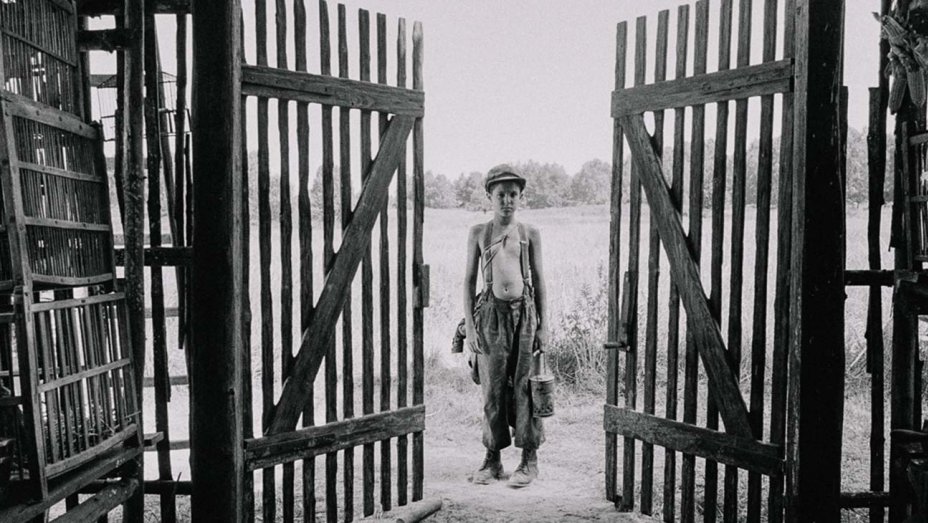
The Czech-Ukrainian Second World War drama, shot in black-and-white and nearly three hours long, had its world premiere at the Venice Film Festival. “The Painted Bird,” is the first-ever movie in Slavic Esperanto. Director Vaclav Marhoul said: “I didn’t want the villagers (speaking) Ukrainian or Polish or Russian or something like that because those people (the villagers in the film) are really bad people,” he said. “I didn’t want that some nation is going to be associated with that, so I opened the big brother – Google, big brother, and typed ‘Slavic Esperanto’, my God it does exist, it does exist, Slavic Esperanto.” The invented language combines Czech, Russian and German. Set somewhere in rural eastern Europe towards the end of World War Two, the black and white film is a sombre tale of a young boy trying to survive a harsh wilderness and the cruelty of strangers. According to critics, it appears to have had a rather negative effect on members of the public who came to watch it. But with a series of plot points that sound more like endurance tests, who can blame them? Based on a 1965 novel, The Painted Bird tells the story of a nameless boy...
The Czech Center New York together with its partners have prepared a rich and varied program of events dedicated to the celebration of the 30th anniversary of the Velvet Revolution. The overarching theme of the events is freedom. Concerts, theater performances, exhibitions, film screenings, discussions, and other programs will be held at the Bohemian Nation Hall in Manhattan from September to November 2019. The main events include the performance of Audience, the one-act theater play by Václav Havel, starring Jakub Špalek and Jan Potměšil. The actors are also figures who have become part of the history of the Velvet Revolution itself, and they will discuss their experiences and insights after their performance, which is part of the Rehearsal for Truth Theater Festival. No less expected is the concert of the band Garage, one of the symbols of the Czech independent music scene. Just like Audience, the Garage concert will be performed in two other American cities as well: Washington, D.C. and Chicago. The Czech Center New York Gallery will also present two exhibitions. The exhibition Václav Havel, Citizen and Dramatist, prepared by the Arts and Theater Institute (Prague), will be on view from September through October. In November and December,...
Cinema club Evald is a small, classy cinema – it is in the Prague city center, has a stable program with four movies running each day, including mainstream selections, at least movies suitable for a small screen, as well as art movies and films from different countries. The generous front door invites you to the more private underground area, which is cozy with the carpets and classy with the cloakroom, especially handy during winter. In summer, the cool underground environment is relieving and rewarding. No drinks are offered in this cinema, but you can get started before the film in the local restaurant, which is just at the end of the same corridor, and of course, also discuss there later on the impact of the film you have just seen. I really like this cinema, there are not many of this type in Prague these days. Author: Irena Schlosser. You can find the original article here Spotted by Locals Prague is a blog (and iPhone & Android app) by locals who live & love their city.
Don’t have an account? Register
[swpm_registration_form level=”6″]
Already have an account? Log In
How Would You Like to Promote Your Business? PR ArticleDisplay bannersVideo productionNewsletter adsJob ListingsInfluencer Marketing
Your Email
We will come back to you within 24 hours with our proporsal