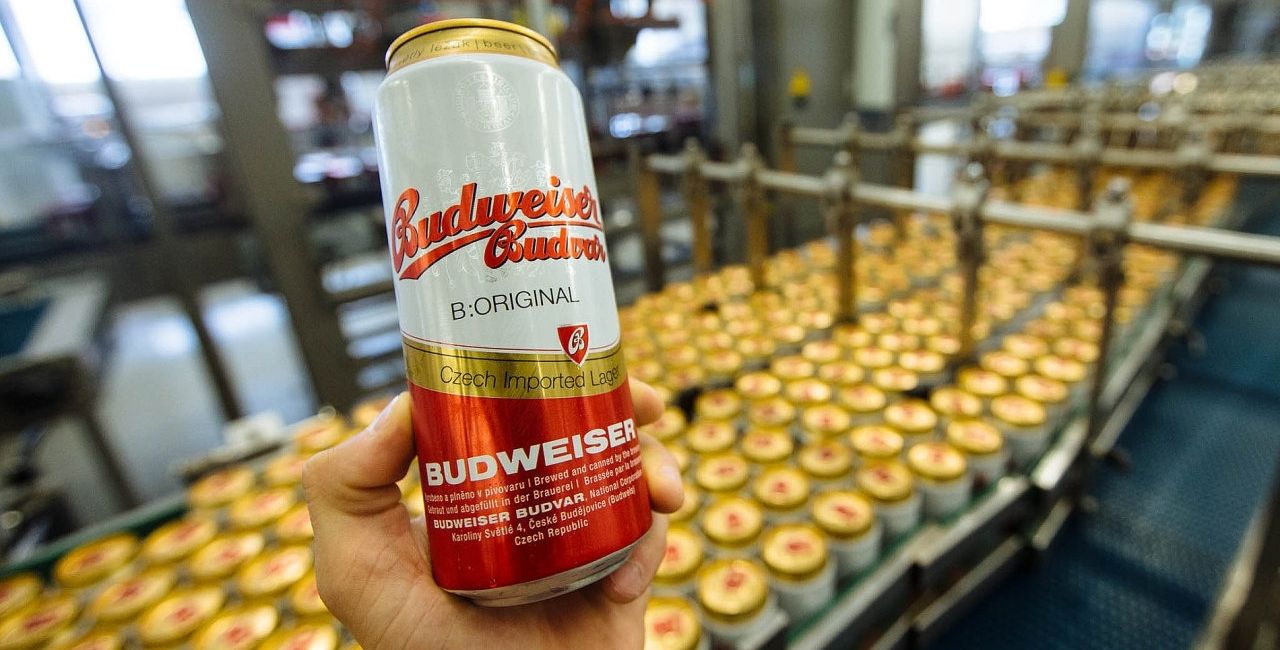
Budvar, the Czech brewer that has been in a long legal dispute with U.S. company Anheuser-Busch over use of the “Budweiser” brand, has registered a record output for the second straight pandemic year. Budejovicky Budvar NP, a 126-year-old state-owned brewery, said its output rose 4.6% to 1.8 million hectoliters in 2021, according to preliminary results released on Thursday. The brewer’s exports were up 11.3% last year, director Petr Dvorak said. The figures “surpassed our expectations,” Dvorak said. Budvar sells its beer in some 80 countries. It said in a statement that practically all its major markets, including Germany, Britain and Slovakia, contributed to increased sales. Revenues also hit a record last year, growing 10.4% to reach 3.171 billion crowns in 2021. Complete results, including profit figures, will be released later in the year. The pandemic particularly affected the domestic market with demand for beer in tanks and barrels declining as bars and restaurants were closed for some time and access for unvaccinated people was limited. “We have a very difficult year in all aspects behind us,” Dvorak said. The brewer has expanded in recent years to be able to produce more than 2 million hectoliters of beer a year. That...
If your day doesn’t start until you’re up to speed on the latest headlines, then let us introduce you to our new morning fix. All the 14 regions of the Czech Republic expressed their support to former PM Andrej Babis who is to seek re-election as the party leader at Saturday’s nationwide congress. Former industry, trade and transport minister Karel Havlicek and ex-finance minister Alena Schillerova were nominated as first deputy heads. Bavarian Minister-President Markus Soder wants to keep improving the relations with the Czech Republic, he wrote in a letter addressed to Czech PM Petr Fiala. Soder supports regular intergovernmental consultations, too. Furthermore, he suggested several projects enhancing bilateral cooperation in transport, modern technologies and education. Czech speed-skater Martina Sáblíková won the bronze in the women’s 5000m meter race in Beijing on Thursday, finishing behind Irene Schouten from The Netherlands who took the gold and Canada’s Isabelle Weidemann who finished second. Last year, Budějovický Budvar brewed a record 1.8 million hectolitres, a 4.6 percent increase over the previous year. Beer sales surpassed CZK 3 billion for the first time, amounting to CZK 3.17 billion. Some 11.4 million tourists stayed in accommodation facilities in the...
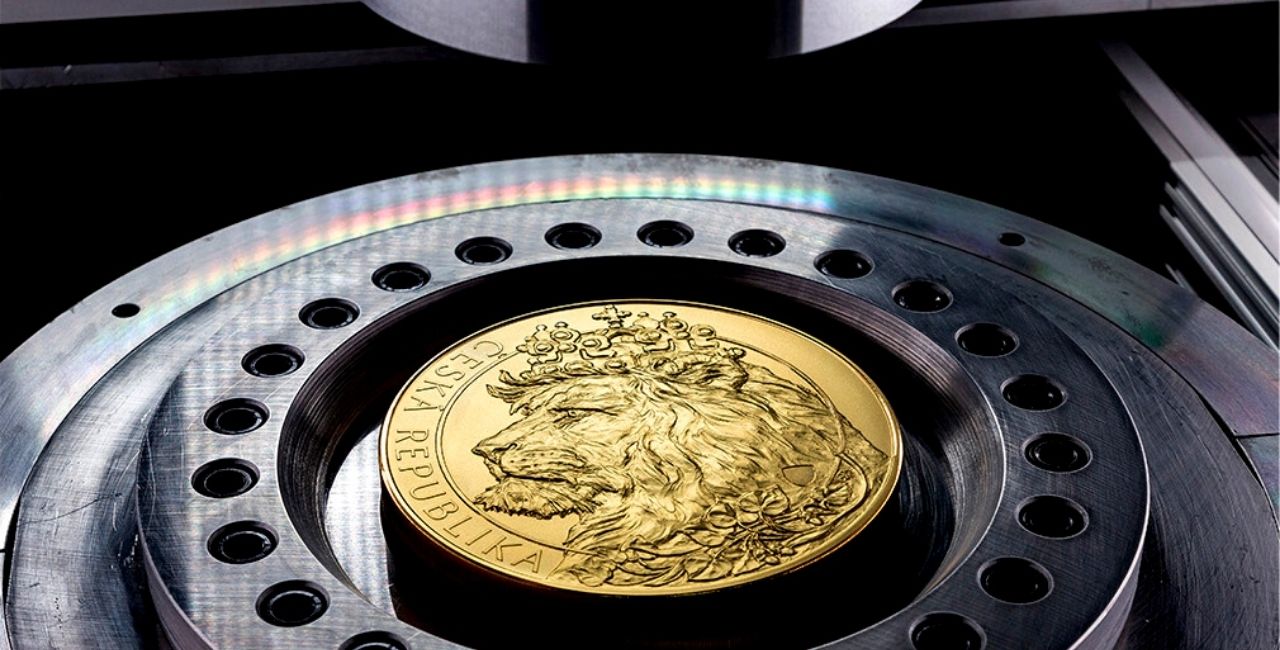
Česká Mincovna (Czech Mint) minted an investment coin worth CZK 14 million, which weighs a record ten kilograms. The weight of the coin has surpassed its predecessor from last year, which weighed “only” five kilograms. The Czech Mint was established in 1993 and is one of the top ones in its field. Its current ten-kilo coin is the largest and heaviest in the Czech Republic with a diameter of 165 mm. It is a gold investment coin with the motif of the Czech Lion. “The coin is unique in that it contains a hologram security element,” explains Stanislav Bachtík, production director of the Czech Mint. The author of the design is the young artist Asamat Baltaev, who creates the Czech Lion in a new design for each year. The hologram protective element can be seen with the naked eye and is in the shape of a shield. It was used for the first time last year when a five-kilo coin with this hologram was entered into the Czech Book of Records. The new coin is the largest coin minted in continental Europe. “Only three other mints in the world, Canada, China and Australia, can produce similar things,” Bachtík said. Because...
Starting today, there’s no more need to show proof of vaccination or being recently recovered from COVID-19 to enter restaurants and other hospitality or service venues. For travel abroad, however, certificates are still needed, and from mid-February, their validity will be limited to nine months from the completed vaccination and can be extended with a booster dose. Measures requiring mask-wearing indoors and limits to the number of people at public events will remain. “The first step is the cancelling of certificates; another one is the end of blanket testing,” said the Health Minister of Czechia, Vlastimil Válek. Most of the measures against the spread of Covid-19 will be abolished in the Czech Republic as of March 1, Prime Minister Fiala announced at a press conference after the government’s meeting on Wednesday. The only measure that will stay in force will be the wearing of respirators in public spaces. The moves follow easing planned in other European countries. Neighbouring Austria will allow shops and restaurants to remain open longer and also ease restrictions on the unvaccinated from next week. The Czech government has sought to boost vaccinations, with 63.5% of its population inoculated, below the European Union average of 70%, according...
If your day doesn’t start until you’re up to speed on the latest headlines, then let us introduce you to our new morning fix. All the 14 regions of the Czech Republic expressed their support to former PM Andrej Babis who is to seek re-election as the party leader at Saturday’s nationwide congress. Former industry, trade and transport minister Karel Havlicek and ex-finance minister Alena Schillerova were nominated as first deputy heads. The Czech cabinet unanimously approved the state budget draft for this year with a deficit of 280 billion crowns, Finance Minister Zbynek Stanjura said on Twitter, adding that the deficit set by the previous government of Andrej Babis (ANO) was cut by 100 billion without raising taxes. The upper limit of 1,000 seated viewers of mass events and 100 participants in other events remains valid in Czechia until February 18 even after lifting the COVID certificate duty, then it will rise to 500 for the latter as of February 19. The Czech national ice hockey team has started the Olympic tournament with a defeat. In their first match on Wednesday, the team, headed by coach Filip Pešán, lost 2:1 to Denmark. Some 11.4...
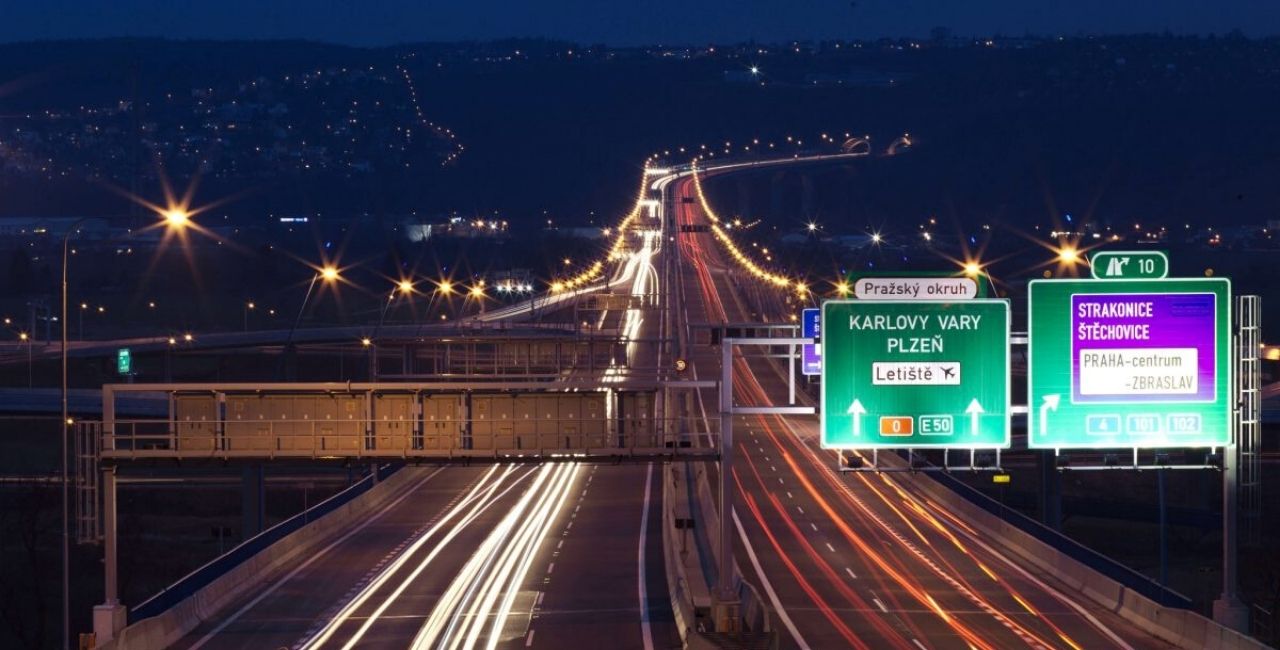
The new government in Prague recently dusted down an old idea to increase the speed limit on sections of motorway from 130 to 150 km/h. That would give the Czech Republic one of the highest speed limits in Europe. It has left many scratching their heads as to why the transport ministry would resuscitate an idea it had opposed back in 2015 when MPs proposed a similar speed limit change. At the time, the amendment was quickly killed off by the Senate, the upper chamber of parliament, and President Milos Zeman publicly declared he would never sign such a change into law, even if parliament agreed to it. The road quality concerns came 74th in the world for quality of roads — below Salvador, Iran and Gambia — in a 2018 study part-conducted by the World Economic Forum. It fell to 76th in the 2019 study, making it the fifth-worst in the European Union. The country’s longest motorway, D1, connecting the capital Prague to Brno, was started in 1967 but decades of modernisation work only finished late last year. The new coalition government that took office in December is eager to quickly turn things around. The new transport minister, Martin Kupka, says...
From 1 March, most of the measures against the spread of Covid-19 will be abolished in the Czech Republic, Prime Minister Petr Fiala (ODS) said on Wednesday after the cabinet meeting. If the epidemic situation develops according to experts’ expectations, the only measure that will stay in force will be the wearing of respirators in public spaces. “We will also gradually increase the number of visitors at cultural, sporting events,” said Fiala. “We all believe that the omicron wave is behind us,” he added. However, the government plans to maintain the limit of a maximum of 1,000 sitting spectators for mass events until February 18, following the lifting of the requirement to show a Covid certificate at restaurants and other facilities. Other group events, including children’s leisure activities, can be attended by a maximum of 100 people. After February 19, the maximum number will increase to 500. For seated events, the number of spectators could be increased by up to 50%. From Thursday, February 10, the government is going ahead with previously announced plans to allow the unvaccinated back into restaurants and other venues as infections start to ebb. The Health Ministry reported more than 37,000 new cases on Tuesday,...
German prosecutors are investigating a Czech millionaire for allegedly driving along an autobahn at up to 417 km/h. Radim Passer is accused of holding an illegal motor race on the A2 motorway between Berlin and Hannover in July 2021. The driver of the Bugatti Chiron vehicle had recorded the incident and posted a clip on YouTube earlier this year, generating widespread criticism in Germany. The 58-year-old millionaire drove “at an inappropriate speed, disregarding traffic rules and in a reckless manner in order to reach the maximum possible speed,” prosecutors said. The man faces a two-year prison sentence or a significant fine if convicted. Passer’s company develops multifunctional houses in Prague, and he is reportedly worth €246 million. The public prosecutor’s office in Stendal, in the state of Saxony-Anhalt, said on Monday that it could charge the millionaire later this week. German Transport Minister Volker Wissing has slammed the driver’s attitude, noting that while Germany has no speed limit, vehicles should always be “under control”.
If your day doesn’t start until you’re up to speed on the latest headlines, then let us introduce you to our new morning fix. The requirement to show a Covid certificate at Czech restaurants and other facilities will end on Thursday, not on Wednesday as previously stated, a Ministry of Health spokesperson told news site Novinky.cz. The Chcípl pes initiative is planning another protest action against the pandemic law. There will be petition tents in Prague’s Klárov district from Wednesday evening. They should remain there until Thursday, when senators vote on the amendment. The Czech Republic’s Foreign Minister Jan Lipavský is set to hand over 500 first aid packages worth a total of CZK 3.6 million, during his visit to Ukraine from Monday to Tuesday. The reconstruction of Prague’s Barrandov Bridge should begin in the first half of May this year. The bridge will not be closed during the repairs, and traffic will be restricted to one of the four lanes in each direction. Czech basketball player Tomáš Satoranský has joined his fourth club since the start of his NBA career in 2016. The 30-year-old has been traded from New Orleans to Portland.
Almost ten thousand flats were given the green light in Prague last year. And even though this does not make up for the shortage the capital is currently facing, this fact is still worth mentioning – it is a record. The reasons are various. Firstly, it is a reduction in the time taken to amend the zoning plan, but the coronavirus pandemic may also have played a role. “The reality has exceeded my expectations, with the construction of 9,698 flats in Prague starting in 2021, which, as far as I know, is the highest number in the history of the independent Czech Republic,” said Adam Zábranský (Pirates), the Czech Housing Councillor, on his Twitter account. Last year, 4,335 flats received building permits, which was a decrease compared to 2019 – when 6,487 flats were started, the most since 2008. The chart shows that it is only the fourth time since 1997 that the seven and a half thousand permits have been exceeded. Before last year, it was in 2005, 2006 and 2007. The city’s quicker approach in amending its zoning plan probably helped. “We were the first to drastically reduce the time it takes to address a project within the...
If your day doesn’t start until you’re up to speed on the latest headlines, then let us introduce you to our new morning fix. The Czech Republic has sent an additional police unit to help guard the external border of the Schengen Area on the Hungarian-Serbian border, with a a 40-member contingent. The Czech government will be approving a further easing of coronavirus restrictions this and next Wednesday, Interior Minister Vit Rakusan (STAN) told CTK after a meeting. However, in spite of the improvement in the pandemic situation, he called for cautiousness. The average monthly pension will increase by eight hundred to a thousand crowns from June, Minister of Labor and Social Affairs Marian Jurečka told Czech Television. The exact amount will be decided by the pace of inflation. Next week, Prime Minister Petr Fiala (ODS) will travel to Brussels for his first summit in office, a two-day meeting between the European Union and the African Union representatives. A new project aims to create a new 9,801-kilogramme bell for Prague – to commemorate thousands of Czech church and tower bells stolen and melted down by the Nazis in summer 1942. The project’s title is #9801.
If your day doesn’t start until you’re up to speed on the latest headlines, then let us introduce you to our new morning fix. Prague Energy (PRE) will increase the price of electricity by a quarter on average from April. Gas prices will rise by 30% in May as well. Moneta Money Bank increased its net profit by 53 percent year on year to CZK 3.98 billion last year. The bank’s operating income fell about eight percent to CZK 11.17 billion but rose 4.6 percent after adjusting for one-off effects from 2020. The Czech Republic’s Foreign Minister Jan Lipavský is set to hand over 500 first aid packages worth a total of CZK 3.6 million, during his visit to Ukraine from Monday to Tuesday. Compulsory wide-ranging coronavirus testing at work and in schools will end on February 18, Prime Minister Petr Fiala announced on Wednesday. For schools, this effectively means that the last series of tests that pupils will take will be on February 14. A new project aims to create a new 9,801-kilogramme bell for Prague – to commemorate thousands of Czech church and tower bells stolen and melted down by the Nazis in summer 1942. The project’s...
Don’t have an account? Register
Already have an account? Log In
How Would You Like to Promote Your Business? PR ArticleDisplay bannersVideo productionNewsletter adsJob ListingsInfluencer Marketing
Your Email
We will come back to you within 24 hours with our proporsal