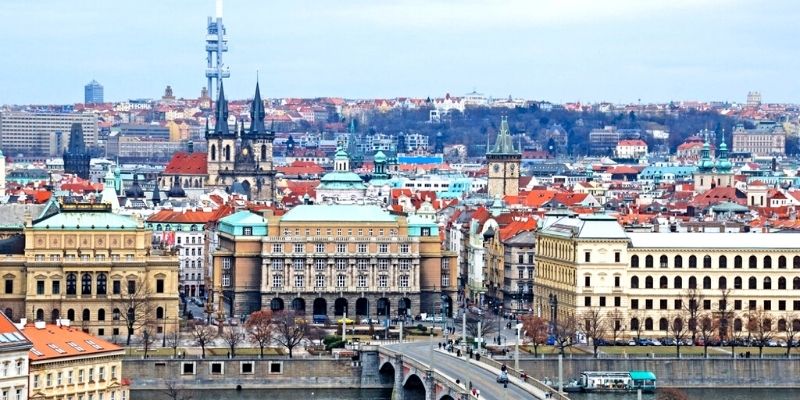
As the coronavirus pandemic continues, we have to deal with many restrictions that have an impact on the very basics of our lives. One of the aspects of our lives that are greatly affected by these restrictions is, of course, work. Not only does it make working more difficult but even getting a job in the first place is very toilsome, to say the least. There is, however, another problem most people currently don’t have to experience – travelling to the Czech Republic for work. The Very First Step It is crucial to mention that if you are a third-country citizen, then in order to be able to arrive in the Czech Republic for work, you first need to get a job. Sure, it may sound odd since searching for a job in a foreign country is much easier once you’re there, but without having a job you cannot get a visa. And without a visa, there is no chance you’ll be even able to enter the country. This, however, only applies to non-EU citizens, so if you are coming from an EU member state, you don’t have to be worried about this. As for the visa itself, it...
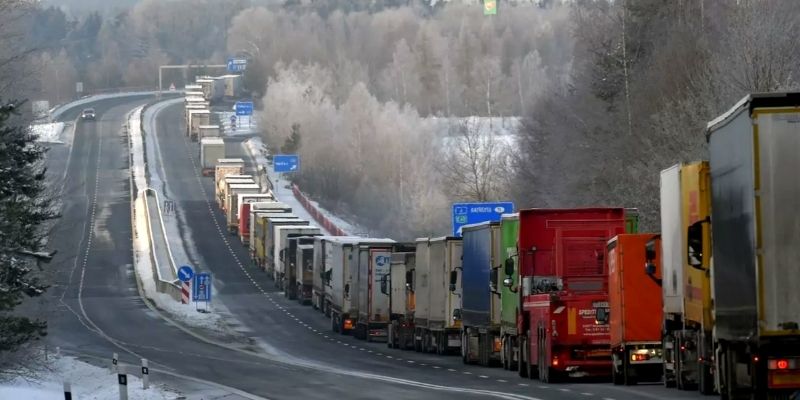
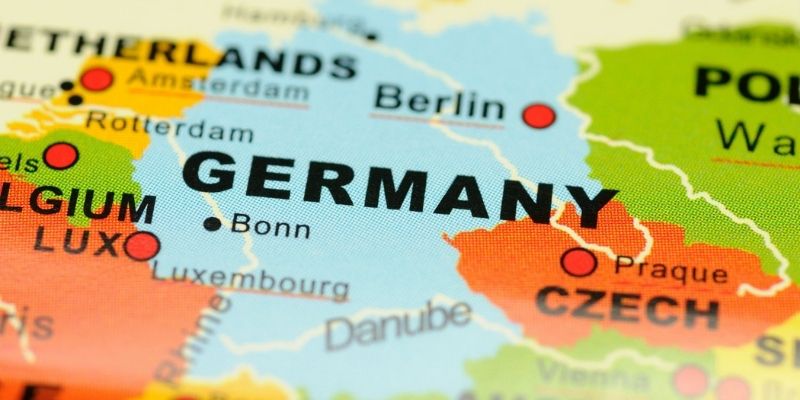
Tailbacks stretching back several kilometers have developed on the Czech roads leading to the German border after Germany declared its neighbor a risk zone due to a coronavirus variant and reintroduced checks for incoming travelers. On the E55/D8 autobahn connecting Prague with Dresden, lorries were queuing all the way back to Usti nad Labem on Monday morning. Police were stopping drivers before letting them enter the tunnel there. On the E50/D5, which leads to the German city of Nuremberg, a queue of lorries initially grew to over 20 kilometers long, according to the motorway administration office and radio traffic news. On Sunday, Germany launched entry bans at its borders with the Czech Republic and the Austrian region of Tyrol, due to concerns about more virulent strains of the novel coronavirus in those areas. There are exceptions for key workers who have to commute across the borders, including lorry drivers, and for German citizens or foreigners resident in Germany. Those people have to register online and present a negative coronavirus test at the border, which must be no older than 48 hours. Czech authorities have boosted their testing capacity in border regions in response to the travel ban, using the fire...
Maren Gräfová will become the very first female director of Škoda. Gräfová is a Czech lawyer, and she will be filling in this position on the 1 of March 2021. Martin Jahn will also become a member. Gräfová will be replacing Bohdan Wojnar, who is responsible for human resources, while Jahn will be replacing Alain Favey, who is in charge of sales and marketing. Jahn will also be filling in this position on the 1 of March. Favey will soon be entrusted with new tasks in the Volkswagen Group, and Wojnar will continue to be president of the Automotive Industry Association. He decided to leave his position after ten years. Gräfová is a lawyer who started her career at the Volkswagen Group. Firstly, she was in the legal department before she became the assistant to the CEO. In November 2018, she was appointed head of the human resources department of the VW Group’s top management. Gräfová is a human resources expert with international experience, and the chairman of the Board of Directors at Škoda, Thomas Schäfer, has personally commended her. The chairman has also disclosed Gräfová’s tasks at the automobile company and said, “her task now will be to take...
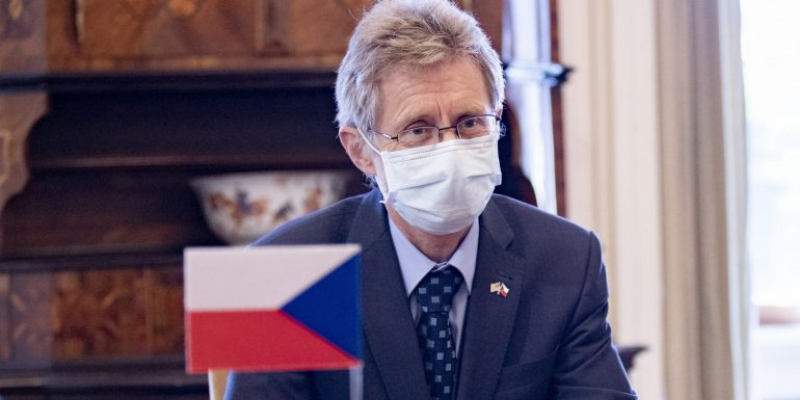
In today’s open letter to the government, the Speaker of the Senate Miloš Vystrčil (ODS) says that reinstating a state of emergency in the country against the will of the lower house would be unconstitutional. According to him, this also applies to the case where the governors request a state of emergency. After today’s meeting with the government, the regional governors asked the cabinet to declare a new state of emergency for 14 more days. The current state of emergency will end at midnight today. The governor of the Moravia-Silesia region Ivo Vondrák said the decision had been unanimous. Prime Minister Andrej Babiš added the government will comply with the request. “If the Chamber of Deputies cancels the state of emergency or vote against its extension, the government may not immediately decide to declare a new state of emergency. In such a case, the government would effectively negate the role of the Chamber of Deputies,” said Vystrčil. Constitutional lawyers are divided over the matter. Without the state of emergency, the government cannot impose a curfew, which is currently in effect between 9 pm and 5 am. Deputy Prime Minister Jan Hamáček (CSSD) warned that: “It would bring about the loosening...
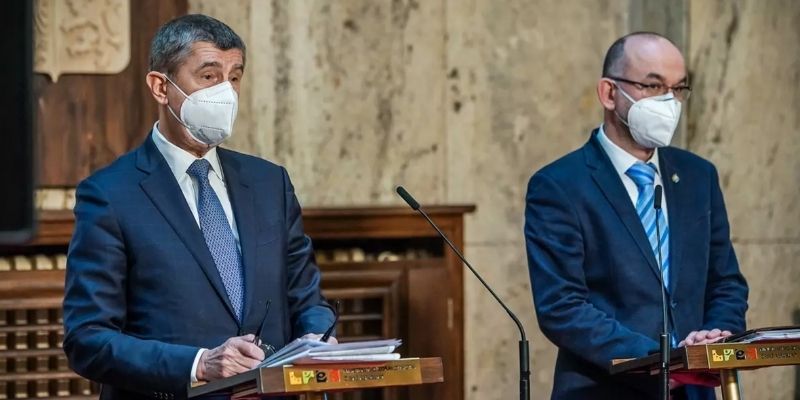
The regional governors agreed to extend the state of emergency for 14 more days. Interior Minister Jan Hamáček (CSSD) said that the priority will be the return of children to school. “Today we agreed that all governors will ask for a state of emergency. At the moment, it is the only way to manage the crisis situation in our country,” said the Moravian-Silesian Governor Ivo Vondrák (ANO). The current state of emergency expires on Sunday, February 14. In the morning, the governors discussed the conditions under which they would request the declaration of a new state of emergency with the Minister of Health, Jan Blatný (ANO). The South Bohemian governor and chairman of the Association of Regions Martin Kuba (ODS) stated that “the governors are asking the children to return to school on March 1.” The governor of Pardubice Martin Netolický remarked that the regions require the government to communicate to the public a plan for the coming days and weeks regarding the release of certain measures. “We want to have a clear timetable for gradual release at further negotiations. We also require self-testing in companies and large employers.” The governors want regular meetings every ten days of the association...
The Czech Republic is in talks with AstraZeneca to secure COVID-19 vaccine supplies on top of the three million doses reserved for the country under an EU deal, news website Seznam Zpravy reported on Saturday. Citing a Health Ministry spokeswoman, the report said the Anglo-Swedish drugmaker had offered the country further deliveries of its vaccine, and that the ongoing talks were about details such as the number of doses, price, and delivery dates. The European Commission, the European Union’s executive, has signed supply deals with vaccine makers for doses to be distributed on a pro-rata basis to member states, which have committed not to hold parallel talks. Saturday’s Seznam Zpravy report said the Health Ministry still had to verify to what extent bilateral deals were in line with the EU deal. The number of newly registered Covid cases reached 8,782 on Friday, roughly 160 more than on the same day a week ago. The Covid-related death toll crossed the 18,000 mark on Friday. AstraZeneca is scrambling to find more manufacturers to produce its coronavirus vaccine in Europe after the drugmaker’s bet on a limited number of sites fell short. By the end of January, only one continental plant — located...
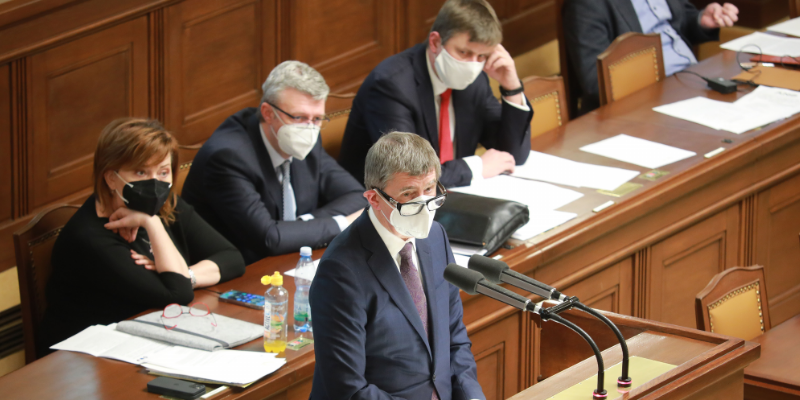
The Czech lower house of parliament on Thursday rejected the government’s request to extend a state of emergency underpinning pandemic measures beyond February 14. The Chamber of Deputies rejected the extension of the state of emergency in force in the Czech Republic due to the coronavirus epidemic. Jan Wintr from the Department of Theory of Law at Charles University believes that several anti-epidemic measures could cease to be in effect on Monday. Without a state of emergency, the government cannot: Impose a curfew, which is currently in effect between 9 pm and 5 am. Prohibit sales in shops and the provision of services Restrict entry into the Czech Republic to foreigners Prohibit entry to sports facilities outside and inside. Due to the measures, the government had to close gyms, fitness centers, courts, ice rinks, swimming pools, wellness facilities including saunas, dance studios, and bowling alleys. Prohibit drinking alcohol in public places Prohibit meeting people from different households Which current measures could continue to apply: Visiting restaurants, pubs, and bars, providing accommodation services. Conferences, theater, and movie performances with the participation of spectators. Impossibility to organize pilgrimages, congresses, educational events, fairs. Participate in teaching at universities, high schools, and primary schools....
The Czech lower house of parliament on Thursday rejected the government’s request to extend a state of emergency underpinning pandemic measures beyond February 14. The Chamber of Deputies rejected the extension of the state of emergency in force in the Czech Republic due to the coronavirus epidemic. The minority government said the decision would mean the end of nationwide limits on movement, including a night-time curfew, the lifting of a ban on public gatherings, and a reopening of retail stores. Some other measures may still be extended under different legislation. The government of PM Andrej Babiš (ANO) asked to extend the state of emergency for another 30 days. The entire opposition did not support the government’s request. At least 54 parliamentary votes were required for its adoption. Babiš told MPs that” anyone who voted against extending the state of emergency would be directly responsible for the loss of human lives.” Early today, Interior Minister Jan Hamacek said that “the refusal to prolong the state of emergency implies a tremendous risk of collapsing healthcare and a negative development of the coronavirus pandemic in the Czech Republic”. “We will make history as a country that demobilized in the middle of a war,”...
Germany will impose an entry ban on travelers from the Czech Republic and Austria’s Tyrol region from Feb. 14, the mass-circulation tabloid Bild reported on Thursday, citing German Interior Ministry sources. Only a handful of exceptions are allowed to enter Germany from these countries, including returning Germans or residents and essential workers. The news comes after the Czech Republic earlier on Thursday announced a stricter lockdown in three districts, including two on the border with Germany, where coronavirus infections have soared above 1,000 per 100,000 residents over the past week. Bavaria Governor Markus Soeder praised measures taken by the Czech Republic to contain the spread of virus variants and criticized authorities in Tyrol, saying they appeared not to be taking the issue seriously. In a speech to Parliament on Thursday, Merkel defended her government’s decision to set a lower infection target for easing the lockdown further: a number of new weekly cases per 100,000 inhabitants below 35. The Robert Koch Institute on Thursday added 10,237 new confirmed COVID-19 cases and 666 deaths to Germany’s totals, bringing the country’s overall case count since the start of the pandemic to 2.31 million and the death toll to 63,635. Germany restricts travel from...
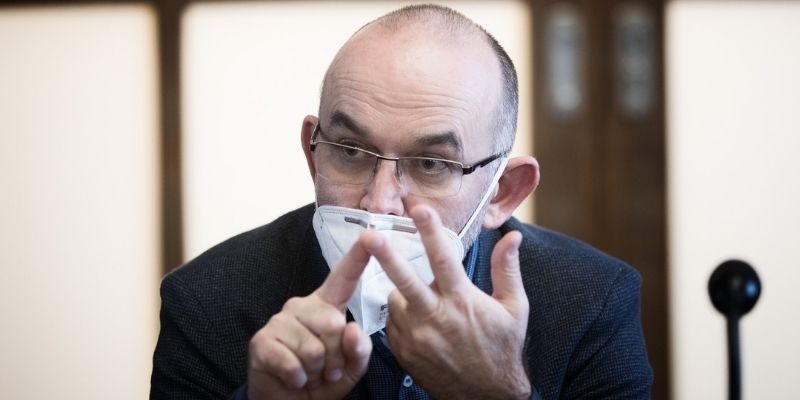
The Czech government on Thursday announced a stricter lockdown in three districts from east to west where coronavirus infections have soared and hospitals are struggling to cope. The order means a ban on movement from and into the eastern district of Trutnov on the border with Poland and the western districts of Cheb and Sokolov on the border with Germany, Health Minister Jan Blatny said. The restrictions will take effect on Friday, Blatny said, but they depend on an extension of a national state of emergency beyond Sunday which the minority government may be unable to secure in a parliamentary vote expected later in the day. The three districts are home to around 300,000 people, and infection rates there were at 1,091-1,183 per 100,000 in the past week, according to ministry data. “These are areas where the number of infections is three to four times higher than elsewhere,” Blatny told reporters. “We have decided to limit free movement in these regions beyond the national measures, and, apart from exceptions, to ban people who live here to leave and people who do not live here to enter.” There will be exceptions for people who can prove they are on the way...
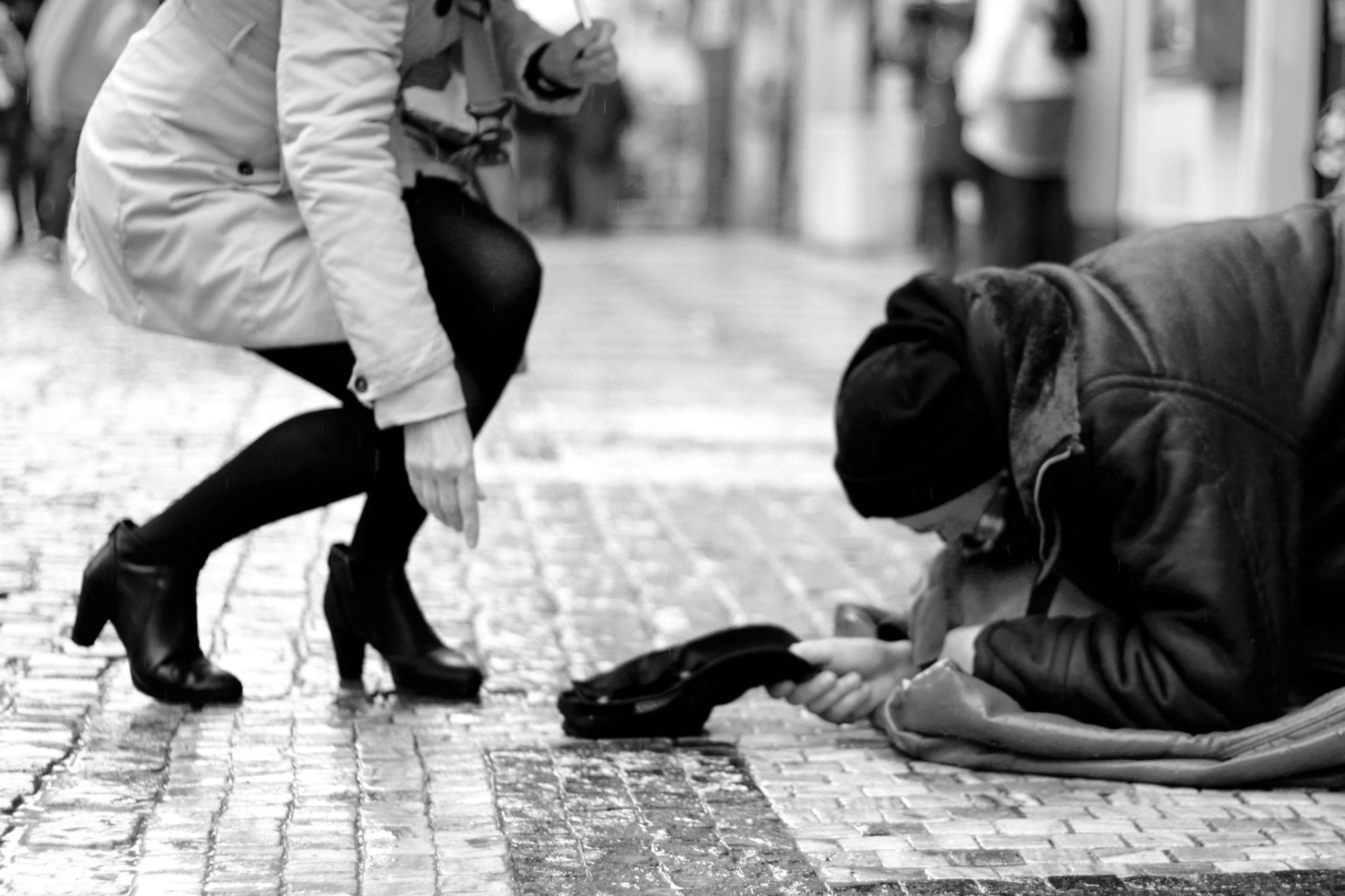
If you decide you have the means to help Prague’s homeless population, the nonprofit organization Mistni Mistnim (Locals for Locals) is launching three new projects. Vouchers for hot drinks and meals for people in need We are just starting our call to support people without homes who are out in the cold weather to show them that we care! With this project, we will also help our network of solidarity cafés to cover at least some of their basic costs. “We would love to start one more path to connect our Prague community in solidarity – we’re all in this together. There is no better time than now to help each other and, especially, the ‘invisible’ ones around us,” says Ester Pacltová, founder at Místní místním Mobile phones collection Místní místním will collect, in cooperation with our solidarity network, old and new phones, sim cards, pre-paid credit, chargers, which we will then distribute to NGOs or distribute directly to people in the street. A phone can help in many ways, from keeping in touch with family and friends to finding a warm place to sleep, finding a job, contacting social or emergency services. These days a phone is more and...
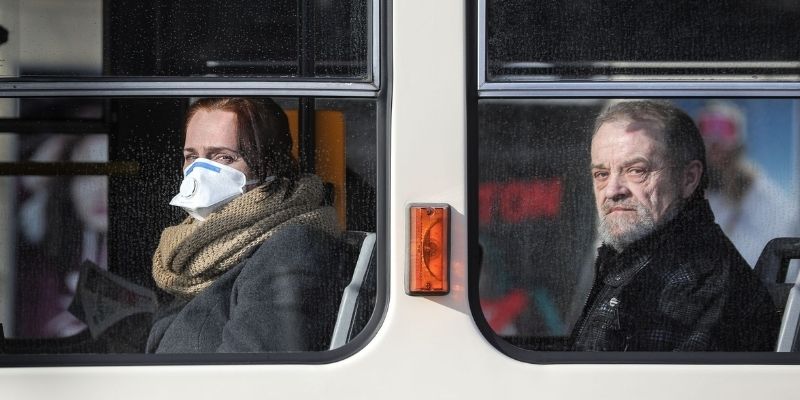
Almost half of Czechs do not stay at home with the symptoms of COVID-19. According to scientists, this may be one of the reasons for the massive spread of coronavirus in the Czech Republic. The study was conducted by the World Health Organization and the German University of Erfurt. The surveys were conducted among one thousand respondents last August, November, and January this year. “Almost half of the people, 46 percent, did not stay at home and are still going out with COVID symptoms. These are more often people who think they are prone to infection but expect a mild course. In Czech society, there is a large proportion of those who prefer personal freedom over others, which proves to be very disadvantageous during a pandemic,” said Helena Hnilicová from the Faculty of Medicine at the Charles University. According to the study, the 3R rule (ruce, roušky, rozestupy – hands, masks, distancing) is most respected in the Czech Republic, especially by seniors, women, and people whose economic situation has worsened due to the coronavirus epidemic. On the contrary, Czechs are the least disciplined to the recommendation not to visit their relatives. According to the survey, 41 percent of people still...
Don’t have an account? Register
Already have an account? Log In
How Would You Like to Promote Your Business? PR ArticleDisplay bannersVideo productionNewsletter adsJob ListingsInfluencer Marketing
Your Email
We will come back to you within 24 hours with our proporsal