Gingerbread hearts were given to passengers on a bus line in Brno last Friday. Bus driver Tomáš Giertli baked, decorated and packed 177 gingerbread for Valentine’s Day. He loves his work and the people he drives, and he is always trying to make their journey more pleasant. “This is the smell of the fireplace so that passengers have a pleasant smell to make them feel good here,” says thirty-six-year-old driver Tomáš Giertli. Originally from Slovakia, this bus driver took care to make the bus smell like gingerbread, and hang red paper hearts he made himself on the upper handles and bars. “My attitude and view of the world as a bus driver is different. And my colleagues took me from the beginning like I’m crazy. They were joking because I drive around the Psychiatric Hospital. But then they realized I was just such a positive person who likes to please people,” says the smiling driver as he sits in his cabin. Gingerbread with wishes A red pocket hangs off of the ticket kiosk. It is decorated with gingerbread hearts, each wrapped in a cellophane bag. “There are 177 of them, but I have already given a few of them, so...
Czech police started an investigation over several Czech shops that sell titles such as The Poisonous Mushroom, which openly promote anti-Jewish topics.
The prime minister Andrej Babiš was halfway through an interview last March when he was told somebody had officially changed the name of his country to Czechia. “Who changed it? You changed it?”, Babiš said to his aides, swinging around in his chair. One of the aides stepped forward and quietly explained that the U.N. had acceded to a proposal to recognize the Czech Republic under the new name. “I didn’t know this. I don’t like it at all,” he said, in the interview with The Wall Street Journal. “It’s because then you will confuse Czechia, Chechnya, I don’t know. I don’t like this. We are Czech Republic. We are Czechs. And I don’t know who came with such a stupid idea. Crazy.” President Zeman prefers Czechia, a centuries-old name that he said sounds nicer, and more evocative. “I am strongly against,” said Mr. Babiš, the prime minister, whose stationery retains the name Czech Republic. Mr. Babiš heads the government and constitutionally holds more power than President Zeman. “The prime minister has a different opinion than the president. This is freedom and democracy. That is all,” said the president’s spokesman Jiří Ovčáček. The United Nations officially calls the country Czechia, as does...
Storm Sabine is expected to hit the Czech Republic on Sunday evening with winds of up to 125 km per hour in the mountain regions. Weather-related power outages are expected, especially in the western part of the country. The wind warning, from 6 pm on Sunday to Tuesday evening, concerns all regions in Bohemia and parts of Moravia and Silesia. People are advised to limit outdoor activities and secure windows, doors, loose objects, greenhouses, and anything else which may be at risk of damage. Firefighters are on standby, the Ministry of Industry and Trade informed. Authorities warned that the Storm Sabine, which approached from the Atlantic Ocean, would bring hurricane-strength winds of up to 120 kilometers (75 miles) per hour, heavy rain and thunderstorms to parts of the continent. “Looking at Sabine’s structure, it’s a remarkable storm. We mustn’t forget that this is a longer-lasting event. You can’t think: ‘It’s Monday morning, the front has passed.’ That’s not right — it’ll continue,” said Jens Hoffmann, meteorologist at the German Weather Service. Sabine, which has been dubbed Ciara in other European countries, prompted similar warnings in Britain, Ireland, Belgium, and the Netherlands. The storm has two names because there isn’t yet...
In 2019 over 22 million tourists arrived in different accommodation establishments in the Czech Republic, 3.5 percent more than in the previous year. The number of tourists visiting Czechia has increased over the years, with the largest number of international tourists coming from Germany – followed by visitors from Slovakia and Poland. The number of overnight stays also rose, reaching over 57 million. Year-on-year, domestic traffic increased by 4.4 percent to 11.1 million and foreign visitors by 2.6 percent to 10.9 million. 2018 was also record-breaking in terms of the number of nights spent in collective accommodation facilities, which was over 55 million, according to data released by the Czech Statistical Office (ČSÚ). For the first time in history, a higher number of foreigners stayed in the Czech Republic than the country’s population. Germany accounted for the biggest share of foreign tourists since the beginning of the year (almost 900,000), followed by neighbouring Slovaks, Poles, British (over 432,000), Russian, Italians and Chinese. Last year, 8 million guests were accommodated in Prague, up 1.7 per cent year-on-year. Almost all regions of the republic increased year-on-year in terms of number of arrivals and overnight stays. Only in Vysočina was there a decrease...
An oak water well uncovered near Ostrov (Pardubice Region) is the world’s oldest wooden construction ever discovered.
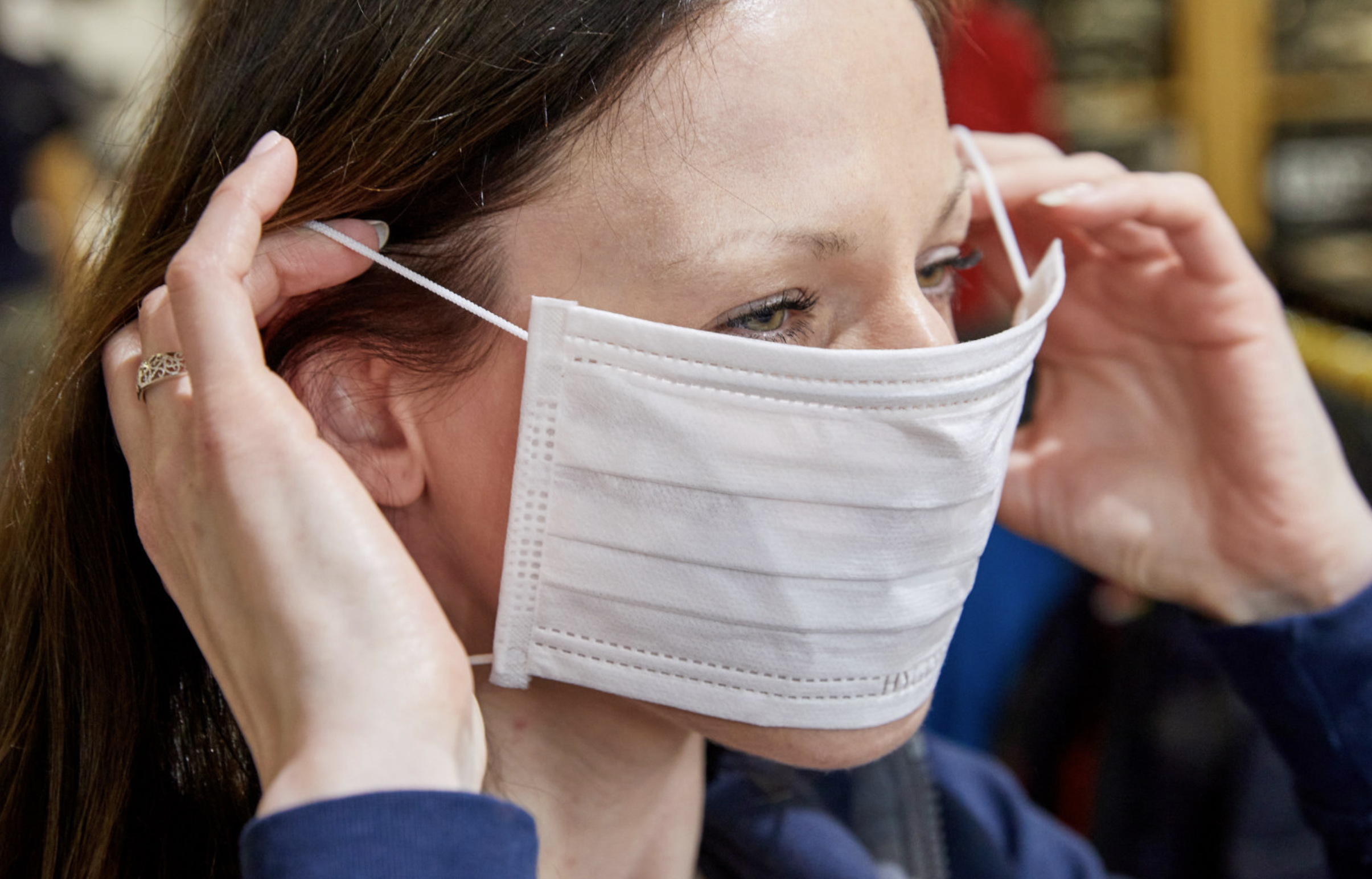
The Czech government banned direct flights between the Czech Republic and China due to the new coronavirus outbreak, effective Feb. 9, a government spokeswoman said on Monday. The flu-like virus has been declared a global emergency and spread from China’s Wuhan province to more than two dozen other countries and regions, with the first death outside of China reported on Sunday. Prague has 12 flight connections a week with China, operated by three Chinese airlines. Hainan Airlines has been operating in Beijing since 2015, a year later Sichuan Airlines began flying to Chengdu, and in 2017 China Eastern Airlines launched a flight to Shanghai, with a stopover in Xi’an. China’s death toll from a new coronavirus jumped above 360 on Monday, surpassing the number of fatalities from its SARS crisis two decades ago, with dozens of people dying in the epicentre’s quarantined ground zero. The World Health Organization has declared the crisis a global health emergency, and the first foreign death from the virus was reported in the Philippines on Sunday.
Czechs are among the biggest spenders on alcohol, and tobacco. A separate research shows that 1.5 million Czechs are at-risk drinkers. The average Czech drinks 14.4 liters of pure alcohol a year, which is twice as much as the global average with Czech men consuming four times more alcohol than women, according to a poll conducted by leading research agency MEDIAN for the Ministry of Health. And it turns out, perhaps unsurprisingly, that the average Czech man’s drink of choice is beer, followed by spirits and wine. “We are particularly alarmed for pregnant women drinking alcohol,” says Jarmila Vedralová, Director of the Department of Drugs Policy. “Every third person thinks that drinking small amounts of alcohol during pregnancy is okay. It is not. This must be clear,” she added. The survey shows that every twentieth person in the Czech Republic drinks alcohol shortly before going to sleep. “And that can lead to long-term dependence,” says Denisa Kalouskova of Health Ministry. “For example, it is little known that excessive and regular drinking also increases the risk of cancer, heart attack or psychiatric disorders. Thereafter, the treatment of these diseases is extremely expensive.” Germany, the Czech Republic, and Lithuania are the heaviest-drinking countries in Europe,...
The Czech Republic registers a growing flu epidemic, with 1,865 infected people for every 100,000 citizens, the country’s chief sanitary officer said on Friday, adding that the death toll had reached 12. “According to the State Healthcare Institute, the influenza epidemic has spread across the entire republic. In general, influenza A virus is predominant. For every 100,000 citizens, there are 1,865 confirmed cases, mostly children and elderly people. Twelve people have already died from flu-related complications. In comparison with last week’s figures, the number of cases increased by almost a third,” Eva Gottvaldova told reporters. The health official advised those who would feel flu symptoms to stay home to curb the infection spread. She also recommended that fellow citizens avoid public places, observe hygiene practices and eat more food rich in vitamins. According to the Czech health service, flu has recently hit most European countries. Influenza A is predominant, but influenza subtypes a/H1N1pdm, A/H3N2 and B/Viktoria are also circulating. The seasonal flu in France, meanwhile, has claimed 22 lives since November, official figures showed on Wednesday. The flu epidemic in European countries comes amid the China coronavirus outbreak, which has spread to over 20 countries and prompted the World Health Organization to declare a global emergency. What is the Flu and How Can We Prevent It? The flu is considered...
The eighth annual Dry February, aimed at highlighting the dangers of excessive drinking, begins today in the Czech Republic. The campaign aimed at encouraging Czech men to abstain from alcohol for the month. The event is organised by the group League of Open Men but is also encouraging women to not drink a drop of alcohol during February. The Czech Republic has among the highest rates of alcohol consumption per capita worldwide. Health statistics show almost 1 million Czechs are at risk of alcohol abuse. A recent report from OECD shows that the Czech Republic ranks 4th in terms of alcohol consumption. The report used data from 2017, at which time Czechs consumed an average of 11.6 liters of absolute alcohol per year each. Pure alcohol is measured as one milliliter for every percentage of the drink’s strength if there is 100ml of it. The big-time benefits of drinking less Goodbye beer gut, hello hotness: Cutting alcohol’s empty calories out of your life can help you lose that beer gut, and by becoming more attractive, you may well get a boost… in the bedroom! Living longer (and harder): Drinking less reduces the risk of erectile dysfunction and low testosterone, type 2 diabetes, liver disease, heart disease, and several forms...
Since the release of their 2004 debut, Hot Fuss, with its now-classic breakthrough singles, Mr. Brightside and Somebody Told Me, Las Vegas’ The Killers have gone on to sell 28 million albums, win countless Grammy, Brit, Q, NME nominations and awards and headline stadia and festivals around the world. Colours of Ostrava organizers announced today that the US band is the latest name to be added to the line-up of this year’s festival. Other names on the line up include LP, Tindersticks, The Lumineers, Sleaford Mods and Youssou N’Dour. The 18th edition of the Colours of Ostrava Festival will take place from July 15th to July 18th, in the industrial area of Ostrava Dolní Vítkovice. On twenty stages, the festival offers more than 350 different acts – in addition to the concerts of more than 120 foreign and domestic bands, there will also be talks within the International Meltingpot Forum, as well as theatre performances, workshops, films, art installations, and other related activities. The diversity of the programme is one among many festival’s assets: the event is held on the site of the city’s former mines and ironworks, a European Cultural Heritage Site – a festival site unlike any other. Despite...
MEDIAN agency survey showed that the majority of Czech citizens support LGBT+ rights. This comes after a bill to legalize same-marriage was introduced to the Chamber of Deputies in 2018. Despite attempts to stonewall the legislation, the Government announced its support for the bill. Although, it has since been pelted with postponements since a vote was scheduled to take place. Deliberations, at times lasting seven hours, have stalled the bill and it has not been discussed since early 2019. The poll suggested that support and opposition for marriage equality rather cleanly sits on generational lines. The most surprising result from the survey is the increase of support for equal marriage among the age group from 35 to 54. There’s also an increase in support for the adoption of children by gay and lesbian couples, families – both of a child of one partner by the other in the relationship [77 percent], and of a child from an institution [62 percent]. Last year, 15% of respondents polled by Media were firmly against legislation allowing same-sex marriages, up from 10% in 2018. The Czech Republic was the first post-communist country in the European Union member to adopt a registered partnership law, back in 2006. In...
Don’t have an account? Register
[swpm_registration_form level=”6″]
Already have an account? Log In
How Would You Like to Promote Your Business? PR ArticleDisplay bannersVideo productionNewsletter adsJob ListingsInfluencer Marketing
Your Email
We will come back to you within 24 hours with our proporsal