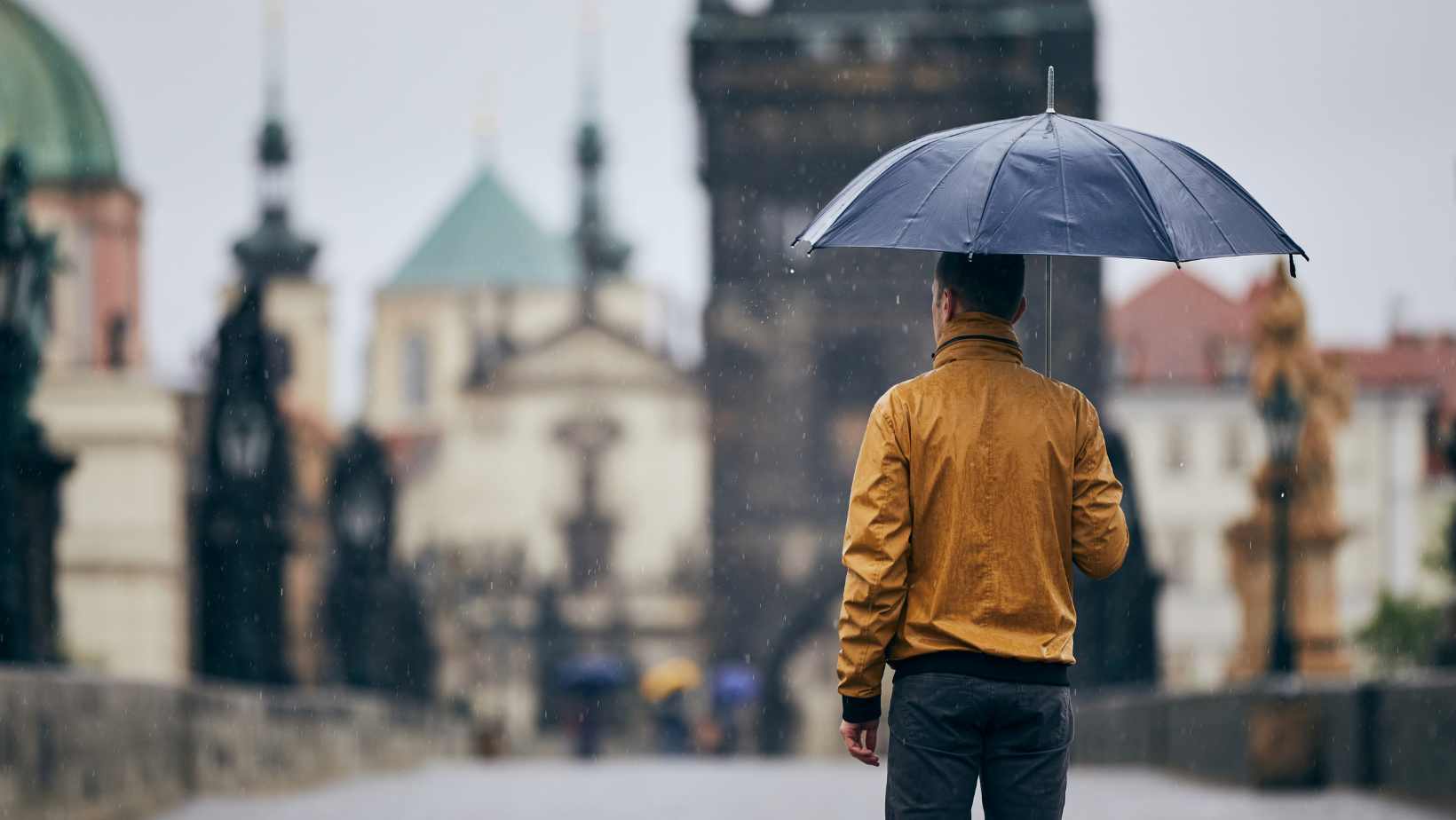
The Czech Republic is in the grip of severe frosts, with temperatures in the mountains dropping as low as -30.2°C. According to the Czech Hydrometeorological Institute (ČHMÚ), nighttime temperatures across much of the country ranged between -9°C and -14°C, while mountainous regions experienced even harsher conditions. The freezing conditions have persisted for several nights. “Tuesday night was particularly cold, especially in northwestern and northern Bohemia, where skies remained clear. Here, temperatures commonly fell to -9°C to -14°C, with some areas dropping to around -16°C. In the Jizera Mountains, we recorded temperatures below -20°C,” ČHMÚ meteorologists reported on X. The lowest temperature of the night was measured at Kořenov Jizerka, where the station recorded -30.2°C at 5:00 AM. “Elsewhere in the country, low-lying areas remained under compact cloud cover, preventing extreme temperature drops. In these locations, temperatures mostly ranged between -4°C and -9°C,” meteorologists added. Daytime Temperatures Struggle to Rise Even during the day, the frost is unlikely to ease. In some areas, temperatures will remain below freezing. “Cloud cover is gradually decreasing from the north and will continue to clear throughout the day. By the afternoon, most of the country will see sunshine, but maximum temperatures will only reach -4°C...
A new amendment to the Tourism Act will require all accommodation providers, including hotels and private Airbnb rentals, to register in the upcoming eTurista system. The proposal has passed its first reading in the Chamber of Deputies, with implementation planned for hotels this year and private rentals next year. The amendment also grants municipalities the power to regulate short-term rentals in apartment buildings. Local governments will be able to set restrictions on rental periods, limit the number of days a property can be rented per year, and impose occupancy limits based on apartment size. “Hotels and other registered accommodations must follow strict regulations and are subject to inspections and potential sanctions. However, authorities often have no oversight over short-term rentals via digital platforms, allowing some hosts to operate in a legal gray zone,” said Minister for Regional Development Petr Kulhánek (STAN). Kulhánek emphasized that the lack of regulation negatively affects popular tourist destinations like central Prague and the Krkonoše (Giant Mountains). Unregistered accommodations often fail to report foreign guests and avoid paying local accommodation fees. “Our estimates suggest that the state loses nearly CZK 800 million annually in unpaid taxes from unregistered accommodations, while municipalities lose another 55 million crowns in...
Czechia is bracing for a week of freezing temperatures, with nighttime lows plummeting to -15°C. The cold spell will peak midweek before a gradual warming starts on Thursday. The Czech Hydrometeorological Institute (ČHMÚ) reports that a high-pressure system over northern and central Europe will drive the extreme cold. People were advised to dress in multiple layers, wear suitable footwear, and limit outdoor exposure, especially for children, the elderly, and those in poor health. The deep freeze will intensify on Monday, with clear to partly cloudy skies, though some areas may see temporary cloud cover and isolated snowfall. Nighttime temperatures will plunge to between -10°C and -15°C, with daytime highs reaching -3°C to 1°C. Tuesday and Wednesday will bring similar conditions, though daytime temperatures may rise slightly to 2°C. Thursday will remain mostly clear to partly cloudy, with temporary cloud cover moving in from the west. However, warmer air will start to arrive. The lowest nighttime temperatures will range from -8°C to -12°C, or around -6°C in cloudier areas. During the day, temperatures could climb to 4°C. The trend of clear to partly cloudy skies will continue into the weekend, though fog and low clouds may develop in some areas, including...
An alarming new drug, nitazene, is making its way through Czech online platforms. Sourced from China, this substance—more dangerous than fentanyl—has already captured the attention of customs officials. In recent weeks, online spaces have seen a surge of advertisements promoting nitazene worldwide. Customs officers in the Czech Republic have intercepted shipments linked to the drug, prompting concerns over its spread. Investigative efforts by Bellingcat and coverage on investigace.cz have shed light on the issue. Their research uncovered numerous nearly identical ads. One such message read: “Hello, friend. Our advantage is safe and fast delivery, ensuring your products arrive on time and in pristine condition. Our efficient process balances security and speed for a seamless experience every time.” These ads typically include contact details via Telegram or Signal and display an image of a white to grayish powder. In the Czech Republic, the drug has been promoted on eight different websites—including Hyperinzerce, Chov zvířat, Zbavsetoho, and primabazar.cz—although inquiries have so far gone unanswered. More Toxic Than Fentanyl Developed around sixty years ago as an alternative to morphine, nitazene was never approved for medical use. In stark contrast to fentanyl, nitazene compounds are estimated to be ten to forty times more toxic;...
The Czech government is set to discuss regulated sales of kratom and cannabis with THC levels up to 1% on Wednesday, with the changes potentially taking effect in July. The regulation focuses on substances deemed to pose low public health and social risks based on current scientific evidence. These include kratom and kratom extracts, known for their stimulant and pain-relieving effects; cannabis with up to 1 percent THC, a low-potency form of cannabis with minimal psychoactive effects. Low-THC cannabis products will be permitted to be sold in licensed stores starting this summer in Czechia, although certain forms of commerce such as automated vending machines remain prohibited. Additionally, starting on April 1, 2025, general practitioners (GPs) in the Czech Republic will be authorized to prescribe medical cannabis to suffering patients. The policy change is a result of a new decree from the nation’s Ministry of Health. “The decree allows GPs to prescribe medicinal cannabis for chronic, intractable pain,” Ministry spokesperson Ondřej Jakob previously said. Medical cannabis was first legalized in Czechia in 2013, however, only specialists can currently prescribe it resulting in roughly 8,000 patients receiving legal access. There is also a push in Czechia for wider adult-use cannabis legalization. However,...
In Milovice (Nymburk District), a driver came dangerously close to hitting a young girl at a pedestrian crossing, raising concerns about road safety. The incident occurred on February 6 on Armádní Street and was caught on a security camera. The footage shows the girl, a primary school student, stepping onto the crossing when a car speeds through, missing her by mere centimeters. Local police quickly identified the driver and referred the case to administrative proceedings. Authorities suspect the driver violated the law requiring motorists to yield to pedestrians at crossings. If found guilty, the driver could face a fine of up to 5,000 CZK, four penalty points, or a driving ban ranging from six months to a year. The police have not disclosed the driver’s identity or age but confirmed that no criminal charges would be pursued. In response to the incident, the police issued a public warning, urging both drivers and pedestrians to remain vigilant. “Drivers must always yield to pedestrians at crosswalks and be particularly cautious when children are present,” police stated. “At the same time, pedestrians should not assume that a vehicle will stop—they should always check for slowing traffic before stepping onto the road.” Would you...
According to the Prime Minister and the latest economic index, Czechia is flourishing, even as Poland and Romania begin to close the gap. According to data released by the Prosperity and Financial Health Index, Czechia now boasts the ninth healthiest economy in the European Union. GDP and consumer spending are on the rise, inflation has been tamed, debt levels remain stable, and Czech companies are steadily returning to domestic ownership. While such progress might prompt celebrations and counter the narrative of an imminent takeover by Asian economies, there’s an important caveat: even though GDP and consumption are increasing, our pace is slow compared to other nations, where growth is notably swifter. “Czechia is doing well. Both GDP and consumer spending are growing,” Prime Minister Petr Fiala stated on the FLOW program. His remarks were meant to boost the morale of citizens—many of whom, he believes, are reluctant to spend due to a gloomy outlook. He also dismissed claims that the government’s consolidation measures have squeezed the budgets of low-income households. In fact, real wages are rising, and the government recently reduced the VAT rate on food from 15% to 12%, a welcome move given that groceries are the largest expense...
Which 5G network in the Czech Republic is the fastest? We have the answer. O2 has been awarded the title of the fastest 5G network in the Czech Republic by independent testing firm Ookla. The accolade follows a comprehensive evaluation based on more than a thousand user tests conducted in the third and fourth quarters of last year using the Speedtest tool. According to the report, O2’s network achieved a median download speed of 146.99 Mb/s—with speeds soaring to 330 Mb/s in Prague. These impressive figures contributed to a Speed Score of 141.18 points, leaving competitors T-Mobile at 117.79 and Vodafone at 82.26. Jan Hruška, O2’s Technology Director, remarked: “After four years of extensive 5G coverage in the Czech Republic, this award is a testament to the hard work of hundreds involved in the project. It also confirms that our customers are enjoying the best service available in the Czech market.” The Speedtest Award is based on a composite score that considers both download and upload speeds, as well as latency. O2’s network demonstrated not only remarkable download speeds but also robust upload performance—exceeding 32 Mbps—and an average latency as low as 19 ms. Notably, the network’s performance in Prague...
Shoppers in the Czech Republic are feeling the strain of yet another rise in food prices, even as overall inflation has eased. While the country’s inflation rate dipped to 2.8%, grocery bills continue to climb, with the cost of everyday essentials seeing sharp increases since the start of the year. Data from the Czech Statistical Office shows food prices have jumped nearly 5% compared to last January. The rise is particularly steep in dairy products, with butter now selling for 61 crowns per package, up from 44 crowns a year ago—a 40.5% increase. Eggs have also become noticeably more expensive, surging 24.6%, while meat prices across all categories are up as much as 10%. Agricultural analyst Petr Havel notes that while food prices are still rising, the hikes are less severe than in previous years. He attributes the recent increase in meat and egg prices partly to stricter animal welfare regulations, including the ongoing phase-out of cage farming. Not all products are getting more expensive. Potato and sugar prices have fallen by more than 20%, thanks to a current sugar surplus. However, vegetable prices are expected to keep rising until April due to seasonal factors. Barring any major disruptions, overall...
The used electric car market in the Czech Republic is rapidly growing, signaling that Czechs are increasingly embracing electric vehicles and moving past common myths about their reliability and safety. According to the Centre for Transport Research (CDV), the rise in used EV sales is driven by increasing competition and the fast rollout of new models, which are pushing down prices for older vehicles. Three-year-old electric cars—typically coming off operational leases with valid battery warranties—are in the highest demand. The most sought-after brands include Tesla, BMW, and Volkswagen, with Prague leading in registrations, followed by the Central Bohemian, South Moravian, and Moravian-Silesian regions. In 2024, 3,843 used electric cars in the M1 category were registered in the Czech Republic, marking a 74% year-on-year increase. Tesla dominated the market, accounting for 24.3% of all registrations (935 vehicles), followed by BMW (636), Volkswagen (580), Mercedes (200), Hyundai (193), Škoda (161), and Nissan (155). The demand was evenly split between private and corporate buyers, with each accounting for around 50% of total registrations. While Tesla remained the top choice across both groups, private buyers preferred Volkswagen and BMW, whereas companies ranked BMW above Volkswagen in their purchasing preferences. This surge in demand for...
The Czech Statistical Office confirmed that inflation in January was 2.8%, mainly driven by rising food prices. Consumer prices rose 2.8% year-on-year in January, slightly lower than in December. Prices also increased 1.3% compared to the previous month, mainly due to higher costs in food, alcohol, and tobacco. December’s Christmas discounts had temporarily slowed inflation, but food prices are now rising again. At the end of last year, agricultural producer prices jumped 8.1%, adding pressure on food costs. Compared to last year, food prices were almost 5% higher, while housing prices grew more slowly, up 1.3%. Prices of goods increased 1.7%, while services became 4.7% more expensive. The cost of rent also rose, driven by higher property prices. Despite some price relief in services, inflation remains high, particularly in the food sector. The Czech National Bank (CNB) is expected to continue cutting interest rates, but only at meetings when new forecasts are released. The next cut is likely in May, with the final one in August, bringing rates down to 3.25%. Inflation is expected to rise slightly to 2.7% this year, possibly exceeding 3% in the middle and later months. The CNB forecasts inflation to average 2.4%, but food prices...
Arctic air will sweep into Central Europe from the northeast this weekend, bringing a sharp drop in temperatures. Moravia and Silesia are expected to experience the coldest conditions, with nighttime temperatures falling to -15°C. However, the extent to which the cold air will reach western Czechia remains uncertain. According to meteorologists on X, the incoming air mass is dry and continental, meaning it will not bring significant snowfall. Instead, the coming days will be marked by clear skies and freezing nights. Where skies remain cloudless, overnight temperatures could drop well below -10°C. If a continuous snow cover forms, the cold will intensify further, with lows reaching -15°C in some areas. Meteorologists predict that daytime temperatures on Saturday, Sunday, and Monday will remain below freezing, hovering around -2°C. The most extreme cold is expected in Moravia and Silesia, while western regions of Czechia may experience slightly milder conditions. It is still uncertain whether the Arctic air will persist throughout the next week. Current weather models suggest the possibility of another round of freezing temperatures, but details will become clearer in the coming days. Would you like us to write about your business? Find out more
Don’t have an account? Register
[swpm_registration_form level=”6″]
Already have an account? Log In
How Would You Like to Promote Your Business? PR ArticleDisplay bannersVideo productionNewsletter adsJob ListingsInfluencer Marketing
Your Email
We will come back to you within 24 hours with our proporsal