Finding a general practitioner in Prague can look simple until the first calls begin. One practice does not answer. Another says it is full. A third can offer an appointment, but not in English. Your insurer’s list may not show who is accepting new patients today or what kind of visit is available. If registration is blocked, first clarify whether you need long-term GP care, a one-time consultation, a specialist, an urgent route, or a private self-paid visit. Decide whether this is really a GP problem A GP is often the right first contact for common health concerns, preventive care, prescription questions, basic tests, and referrals. In Czech, this doctor is called a praktický lékař. Not every situation should wait for GP registration. For a sudden and serious health problem or a possible threat to life, call 155 for the medical emergency service or 112 for the European emergency number. If the issue clearly belongs to a dentist, gynaecologist, or specialist, ask that provider whether direct booking is possible or a referral is required. Patients in Czechia can generally approach a specialist without a GP referral, but an individual provider, insurer, or procedure may have its own requirements. Tell the...
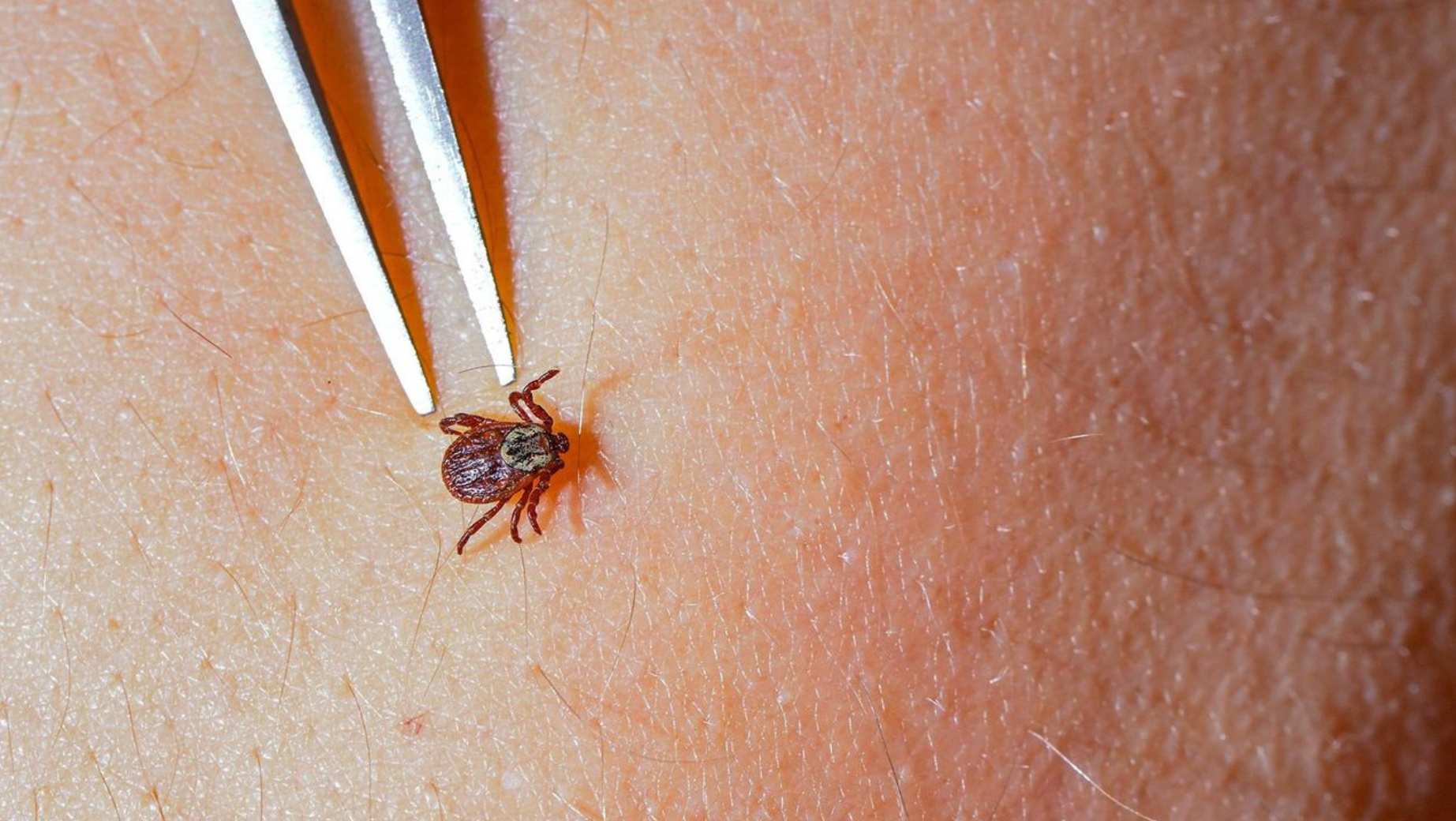
Lyme disease cases are rising sharply across the Czech Republic, with more than 8,000 infections recorded since the beginning of the year. Health officials warn that the summer peak may not have arrived yet. A total of 8,108 cases were reported through the end of July, according to data from the Czech State Institute of Health (SZÚ). July alone accounted for 2,792 infections, meaning that roughly one in three cases recorded so far this year occurred during the month. Doctors registered an average of about 90 new cases each day in July. The figures are significantly higher than those seen in previous years. Between January and July, the Czech Republic typically recorded between 1,500 and 2,000 Lyme disease cases. Part of the increase may be linked to a change in the way infectious diseases are reported. The number of tick-borne infections depends on several factors, including tick populations and seasonal weather conditions. Climate change is also playing an increasingly important role. The highest numbers of Lyme disease infections have so far been reported in the Central Bohemian and South Moravian regions. The risk is not limited to forests and countryside. Prague’s parks and wooded areas can also provide suitable conditions...
Skywatchers in the Czech Republic will have two reasons to look up on the night of August 12. A partial solar eclipse will be visible in the evening, followed by favorable conditions for watching the annual Perseid meteor shower. The eclipse will be visible across Czechia shortly before sunset, with the Sun low over the western and northwestern horizon. In Prague, the partial eclipse is expected to begin at about 7:19 p.m., reach its maximum at 8:12 p.m. and end around 8:27 p.m. At the height of the eclipse, the Moon will cover about 86 percent of the Sun’s disk in Prague, making the event particularly noticeable if skies are clear. The eclipse will look different depending on where observers are located. The farther east they are, the later the eclipse will begin and the less of it will be visible. In eastern Czechia and much of Slovakia, the maximum phase will take place after sunset, when the Sun is already below the horizon. The event will be a partial eclipse in Central Europe, while a total solar eclipse will be visible in parts of Greenland, Iceland and Spain. Astronomers and eclipse enthusiasts are expected to travel to those areas...
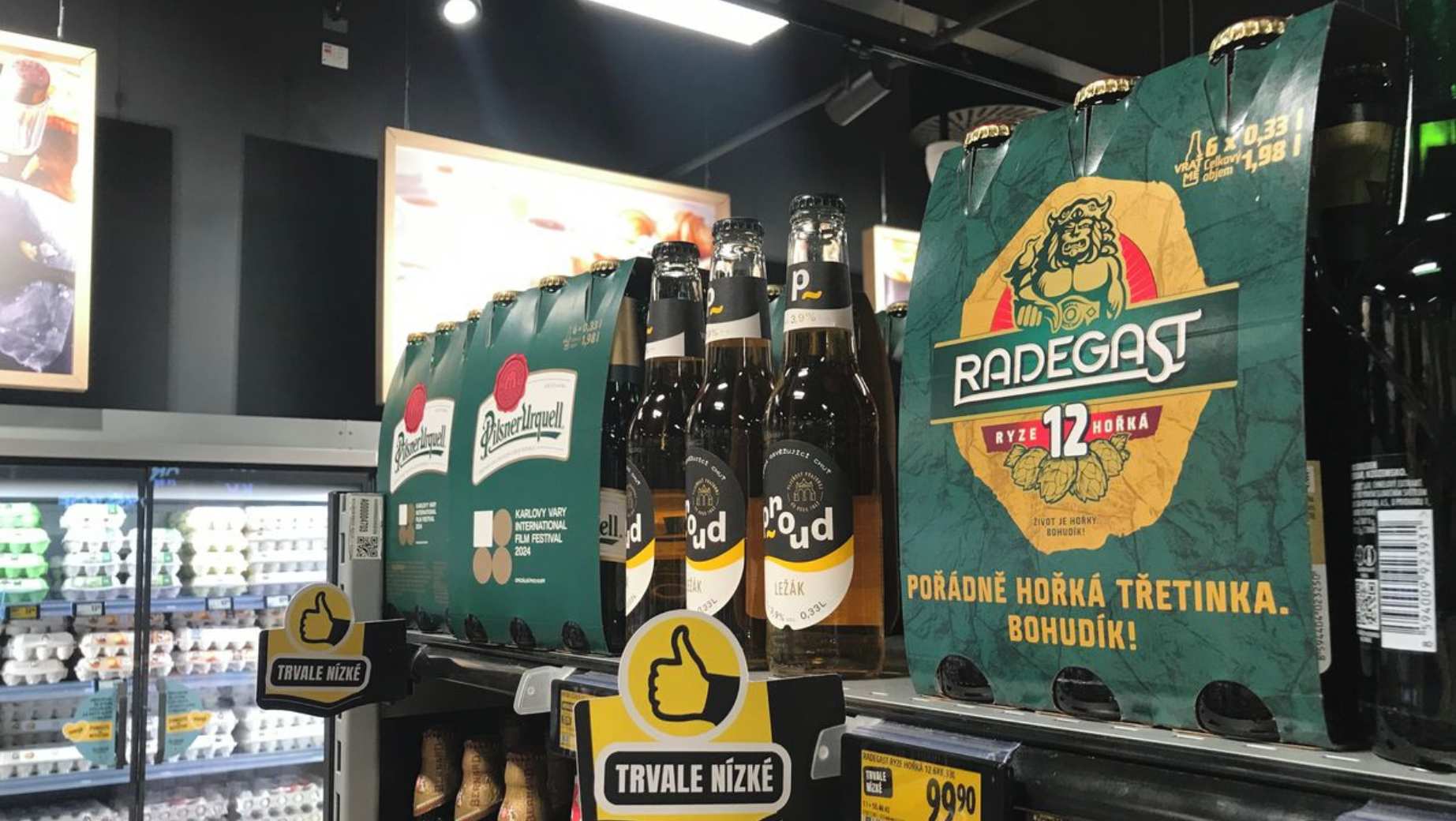
Beer remains a staple of the Czech shopping basket, but new sales data from online supermarket Rohlík shows that drinking habits are gradually changing. Traditional lagers still dominate, while non-alcoholic beer is recording the fastest growth among the main beer categories. The category has grown by more than a quarter over the past year, with Birell among the brands driving the increase. Birell sales alone are up by almost 20%. Together with flavoured beers and radlers, non-alcoholic beer now accounts for close to one-third of all beer sales on Rohlík. Beer from small and regional breweries is also gaining ground, with sales increasing by more than 11%. The biggest decline is being recorded among craft beers grouped by style, including IPA and APA. This is currently the only major beer segment experiencing a year-on-year drop. Czech brands continue to dominate the market. More than nine out of every 10 beers sold through Rohlík are from domestic brands. Imported beers, however, are growing at a faster rate. Their sales have increased by 18% year-on-year. Beer sales peak at the weekend Friday is the busiest day for beer sales, with roughly twice as much beer sold as on Monday. Friday and Saturday...
A large number of Czech households may be paying more for electricity than necessary because they are using a distribution tariff that does not match their actual consumption. A new analysis estimates that switching to a more suitable tariff could save households more than CZK 1.3 billion a year in total. The analysis was conducted by energy company bezDodavatele. The company examined electricity consumption at 1,132 household consumption points using the two most common household distribution tariffs, D01d and D02d. According to data from the Energy Regulatory Office (ERÚ), D01d and D02d are used by around 65 percent of the approximately 6.5 million household consumption points in the Czech Republic. The analysis found that changing the distribution tariff could reduce electricity costs for more than half of the households examined. Many households never reconsider their tariff One reason is that households often keep the same tariff for years without checking whether it still suits their electricity consumption. A tariff that made sense when a household first connected to the electricity grid may no longer be the cheapest option after its consumption patterns have changed. Many consumers, however, do not regularly review the distribution tariff listed on their electricity bill. According...
Revolut is expanding its investment services in the Czech Republic, giving retail customers access to funds focused on private equity, private credit and infrastructure. The new products will become available in the Revolut app from July 31. The fintech has signed distribution agreements with four major asset managers — Apollo, Ares, Hamilton Lane and Partners Group — which collectively manage more than $2.8 trillion in assets. The move gives Czech retail investors access to parts of the private markets that have traditionally been aimed largely at institutional investors. Private market investments have often required substantial minimum commitments, frequently above €100,000, or around CZK 2.5 million. Revolut’s new offering is designed to lower that barrier and allow customers to add private assets to portfolios that may already include stocks, bonds and exchange-traded funds. Investments will be available directly through the Revolut app. The funds will be offered through the European Long-Term Investment Fund framework, known as ELTIF 2.0. How ELTIF 2.0 works The structure is intended to provide investors with greater flexibility than traditional private equity funds, where capital can remain committed for several years and withdrawals may not be possible during that period. The products offered through Revolut use an...
A Czech company has entered the Fortune Global 500 ranking for the first time in history. Energy and industrial group EP Group (EPG), controlled by Czech businessman Daniel Křetínský, placed 179th in the latest edition of the prestigious list of the world’s largest companies by revenue. The ranking, published annually by the U.S. business magazine Fortune, evaluates companies based on their total sales. EP Group reported revenues of $75.387 billion, equivalent to around CZK 1.6 trillion. To put the figure into perspective, the Czech state budget expects total revenues of CZK 2.118 trillion this year. EP Group’s portfolio includes stakes in major companies across Europe, including British postal operator Royal Mail, Slovak energy producer Slovenské elektrárne, German retail chain Metro and French energy giant TotalEnergies. With its debut in the ranking, EP Group has also placed Prague among the headquarters of the world’s largest corporations. The Czech capital is now one of 242 cities worldwide where at least one Fortune Global 500 company is based. Only 14 other countries in the Fortune Global 500 ranking have a single representative, including Saudi Arabia, Qatar, Poland, Austria and Thailand. EP Group is also among a very small number of newcomers. Only 13...
Nearly one in five vendors inspected at Prague’s farmers’ markets during the first half of 2026 were found to have breached food safety or labeling regulations, according to the State Veterinary Administration (SVS). Between January and June, veterinary inspectors checked 53 vendors across Prague and identified violations in 10 cases, representing almost 19 percent of all inspections. Nationwide, inspectors carried out 165 inspections, with irregularities detected in 27 cases, or roughly 16 percent. Officials said the most common problems in Prague involved improper storage temperatures for food of animal origin, incorrect or incomplete product labeling, and inadequate protection of food from contamination during sale. Inspectors also highlighted several cases they considered particularly serious. In one instance, a vendor was found producing meat products without the legally required authorization while packaging them with the identification mark of a production facility that no longer exists. Authorities said such practices can mislead consumers about where products originate. The SVS warned that food safety risks increase during the summer months, especially at outdoor markets where high temperatures make it more difficult to maintain proper cooling conditions. Across the Czech Republic, labeling violations were the most frequently recorded offense this year, accounting for 26 cases....
Czech women earn significantly less than men on average, with the annual difference estimated at CZK 109,000. New figures based on Eurostat data show the country’s gender pay gap remains above the EU average. Across the EU, employed women earn an estimated CZK 93,800 less annually than men on average. The European Trade Union Confederation (ETUC), which converted the hourly wage gap into annual earnings, estimates that the combined difference across the bloc amounts to more than CZK 8.65 trillion every year. Czech Republic exceeds the EU average According to Eurostat, women across the European Union earned 11.1% less per hour than men in 2024. In practical terms, women received CZK 88.90 for every CZK 100 earned by men. The figures cover companies with at least ten employees. Applying that methodology, the ETUC estimates that women in the Czech Republic earn roughly CZK 108,700 less per year than men, placing the country above the EU average. Only a handful of member states recorded larger estimated annual gaps. Finland ranked highest at around CZK 183,500, followed by Austria (CZK 165,600), Germany (CZK 146,200) and Sweden (CZK 123,600). At the opposite end of the scale, Luxembourg was the only EU country where...
You don’t need a plane ticket to experience the rhythms of Brazil—just a train to Brno. Brno will once again become a hub of Brazilian culture as the city welcomes the return of Brasil Fest Brno, the largest event of its kind in Central Europe. The three-day festival kicks off on Thursday, with a full schedule of concerts, dance performances, and street parades bringing a tropical flair to Brno’s historic center. On Saturday, the festival’s main parade will move through the city center, joined by hundreds of dancers and musicians from across Europe and Latin America. The route starts at Moravské náměstí and ends at Zelný trh. This year, for the first time, the parade will include a five-meter puppet of the Brno dragon, decorated in the Brazilian national colors. The festival’s programme will open on Thursday, July 30, with a special concert by Hamilton de Holanda Trio at Špilberk Castle’s Summer Cinema. The Brazilian mandolinist, winner of the 2025 Latin Grammy Award for Best Jazz Album, is one of the leading figures of contemporary Brazilian music. On Friday, the festival will move to the city centre with free performances at Moravské náměstí and náměstí Svobody. Visitors can look forward...
The world’s largest drum and bass festival is returning to Lake Most (Jezero Most) with its strongest lineup to date, bringing some of the genre’s biggest international names to Czechia from July 30 to August 1. This year’s edition of Let It Roll will feature major live performances, exclusive back-to-back (B2B) collaborations and themed nights designed specifically for dedicated drum and bass fans. Among the headline acts are Chase & Status, Pendulum LIVE, Netsky, Wilkinson, Hybrid Minds, A.M.C, and the Austrian pairing Camo & Krooked b2b Mefjus. Live performances by Modestep and Fox Stevenson are also on the schedule, while Czech audiences will see the local debut of CONTROL ALT DΞLΞTΞ, the audiovisual project created by Dutch EDM producer Don Diablo. One of the biggest attractions will be the return of Chase & Status, the British duo whose career spans more than two decades. Winners of a Brit Award and Grammy nominees, they are expected to perform tracks from their forthcoming album alongside their biggest hits. Their appearance marks their first Let It Roll performance in three years. View this post on Instagram A post shared by LET IT ROLL (@letitrollfestival) Another highlight is Pendulum LIVE, whose concerts...
The Czech government is considering extending compulsory preschool education from one year to two, meaning children could be required to attend kindergarten from the age of four. Education Minister Robert Plaga (ANO) said the proposal aims to provide earlier support for children who may need additional help before starting primary school. “Schools need more psychologists, special educators and other experts who can support both children and teachers. This support must begin as early as possible, already in kindergarten,” Plaga said in a video published on Facebook. He added that early intervention can improve children’s chances of success later in life. Currently, preschool education is compulsory in Czechia only for children who turn five before the start of the school year. The minister argues that earlier attendance could help children from disadvantaged backgrounds or those facing difficult situations at home. “A child’s more challenging behavior is not always caused by a lack of interest in education. In some cases, children are dealing with difficult circumstances and need support before their problems become more serious,” Plaga said. He added that helping children develop their abilities or overcome difficult periods represents a long-term investment in society. Lack of kindergarten places remains a challenge...
Don’t have an account? Register
Already have an account? Log In
How Would You Like to Promote Your Business? PR ArticleDisplay bannersVideo productionNewsletter adsJob ListingsInfluencer Marketing
Your Email
We will come back to you within 24 hours with our proporsal