On Tuesday afternoon, the Czech government approved one-off support of 25,000 CZK for all who were forced to close their businesses within the restrictions and the introduction of the kurzarbeit system from April 6. Ministers discussed the proposal of the Minister of Labor and Social Affairs Jana Maláčová (ČSSD). Maláčová pushed the State to pay two salary contributions to employers, 80 percent for those who had to close their businesses and 60 percent for those who decided on their own. “We want companies not to lay off people,” Maláčová said at a press conference. Applicants must fulfill several conditions by submitting an affidavit, including a fall in revenue of 10% year-on-year in the first quarter (January-March), and a minimum gross income of 180,000 CZK last year. According to the Ministry of Finance, payments can begin from April 12th. Originally the government intended to pay entrepreneurs 15,000 CZK per month. At the same time, the Government approved special incentives for businesses to limit personnel lay-offs. The Cabinet also approved a six-month moratorium on a mortgage and other loan repayments.
You would normally see them in courtrooms where they stand against each other and fight for each of their clients. But these are not common times. A group of leading Czech and Slovak lawyers launched the free online project “Právo v roušce”, designed to help residents, private entrepreneurs and legal entities in these times of crisis. It contains instructions, tips, sample statements, and other useful legal information that may come in handy during the state of emergency. The web portal is divided into the following categories: trade relations labor law taxes compensation for damage bankruptcy and debts tenders medical law migration legislation domestic violence family law The authors of the project at the same time reminded entrepreneurs that they have the right to demand compensation from the state for the rent of commercial space that they were forced to close due to quarantine. “Even for us lawyers, it is often difficult to keep up with all the daily changes. People often need to solve unexpected problems, and very quickly. For many of them, however, the services of lawyers are now unavailable, whether financially or logistically. Everyone should help as they can. This is how we can do it,” says Jana...
The Czech government is extending measures that limit people’s movement by another 10 days to April 11, to help curb the coronavirus outbreak. Travel to work or to visit family is allowed. On Monday 30 March 2020, the government decided to extend the emergency measure against the spread of the coronavirus. The extraordinary measure from the government following the declaration of the state of emergency, limiting freedom of movement and residence of persons until Tuesday, 24 March 2020, with certain exceptions, will now be extended until 06:00 on 11 April due to developments in the coronavirus pandemic in the Czech Republic. As of the same date, all other emergency measures still in force have been prolonged, such as restricting, for example, retail and service sales, prohibiting the presence of the public in restaurants, restricting the operation of offices, and cancelling payment in blue parking zones. The Czech government is debating a 2-week quarantine for all returning from abroad, as opposed to just those returning from high-risk countries. Starting on Wednesday, March 25, the ban on other people’s access to stores has been postponed from 8.00 am to 10.00 am, and now it only applies to retail food stores, sanitary goods,...
The Czech entrepreneurs are waiting to receive the second wave of government loans to help small and medium-sized businesses affected by the coronavirus crisis. However, Prague companies cannot apply (yet) for loans because the funds are provided from the European Union to support entrepreneurship and innovation in the poorer regions. Prague City is not one of them. 1.5 billion CZK will be set aside for applications for loans under the COVID II program and entrepreneurs will be able to claim from 10,000 to 15 million CZK. However, Prague businesses and companies can’t require loans, yet. “We wanted to deploy the money quickly, so we used European funds from the Operational Program Enterprise and Innovation for Competitiveness as the main source. However, they cannot be used for the Prague region. If a company is based in Prague but has branches in other Czech regions, it can apply for a loan. But only to cover operating expenses in those regional establishments,” said Jiří Jirásek, head of the Czech-Moravian Guarantee and Development to Seznam.cz. Entrepreneurs affected by coronavirus will be able to apply for loans to pay operating costs, ie wages, rentals, energy, supplier-buyer invoices. It will not be possible to use this...
The Czech Republic has excluded South Korea from its list of COVID-19 risk countries and lifted the suspension of direct air routes between the two countries. According to the South Korean Embassy in Prague on Wednesday, the Czech government has excluded South Korea and China from its list of countries with high virus risk, which was newly updated on Monday. In the meantime, the Czech health authority has added six nations including the U.S., Canada, Australia, Malaysia, Israel, and Portugal to its 19-nation list. However, flight operation between Incheon and Prague will likely take some time before resuming. The Czech government is currently banning the entry into the country of all foreigners, excluding long-term residents such as green card holders, through April 11. Prague’s latest decision has apparently been affected by a declining number of confirmed cases in South Korea, and its relationship with Korean companies with operation in the country. South Korean Ambassador to Czech Kim Tae-jin and Yang Dong-wan, head of Hyundai Motor’s Czech office, met with Czech Prime Minister Andrei Babish on Wednesday. Hyundai Motor reportedly donated about 400,000 U.S. dollars and 20,000 face masks to the nation.
In the wake of current government restrictions extending until the end of April, the tourism industry will decrease by 142 billion CZK.
At this moment we’re living through a historical event. Like any event of such a scale, it will affect many spheres of our lives. How badly would depend on several conditions: mainly on the type of limitations and their length. The hardest and longest to my mind will be affected by the sphere of tourism. Dozens of thousands of people working as accommodation providers, guides, travel agencies, souvenir shops, etc. have now lost their source of income. According to many experts, the boarders may stay closed long after the situation in the Czech Republic will stabilize. For many businesses even the one month shut down may mean the end of their existence: high bills and salary obligations will force many employers to start firing people. The longer the limitations will last, the more businesses will turn bankrupt. These are the signs of the buying power drop-down of the population. Even those of us with uninterrupted income would be worried by the destabilization and uncertainty. Would this affect the real estate market? Will prices go down? The price level is determined by the demand and offer. The uncertainty will most probably cause the drop of interest to the real estate market:...
This morning, the Minister of Foreign Affairs of the Czech Republic, Tomáš Petříček, informed the Italian Ambassador Nisio that the Czech Republic will send 110,000 masks for the Chinese community in Italy will be delivered as soon as possible. The load will depart within 48 hours. According to Petříček, the police will continue the investigation. “We need to clarify how it is possible that that load appeared illegally in the warehouse in Lovosice,” said the Foreign Minister. “Today (ie on Sunday) I am sending a letter to the Italian Foreign Minister explaining the whole situation. We won’t send the seized equipment but similar gear, which corresponds exactly to the one that was intended for Italy,” added Petříček. “Italy will not lose anything”, said Czech Interior Minister Jan Hamáček. The Czech government in close coordination with the Italian Embassy in Prague has decided to immediately send the load destined to Italy without waiting for the conclusion of the police investigation still in progress. The complexity of the case would require a few more days but the situation in Italy does not allow for waiting. What happened On March 17, the Ministry of the Interior and the Usti nad Labem Region detained...
The Czech government is preparing to offer CZK 100 billion of aid for businesses and CZK 900 billion more in loan guarantees to help the economy withstand the impact of the coronavirus. The combined package could be worth nearly 18% of the central European country’s economic output in 2019 — a huge amount. “The direct assistance could be up to 100 billion crowns and loan guarantees up to 900 billion, in our estimate, which we would offer to business people, individual entrepreneurs and firms,” Babis told a televised news conference. He also called on companies not to start firing workers, as labour offices started to report an influx of new job seekers, mainly from the tourism, hospitality, and other service sectors. Industry Minister Karel Havlicek said the loan guarantees would also be available for self-employed individuals. The government has started taking applications for a loan program for small and medium-sized enterprises and offered firms and individuals the option to postpone some tax payments. The Ministry of Finance expects to raise the projected state budget deficit for this year, Minister Alena Schillerová said. A deficit of CZK 40 billion had been envisaged but that will now increase by tens of billions,...
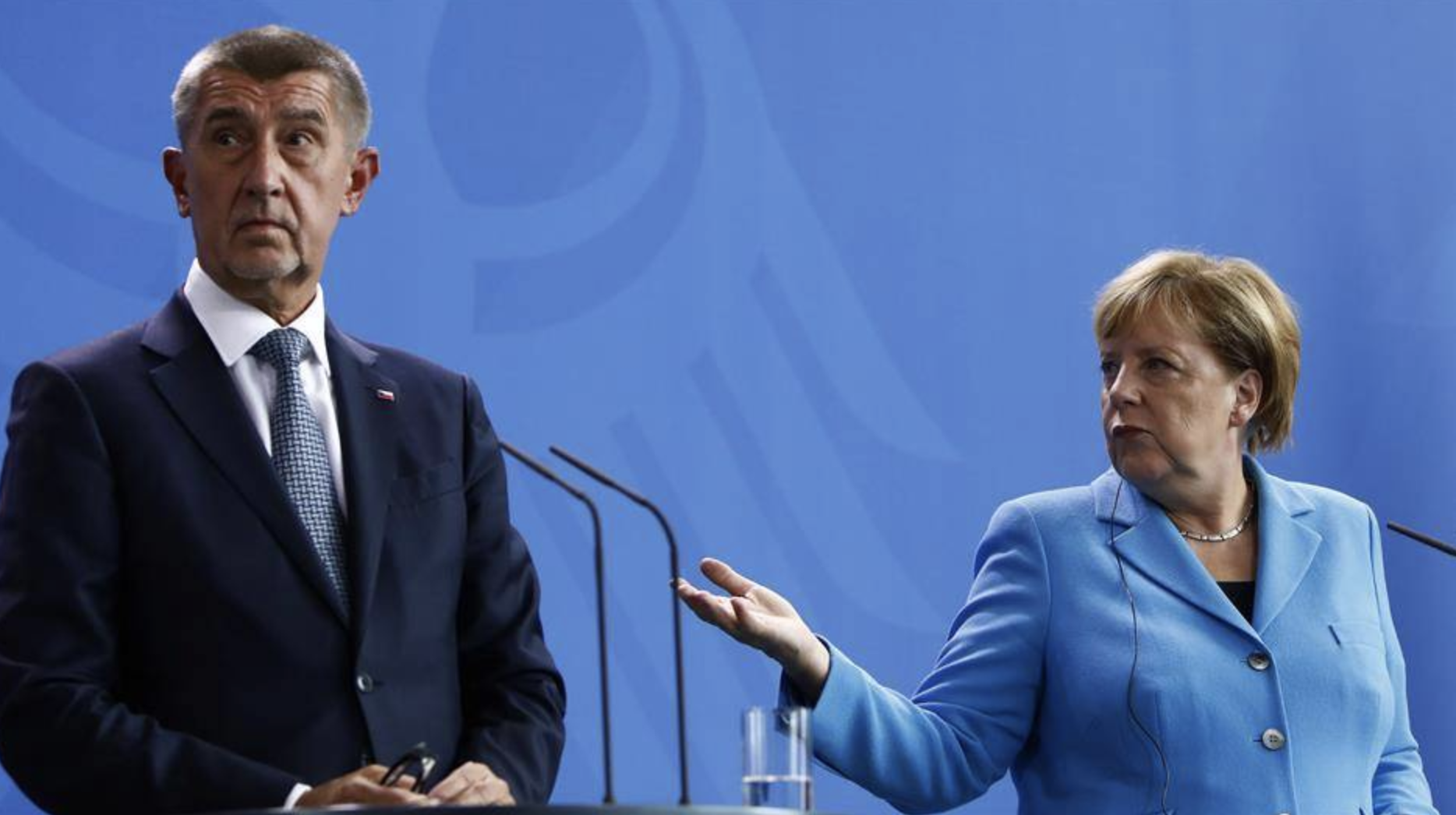
German Chancellor Angela Merkel says up to 70 percent of the population could eventually become infected by coronavirus.
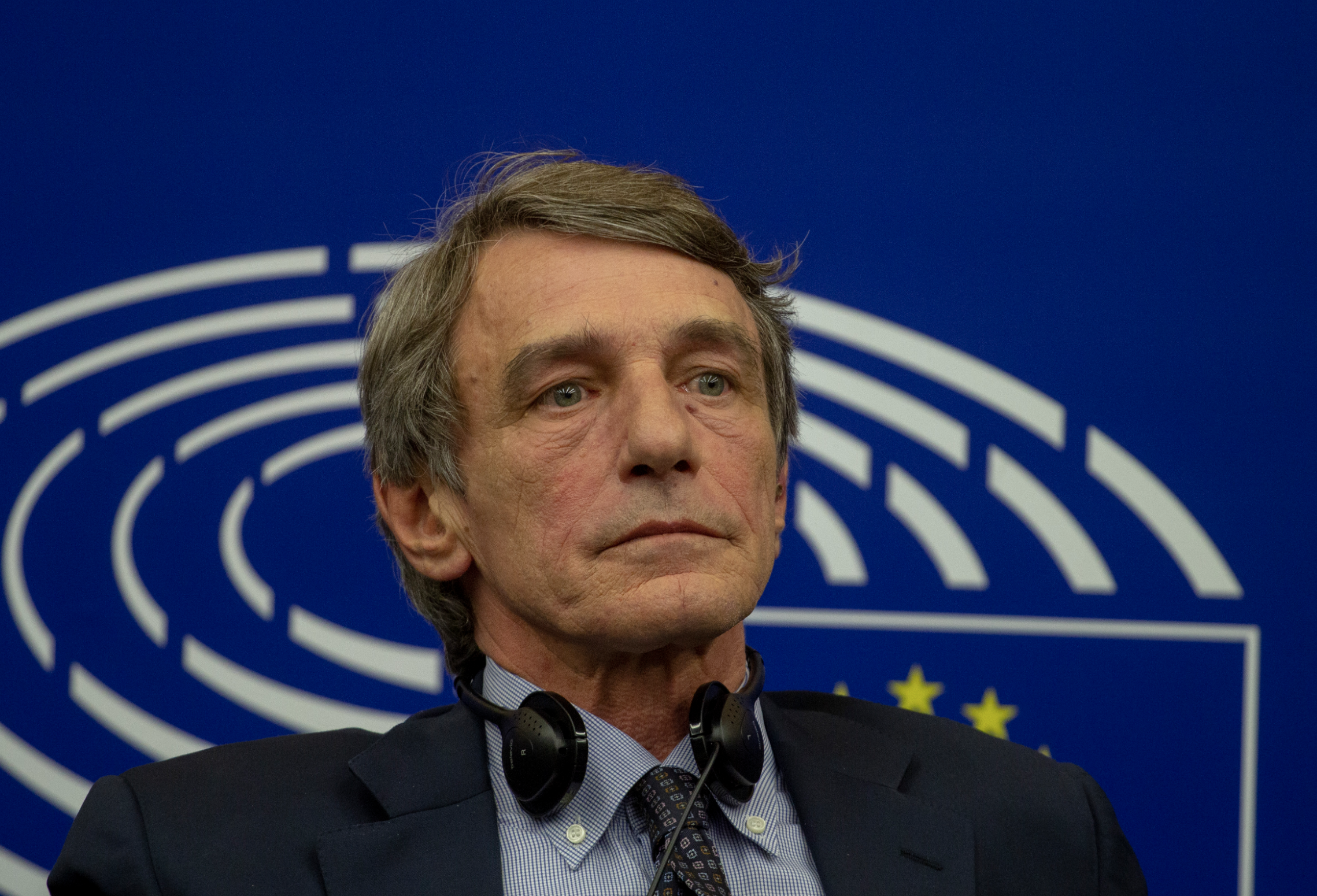
European Parliament President David Sassoli said Thursday he will complain to Commission and Council leaders about “unacceptable” comments by Czech Prime Minister Andrej Babiš. Babiš on Friday branded as “traitors” two Czech lawmakers who took part in a Parliament fact-finding mission to Prague to look into the potential mismanagement of EU funds. The mission from the Parliament’s budgetary control committee was the result of growing concerns about possible irregularities and conflicts of interest. Babiš has come under scrutiny for his links to an agricultural conglomerate he founded, Agrofert, which has received millions in EU funds. The prime minister has repeatedly denied any wrongdoing. One of the two Czech MEPs, Tomáš Zdechovský from the European People’s Party (EPP), said that he and his family had received death threats following Babiš’ comments. He said his family now needed police protection. Green MEP Mikuláš Peksa, the second Czech lawmaker, said he had contacted the police because of a growing number of death threats. A spokesperson for Sassoli said the issue had been discussed at Thursday’s meeting of Parliament leaders. “The general agreement was that the attitude toward the delegation was unacceptable,” the spokesperson said, adding that Sassoli “takes this question very seriously and will raise the point with the President of...
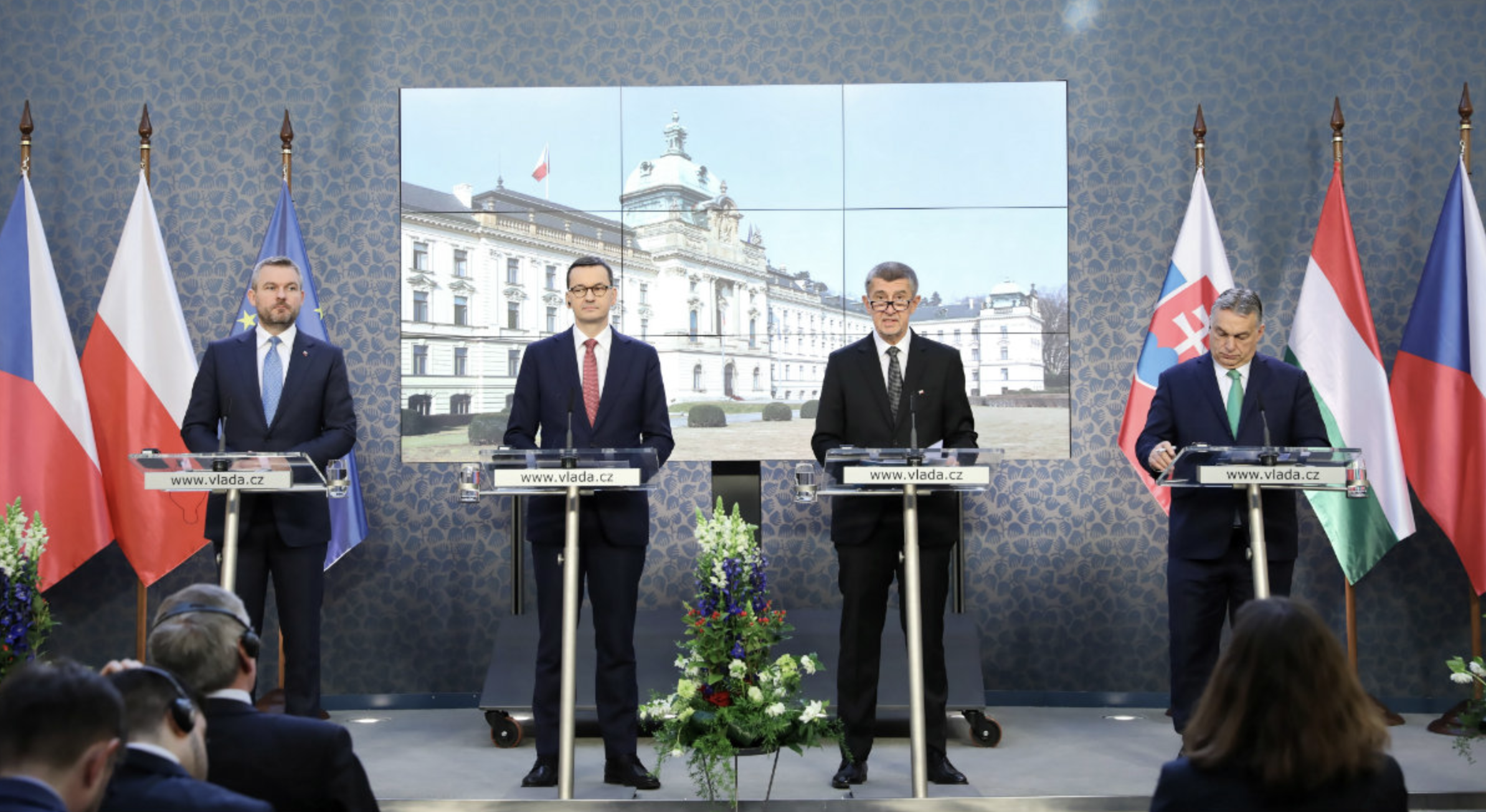
The prime ministers of Poland, Czechia, Hungary, and Slovakia vowed to aid Greece to combat the growing migrant crisis at its border and use all measures to fight coronavirus during a Visegrad Four summit in Prague yesterday. Czech Prime Minister Andrej Babis said that the situation in Greece was serious and that all four Visegrad countries, which are known for their tough stance on migration and opposition to migrant quotas in Europe, are ready to help. Hungarian Prime Minister Viktor Orbán said, “Even if Greece’s attempt to hold back migrants is successful, we shouldn’t forget about the 130,000 people who are already north of the Greek border and who want to get into Europe.” European Commission President Ursula von der Leyen even called Greece the “shield” of Europe over its efforts to combat illegal immigration, which is a big departure for her harsh words for Orbán during the 2015 migration crisis, when she criticized his efforts to halt the migrant wave Europe was facing at the time. Europe has now pledged €700 million in funds to Greece to help combat the crisis. Polish Prime Minister Mateusz Morawiecki stressed that given the current situation on the EU’s southern border, Greece has begun to speak...
Don’t have an account? Register
Already have an account? Log In
How Would You Like to Promote Your Business? PR ArticleDisplay bannersVideo productionNewsletter adsJob ListingsInfluencer Marketing
Your Email
We will come back to you within 24 hours with our proporsal