The main goal is to minimize the generation of waste, and once waste is generated, to turn it into new resources. The circular economy, with its suite of strategies suitable for urban policymakers, can deliver substantial climate mitigation opportunities, social benefits and economic opportunities. The focus of the strategic plan approved by the City Council was on recycling of construction and household waste, greater use of rainwater and development of urban agriculture. A second life for the city’s bulky waste Each year, Prague households consume approximately 307,000 tonnes of non-food products. Of this, nearly 10% is bulky waste – materials or items too large for household waste, such as electrical goods, appliances and furniture – which are destined for landfill. And as the average household income has risen, so has the level of tossed bulky waste. Potentially, 70% of this can be reused, giving furniture and appliances a second life and reducing the overall demands for brand new products. Prague is also building a growing network of Re-Use Points throughout the city: cashing in on the value this ‘waste’ provides when the circular strategies of reuse, refurbish and repair are utilised. In only half a year of the pilot being...
The latest figures show that the Prague hotel market has borne the brunt of the coronavirus crisis in Europe. Hotel industry in Prague recorded the steepest decline in average revenue per room in 2020, down 84.6% on the previous year, with only Barcelona, Rome, and Lisbon being impaired on a similar scale. Even so, confidence in the Prague hotel market and its long-term potential is hardly waning, as underscored by the unflagging interest not only among investors, who are always on the lookout for good opportunities to buy but also among hotel operators, who have identified Prague as the main target of their activities. “The Czech authorities did not follow the example set by many other countries in using local hotels to accommodate health professionals or as makeshift hospitals. All this hastened Prague’s status as one of the most devastated hotel markets in Europe. Having said that, we must remember that these are temporary factors not directly related to the tourism market, which should recover quickly once the virus has been brought under control,” said Bořivoj Vokřínek, Strategic Advisory, Head of Hospitality Research EMEA, Cushman & Wakefield. Results reported for last summer, when rules were eased for a while, signalled...
Ondřej Vlček, CEO of Avast and one of the wealthiest Czech businessmen, has taken the lead in introducing new models of working, that could revolutionize the way companies work in the future. Avast has not only successfully kept afloat during the Covid-19 crisis, but they have also actually drawn inspiration and adapted exceptionally to the new troubling circumstances. Decisive changes in Avast were made as early as September 2020 last year, when the antivirus giant chose to give their employees the possibility of working at home permanently if they wanted to. This year, Avast has decided to provide two models of work for their employees: the conventional ‘Work from the Office’ model, and the ‘Work from Anywhere’ model. The ‘Work from the Office’ model lets employees spend most of their time in the office, or they can also just visit the office for meetings and if it’s necessary. The latter model, ‘Work from Anywhere’, which is a concept that was solidified because of the pandemic, allows Avast’s employees to work from their homes, cafés, or practically anywhere that suits their interests. This new model of work that has inevitably emerged because of the Coronavirus and its global restrictions, has fundamentally...
The Swedish furniture sellers IKEA have announced they are planning to open the Czech Republic’s first planning studio. The studio will be the first in the entire region of the Czech Republic, Hungary, and Slovakia and will focus on the planning of kitchens, storage spaces and bathrooms. IKEA experts will be available to work with customers in designing spaces and planning projects. Over the past fiscal year, the company has experienced a massive boost in online sales and intend to improve their online store experience as well as add new dispensing points in new locations in the region of the Czech Republic, Slovakia, and Austria. An exact location of where this new video design studio would be has yet to be announced. “We are looking for an ideal place where a lot of Praguers go and where they shop,” IKEA Business Manager Federica Barberis tells České Noviny. A small design location was already featured in a convenient shopping location like Wenceslas Square but had only lasted a year before closing in August of 2019. A spokesperson for IKEA state that its presence on the square was only intended to be temporary. IKEA Planning Studios have previously opened in London, Madrid,...
Let’s discover, how many wonderful and creative foreigners live in the Czech Republic! India is the second-largest country in the world in terms of population. One can not imagine the level of competition between the people for better jobs, places in better universities, or even better-living conditions. Sometimes it leads to migration, whether across India or across the globe. Today there are 4165 Indians living in the Czech Republic. Most of these people are very successful. They run their business, they are doctors and engineers. One of these people is Vansh. He came here with a revolutionary idea: to shoot the best Indo-Czech film. He is a foreigner who might live next door.
The City of Prague is aware of the importance of greenery in the urban area and at the same time, the representatives of the city want to support sustainable rainwater management and other adaptive measures within various investment projects of the Czech capital. Thus, the Prague City Hall will launch a brand-new department of Blue-Green Infrastructure. Its manager will be responsible for overseeing and coordinating the city investments in terms of blue-green infrastructure support. From the long-term perspective, Prague is perceived as one of the greenest cities in the world and tirelessly continues planting new trees, having finalized its two separate stages in 2020, even during the COVID-19 state of emergency. Prague City Council’s Program Statement for the years 2018–2022 includes a commitment to plant 1,000,000 new trees in the capital. In 2019 alone, over 350,000 forest tree seedlings were planted. More data on the Prague greenery and environment can be found on the new data website of the city – Pragozor.cz – in the Czech language. In recent years, Prague Council approved several conceptual documents (some of them available for download in English here) relating to the protection and care of urban greenery or generally to the green-blue infrastructure development. Prague already introduced the Principles of...
Czech real estate portal Valuo.cz has recently published an index showing how proximity to a metro station can affect the price of an apartment. Valuo.cz analyzed the average price of apartments located within 400 meters from the Prague metro stations (for some end stations, the radius is 1 km). Apartments at the Staroměstská metro station in Prague are on average almost three times more expensive than on the cheapest Černý Most. The analysis is based on real estate servers from last October to December. It takes into account 65 to 95 square meters of private property within one kilometer of the metro station. Malostranská turned out to be the most expensive metro station in terms of nearby apartments with an average of 211,700 CZK per square meter. Over the year, housing prices have risen here by 25%. The most affordable apartments are located near Rajská zahrada metro station – 75,700 CZK per meter.
If you are looking for a quick delivery to your door, or if you’re running a company or business and want a practical and quick way to have your meals every day, MyFoodPlace can help. This company offers their service as the very first Cloud Kitchen in Prague, Czech Republic. What makes the concept behind a Cloud Kitchen interesting, is that a company usually takes multiple chains of restaurants and food services under their wing, and in general, lets them work from the same location. This concept is both pragmatic, efficient, and also innovative. MyFoodPlace, as an example, collaborates with many different restaurants, to give their customers a plethora of options, such as Corleone, Smíchovna, Namaste India, Žebírkov, and their very own pizza brand Raketou, to deliver a variety of different dishes to your door or place of work. All these food brands work under one roof and are at their customers’ service. MyFoodPlace deliveries have an eclectic range of different foods, from pasta to burgers, salad bowls to Asian cuisine, to even Indian and Czech Food. If you want to expand your taste palette with the different delicacies this company has to offer, then taking advantage of this multicultural...
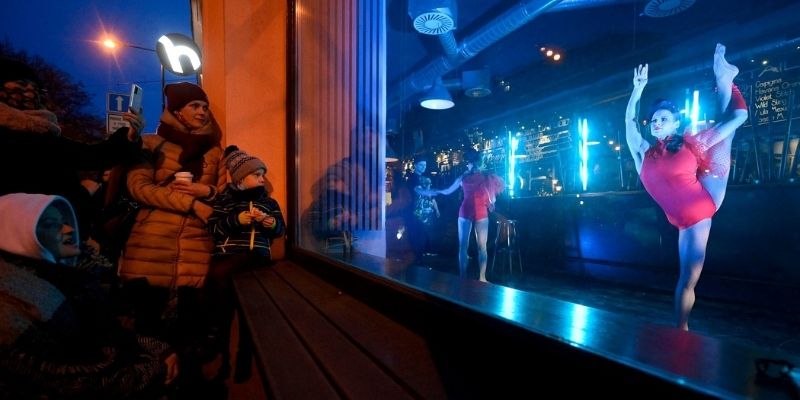
On January 21, artists of the Cirk La Putyka circus performed in front of the closed bar window, while the audience watched outside. The aim of the Cirk La Putyka events in Prague during Covid-19 pandemic is to get live art back to people during theatres-closed-time. From mid of October 2020, all theatres across the country have been closed to visitors due to measures adopted by the Czech government to counter a surge in new coronavirus.
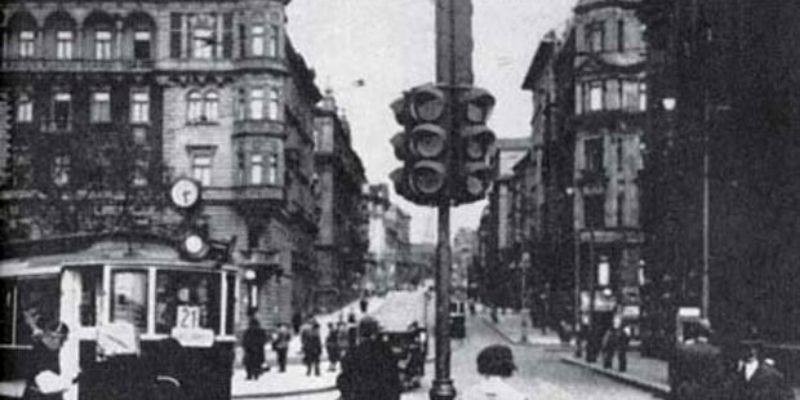
Some sources state that the very first traffic lights were first installed in Prague on the crossroads in the middle of Wenceslas Square between Vodičkova and Jindřišská Streets on the 21st January 1930. At that time, almost 19,000 cars passed through the junction at peak hours. The same sources state that the first light signalling facility in Prague was manufactured in ČKD Praha and was installed at the crossroads of Hybernská, Dlážděná and Havlíčkova streets by Masarykovo Railway Station as early as 1927. Traffic control in Prague The control of traffic on the busiest crossroads in Prague began on 2nd September 1919; in those days a policeman simply stood in the middle of the crossroads controlling traffic on Můstek and on the other four crossroads assisted with a cosh. He was using a ‘pendrek’ (baton) to direct traffic. Praguers were staring at him and found it all strange. They began calling him ‘pendrek’, and to this day, traffic guards are called that. Traffic lights were not to arrive on the scene until later on. Initially, a quadrilateral semaphore was hung in the center of the crossroads and used for cars coming in from all directions as well as for pedestrians....
Throughout the course of 2020, a total of 3,665,871 passengers passed through the gates of Václav Havel Airport Prague. The operation of the airport was unprecedented due to the COVID-19 pandemic, in particular the related restrictions on travel and the worldwide decline in demand for flying. As a result, 79% fewer passengers were handled in Prague compared to 2019. In January and February 2020, there were direct flights serviced from Prague to a total of 111 destinations around the world. In the following months, the offer was limited and continued changing based on the epidemiological situation. Passengers were offered flights to up to 87 destinations on an ongoing basis. Last year, the routes to the United Kingdom were, traditionally, the most popular, with the greatest number of passengers flying to/from London. Václav Havel Airport Prague is ready for a gradual return of air carriers and passengers expected during this year. Currently, passengers can take direct flights to over twenty destinations from Prague. The offer of additional direct connections will primarily depend on the development of the epidemiological situation, which will determine the possible relaxation of the rules for travel. The rate and speed of vaccination of the European population and...
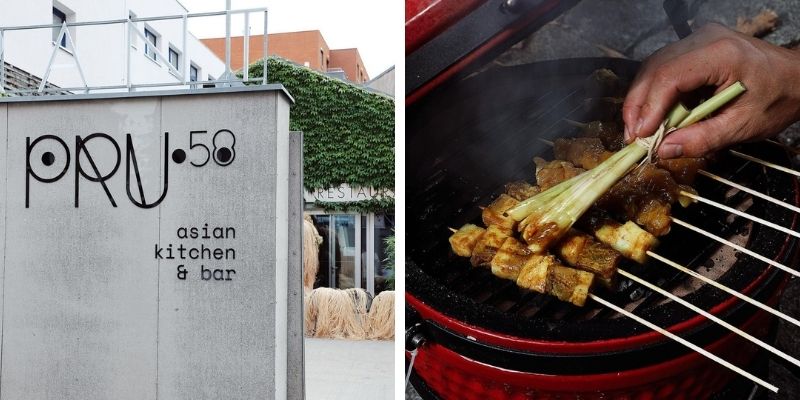
Asian cuisine is becoming more and more popular in the heart of Europe. It is easy to see the trend of Asian cuisine in Prague growing as the number of fine dining establishments, noodle bars, sushi bars, and eateries keep popping up one after another in the many neighborhoods of Prague. The new restaurant PRU58 coming to Holešovice, promises to deliver a menu packed full of Asian cuisine with a modern twist. The founder of Café Buddha and Benjamin Štěpán Návrat is the mind behind the new restaurant. Customers can expect an unforgettable dining experience with a focus on fresh, locally sourced ingredients, seasonal menu changes, and food that smacks of flavour without compromising on health. No classic pho bo or bum bo nam bo then, only special Asian-style dishes. An example? Quail cooked on a special barbecue with fried bananas and cauliflower or beef with Bangkok curry. According to Návrat, post-covid gastronomy will offer better quality for several reasons. “I think the market will clean it up in a way. There will be fewer companies, so we will be able to teach customers humility and more organization. In addition to catering, companies will provide other services such as cooking...
Don’t have an account? Register
[swpm_registration_form level=”6″]
Already have an account? Log In
How Would You Like to Promote Your Business? PR ArticleDisplay bannersVideo productionNewsletter adsJob ListingsInfluencer Marketing
Your Email
We will come back to you within 24 hours with our proporsal