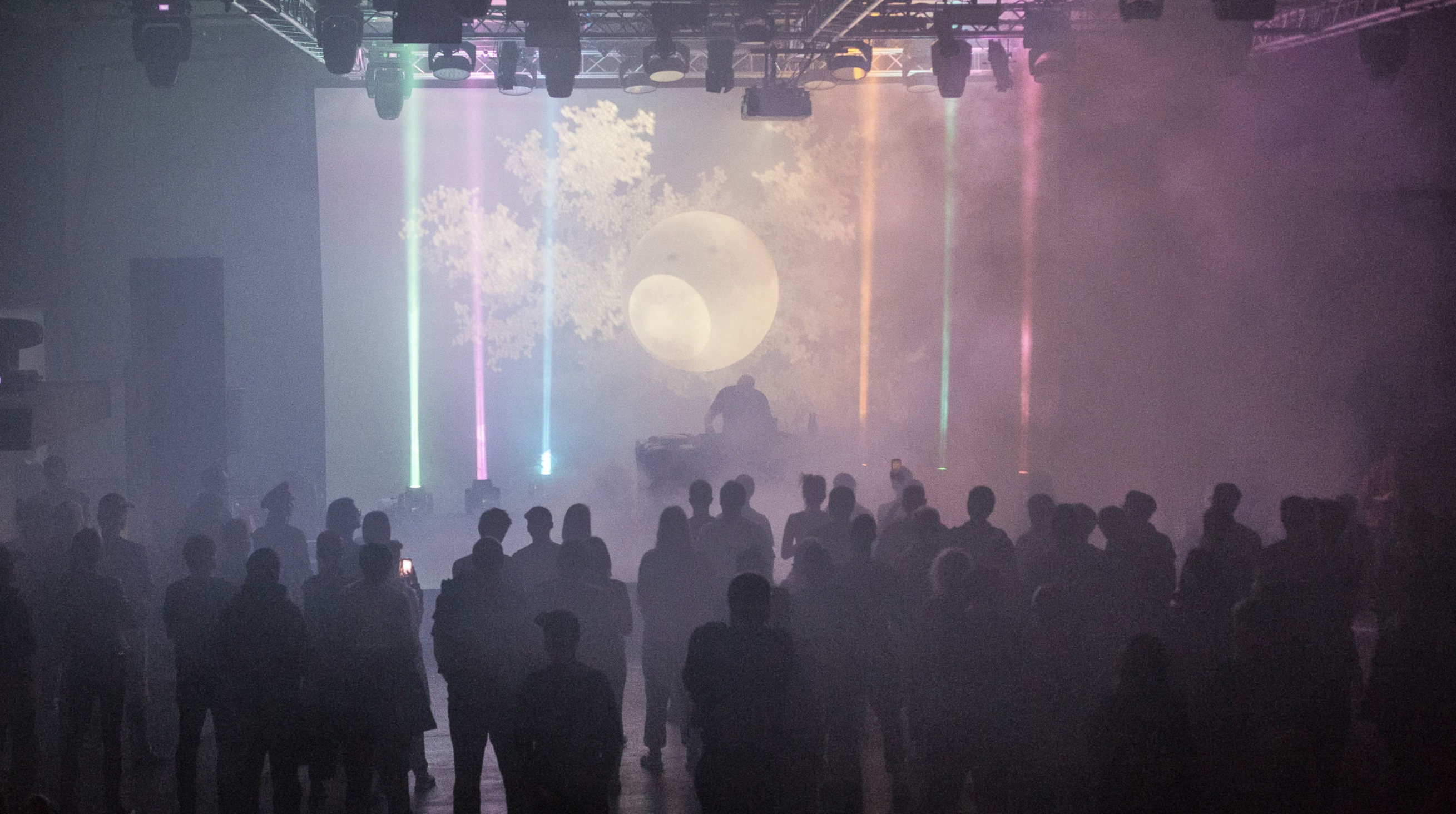
Lunchmeat Festival 2020 – the annual cutting-edge club arena for electronic music paired with state-of-the-art audio-visual technics – will take place from September 28 till October 3. The festival combines performances for sit-down attention and contemplation with later evenings for revels on the dancefloor. However, the motto for this year’s festival is “We See You Dancin’” which puts more emphasis on our need for such a release, especially in these weird times of both post-quarantine and another potentially upcoming quarantine. SOPHIE is the biggest name on the festival’s marquee this year. As a Los-Angeles based, Scottish singer, performer and producer, SOPHIE has a colorful and singular PC sound from her own software produced adrenaline-charged synth-pop merged with elements of sound blasts, like the twists and turns of computer games or sound fragments on movie soundtracks–the new “natural” sounds of life around us. SOPHIE has emerged from her underground status recently as a top-ranked producer for pop stars including Charli XCX, Kendrick Lamar, and even Madonna (see the video “Bitch, I’m Madonna”). Another experimental pop artist at the top of the bill is Lyra Pramuk, who works with recordings of her own voice, which she manipulates or processes through software and...
In 2019, 197,842 new trees were planted in Prague. The average person used 114 litres of water per day in 2019, and motorists spend an average of five days and eight hours in traffic jams per year. This is Prague in numbers, as offered by the new data-crunching website, Pragozor. With one hundred and fifteen eye-catching graphs to explore, you can find information on health, housing, environment, public transport, cars, safety, mobility, and tourism – as well as live data on coronavirus cases. The data offers insights into the success and failings of Prague. For example, Every citizen of Prague (including infants and seniors) produces 330 kg of waste per year, yet the amount of waste that ends up in landfill is steadily decreasing. There is a shortage of surgeons in the city, but Prague is rated as having better access to healthcare than Vienna and Berlin. The number of new builds has increased since 2019, but so has the price and the number of city flats that are privatised. Meanwhile, the rate of violent crime has dropped drastically while cases of graffiti have increased. Mayor Zdeněk Hřib commented: “The smart city is data-driven. I am glad that we can now offer...
Did you know that nine pharmacies across Prague are open 24/7? Here's where to find them.
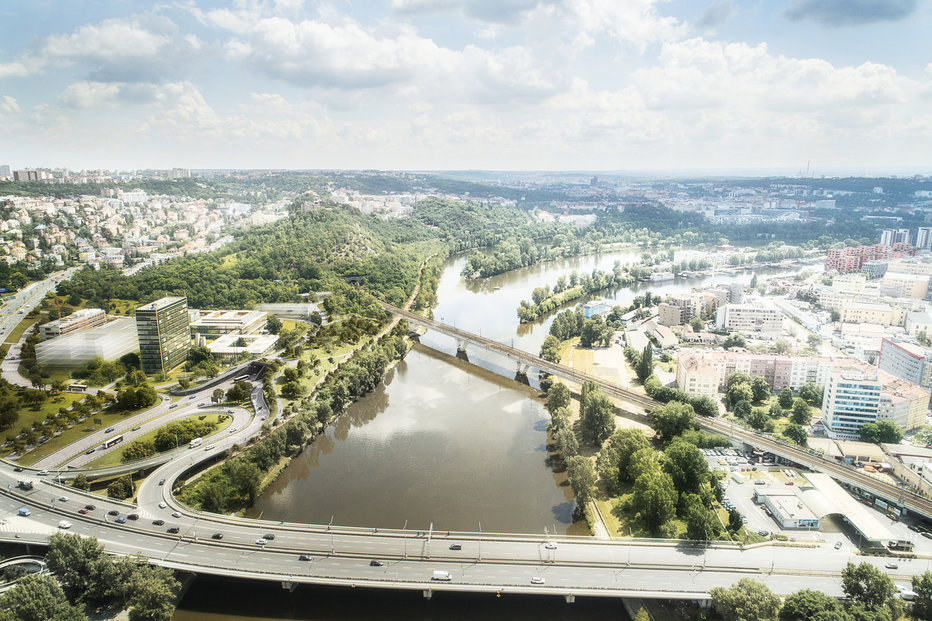
How will Prague look in the next 20 years? Discover the answer at ‘Prague Tomorrow? Priorities in Prague’, an exhibition at the Centre for Architecture and Metropolitan Planning (CAMP). The exhibition consists of 25 public construction projects which explore ways to transform Prague. They include ambitious aims to transform a brownfield area in the Nové district, to complete the inner city ring road, and build a new park on the island of Štvanice. Mayor Zdeněk Hřib believes that transforming Bubny-Zátory, the city’s largest brownfield, is a particularly fundamental objective for the city as it will improve access to housing. However, Deputy Mayor Petr Hlaváček is supporting potential plans to build a philharmonic building, which he hopes could become a creative symbol of 21st century Prague. Ondřej Boháč, director of the Institute of Planning and Development, explains that the exhibition is a “model selection of twenty-five interesting projects that will change the expression of Prague as we know it today.” The projects have been divided into five specific categories: new neighbourhoods, squares, parks and opportunities and connections. What unites them is improvements for life in the city. Not all of these projects will come to life. Pavel Vyhnánek, Deputy Mayor for Finance and...
Austria will probably include Prague on the list of regions with high-risk of COVID-19 infection, Foreign Minister Tomáš Petříček (ČSSD) said on Twitter today.
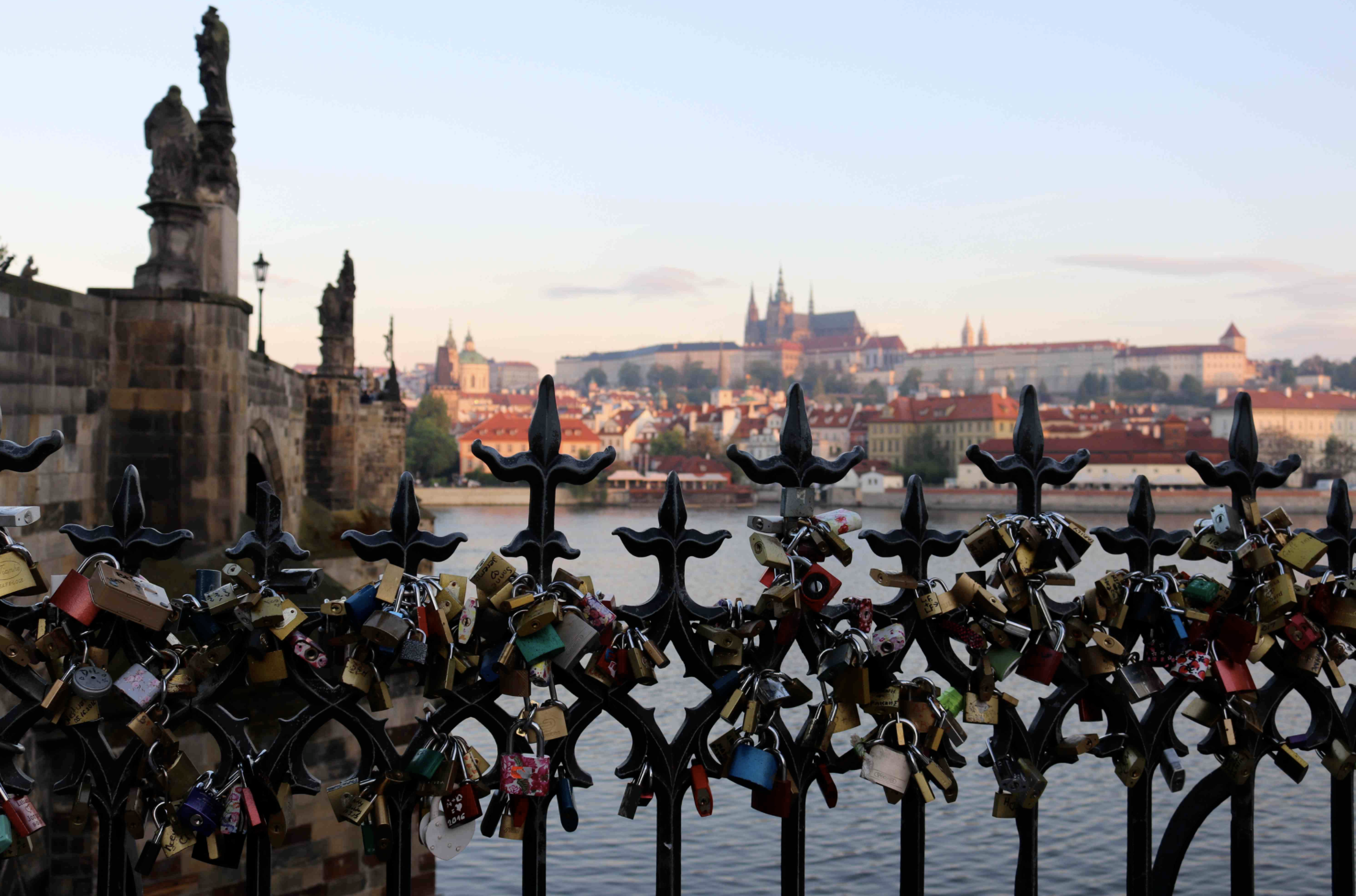
The Association of Artists now believes they have removed an incredible 13.2 tonnes of these locks over the past 11 years.
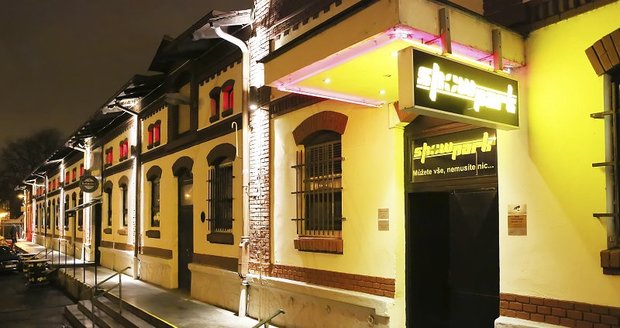
The brothel in Prague's Holešovice district has lost its eviction battle with the city council, Mayor Pavel Vyhnánek has announced.
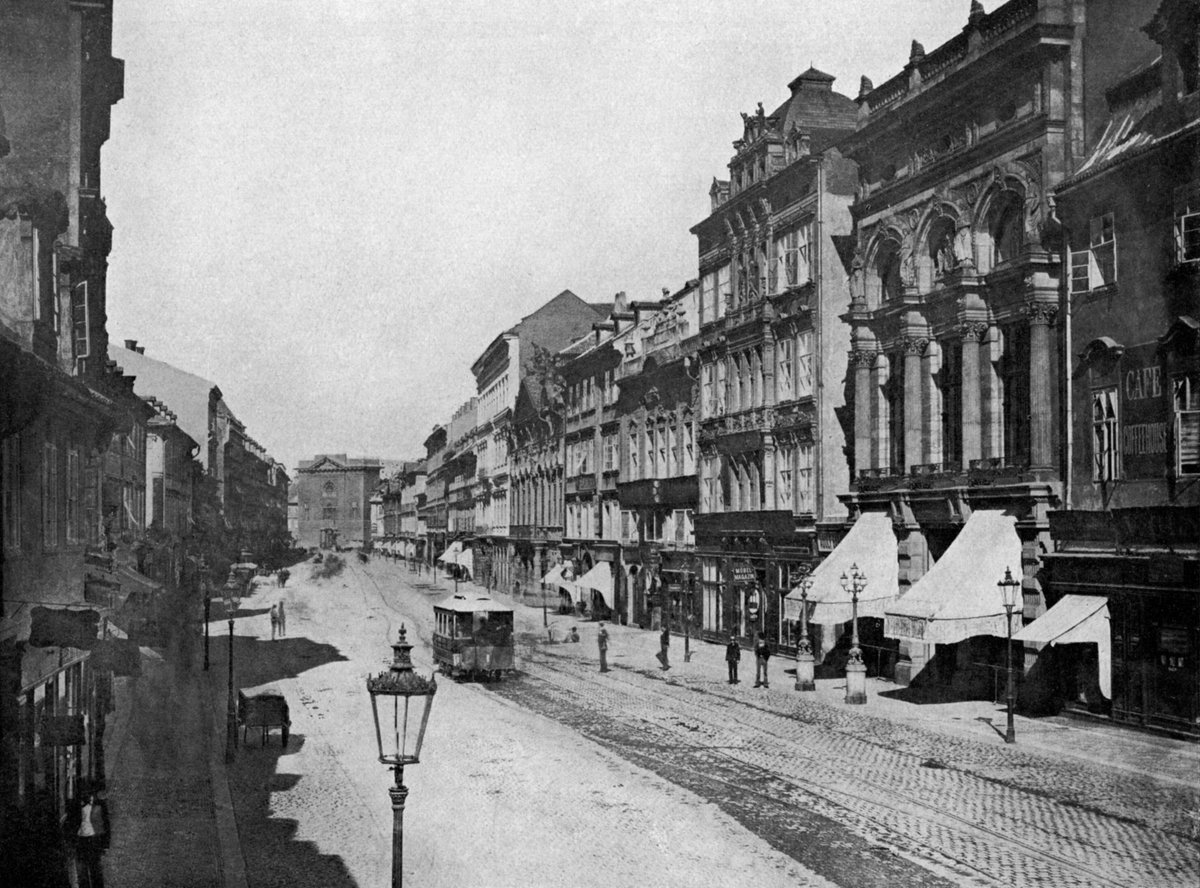
September 23, 1875: the operation was launched solemnly on the first track of the Prague horse-drawn railway from Invalidovna in Karlín to the Chain Bridge of Emperor Franz. It was 3.4 km long, in the territory of Prague monorail with switches, in both suburbs double-track. The first depot was in Karlín. At that time, the name of the company operating the horse-drawn railway was General Direction der Prager Tramway. This date is considered a symbolic beginning of the history of public transport in Prague. In 1876, the track was extended west of the National Theater, through the Újezd hub to the Smíchov Railway Station. In 1882 the network was extended to Vinohrady and Žižkov. At that time, they were independent suburbs of Prague, but now they are incorporated into the city. In 1883, the size of the entire network was 19.43 kilometers. In 1891 the first electric tram line was opened in Letná. This line led from the upper terminal of the Letná Funicular to the pavilion of the Jubilee Exhibition through Ovenecká street. After two more years, this line was extended to the Governor’s Villa, a further distance of 1.4 km. In 1896, on 19 March, František Křižík opened a second, more important tram...
The City of Prague has drawn up regulations defining the amount of financing for civic amenities that investors will have to provide when they develop new city districts. These rules will apply to all developments requiring zoning plan changes which increase land value. The new regulations will specify how much the developer must contribute to the city or city district in the form of new parks, kindergartens, or apartments. For the first time, Prague will have a uniform set of rules for all municipal districts. The aim is to create transparent regulations for both the city and investors. There is currently a lack of uniform regulations to determine the level of resources or amenities that landowners must contribute to the city after they are granted changes to the zoning plan. Prague recently defined a clear formula for these calculations, which takes into account the increase in land value resulting from the change. The new guidelines will ensure sustainable development in the capital and protect the interests of the city and its residents. “If a certain area is not yet slated for development, the value of that land differs greatly from the value it would have if a change to the...
Thanks to "Prague Unlocked" campaign by Prague City Tourism, almost 60,000 people visited the metropolis this summer.
Studio Xtopix presented its vision on the new Mariánské náměstí. This new view is not only a product of the studio vision but also of that by participating citizens, who have shared their hopes and dreams on what the final look of the square will be like. In their opinion, the square should not only be a leisure epicentre but also a cultural stage. The project also includes the reconstruction of Franz Kafka square and its surrounding streets. Works should start in the year 2022. Involving citizens in the design of public spaces The Prague City Hall and the City and National Library are some of the institutions which are located on Mariánské náměstí. Given the important significance of the location, the Prague Institute of Planning and Development chose to organize a competition, which was won by Xtopix studio. The new design of the square should be able to provide a pedestrian zone which will have two maple trees. Public furniture, such as benches and tables will not be absent either. Nor will be water fountains which will provide refreshment even in the hottest of the summer days. The square surroundings will naturally undergo a very much needed modernization as well....
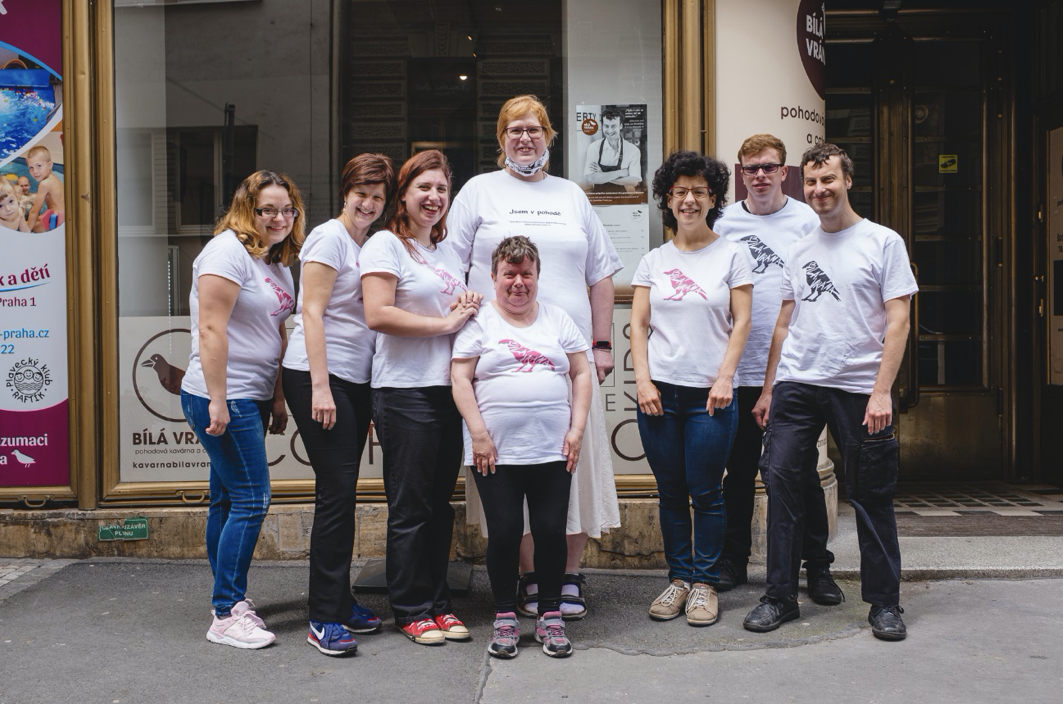
Many great restaurants and cafes can be easily found around Prague but there are some that add some extra value to your daily coffee or lunch. The Silent Café (Tichá kavárna) was established in 2011 as the first café in Prague where you are served by deaf staff only. By pointing you can choose from a various selection of sweet and savory bakery and uplifting coffees and teas. Silent Café is often holding exhibitions and concerts to bright up your day with a lively and cultural atmosphere. “To spread the concept, we created a mobile Café on Wheels. The van moves around Prague and participates at events and festivals. You can enjoy amazing refreshments and interact with the world of deaf people.” Kavárna Bílá vrána (Café White Crow) is located just in the center on street Ve Smečkách. You can enjoy a morning brunch, a great lunch menu, and much more, prepared and served mainly by mentally deficient people. “We want to establish long-term cooperation with our staff and help mentally handicapper people to become independent. We provide sheltered accommodation and necessary assistance for our staff and needed to relax for their families. Besides running the White Crow café, we...
Don’t have an account? Register
[swpm_registration_form level=”6″]
Already have an account? Log In
How Would You Like to Promote Your Business? PR ArticleDisplay bannersVideo productionNewsletter adsJob ListingsInfluencer Marketing
Your Email
We will come back to you within 24 hours with our proporsal