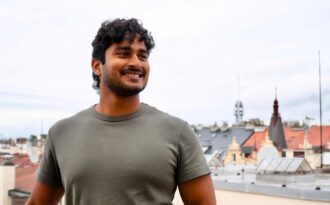
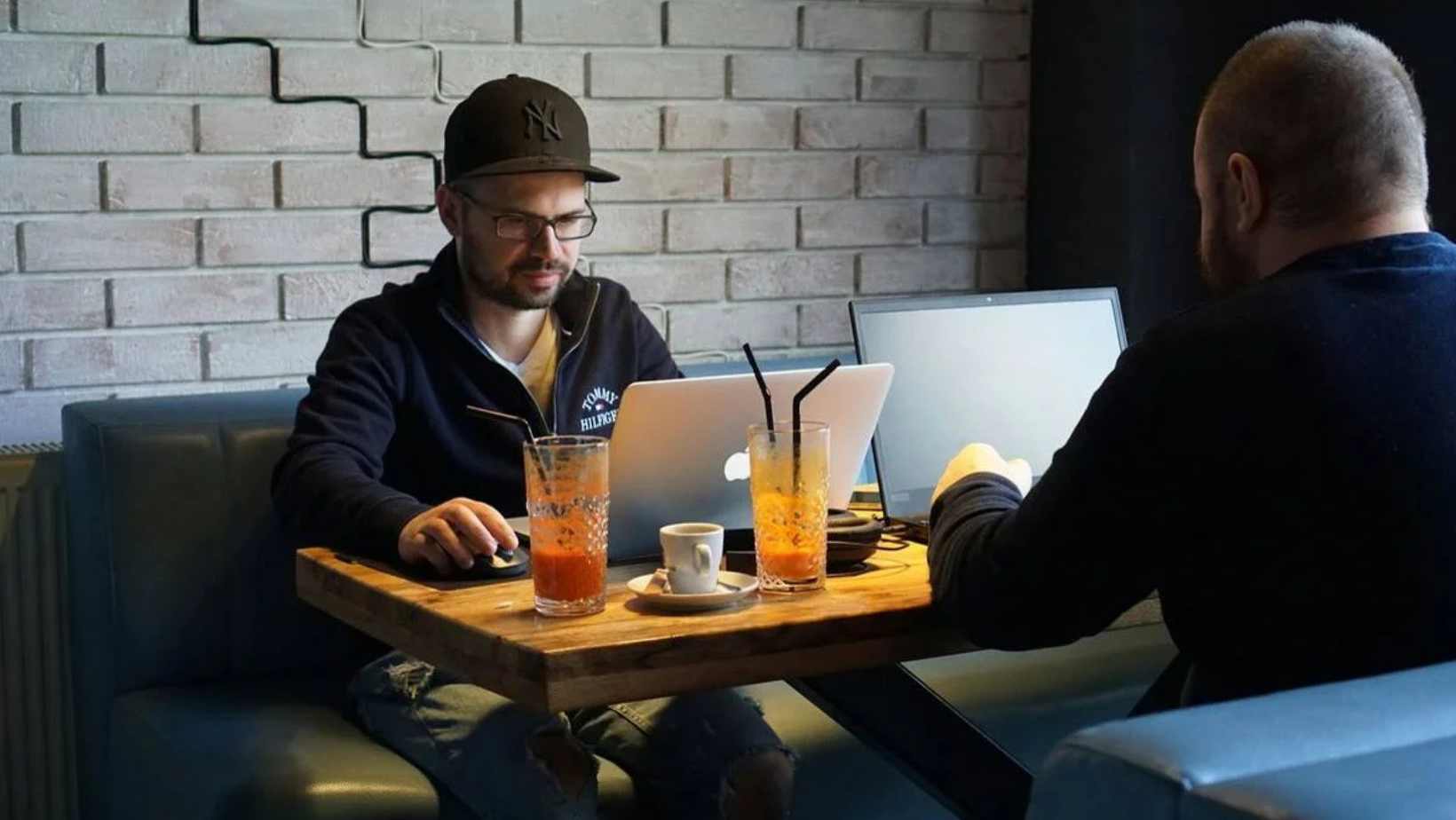
For the past 12 years, Benjamin has been building a life in Prague – and helping bring a taste of France to the Czech capital. What began as a business supplying wine to hotels, restaurants and wine bars 10 years ago has gradually grown into The French, a food business focused on bringing French products directly to Prague. The company started with an e-shop selling mainly wine, pâté, jam, honey and foie gras. But Benjamin soon realized there was something missing: fresh French produce. “The idea, step by step, was that we were missing fresh products to be able to open a physical shop. That’s how, two years ago, we started importing fresh products.” Today, The French operates two shops in Prague and imports a wide range of products directly from France, with a focus on freshness and quality while keeping prices accessible. “It cannot be fresher than what we import.” From Breakfast to Dinner Fresh fruit and vegetables have become one of the shop’s main attractions. The products are imported weekly, with a truck leaving France every Tuesday carrying oysters, mussels, cheeses, fish, meat, fruits and vegetables. “Two days ago it was in the sea and today it’s already...
Prague has the highest rent-to-minimum-wage ratio among EU capitals, with the average two-bedroom apartment costing 185% of the gross minimum wage. Prague has become the European Union’s least affordable capital for minimum-wage earners looking to rent a home, according to a new analysis by the European Trade Union Confederation (ETUC). The average monthly rent for a two-bedroom apartment in the Czech capital reaches €1,710, compared with a gross monthly minimum wage of €924. This means rent alone amounts to 185% of the minimum wage. Lisbon follows in second place, with rent accounting for 168% of the gross minimum wage. Budapest ranks third at 159%, followed by Bratislava at 158%. Other capitals where average rent exceeds the gross minimum wage include Sofia (154%), Athens (153%), and Riga (151%). The figures highlight the pressure facing minimum-wage earners in cities where housing costs have risen significantly faster than incomes. How Prague Compares with Western Europe Prague’s position is particularly striking when compared with several Western European capitals. In Paris, average rent accounts for 138% of the gross minimum wage, while the figure stands at 125% in Madrid and 113% in Dublin. At the other end of the ranking, Brussels is the most affordable...
EU citizens living in Prague 8 can learn how to vote in the upcoming municipal elections at an event on 17 September. The Prague 8 branch of the Czech Pirate Party is inviting international residents to an English-language evening explaining how EU citizens can take part in Czech local elections. The event, titled “Hey, You Can Vote Too!”, will take place on Thursday, 17 September, at 6 PM at Pauza Palmovka in Prague 8. The evening will offer a practical introduction to the Czech voting system, an overview of the Prague 8 Pirates’ local programme, and an opportunity for international residents to share their views on life in the district. Organisers say the event is intended to help EU citizens understand their voting rights and discuss what they would like to see improved in Prague 8. Who Can Vote in Czech Local Elections? Citizens of other EU Member States can vote in Czech municipal elections if they meet certain conditions. Voters must: Be at least 18 years old by the second day of the election. Have permanent or registered temporary residence in the municipality. Be entered in the supplement to the permanent electoral register. EU citizens who are not already...
The family-run restaurant has been bringing authentic North Indian flavours and warm hospitality to Prague since 1996. For 30 years, Indian Jewel has been serving authentic Indian cuisine in the heart of Prague. Established in 1996 by Sanjeev Wadehra, the family-owned restaurant is celebrating three decades in the Czech capital in 2026 — a milestone that makes it one of the longest-standing Indian restaurants in the country. The restaurant’s story began with Sanjeev Wadehra, who brought recipes, cooking traditions and spice blends directly from India to Prague. Today, the kitchen continues to focus on authentic North Indian cuisine, with dishes prepared according to traditional recipes rather than adapted to passing culinary trends. View this post on Instagram A post shared by Indian Jewel Prague (@indianjewelprague) To celebrate its 30th anniversary, Indian Jewel is offering Prague Morning readers a complimentary welcome drink or dessert. Simply mention Prague Morning when you visit. Among the highlights are tandoor specialities, prepared in the traditional clay oven, alongside lamb, chicken and shrimp curries. The menu also offers a wide selection of vegetarian dishes, as well as biryanis, freshly baked naan and other Indian classics. Popular choices include Butter Chicken, Chicken Tikka Masala and...
Tharusha De Silva, originally from Sri Lanka, has spent much of his life between different countries. Today, he is bringing a taste closely associated with home to Prague through his beverage brand, The Coconut Culture which is also available at select cafés and restaurants across Prague. We spoke to him about his journey to the Czech Republic, navigating life between cultures, and the story behind The Coconut Culture. Journey to Prague Prague was never part of a long-term plan for De Silva. He first came to the Czech Republic in 2016 to study mechanical engineering, after growing up in Sri Lanka and spending his teenage years in Dubai. By his own account, his decision to come here was almost entirely random. “We had a counselling office that used to help us with university applications, and one day they changed the wallpaper to a map of Prague. I just went into the room, pointed at it and said, ‘Hey, what is that?’ They told me a little bit about Prague, and that’s how I got here.” At first, Prague was simply where he planned to spend his university years. “I always thought that I would leave after university,” he says. But...
On October 21, electronic duo AIGEL will perform at Futurum Music Bar in Prague as part of a special concert marking the band’s 10th anniversary. AIGEL was formed by Tatar poet and singer Aigel Gaisina and St. Petersburg producer Ilya Baramiya. Over the past decade, the duo has developed a distinctive sound combining electronic music, trip-hop and psychedelic influences. Get your ticket here Their music crosses linguistic and cultural boundaries, with songs performed in Russian, Tatar, English and German. AIGEL gained international attention with the viral tracks “Tatarin” and “Pyyala.” The latter topped streaming charts in 25 countries and reached No. 1 on the global Shazam chart. Over 10 years, the duo has released five albums and dozens of singles. They have also received a Cannes Lion for the music video “You’re Born” and toured extensively across Europe and beyond. Now based in Europe, AIGEL is preparing a special anniversary show in Prague, combining the duo’s electronic sound with Gaisina’s distinctive and expressive vocals. The concert will take place on October 21 at Futurum Music Bar. Promote your business to thousands of expats in Prague Find out how. .
The EU has introduced a framework to support long-term rentals in tourist-heavy cities. Airbnb warns it creates regulatory uncertainty without improving long-term housing outcomes. The EU has announced an affordable housing plan aimed at encouraging long-term rentals and making housing more accessible for Europeans. Unveiled on Wednesday, the plan aims to create clarity and predictability in how rules are applied by local authorities, particularly in neighbourhoods popular with tourists where short-term rentals have displaced residents. “Lack of affordable housing is a matter of concern for so many of our European citizens,” European Commission President Ursula von der Leyen said in a press statement. “Essential workers and students cannot afford to live where they serve and study. But most importantly, it is about fairness. Today, we are delivering for all Europeans.” “The new rules are designed to help competent authorities identify ‘areas under housing stress’ using a common methodology,” a Commission press release explains. Housing in Europe is getting worse The latest data on access to accommodation across Europe are worrying, and have pushed the Commission to intervene. Recent Eurobarometer data shows that 50 per cent of European city dwellers think that housing is an urgent problem they experience. House prices...
After a major renovation costing more than CZK 3 billion, Prague’s Industrial Palace at the Výstaviště exhibition grounds will open its doors to the public in two weeks. From September 25 to October 11, visitors will be able to explore the history and architecture of the landmark and see how it has been transformed during the renovation on guided tours organised by Výstaviště Praha and Prague City Tourism. According to Výstaviště Praha, the palace will not remain open to the public on a regular basis after the tours. Instead, it will serve as a venue for exhibitions, trade fairs and other scheduled events. The renovation of the Industrial Palace, including the reconstruction of its fire-damaged left wing, began in February 2022, more than 13 years after the wing was destroyed by a fire in October 2008. The approximately one-hour guided tour costs CZK 91. Organisers say the symbolic price refers to 1891, the year the Industrial Palace first opened. Tickets are available through the Prague City Tourism website. Places are limited, and some tour dates have already sold out. The first major event scheduled at the renovated palace will be the Designblok festival in early October. Built in Just Ten...
A new seven-story residential building planned for Prague’s Smíchov district has moved closer to construction after securing a zoning decision. The project, known as Smíchovská Žehlička, is being developed by BPD Partners and Top Estates and is expected to be completed in 2029. The building will contain 66 apartments as well as eight commercial units for shops, services and restaurants. It will also include shared coworking and community spaces. The total gross floor area is expected to be close to 8,000 square meters. The project is planned for a wedge-shaped site between Kováků and Na Zatlance streets, directly below Mrázovka Park. The unusual shape of the plot and the significant difference in elevation between the two streets have made the site particularly difficult to develop. The project has been in preparation for more than a decade. BPD Partners, the investment group owned by Czech businessmen Vasil Bobel, Petr Pudil and Jan Dobrovský, began working with architect Patrik Hoffman on the scheme in 2010. Inspired by New York’s Flatiron Building The shape of Smíchovská Žehlička is largely determined by the site’s narrow, wedge-shaped plot and surrounding streets. The design also takes inspiration from New York’s Flatiron Building, whose distinctive triangular form...
Award-winning Holocaust documentary UnBroken will have its Czech premiere at Prague’s Edison Filmhub on Friday, September 25. The screening will take place alongside the opening of the new “Rescuers of Children” exhibition at the National Pedagogical Museum. Director, producer and writer Beth Lane will attend the Prague screening. The documentary tells the story of Lane’s mother, Ginger Lane, and her six siblings, who survived the Holocaust after being hidden for two years by German farmers Paula and Arthur Schmidt. The seven Jewish children were sheltered on the couple’s farm in Brandenburg, about 60 kilometers east of Berlin. They survived the war and emigrated together to the United States in 1946. They are believed to be the only known family of seven Jewish siblings to have survived the Holocaust and later emigrated together as a family. Ginger Lane, now 86, is one of two surviving members of the family. Paula and Arthur Schmidt were later recognized by Yad Vashem as Righteous Among the Nations, an honor given to non-Jews who risked their lives to save Jews during the Holocaust. Their story is also featured in “Rescuers of Children,” the new exhibition at the National Pedagogical Museum. The exhibition examines the experiences...
Prague will host the first international climate week in Central Europe from September 14 to 20, with more than 50 conferences, seminars, workshops and other events planned across the city. Climate Week Prague will bring together representatives from climate research, finance, government, business and other sectors to discuss how cities and economies can respond to climate change. The official opening will take place at the Prague Planetarium on Monday, September 14, at 2:30 p.m. Speakers will include former European Commissioner for Climate Action Connie Hedegaard, Deputy Director-General for Climate Policy at the European Commission and a former Czech environment minister Jan Dusík, and Prague Mayor Bohuslav Svoboda of the ODS party, who is supporting the event. The program will cover a broad range of issues, including how cities can adapt to rising temperatures, water management, energy, construction, agriculture and transport. Finance will be a major part of the agenda. The CEE Sustainable Finance Summit, running from September 14 to 16, will examine the impact of geopolitics and artificial intelligence on Europe’s economic competitiveness. Climate Week Prague has been organized by a coalition of independent organizations led by the International Sustainable Finance Centre. The group also includes research institutions, the Climate...
Prague’s Petřín funicular will resume passenger service on Tuesday, September 22, 2026, following a two-year reconstruction of the railway and its infrastructure, the Prague Public Transit Company (DPP) has announced. Service will begin at 7 a.m., with the new fourth-generation cars departing from both Újezd and Petřín stations. Trains will then run according to the regular timetable, with departures every 10 minutes until 10:15 p.m. The reopening comes almost exactly two years after the previous funicular was taken out of service. The third-generation cars made their final journey on September 13, 2024, after prolonged heavy rainfall destabilized and eroded sections of the hillside. New cars increase capacity The two new cars were designed by Czech designer Anna Marešová and built by Swiss manufacturer CWA Constructions SA. The vehicles cost a combined CZK 137.7 million and were delivered to Prague in April. Each car can carry up to 120 passengers, compared with a capacity of 100 on the previous vehicles. The design also introduces glass roofs, giving passengers a clearer view of Petřín Hill during the journey. View this post on Instagram A post shared by ANNA MARESOVA designers (@anna_maresova_designers) Air conditioning, however, will not be installed. Because of technical limitations,...
Don’t have an account? Register
Already have an account? Log In
How Would You Like to Promote Your Business? PR ArticleDisplay bannersVideo productionNewsletter adsJob ListingsInfluencer Marketing
Your Email
We will come back to you within 24 hours with our proporsal