If your day doesn’t start until you’re up to speed on the latest headlines, then let us introduce you to our new morning fix. A special military plane with the remains of General Frantisek Moravec, a commander of the Czechoslovak intelligence, landed at the military airfield in Caslav, Central Bohemia, on Tuesday. The plane with the remains flew from the United States and from the Czech border it was escorted by two Czech Gripen fighters to the airfield. . Czech Prime Minister Petr Fiala is to meet German Chancellor Olaf Scholz in Berlin on May 5 and he will be equally received by German President Frank-Walter Steinmeier. Fiala’s trip was originally scheduled for March, but it had to be postponed twice. The Ministry of the Environment has allocated over 10 billion crowns for adaptation measures against drought in the coming years, Environment Minister Anna Hubáčková told journalists on Tuesday. The Czech Republic has reopened its consulate general in the Western Ukrainian city of Lviv, two months after it was closed down in response to Russia’s invasion of the country. Confidence in the Czech economy rose 3.4 points month-on-month to 100 points in April, having fallen a...
The Czech Republic wants to quickly shake off its dependence on Russian military technology and modernize using U.S. products, Czech Defense Minister Jana Černochová announced after a meeting in the Pentagon with her U.S. counterpart Lloyd Austin. Černochová revealed that the two countries would soon conclude a bilateral defense cooperation agreement which could see Czechia purchase new fighter jets and tanks from the United States, in addition to its current order for a new fleet of helicopters. It was the first direct meeting of both countries at the ministerial level since the beginning of the current phase of the Russian war in Ukraine. Austin welcomed the Czech visitors by heaping praise on the country for being one of the leaders in defense and humanitarian aid to Ukraine, and thanked the Czech Republic for its participation in the new NATO battle group in Slovakia. He also confirmed that the current U.S. administration is interested in quickly concluding an agreement with the Czech Republic on defense cooperation. “We have confirmed the intent and we will now discuss the specific provisions of that agreement,” said Černochová after the talks. “Here, my colleagues and the American side have communicated that our treaty should be...
The first season of the award-winning series, based on the books of Isaac Asimov, was filmed in Ireland. Now the crew will move to Prague and other locations in the Czech Republic. The average budget per episode is $4.5 million, for a total of more than CZK 100 million. The series follows a ruling empire in the future whose grip on control comes at risk when a mathematician (Jared Harris) uses a mathematical model to predict the empire’s demise and mankind’s descent into the dark ages. The world of the Foundation series takes place more than 20,000 years into the future, when mankind will settle the entire galaxy and create a unified empire that will unite all human-inhabited planets. Based on the book series by Isaac Asimov, Foundation follows a “band of exiles who discover that the only way to save the Galactic Empire from destruction is to defy it” and the storyline sprawls a massive timeline of over 1,000 years. Brought to life by David Goyer, whose writing credits include Batman Begins, The Dark Knight and The Dark Knight Rises, the showrunner says in the teaser that the book series has tried to be made for the past 50...
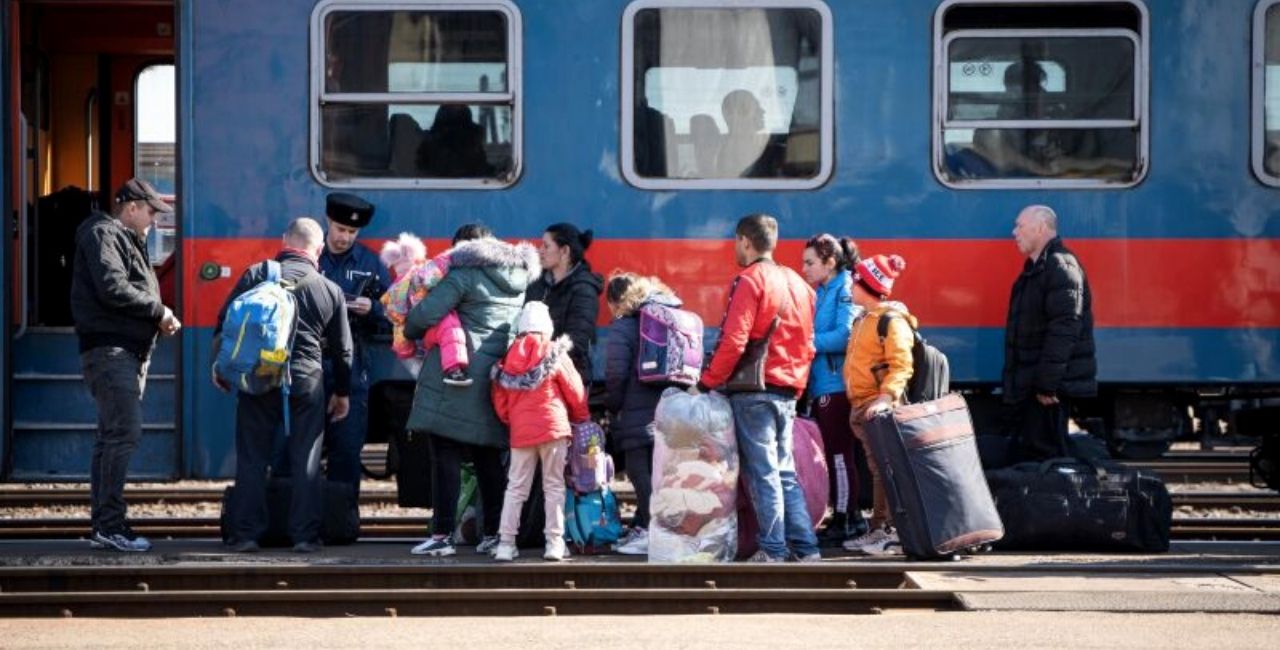
If your day doesn’t start until you’re up to speed on the latest headlines, then let us introduce you to our new morning fix. Seven out of ten Czechs are in favour of welcoming people fleeing the Russian invasion of Ukraine. However, the arrival of refugees is also raising fears among a significant part of society that social security is weakening and unemployment is rising, according to the results of a survey published last week by the STEM agency. . The Czech Republic has granted 308,170 emergency visas to refugees fleeing the war in Ukraine, including 862 on Sunday, according to data released by the Interior Ministry. In the past weeks, the number of issued visas was decreasing. Talks on the Czech-US Defence Cooperation Agreement (DCA) may start in the second half of May, Deputy Defence Minister Jan Havranek told journalists on Monday. Havranek said the Czech negotiating team would be led by him and it will comprise defence and foreign ministry officials. A part of the rib of last Austrian Emperor and King of Bohemia Charles I. was placed in the Imperial Chapel of the Cathedral of St. Vitus at Prague Castle on Sunday. The ceremony...
That the Czech Republic topped another global beer consumption ranking didn’t take many by surprise. According to the World Beer Index 2021, the Czech Republic had no equals worldwide in terms of average annual consumption of the beverage last year, with 468 beers being drunk per person. The report was compiled by Expensivity, a US finance company. Rounding out the top three were Spain and Germany, with averages of 417 and 411 beers respectively, while Haitians ranked last, drinking just four beers each. “We consume more beer than any other country in the world, beating the likes of Ireland, Germany and Belgium. This is no small feat,” rejoices Luděk Ohem, spokesperson at Prague’s Beer Museum. However, Expensivity believes this may not necessarily be the case, saying that much of the beer drunk in Czechia flows down the throats of foreign visitors. “Prague is the fourth most-visited city in Europe and it is infamous for its bachelor parties. Like sunny Spain, in second place, Czech Republic’s beer consumption may be significantly swelled by visiting merry-makers,” the company said on its website. And yet, given that the report relied on data from the pandemic-stricken 2021, it seems fair to assume that Czechs...
Café Dlask, a small confectionery in the Czech town of Varnsdorf (Ustek region), has started to bake a pineapple-coconut cake named “Glory to Ukraine!” in the blue-yellow colors of the Ukrainian flag. A piece of cake costs only 50 CZK, and all the money raised from its sale goes to help Ukraine. Just in one month, they managed to collect and transfer it to the account of the Ukrainian Embassy CZK 10,500. The Czech Republic has issued 302,000 humanitarian visas to Ukrainian refugees since the start of the war, according to data released by the Ministry of Interior. The inflow of refugees has slowed and the ministry is now issuing around 2,800 visas a day to newcomers. The vast majority are women and children. The year-long visa gives them health insurance and enables them to work and study in the Czech Republic. They also have the benefit of free accommodation.
In an interview with Seznam Zpravy, Health Minister Vlastimil Válek discussed future plans for the Covid-19 vaccination, predicting that vaccination against Covid-19 may become an annual occurrence. On Tuesday, April 19, the Czech Republic passed the milestone of 40,000 deaths from Covid-19. The country has a population of 10.7 million and has suffered one of the world’s worst per capita death rates since the coronavirus pandemic began. Despite decreasing infections, the upcoming summer is likely to be a lull before the next wave of the epidemic hits, according to Czech Health Minister Vlastimil Válek (TOP 09). “Covid, like influenza, has an autumn curve and a smaller spring curve of infections. That’s why we will always need to vaccinate against covid before the autumn wave, so that the antibodies are high enough in the critical period,” Válek told Seznam Zprávy. “Covid hasn’t gone away and we need to mentally prepare ourselves for the fact that we will probably have to get a vaccination shot every year,” he added. According to the World Health Organization, it is still not conclusively known how long the vaccine provides protection against COVID-19, but they explain that “most people have strong protection against serious illness and...
If your day doesn’t start until you’re up to speed on the latest headlines, then let us introduce you to our new morning fix. The Czech Republic’s public debt has risen by CZK 128 billion over the past quarter to a total of CZK 2.59 trillion, the Czech Ministry of Foreign Affairs announced in its quarterly report. . The Czech Republic would like to replace Russia as a member of the Human Rights Council of the United Nations. The country’s Foreign Ministry announced on Twitter. A total of 47 states sit on the UN’s Human Rights Council The United States welcomes the announcement by Czech Defence Minister Jana Cernochova to open negotiations about a bilateral Defense Cooperation Agreement (DCA). Cernochova and her US counterpart Lloyd Austin confirmed their interest in concluding such a defence agreement during their talks in Washington on Thursday. In an interview with Seznam Zpravy, Health Minister Vlastimil Válek discussed future plans for the Covid-19 vaccination, predicting that vaccination against Covid-19 may become an annual occurrence. Czech Senate chairman Milos Vystrcil and Foreign Minister Jan Lipavsky will attend the funeral of Madeleine Albright, the Czech-born former U.S. secretary of state, in the National...
The Czech Republic and eight other countries most affected by the refugee crisis will apply for EU financial assistance to ensure the effective use of existing and additional EU resources. The countries will submit a proposal with 14 measures by the end of April, the regional development ministry wrote in a press release published Thursday (21 April). The proposal was prepared jointly by the Visegrad Four, the Czech Republic, Slovakia, Poland and Hungary, as well as Bulgaria, Romania, and the Baltic states, Regional Development Minister Ivan Bartoš (Pirates) said. “In a joint letter from the ministers of these nine countries, we will call on the European Commission to extend the time for completion of projects, i.e. to allow beneficiaries to reimburse eligible expenditure up to a year later, and to loosen more the partial rules in the ending programming period,” Bartoš said. Another demand aims for swift approval of programs in the new 2021–2027 programming period so that projects helping refugees can be reimbursed as soon as possible. Bartoš said the impact of the refugee crisis on individual EU countries varies, but mutual solidarity between all countries is needed to take care of refugees and support the development and improve the quality...
German prosecutors have decided not to press charges against a Czech millionaire who drove his high-powered sports car along a German highway at speeds of at least 414 kilometres per hour. Germany’s DPA news agency reported on Friday, local time, that prosecutors in the town of Stendal reviewed footage of the incident and concluded that Radim Passer had not broken the law when he pushed his Bugatti Chiron to extreme speeds on a stretch of autobahn between Berlin and Hannover. In a post below the video, which was uploaded to YouTube, Mr. Passer wrote that the video was recorded last year on a 10km section of straight road with three lanes and “visibility along the whole stretch”. More than two-thirds of Germany’s highway network has no speed limit, a feature that has attracted foreign drivers who want to drive at breakneck speeds not permitted in their own countries. German authorities can still prosecute drivers who drive in a way that is considered reckless, regardless of their speed. However, Stendal prosecutors told DPA that they believed Passer had not endangered anyone because he had chosen the best time and conditions for his drive. On his YouTube post, Mr. Passer wrote that he completed the...
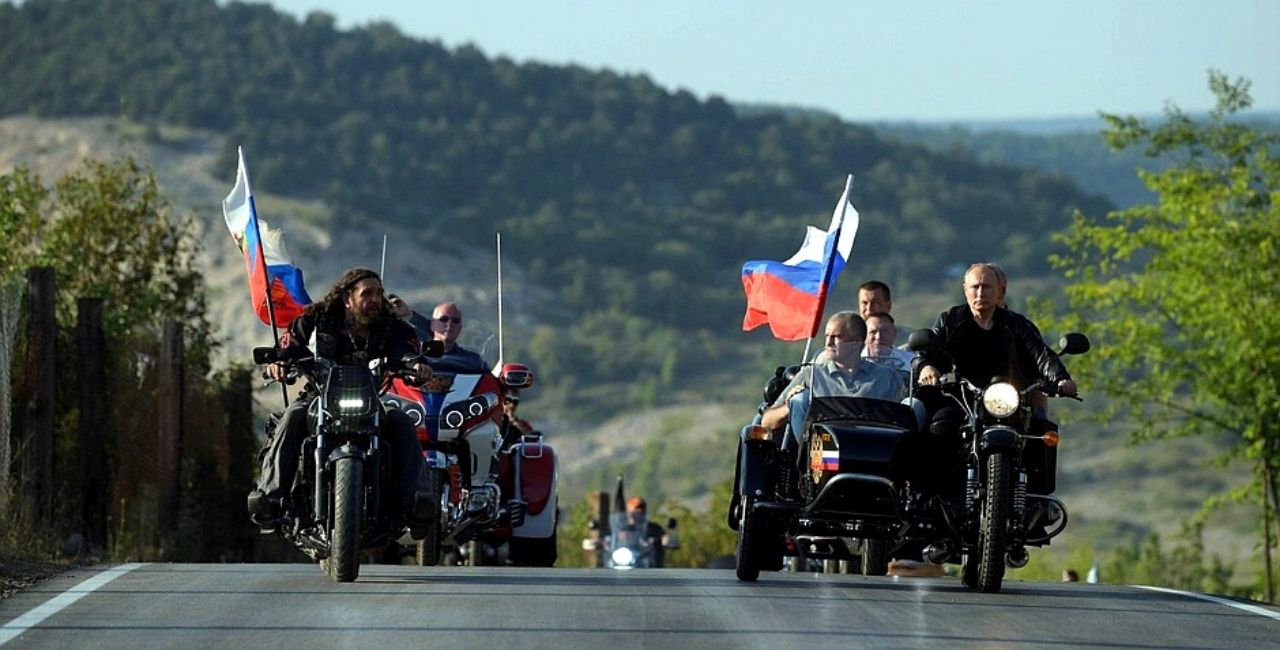
Russian bikers “Night Wolves”, who are linked to President Vladimir Putin, are not welcome in the Czech Republic, says Interior Minister Vít Rakušan (STAN) to N daily. Police do not yet have information that the Russian motorcycle club is planning to come to the Czech Republic this year, but “they have the option of revoking their visas and expelling them from the country,” added Rakušan. Every year, the Night Wolves travel all the way from Moscow to Berlin, paying homage to Red Army soldiers who died in World War II, but critics see their rides as politically provocative and Russian propaganda. After two years of pandemic, they are planning events in the Czech Republic, Germany, Slovenia, Bulgaria and Slovakia. They are due to arrive in Ostrava on May 2. According to the Rakušan, however, the “Putin supporters are not welcome in the Czech Republic and their presence is not appropriate”. “We do not even have official information that a commemorative act should take place in a number of Czech and Moravian towns and cities,” police presidium spokesperson Ondřej Moravčík told N daily. “We have the authority to cancel short-term visas in case the legal conditions are met. However, this procedure...
U.S. Secretary of Defense Lloyd J. Austin III hosted an enhanced honor cordon yesterday, welcoming Czech Defense Minister Jana Černochová to the Pentagon. Černochová has confirmed the Czech Republic’s intention to sign the Defense Cooperation Agreement with the United States. “We believe that the [agreement] will deepen our mutual cooperation not only as NATO allies but at the same time in the fielding of our armed forces modernization efforts,” she said, noting that her country wishes to replace its obsolete Soviet-era equipment with modern military hardware. The Soviet-era military equipment is now being put to good use as the Czech Republic has been sharing it with Ukraine, which is familiar with its use, she said. “The Czech Republic is ready to send more military equipment to Ukraine,” she added. Cernochova said that she would also like to sign the reciprocal Defense Procurement Agreement that will enable the Czech defense industry to participate in U.S. defense procurement programs. The defense minister said that although her country has about 10 million people, the Czech Republic has taken in around 300,000 Ukrainian refugees. Černochová said the Czech Republic will fulfill its pledge to reach 2% of its gross domestic product in defense spending...
Don’t have an account? Register
Already have an account? Log In
How Would You Like to Promote Your Business? PR ArticleDisplay bannersVideo productionNewsletter adsJob ListingsInfluencer Marketing
Your Email
We will come back to you within 24 hours with our proporsal