Czechs are increasingly choosing Polish swimming pools as their preferred destination, but cultural differences sometimes result in awkward situations. A notable incident occurred in Prudnik, as they opted to change in common areas instead of the designated cabins. Concerns were raised, especially regarding the impact on children sharing the changing rooms. The management of the Sójka swimming pool addressed the issue, emphasizing the need for separate changing spaces for different genders, a practice not adhered to by some Czech swimmers. The incident highlights cultural differences in attitudes toward nudity, with Czech pools often having more liberal policies. “Undressing in front of children is not considered offensive by Czechs,” says a young Czech woman quoted by Nowa Trybuna Opolska. However, this behavior is quite unusual for Poles. “I didn’t witness anyone undressing in the communal shower at the Prudnik swimming pool. People feel embarrassed,” mentioned a Polish visitor to the same source. According to the Polish account, Czechs generally have a more liberal attitude towards nudity, whereas Poles are accustomed to changing behind curtains. When Poles put on their swimsuits, they take their clothes behind the curtain and then proceed to the lockers to store their belongings. Bazén v polském Prudniku...
The Czech town of Žatec received the certificate of inscription on the UNESCO World Heritage List on Saturday, two months after the organisation’s committee decided to inaugurate the town and its surrounding hop-growing landscape. Interest in the hop-growing landscape increased this year, with more tourists visiting the information center and the nearby Steknik Castle, located in the middle of the hop-growing area. Žatec and its surrounding landscape represent a centuries-old tradition of hop growing. The new UNESCO site consists of two parts. The first is the landscape, with its hop farms and the villages of Trnovany and Steknik, including the castle. The second part is the historic center of Zatec and its 19th-century industrial quarter, which has the highest concentration of buildings connected with hop processing and trade. The two parts are connected by the Ohre River. It is the first hop-growing landscape in the world to be awarded UNESCO status. “For us, this is a confirmation of the exceptional quality of the hops we grow here,” Michal Kovarik, secretary of the Czech Hop Growers Association, told CTK. The Žatec district is where most of the hops in the country are grown, comprising 3,744 hectares, or 77% of the total...
Anything involving bureaucracy in Czechia can be a horror experience for many foreigners residing in Prague. Whether signing a rental agreement for your new apartment, registering with the foreign police, applying for a visa, or even simply mailing a letter to the post office, overcoming the obstacles of language barriers and cultural differences can cause a roadblock in expat integration. For some of us who may not have a close Czech friend to rely on to assist us in these troublesome procedures, it may be important to look elsewhere for help before signing the contract, opening a business, or compiling the necessary documents to apply for residency. That’s where PRAGate comes in, providing translation and consulting services specifically catered to help you in these situations. Alexander Mikolas, head of PRAGate, expressed that navigating various matters can be challenging for foreigners in this environment. “This difficulty is amplified by the language, which acts as a protective barrier for the nation. It determines one’s inclusion or exclusion in Czech society, making interactions with offices, bureaus, and landlords especially challenging for those who find themselves excluded.” Alexander moved to Prague from his hometown of Karlovy Vary to study law after graduating from high...
Did you know that the Czech Republic is one of the most favorable countries to invest in when it comes to taxation? Preceded only by Luxemburg or Switzerland, the Czech Republic offers perks such as no acquisition tax, tax benefits for residents, favourable deductions for rental income, and even no tax to pay on profit if you own the property long enough. One of the most positive parts when it comes to property investments is actually the tax systems. Yes, I do mean positive… I am not mistaken. Speaking to foreigners from all around the world, I often get surprised looks when I explain there are almost no taxes to keep in mind when buying a property here. If we compare to other acquisition costs like solicitor fees in the UK or annual property taxes in the US, here we have really nothing to complain about. Let’s take it step by step: Before 2020, there was a 4% acquisition tax paid to the country’s financial office and which was an obstacle to purchasing property for many people. Luckily this requirement was removed during the Covid pandemic so now you do not need to think of extra 4% to pay from...
The Czech Technical University (ČVUT) campus in Prague opened a training and research centre for simulated space missions on Tuesday, which was also attended by Italian astronaut Paolo Nespoli. The Little Moon City project will provide facilities and conditions for scientific, university and commercial research. The entire concept is to allow testing of instruments, materials, procedures, or human crews in conditions resembling space. Little Moon City consists of a deep-sea station called Deep Lab H03 by the Hydronaut project. It is designed for long-term stays of small diving crews underwater, as well as on land, and can also simulate a stay in the space shuttle. The station has been designed for a wide range of research, from the effects of isolation and extreme environments on the human psyche, to testing the functionality of technologies under extreme pressure. “Our goal, among other things, was to enable people who don’t have diving training to work in the habitat. We could observe how a biologist or zoologist, for example, would work in such an environment. Getting such people into the module when it is ten metres underwater is a problem,” said project leader Jiří Schneider. The module is less than ten cubic metres...
The Czech Republic has been elected to the Executive Board of the United Nations Educational, Scientific and Cultural Organisation (UNESCO) in Paris, and will serve from 2023 to 2027. “The Czech Republic has just been elected to the UNESCO Executive Board,” the Foreign Ministry said on the social network X. Adding that one of the topics the Czech Republic will focus on, during its mandate, will be the transformation of education, and the protection of cultural and natural heritage. The Executive Board, together with the General Conference, is UNESCO’s governing body and is made up of 58 member countries, elected by the Conference according to their respective electoral groups. The last time the Czech Republic was a member of the Executive Board, within the Central and Eastern European Group, was between 2012 and 2015. UNESCO was founded shortly after World War II to develop cooperation in education, science, and culture. In the latter area, it is best known for its World Heritage List, in which the organization includes the world’s most important sites. As for the Czech Republic, its first additions to the UNESCO World Heritage List were the Historic Centre of Prague, the Historic Centre of Český Krumlov, and...
The inaugural Christmas fair in Prague is set to start on Monday, 20 November 2023 at Náměstí Míru. The popular Christmas market in front of the picturesque Church of St Ludmila will once again include stalls offering a wide range of Christmas products such as mistletoe, Advent wreaths, candles, candle holders, toys, Christmas decorations, confectionery, Advent calendars, nativity scenes, and arts and crafts products. On offer will also be traditional Christmas goods such as Christmas punch, mead, mulled wine, roasted chestnuts, pancakes, BBQ specialties, and many more. Popular Czech foods on offer include: large hams roasted on spits (šunka); barbecued sausages (klobása); flatbread topped with garlic, cheese and ketchup (langoš); chips (hranolky); smoked meat dumplings (knedlíky plněné uzeným masem); sweet dumplings (sladké knedlíky); and pancakes or crêpes (palačinky). The imposing neo-Gothic Church of St. Ludmila overlooks the wintery Christmas market, complete with a massive Christmas tree and Nativity scene. Operating hours for this market are from 10:00 to 20:00 daily, concluding on Christmas Eve, 24 December. For details on the opening schedules of other Christmas markets in Prague, refer to the information available here.
Penta Real Estate, a top-tier development company, has secured a deal with Czech Railways, purchasing long-unused land near Prague’s magistral for a minimum of CZK 244 million. The price is expected to rise further following changes to the zoning plan. The funds from this deal will be utilized by Czech Railways for investments into new trains and services. The acquired land will see Penta continue its construction of a new district around its newly opened office building, Masaryčka. This move comes after Penta’s recent acquisition of ČSAD Praha Holding, which owns the Florenc bus station and adjacent plots. Pavel Streblov, Director of Commercial Construction for Penta Real Estate, explains, “We recently completed the first construction phase around Masaryčka. We want to continue building towards Florenc in the intentions of the urban competition from 2021 and thus connect the city center with Karlín. Thanks to the land purchase, we can now complete negotiations with the city about changing the zoning plan for this location.” A large part of the purchased land will become the city’s property once the streets and public spaces are built. Some of the plots currently house a commercial center designed by Iraqi-origin architect Zaha Hadid, which was...
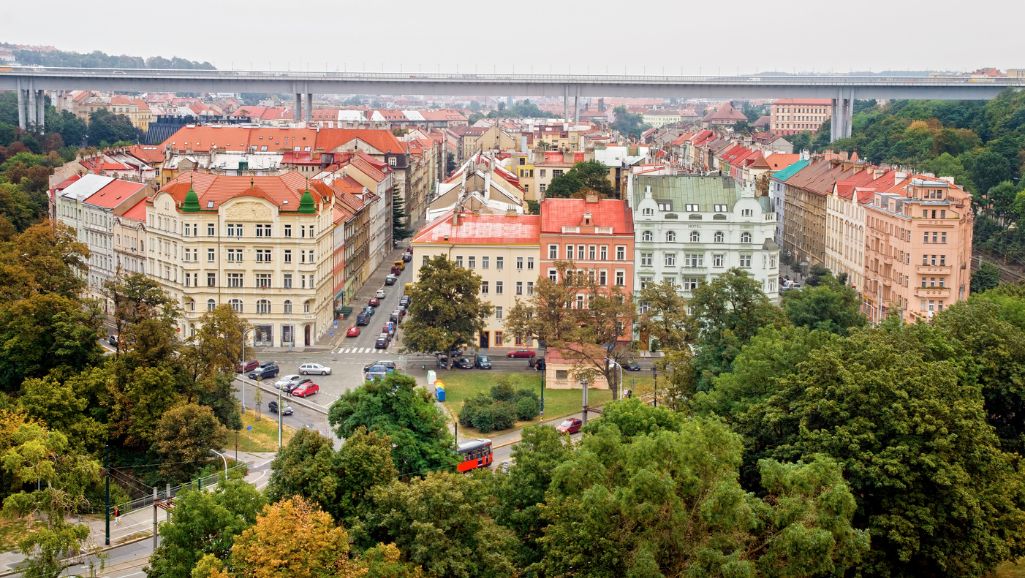
A skating rink will be opened under the Nusle Bridge in Prague’s Folimanka Park in the Jammertal sports and recreation area. It will open on 1 December and will be open until 29 February 2024. The area of the ice rink is 630 square metres. Next to it, visitors will find skate hire and a tent with warming drinks and snacks. The entrance ticket for the whole day will cost CZK 50, while children under six years old can enter free of charge. On the opening day of the ice rink, the organisers will launch a webcam aimed at the ice rink so that visitors can get an idea of how busy it is in advance. In spring, summer and autumn the park is open for roller sports, in winter there is an ice rink. There are also two Pétanque courts, a yoga space, ping pong tables and interactive water features for children. The area is also attractive for non-athletes, as there are picnic tables and barbecues. Address: Park Folimanka, Prague 2 Opening hours: 01.12.2023 – 29.02.2024 weekdays – from 14:00 to 20:00 weekends and holidays – from 09:00 to 20:00
Saying the words “From the River to the Sea, Palestine will be free” may be considered a criminal offence in certain circumstances, Czech authorities informed on Wednesday. The Czech Interior Ministry, police officers, prosecutors and the Prague city representatives discussed measures to fight anti-semitism during public gatherings at a meeting on Wednesday. “The conclusion of the discussion is that the use of the slogan From the River to the Sea Palestine will be free is problematic in the context of the Hamas attack against Israel on 7 October 2023 and could fulfil the elements of a criminal offence,” Czech Interior Ministry spokeswoman Klára Dlubalová informed. According to the ministry, anyone using such a slogan could potentially be guilty of supporting and promoting terrorism, inciting hatred against a group of people, or denying, questioning, condoning or justifying genocide. “The link to the Hamas movement and other organisations calling for the destruction of the State of Israel is unambiguous, according to the Interior Ministry, and the slogan has historically been used by the majority in conjunction with a clearly stated demand for the destruction of the existence of the State of Israel and the elimination of part of the population by any...
Six banks have launched a service that will enable clients to send payments using only a person’s phone number. The payment-to-contact service aims to simplify transactions and reduce errors. Clients who wish to use the service will have to register their phone number with the bank. Two more banks expect to launch the service within the next year. The banks which have already launched the service are Air Bank, Česká spořitelna, ČSOB, Fio banka, Komerční banka and Raiffeisenbank. “ČSOB enables these payments via the ČSOB Smart app, where it is possible to simply search for the recipient in the directory of mobile contacts. The ČSOB Smart application always first notifies the user whether the recipient is registered and therefore it is possible to make a payment to the contact,” explains Vladimír Vojtíšek, Executive Director for Daily Banking at ČSOB. “Probably few people remember their bank account number off the top of their head, but almost everyone recalls their mobile number. That’s why we believe in its expansion,” says Jiří Suchý, Director of Products and Innovations at Air Bank. “In the modern banking world, it’s crucial to move with the times. Raiffeisenbank is among the first banks to make Payment on...
On Wednesday, 15 November, a vending machine offering filtered tap water was installed at Prague Main Station. This marks the beginning of the “Plastic-free railway” (Železnice bez plastů) ecological project started by the Czech Railway Transport Authority. In the coming weeks, similar machines will be introduced at Kolín, Praha-Smíchov, Hradec Králové hl. n., Náchod, Děčín hl. n., Plzeň hl. n., České Budějovice, and Břeclav railway stations. The water stations will be conveniently placed in halls or main corridors and will use carbon filtration in combination with UV-C LED technology to ensure water quality. The primary aim of the project is to encourage passengers to minimize waste in public spaces and provide them with an alternative to bottled water. Jiří Svoboda, the director general of the Railway Administration, explained that the project’s goal is to provide passengers with a more sustainable alternative to buying bottled water. “In the current situation, people don’t really have a choice, and when they decide on their drinking regime while traveling by train, they usually end up buying bottled water. In addition, our long-term surveys and experience show that classic public drinking fountains are not among the preferred sources of drinking water, mainly because of their...
Don’t have an account? Register
Already have an account? Log In
How Would You Like to Promote Your Business? PR ArticleDisplay bannersVideo productionNewsletter adsJob ListingsInfluencer Marketing
Your Email
We will come back to you within 24 hours with our proporsal