In 2022, a new sleeper train will add to a network of planned routes that will link up cities across Europe, including Prague, Berlin and Amsterdam. It joins a growing number of companies reviving overnight rail travel across the continent, such as the French rail start-up with plans to connect Paris to destinations like Copenhagen, Rome and Porto by 2024. The French start-up, which goes by the name of Midnight Trains, is described as a “hotel on rails” and will feature a restaurant and bar onboard, as well as hotel-style private rooms. From its base in Paris, it hopes to travel to 12 European destinations from 2024 and make the journey an adventure in itself for passengers. The project is still in its early stages but Midnight Trains is just one of the many companies catering to a growing faction of travelers looking to swap air travel for slow and sustainable rail travel instead. France’s state-owned SNF rail company announced an ambitious plan back in 2017 to reignite its sleeper trains, and last month launched a night service from Paris to Côte d’Azur with tickets starting at €29 for the 12-hour journey. And there is more in the pipeline with SNCF aiming to bring back a total of 10 sleeper services over the next 10 years....
Some buildings will be open across Prague and the rest of the Czech Republic as part of European Heritage Days, held September 11–19. The goal of the European Heritage Days, which have been taking place since 1991, is to broaden and increase the general awareness and protection of Czech cultural heritage. The Czech Republic’s European Heritage Days – Dny Evropského Dědictví – this year focuses on the theme of ‘Monuments for All’. The celebrations will start with the opening of an exhibition of folk crafts at the Gallery of the Slovácko Museum and ceremonial presentation of titles to people demonstrating expertise in traditional crafts from lime plastering to embroidery, followed by a gala evening on the 10th of September. During the weekend itself, architecture across the country will be highlighted, including the Baroque fountains at Uničov, while other places which are not normally open to the public will open their doors, including the Printing House at Litomyšl which will be presenting readings of the work Božena Němcová as well as offering jazz music and dancing. Museums will also be taking part, such as The Glass Museum at Kamenický Šenov which will be opening its permanent display of engraved and cut glass for free entry, including its collection...
After last year’s break, Signal will light up and revive Prague’s spaces in a big way. A total of 4 routes, 15 installations in public space, 6 installations in augmented reality, and a rich accompanying program. The absolute novelty is a mobile app working with augmented reality, which is dedicated to one entire route in Karlín called Signal AR. It will complement the popular Karlín and Old Town routes and the new Holešovice route. At the festival you can look forward to works by Milena Dopitová, Jiří Černický or the design duo Vrtiška & Žák, and there will also be famous foreign studios. If you don’t have it in your diaries yet, make a note that Signal will take place this year from Thursday 14th to Sunday 17th October 2021. You can already find the Signal 2021 map here. Signal AR: Try augmented reality for yourself! The ninth edition of the digital and creative culture festival is all about sustainability and is called Plan C – ecology, sustainability and above all adaptability. The pandemic got us thinking: “How do we create a festival that can be there with us in times of need?” In collaboration with digital agency BRAINZ IMMERSIVE, bicepsdigital and four Czech artists – painter, sculptor...
According to the Minister of Health Adam Vojtěch (ANO), the Czech Republic is at the foot of another wave of the epidemic coming again from the West, where the number of new cases of coronavirus infection has been growing in recent weeks. According to the Minister, the situation is not dramatic, not even in the Karlovy Vary Region, where the number of new infections per hundred thousand inhabitants per week is the highest. “I expected that the situation could worsen after the holidays. I am not saying that it is only a question of children returning to school, but in general the society’s return to some normal regime, with greater mobility of people,” said Vojtech. The increase in the number of cases has not yet been reflected in a significantly serious clinical course of the disease, although the number of patients has also increased in hospitals. As of Tuesday, September 7, 82 people are hospitalized, while more than three-quarters of those newly infected are unvaccinated. Prime Minister Andrej Babiš (ANO) told Czech Television in Litoměřice that the government expects the number of people infected will continue to grow. However, any measures against the spread of coronavirus will be managed locally....
The average Czech throws away about 40 kilograms of food a year. People in housing estates waste the most food, while in rural areas, waste is less, which is related, among other things, to the fact that in these localities there is a better possibility of composting or feeding animals. To avoid such waste, for example, people could start offering food to charities. And that is exactly what three Prague canteens are trying to do. In their attempts, one hundred portions of food have been donated to local shelters. Up to 25 kilograms of food are thrown daily in each Czech canteen. “This number equals to around 30 to 50 portions, maybe around two to five percent of the total amount during daily operation,” said Anna Strejcová, director of Zachraň Jidlo, an organization that strives to reduce food waste. “We should aim to donate around 100 meals to five different charities,” said Denisa Rybářová, marketing manager. “We are, of course, very happy doing this and will certainly be appreciative of any other similar opportunities coming our way in the future,” said Stanislav Fiala, the director of Azylový dům svaté Terezie, a social services organization providing shelter to those in need....
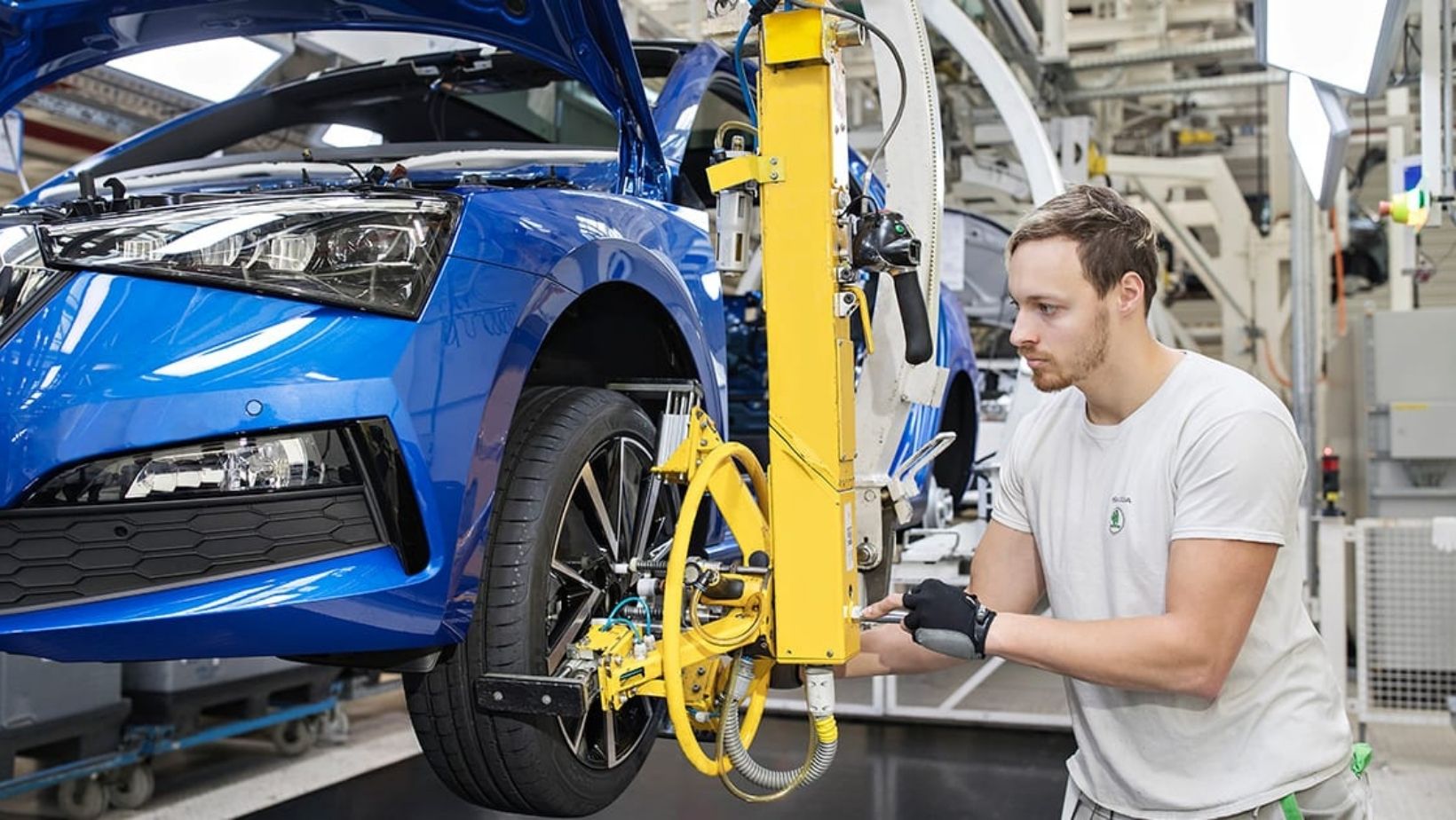
“We have repeatedly said that the [EU’s climate] goals must be set in a way not to harm our industry,” Czech Prime Minister Andrej Babis grumbled recently in the presence of reporters. “It must be done reasonably, not based on ideology.” Babis’s complaint that the target is “extremely ambitious” is not surprising. While rarely coming up with his own ideas, the populist billionaire seldom misses a chance to claim to Czech voters he’s pushing Brussels for a better deal for their country and its less privileged economy. The transition to e-mobility is a particular issue. The auto sector is a lynchpin for the Czech economy, accounting for 26% of all industrial output and more than 9% of GDP. Not only does the EU’s Fit 55 plan demand a huge shift for a key industry, but it cuts to the very heart of the Czech economic model adopted when communism fell. Based on cheap labor it has long been exploited by foreign investors, and remains in play today in many sectors, including autos. Although the challenge is huge, in the face of the existential threat posed by the transition there’s no choice but to institute revolutionary change, industry figures insist. It’s not the carmakers...
On Saturday, September 11 you can celebrate experience Americká street (and now also Záhřebská) differently. Meet the neighbours, taste traditional Mexican cuisine, listen to Czech and expat DJs and bands. Between 11 am and 10 pm Americká and Záhřebská streets will turn into a carnival alive with music, dance, theatre, activities for kids and great food. Free entry. This is the 10th time this event is held at Americká. The inaugural festival will offer bands both Czech and international, DJs at two stages, traditional celebration La Calle Mexicana to mark the independence day, theatre, workshops for kids and Latino dance workshops for adults, tons of food, drinks and great fun for all ages. This year the activities will spread to Záhřebská street where car-free zone will be created. Municipal library located there will remain open on Saturday and prepare a workshop for children including book reading an entertaining quiz games, while Divadlo 21 will perform fairy tale play for kids at 3 pm. Omri Goz, the main organiser, invites visitors to enjoy the rich accompanying program. “Newly open 2 deci wine bar will offer music workshop and Danzorama will teach you the steps of Cumbia and Quebradita dances“. The main...
“Assuming a higher immunisation rate, we can lift these measures. That is the message we have today,” Vojtěch said, mentioning the possible end of mandatory masks in indoor areas or limits currently applied to public events. Only 54% of Czech citizens are currently vaccinated, putting the country’s vaccination rate below the EU average. However, the Czech government is now mulling a new campaign to motivate more people to get their jabs. “It is about convincing, constantly emphasising, that without sufficient immunisation we can again have overloaded hospitals and a real problem to get the pandemic under control,” Vojtěch added. Making the vaccine mandatory is not something that is currently being discussed, however. The Czech government has established vaccination centres even in commercial centres where people can get their jabs without prior registration. These centres will remain open at least till October. A third COVID-19 booster shot will also be available from 20 September for people who completed their vaccination eight months ago.
Czechs are more satisfied with their lives than the average Italians and French citizens, according to EU statistical arm Eurostat. The survey asked people across the European Union aged 16 and over how satisfied they were overall with their lives on a scale from 9 to 10. The study takes into account a number of aspects to reach the wide-ranging life satisfaction category, including housing, employment, education, health, safety, governance, as well as environmental matters. “The mix of statistical indicators with objective information such as income, housing conditions and work situations together with subjective evaluations results in differing levels of satisfaction depending on an individual’s priorities and needs,” Eurostat explained. The Czech Republic has a life satisfaction score of 7.4, slightly above the EU average of 7.3. The lowest overall score was recorded in Bulgaria (5.4), while Finland and Ireland had the highest level of life satisfaction, with 8.1. Czech respondents to the survey reported satisfaction levels slightly above the EU average with the state of their finances, their housing situation, their employment circumstances, their satisfaction with personal relationships and their living environment. For use of time, the Czech score was exactly the EU average of 6.7/10, despite Czechs working almost...
Prague is Burning! invites you to an interactive exhibition at The New Mill Water Tower. Come learn about the history of fires in Prague and how this age-old element is an intrinsic part of the city’s story. The exhibition itself shows fire as quite intrinsic to the history of Prague. It tells of the danger of fires in bygone centuries, as well as the more recent past, but also of the ways in which the residents of the Capital fought back against this destructive element, the progress of technical capabilities and institutional measures to defend against fires. The exhibition makes use of digital reproductions of Prague, of Prague’s large fires and of firefighting kit and equipment. In addition to the specific theme of fire and rallying against it, shown through projections, prints, photographs or historical textbooks for firefighters, and firefighting regulations, the visitor gets to experience what sort of terrible situations Prague’s fires of the medieval or early modern period represented. Using sensory illusions we are made to feel the threat posed to Prague by fires that engulfed entire neighborhoods. Information: Address: Nové mlýny 3a, – Nové Město Opening hours: Whole week, 10.00 – 18.00 Tickets: basic 150 CZK, reduced 100 CZK, family 350...
The Battle of Bilá Hora in 1620 determined Czech history for the next three centuries. The battle will be re-enacted Sept. 18 and 19. About a thousand gunsmiths would have to fight on both weekend days starting at 3:00 p.m. This year marks the 17th reenactment of the battle and for its visitors, the event organizers have prepared period markets and lectures on various related topics, especially on the historical context of the battle or about the life of soldiers in the 17th century. The spokesman of Prague 6, Jiří Hannich, told ČTK on behalf of the organizer. “We expect around a thousand participants from the Czech Republic and abroad to take part in the event,” he added. At the venue, visitors will find out a marketplace with traditional handicraft products and some refreshments. As every year, the accompanying program will feature fencing, training, juggling, music performances and lectures. According to a spokesman for the town hall, horse riders, infantry, and artillerymen from Germany and Hungary will be present at this year’s reenactment. The participation of actors from Spain, Austria, and Great Britain is also planned. The celebration of the jubilee 400th anniversary of the battle in 2020 was attended by only a few hundred soldiers due...
The enlargement of the European Union to include the countries of the Western Balkans is a complex process that will take a long time, but until then, Brussels should offer the region the prospect of membership in the Schengen Area, stated Czech Prime Minister Andrej Babiš at the Bled Strategic Forum in Slovenia. “Why aren’t we talking about Schengen? The enlargement of Schengen is much easier than the enlargement of the European Union,” said Babiš, who participated in the conference in a panel of leaders entitled “Future of Europe – To Stand and Withstand”. In his speech at the forum, the head of the Hungarian government, Prime Minister Viktor Orbán, also spoke in favor of Serbia’s accession to the EU, calling Serbia a key state. Members of the Schengen Area enjoy visa-free travel between member states. According to Babiš, the enlargement of the Schengen Area would significantly help to stop illegal migration. He also reiterated that in addition to the EU member states of Croatia, Bulgaria, and Romania, that Serbia should also be admitted to the Schengen Area. However, Babiš is not in general optimistic about the Schengen Area as, last week, he stated it is not working. When asked if he...
Don’t have an account? Register
Already have an account? Log In
How Would You Like to Promote Your Business? PR ArticleDisplay bannersVideo productionNewsletter adsJob ListingsInfluencer Marketing
Your Email
We will come back to you within 24 hours with our proporsal