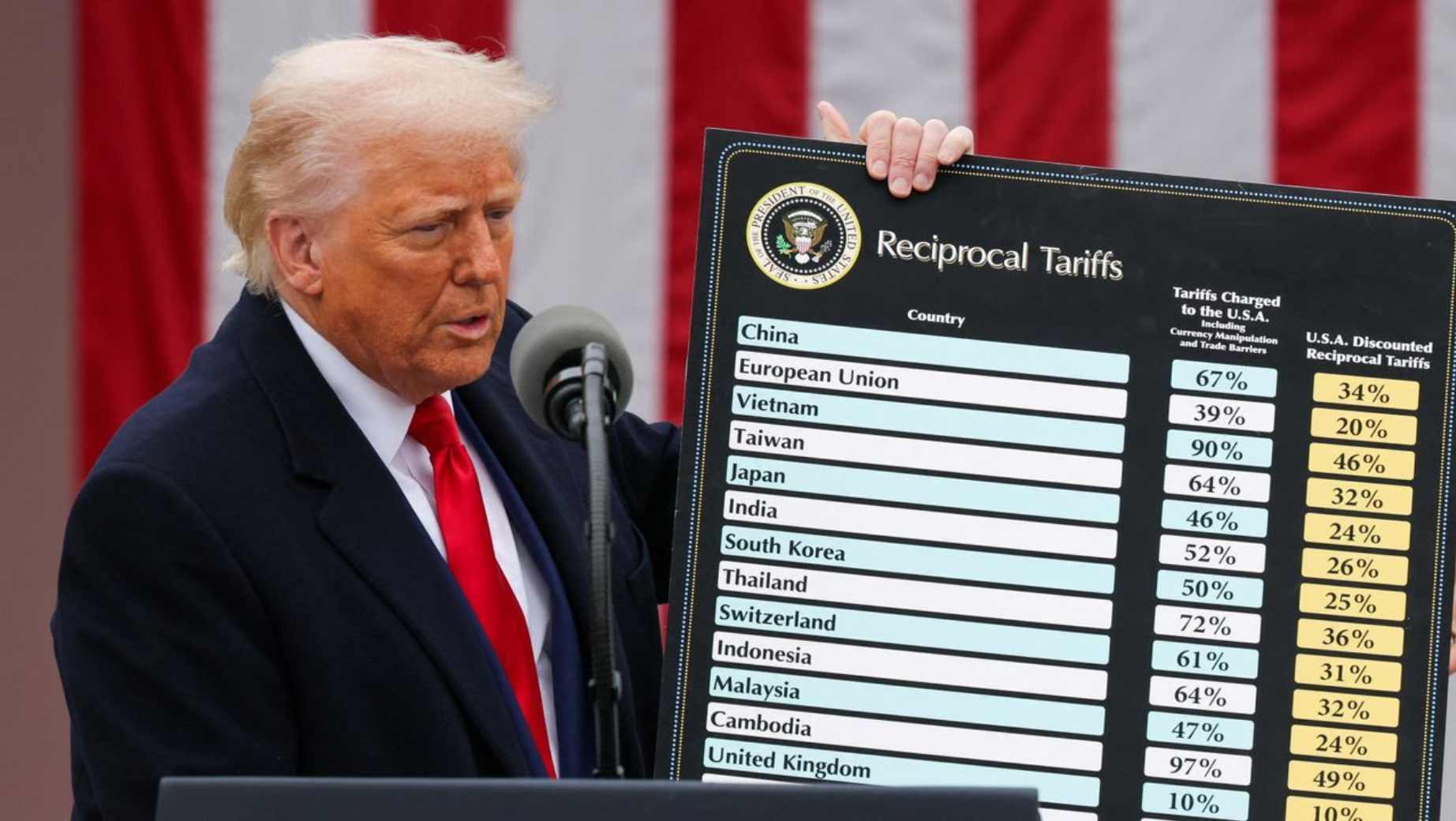
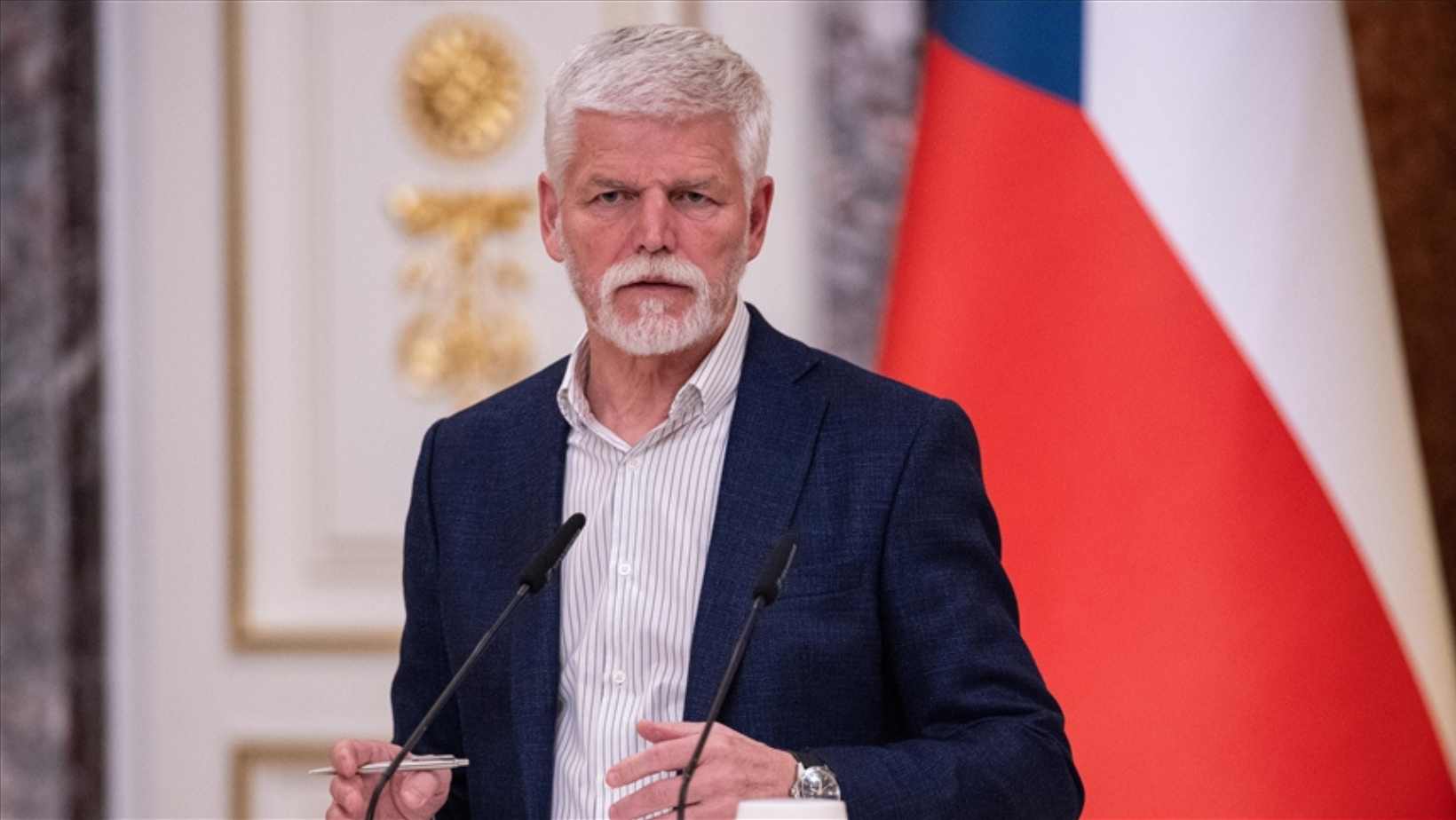
Czech President Petr Pavel spoke with Ukrainian President Volodymyr Zelensky on Friday, assuring him of continued Czech support as Ukraine marks three years of resistance against Russian aggression. “We know very well and will not forget who is the victim and who is the aggressor in this war. Together with other European countries, we intend to intensify our assistance to Ukraine in its brave and just struggle,” Pavel said. His statement was seen as a response to former U.S. President Donald Trump, who recently cast doubt on Russia’s role as the aggressor. Pavel emphasized that Ukraine is not only fighting for its own survival but also for Europe’s security and freedom. The Czech president shared details of his conversation with Zelensky on X. The two leaders have met multiple times in the past, with Zelensky previously welcomed at Prague Castle. Trump has intensified his verbal attacks on Ukraine and Zelensky in recent days, calling the Ukrainian president a dictator and a mediocre comedian. He also claimed that Ukraine could have ended the war much earlier and should not have engaged in the conflict with Russia. Pavel, who has previously called Trump a “repulsive being”, firmly rejected Trump’s remarks about Zelensky....
The Czech government has expanded the list of non-EU countries whose citizens can work in the country without a permit. Starting in March, people from Taiwan will no longer need a work permit or employment card to be legally employed. The cabinet approved the change on Wednesday as part of an effort to attract more skilled foreign workers. The measure aims to ease hiring for Czech businesses while making it simpler for professionals and managers from Taiwan to relocate. According to the Ministry of Labor and Social Affairs, as of last June, 185 Taiwanese nationals—80 men and 105 women—were employed in Czechia. The decision comes after an amendment to the Employment Act, which allows the government to designate certain non-EU countries as eligible for work without additional permits. Since July 2023, this list has included Australia, Japan, Canada, South Korea, New Zealand, the United Kingdom, the United States, Israel, and Singapore. Taiwan was originally part of the proposal but was later removed because Czechia does not officially recognize it as an independent state. However, a separate legislative change now allows Taiwan to be treated as an independent jurisdiction, clearing the way for its inclusion. Security concerns were also considered before...
Chief of General Staff expresses need to boost numbers in the Czech military, despite demographic trends. Russia should not be expected to become “friendlier” after the Ukraine war comes to an end, according to the Czech Republic military chief. “Russia will stay here. Russia will not be safer towards us, it will not be friendlier and it will not be more predictable,” Chief of General Staff Karel Rehka said in weekend remarks to Czech television. His remarks came days before the war reached its third anniversary and with talk of possible negotiations and peace proposals making headlines. Rehka also pointed to the difficulty of achieving a resolution to the war in a way that prevents it from resurfacing in the future. He added that his country’s military hopes to boost its active and reserve members to 37,500 but admitted that this is “unrealistic” given demographic trends and past recruitment efforts. Under current plans, the Czech army is set to have 30,000 professional soldiers and 10,000 active reserve members by 2030. Currently, the army has some 23,600 soldiers, with around 1,000 added over the past five years. Would you like us to write about your business? Find out more
The European Union is preparing to restrict certain food imports from the United States to bolster domestic agriculture. This move comes as a direct countermeasure to US President Donald Trump’s trade policies, according to the Financial Times. The European Commission is expected to approve a review of current import limits next week. Early indications suggest that the new restrictions may focus on products like soybeans produced using pesticides that EU farmers cannot legally apply. By enforcing these standards, the EU aims to protect its agricultural sector and ensure fair competition in the marketplace. Officials have emphasized that these measures are designed to shield local producers from products manufactured under different environmental and safety regulations. In doing so, the bloc seeks to create a level playing field and maintain the integrity of its domestic market. “We have very clear signals from the parliament, very clear signals also from the member states and from our farmers: whatever is banned in the EU, it should be banned in the EU, even if it is an imported product,” European Commission’s health commissioner Olivér Várhelyi said in an interview in January. Trump on Thursday attacked countries that blocked US products, including the EU, which he...
According to the Prime Minister and the latest economic index, Czechia is flourishing, even as Poland and Romania begin to close the gap. According to data released by the Prosperity and Financial Health Index, Czechia now boasts the ninth healthiest economy in the European Union. GDP and consumer spending are on the rise, inflation has been tamed, debt levels remain stable, and Czech companies are steadily returning to domestic ownership. While such progress might prompt celebrations and counter the narrative of an imminent takeover by Asian economies, there’s an important caveat: even though GDP and consumption are increasing, our pace is slow compared to other nations, where growth is notably swifter. “Czechia is doing well. Both GDP and consumer spending are growing,” Prime Minister Petr Fiala stated on the FLOW program. His remarks were meant to boost the morale of citizens—many of whom, he believes, are reluctant to spend due to a gloomy outlook. He also dismissed claims that the government’s consolidation measures have squeezed the budgets of low-income households. In fact, real wages are rising, and the government recently reduced the VAT rate on food from 15% to 12%, a welcome move given that groceries are the largest expense...
Shoppers in the Czech Republic are feeling the strain of yet another rise in food prices, even as overall inflation has eased. While the country’s inflation rate dipped to 2.8%, grocery bills continue to climb, with the cost of everyday essentials seeing sharp increases since the start of the year. Data from the Czech Statistical Office shows food prices have jumped nearly 5% compared to last January. The rise is particularly steep in dairy products, with butter now selling for 61 crowns per package, up from 44 crowns a year ago—a 40.5% increase. Eggs have also become noticeably more expensive, surging 24.6%, while meat prices across all categories are up as much as 10%. Agricultural analyst Petr Havel notes that while food prices are still rising, the hikes are less severe than in previous years. He attributes the recent increase in meat and egg prices partly to stricter animal welfare regulations, including the ongoing phase-out of cage farming. Not all products are getting more expensive. Potato and sugar prices have fallen by more than 20%, thanks to a current sugar surplus. However, vegetable prices are expected to keep rising until April due to seasonal factors. Barring any major disruptions, overall...
The Czech Chamber of Deputies voted to lift the immunity of Freedom and Democracy Party leader Tomio Okamura, allowing police to proceed with criminal charges related to his party’s controversial election posters. Okamura is suspected of inciting hatred and discrimination. In the runup to last year’s elections to the European Parliament, the SPD billboards sparked controversy. One targeting the EU migration pact featured a man with dark skin wielding a bloody knife and wearing a bloody shirt along with the message: “Deficiencies in health care can’t be solved by importing ‘surgeons’. ‘Stop the EU Migration Pact!’” The SPD chair claims the ad was “truthful” and a reaction to Government moves which he believes will mean migrants will start “flooding” the Czech Republic. He also said he considers the affair to be an attack on freedom of speech and an attempt to silence him. Because one report of a crime was filed against the ad by a TOP 09 politician, Jiří Pospíšil, Okamura said it was an attempt to “criminalize” the opposition. Another SPD ad in last year’s campaign featured a graphic of two Romani boys smoking cigarettes. Artificial intelligence had obviously been used to generate the image. The message read:...
The Czech Statistical Office confirmed that inflation in January was 2.8%, mainly driven by rising food prices. Consumer prices rose 2.8% year-on-year in January, slightly lower than in December. Prices also increased 1.3% compared to the previous month, mainly due to higher costs in food, alcohol, and tobacco. December’s Christmas discounts had temporarily slowed inflation, but food prices are now rising again. At the end of last year, agricultural producer prices jumped 8.1%, adding pressure on food costs. Compared to last year, food prices were almost 5% higher, while housing prices grew more slowly, up 1.3%. Prices of goods increased 1.7%, while services became 4.7% more expensive. The cost of rent also rose, driven by higher property prices. Despite some price relief in services, inflation remains high, particularly in the food sector. The Czech National Bank (CNB) is expected to continue cutting interest rates, but only at meetings when new forecasts are released. The next cut is likely in May, with the final one in August, bringing rates down to 3.25%. Inflation is expected to rise slightly to 2.7% this year, possibly exceeding 3% in the middle and later months. The CNB forecasts inflation to average 2.4%, but food prices...
Tech billionaire Elon Musk on February 9 called for shutting down U.S.-funded media outlets Radio Free Europe and Voice of America. Responding to comments by U.S. Special Presidential Envoy for Special Missions Richard Grenell, Musk wrote on X: “Yes, shut them down. Europe is free now (not counting stifling bureaucracy). Nobody listens to them anymore. It’s just radical left crazy people talking to themselves while torching $1B/year of US taxpayer money.” “Radio Free Europe and Voice of America are media outlets paid for by the American taxpayers. It is state-owned media. These outlets are filled with far left activists,” Grenell reportedly said on Feb. 9. “I’ve worked with these reporters for decades. It’s a relic of the past. We don’t need government paid media outlets.” Both Elon Musk and Richard Grenell have voiced strong opposition to government funding of media organizations, arguing that taxpayer money should not be used to support these outlets. Musk, as head of the Department of Government Efficiency (DOGE), has criticized federal payments to media organizations like Politico, the Associated Press, and The New York Times, deeming them inefficient uses of taxpayer funds and moving to eliminate them. Similarly, Grenell, as Trump’s special mission envoy, has publicly condemned government...
The Czech Republic’s consumer price inflation eased less-than-expected in January after rising to a 1-year high in the previous month, flash data from the Czech Statistical Office showed on Thursday. Consumer prices climbed 2.8 percent year-over-year in January, slower than the 3.0 percent rise in December. The expected inflation rate was 2.6 percent. Energy prices, including automotive fuels, decreased 2.4 percent from last year, which was largely attributed to the slowdown in inflation. Inflation based on services slowed to 4.7 percent from 5.0 percent. On the other hand, the annual price growth in food, alcohol, and tobacco accelerated to 4.8 percent from 2.7 percent. On a monthly basis, consumer prices moved up 1.3 percent. Final data will be published by the Czech Statistical Office on February 12. Would you like us to write about your business? Find out more
The Czech Senate has passed a law that effectively bars Russian nationals from obtaining Czech citizenship. The legislation, titled Lex Ukraine, primarily focuses on extending temporary protections for Ukrainian refugees, with provisions targeting citizenship for Russians included as amendments. Under the new law, applications for Czech citizenship from Russian nationals will only be considered after the Russia-Ukraine war ends. The law also requires Russian citizens to renounce their Russian citizenship before becoming Czech citizens. All pending citizenship applications from Russians will be frozen. Exceptions are made for minors, asylum seekers, and opponents of the Russian regime. However, the law does not clarify how Russians seeking citizenship must prove their status as dissidents. The legislation also introduces criminal penalties for “unauthorized cooperation with a foreign state,” a provision critics argue could be used for political repression. The law was supported by only 21 of the Senate’s 73 members. However, since dissenting senators did not propose amendments, the legislation is considered approved. It now awaits the president’s signature, which is expected to be a formality given his earlier comments that he is not opposed to the measure. Human rights advocates and members of the Russian community in the Czech Republic have criticized...
58% of Czechs disagree with the government’s policy to support Ukraine, claims a new survey. Czech interest in the ongoing war in Ukraine has declined as public disapproval of the government’s policy of supporting Kyiv grows, local media reported on Wednesday. According to a survey conducted by the Centre for Public Opinion Research (CVVM), 43% of people expressed interest in supporting Ukraine in the ongoing war with Russia in the last quarter of 2024, a 14% decrease from the beginning of last year. Meanwhile, disapproval of the Czech government’s actions in support of Ukraine has grown to 58%, the highest level since the beginning of the Russian war on Feb. 22, 2022. According to the survey, interest in Ukrainian developments has grown significantly in tandem with a growing interest in politics in general and, to a lesser extent, with increasing educational attainment or even age. The survey also highlights attitudes toward international responses to the conflict. Nearly three-quarters of respondents (73%) believe that the global community should apply diplomatic pressure on Russia. Additionally, 49% support isolating Russia politically and economically, 45% back financial aid to Ukraine, and 42% agree with providing military equipment. However, only 11% of Czechs would endorse...
Subscribe for our daily news
Don’t have an account? Register
Already have an account? Log In
How Would You Like to Promote Your Business? PR ArticleDisplay bannersVideo productionNewsletter adsJob ListingsInfluencer Marketing
Your Email
We will come back to you within 24 hours with our proporsal