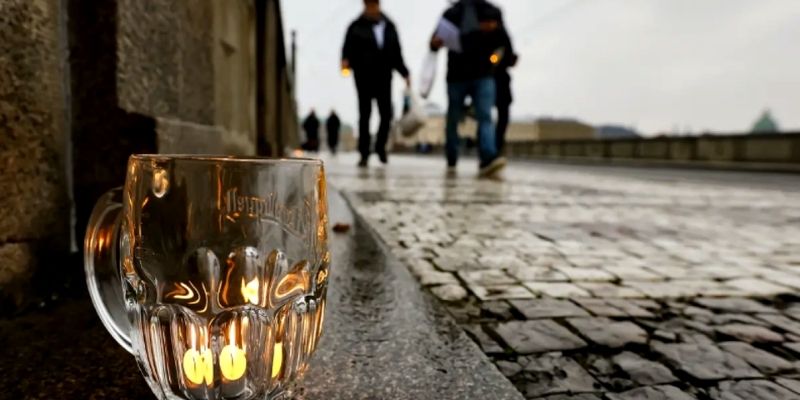
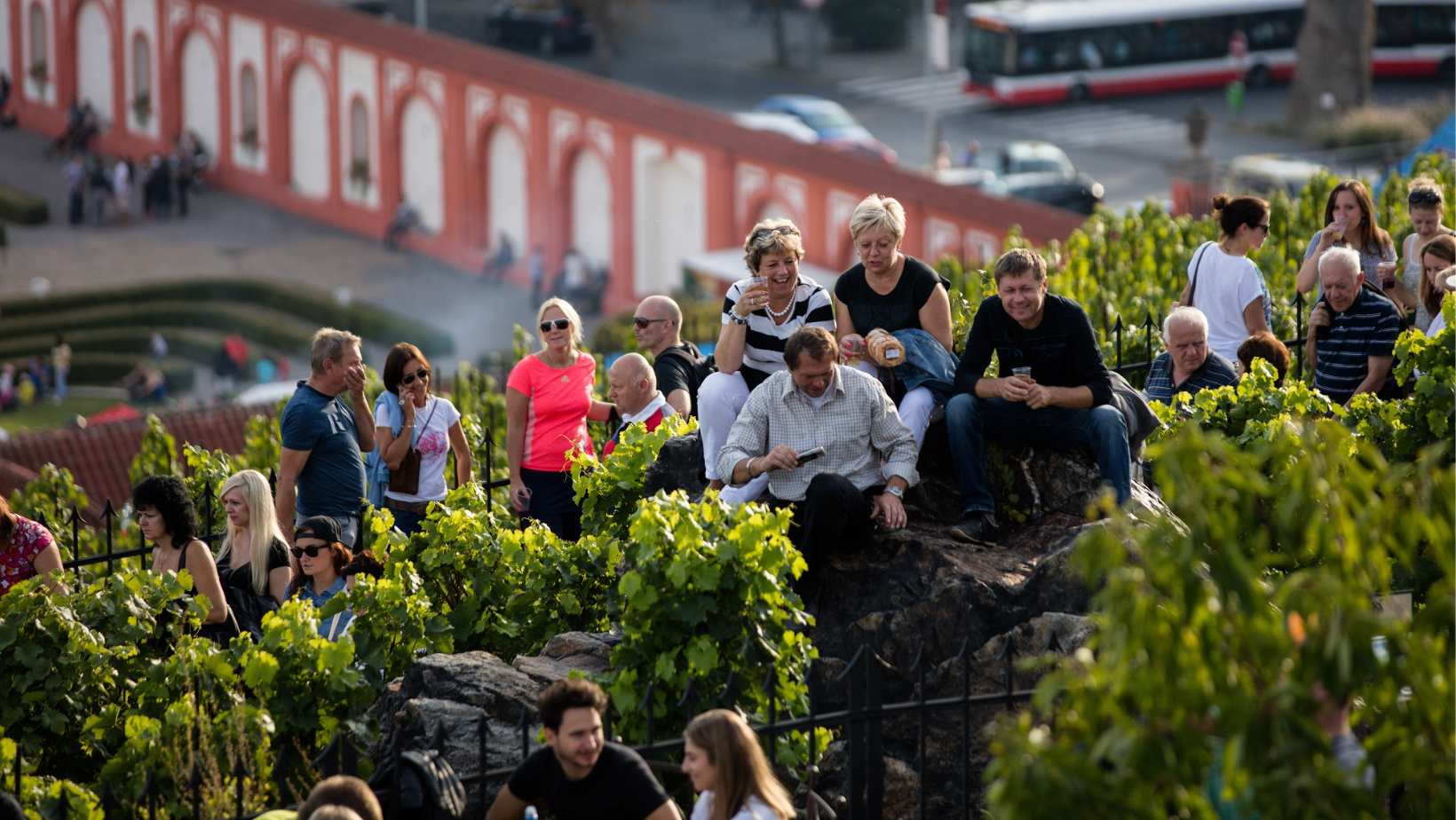
Protesters will gather once again in central Prague on Sunday, January 10, to challenge restrictions adopted to combat the Covid-19 spread. “At the demonstration, we will announce the re-opening of the Czech Republic. We will not respect government measures that do not work, but on the contrary have caused a far more deadly pandemic of poverty, unemployment, and collapsing companies,” the co-founder of Chcipl PES David Biksadsky said. The organizers call on the participants to come with face masks and respect the peaceful nature of the demonstration. “We are not talking only about the gastronomic sector, but also hotels, artists, taxi drivers, fitness centers, suppliers, and many other groups of citizens who have suffered from quarantine measures. We want to give the government a clear signal that we are fed up with all of this,” said Janeček, who is a member of the Chcípl PES initiative. The Minister of Industry Karel Havlíček (ANO) invited the organizers to an online meeting, which will take place on January 13 and should also be attended by members of the Association of Hotels and Restaurants and the Association of Small and Medium Enterprises. Hundreds of protesters gathered in Prague last Sunday, January 3rd, with...
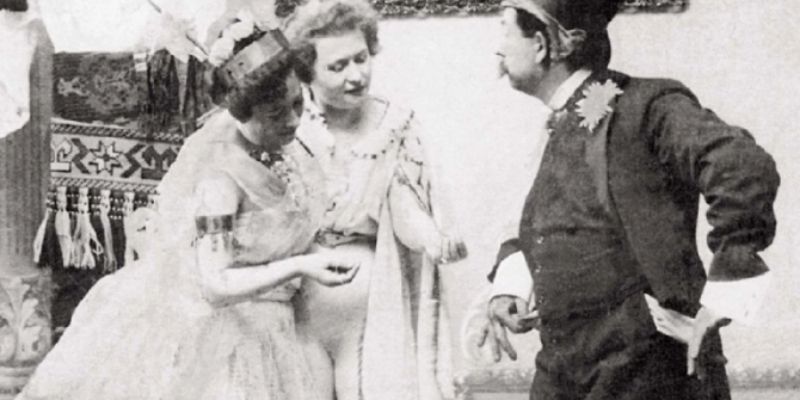
The 19th century marked the legalization of prostitution in Prague with specific laws intact. Brothels became a common entrepreneurship opportunity and prostitution was on the rise, mainly due to the higher number of students and soldiers. The anonymity and wealth of cities Prostitutes were referred to in distinctive ways, whether it be ladies of the evening, ladies of pleasure, or more demeaning variants. Each and every single prostitute had to keep a booklet documenting her health. Prostitution in the times of Josef II, around 1780, usually adhered to the countryside. However, with the forthcoming industrial age, more prostitutes began seeking a larger clientele, a stronger sense of anonymity, and further financial development in the comfort of bigger cities. The practice of the world’s oldest profession wasn’t always what these women set out to do, as it was usually women of lesser education or insufficient qualifications for employment who deemed it a last resort. Still, some girls managed to make more money working at a luxurious brothel than a professor would, teaching at a university. Prostitution was considered to belong to the streets of Prague. The same way celibacy was largely expected from brides prior to the wedding night, the sexual...
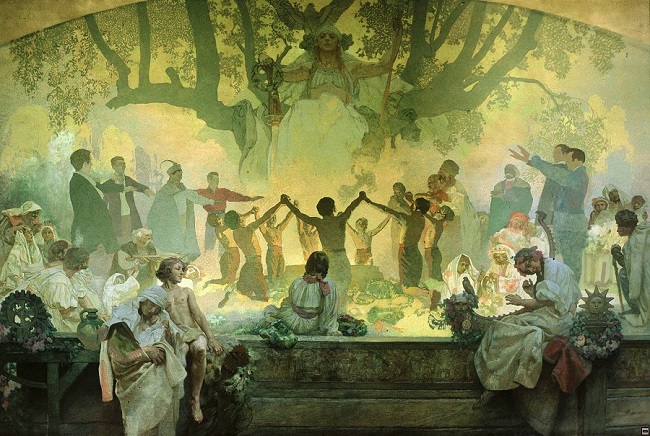
The Slavic Epic by Alfons Mucha could be temporarily displayed in the Savarin Palace, acquired in 2015 by Crestyl company. The canvas would move after a five-year loan to Moravský Krumlov and for a maximum of 25 years. The Slav Epic (Czech: Slovanská epopej) is a cycle of 20 large canvases painted by Czech Art Nouveau painter Alfons Mucha between 1910 and 1928. The cycle depicts the mythology and history of Czechs and other Slavic peoples. In 1928, after finishing his monumental work, Mucha bestowed the cycle upon the city of Prague on condition that the city builds a special pavilion for it. In 2012, all 20 works were moved and displayed together on the ground floor of the Veletržní Palace until 2016, in an exhibition organized by the National Gallery in Prague. In December, the District Court of Prague has ruled against the capital in a case regarding the cycle of paintings. The lawsuit was filed by the artist’s grandson John, who claimed that the city had violated the terms of a 1913 agreement between Mucha and his benefactor, the American philanthropist Charles R. Crane, which stipulated that the works would be gifted to Prague on the condition that the city build a pavilion to house them. “The Slavic Epic...
Ever since Covid-19 brought concerts and tours to a crashing halt this spring, the global live music industry has been in a bind. It was one of the earliest industries forced to shut down, and it will likely be one of the last to reopen. In the meantime, promoters and booking agents have lost jobs, venues have shuttered, artists have been cut off from one of their most reliable streams of income, and thousands of tour crew members have faced a financial and existential reckoning. Many artists have moved their gigs to 2021 in the hope that it will not be necessary to cancel them… once again. Dead Can Dance announced their return to Prague on Saturday 27th and Sunday 28th March at the Prague Congress Center. The last concert by Lisa Gerrard and Brendan Perry was sold out in two hours. Famous guitarist Joe Satriani postponed his European tour for a year due to a coronavirus pandemic. He is scheduled to perform at the Congress Center on May 15. In addition to songs from the new album, the concert program included classic songs from the guitarist’s repertoire such as Surfing With The Alien, Cherry Blossoms, and Flying In A Blue Dream. The Finnish...
It’s been 17 years since “Love, Actually” first hit theaters, but the scene in which Andrew Lincoln silently confesses his love to Keira Knightley with a bunch of poster boards still gets a lot of mileage. The latest example: Prague Mayor Zdeněk Hřib using this unique method of communication to deliver a New Year message to all the citizens of the Czech metropolis. Přeji krásný nový rok všem lidem dobré vůle. Ať je lepší než ten loňský. Věřím, že bude! ☺️ pic.twitter.com/wSBUxQUpIT — Zdeněk Hřib (@ZdenekHrib) January 1, 2021
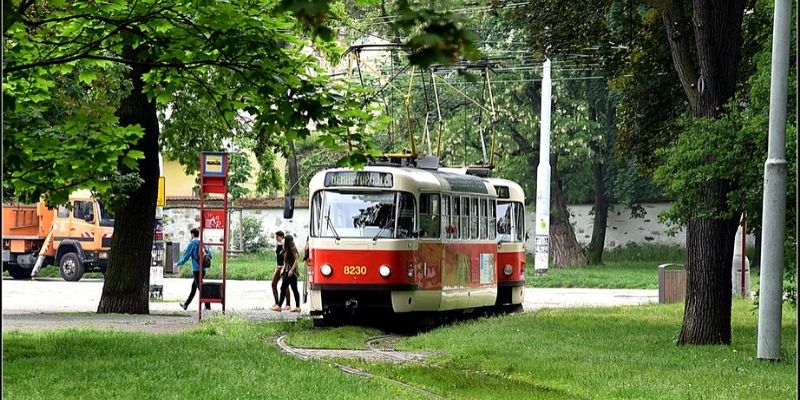
Prague is planning to grass over some of its tram lines as part of a program to make the city greener. Green tram rails are becoming more and more popular in Europe, and Prague wants to follow this trend. As part of the project Gene Funds for Cities and Landscapes, the Prague Public Transport Company is testing new unique mixtures of plants for evergreen tram tracks. Not only are grass tracks aesthetically pleasing, but they also go some way to supporting town landscapes that lack green space. This can have significant benefits for health and well-being, making cities more attractive. Moreover, grass tracks can reduce traffic noise, improve air quality, and cool the summer heat. “Embedding rails in grass acts as a better absorber of sound and vibration than traditional light rail embedment materials such as concrete and other hard surfaces,” said Prague’s Deputy Mayor for Mobility Adam Scheinherr One more benefit is the fact that the repair of the tram line on the grassy surface can be carried out faster than the repair of the paved line, which takes significantly more time, is more expensive, noisier, and duster. The researchers, in cooperation with the transport company, sowed the first three test...
On January 1st, 1993, Czechoslovakia split into the Czech Republic and Slovakia. A multi-ethnic nation born at the end of World War I in the glow of pan-Slavic brotherhood, Czechoslovakia survived dismemberment by the Nazis and more than four decades of Communist rule only to fall apart after just three years of democracy. Both countries divided their common “goods” (embassies, military equipment, etc.) on a two-to-one ratio to reflect their populations. The split “was not entirely inevitable, but the political and economic costs of keeping the country together would have been extremely high”, pointed out Jiri Pehe, political analyst and former advisor to Vaclav Havel. The split was cheered in Prague and Bratislava, by bonfires and joyous speeches in the main square. “Two states have been established,” Vladimir Meciar, Prime Minister of Slovakia, said at that time. “Living together in one state is over. Living together in two states continues.” Take a look at these photos and how Czechs and Slovaks celebrated the dissolution of the Czechoslovak Federal Republic (CSFR).
From Thursday, December 31, passengers in the Prague metro can use the high-speed LTE mobile network at Náměstí Míru, Hůrka, and Lužiny, reports Mobilenet.cz. As of today, 39 stations out of 61 are covered with LTE services. According to the previous plan, the entire metro should be covered with a mobile signal by early 2022. Construction works and cable installation in Prague Metro were performed in phases and during night hours when the metro is closed to the public (1:00 to 3:00 a.m.). The total distance between the four new stations where the cable will be installed in both directions is 11.6 km. The costs of covering the Prague metro stations and the tunnels amount to CZK 12 million and CZK 18 million, respectively. The Prague metro began operation in 1974 and now has three lines with 61 stations. It currently has a transit network 65.2 kilometers long. This does not include the long-planned Metro D line. It takes at least 50 hours to establish a 4G LTE network in one station; and, to install the network cables in both directions of the tunnel between any two stations takes approximately 2 months. Expanding WiFi coverage is part of a long-term city project not only...
City Sightseeing is one of the world’s leading open-top bus, boat, and guided walking tour company. Established in 1999, the global brand provides hop-on hop-off services. City Sightseeing operates in over 100 locations across 5 continents which includes cities such as London, Rome, New York, Edinburgh, Seville, Moscow, Cape Town, and Prague. The lack of tourists in the Czech capital forced City Sightseeing Prague to file for insolvency. COVID-19 pandemic is mentioned by the company in the declaration of insolvency as the main reason for the current situation. “Due to the nature of the business, it is not possible to continue operating this type of activity, nor can we expect a change and possible improvement of the situation in the near future,” the company wrote in the proposal. According to the proposal, the company has liabilities in the amount of 14 million CZK. He mentions four buses, two of which are double-decker. According to the proposal, Unicredit Leasing, City Sightseeing Support (a British company, the Czech branch operates as a franchise) and the city of Prague are among the carrier’s largest creditors. In 2019, according to official documents, the company had sales of almost fifty million CZK, but the net...
The Prague Public Transport Company (DPP) launched a real-time tram location function both in the Lítačka and IDOS mobile apps. Deputy Minister for Transport Adam Scheinherr announced on social networks that the two apps now display the tram live locations and the arrival time in a beta version. V aplikacích Lítačka a IDOS konečně najdeme online polohy tramvají a časy, kdy přijedou do zastávky. Spustili jsme testovací provoz v aplikacích, které používá nejvíce Pražanů. Konečně budeme moct pohodlně zjistit, jestli tramvaj, na kterou čekáme, už jela, nebo teprve přijede. — Adam Scheinherr (@Adam_Scheinherr) December 30, 2020 Passengers can see if the tram left earlier than planned or if is late for a few minutes. The app will also automatically displays the estimated waiting time. The new function will be launched in January.
Even during the COVID-19 pandemic number of foreigners in the Czech Republic was on the rise. Today, at the very end of 2020 there are nearly 617 thousand people from all over the world. Each and every person among expats came here for his/her own reasons. But what is important, is the way of these people, their stories. Without them, it is impossible to imagine these people. And it is even harder to understand them. IntegrON project, which was born as an independent youth initiative supported by the European Solidarity Corps, decided to collect these stories and assemble them into a chronicle of migration to the Czech Republic in the 21 century. Why, one might ask. The answer is simple: this is the only way to get to know each other. It is the dialogue, that has no boundaries. IntegrON’s guests are creative people who do art, theater, or music, diplomats, that work in the foreign service representing their cultures and nations, the people, who managed to “conquer” the Czech Republic: they have built an own success in a foreign country, fulfilled their dreams and became those, who they are today. We, Czech and foreigners, are closer than we think....
Over 462 kilograms of khat, a stimulant drug made from the leaves and twigs of evergreen shrubs, were found by customs officers at the Prague Airport. The drug was discovered in a cargo shipment from Dubai. “Similar shipments have been detained several times, but such a large amount is quite exceptional”, says the spokeswoman for Customs Administration, Šárka Miškovská. In February, a man who flew a flight from Doha, Qatar, tried to smuggle 45 kilograms of edible kata into the Czech Republic. Last November, customs officers detained 142 kilograms in seven suitcases from Tel Aviv, while two weeks earlier, a man flying from Dubai had 33 kilograms of this drug in his luggage. Khat is typically grown in East Africa and the Arabian Peninsula and is chewed for its stimulant effect. The World Health Organization classified khat as a drug of abuse in 1980. The green khat leaves are chewed and a small ball of partially chewed leaves are held against the inside of the cheek (similar to chewing tobacco). Dried leaves can also be chewed this way, though they are less potent. Some khat users also smoke the drug, make it into tea or sprinkle it on food, according to information provided...
Don’t have an account? Register
[swpm_registration_form level=”6″]
Already have an account? Log In
How Would You Like to Promote Your Business? PR ArticleDisplay bannersVideo productionNewsletter adsJob ListingsInfluencer Marketing
Your Email
We will come back to you within 24 hours with our proporsal