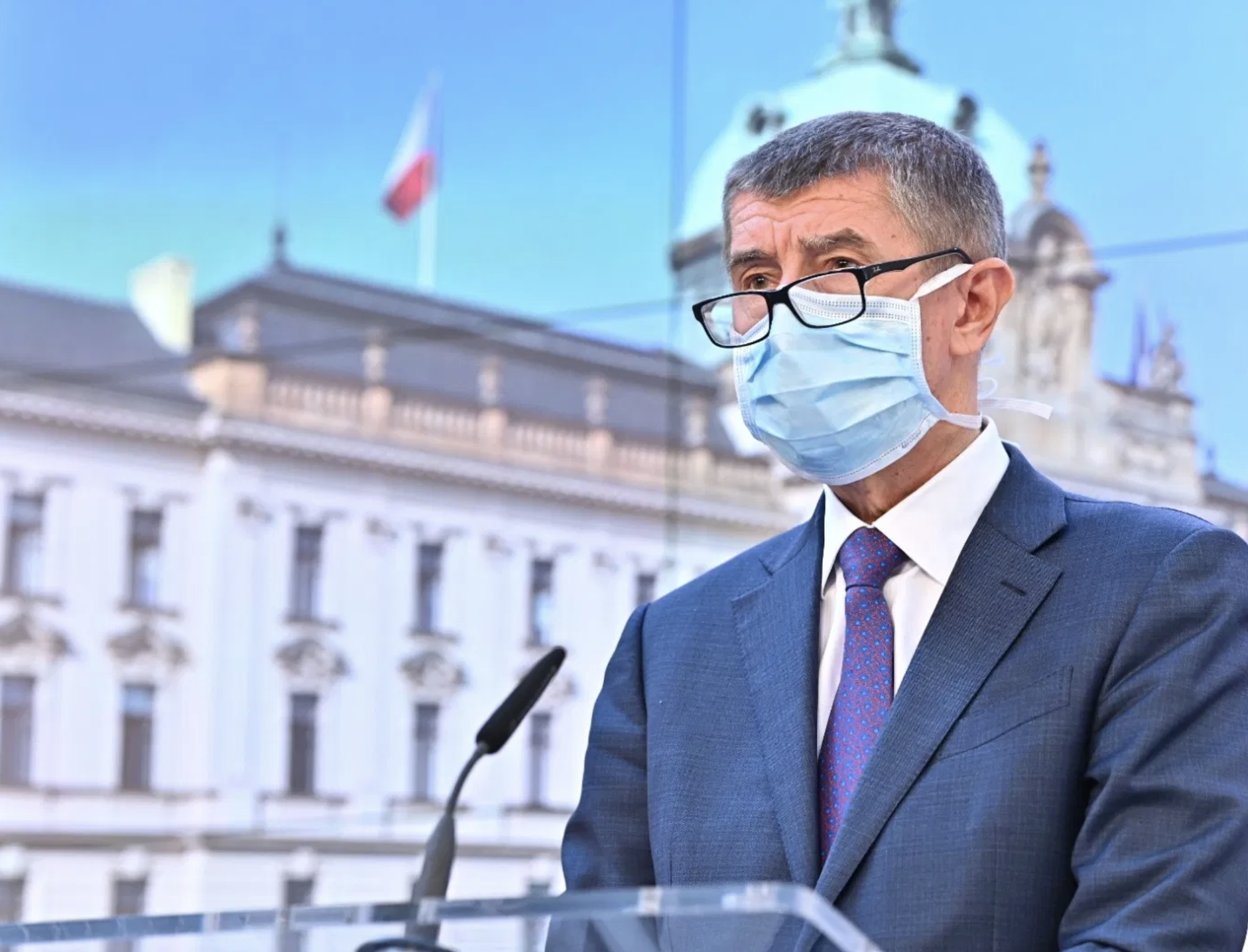
Czech lawmakers on Tuesday approved extending a state of emergency until April 30, a shorter period than what the government had wanted for using the extraordinary legal framework to further tackle the coronavirus outbreak. Prime Minister Andrej Babis’s government had sought a one-month extension to May 11 for the state of emergency, which allows the cabinet to curb some rights of citizens, including freedom of movement or enterprise, and gives it more flexibility in areas such as public procurement. The news was announced at a press conference following a meeting of the Czech Government this afternoon. During the debate, the government faced criticism from the opposition as well as demands for a clear plan of return to normal life in the Czech Republic. The state of emergency allows the government to adopt measures to slow the spread of the new coronavirus, such as limitations on free movement inside the country and across borders, shop and restaurant closures, and streamlined procurement of medical supplies. On March 30, the Czech government extended the quarantine regulations that include a limitation on free movement and mandatory closure of most shops and restaurants until April 11. From March 31, a mandatory 14-day quarantine is now...
Prague City Hall intends to allow retailers to display and sell their products, directly from sidewalks immediately outside of their shop fronts free of charge.
Here are the answers to your questions about how the measures of the Government of the Czech Republic mentioned in the Liberation Package will affect you. Connect Economic Group s.r.o. Tax Advisor Tomáš Navrátil and owner of CEG and Tax Specialist Šárka Pelikánová have answered your questions. Why did the government introduce a liberalization package? The government justifies the introduction of these measures to ensure the health and administrative security. The government official statement is: On the possibility of later payment of income tax, the Ministry of Finance states that “the purpose of remission of late payment interest is to limit the number of people at the tax offices, and to respond to staff shortages on the part of legal persons as a result of virus spread” Other measures include an increase in the tolerance of the least serious misconduct on the part of taxpayers, in circumstances where the spread of the virus reduces their ability to perform their duties, etc. Therefore, it is better not to perceive the measures introduced by this package primarily as economic support from the Czech Government towards taxpayers, i.e. entrepreneurs. It will be better for you to understand all the measures and adapt yourself...
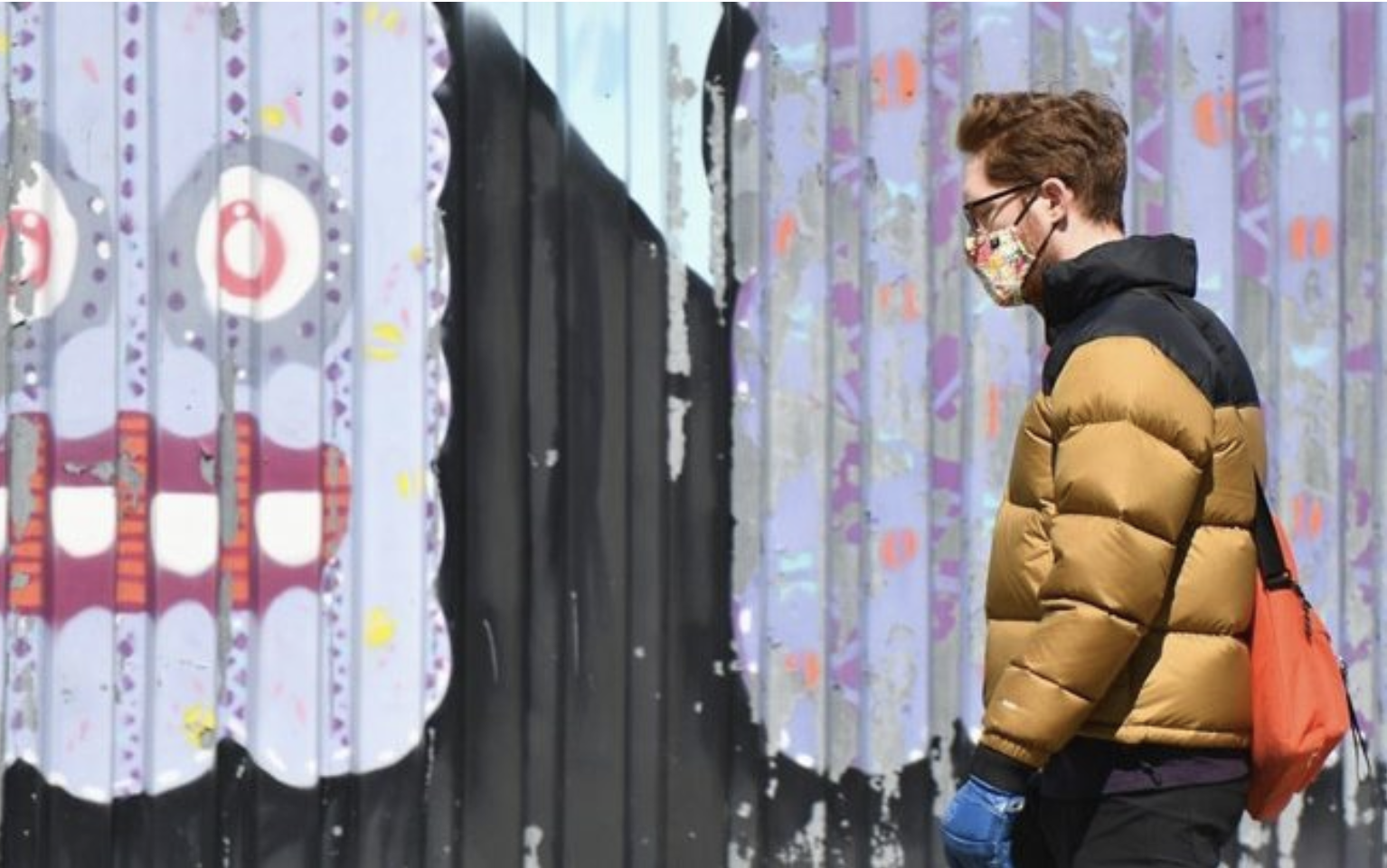
From tomorrow, Tuesday, April 6th, people will be able to do individual sports outdoor. Running or cycling in the parks and woods will be possible without a face mask, as long as they maintain a distance of two meters from others, and stay in groups with a maximum of two people. “We are allowing movement of joggers and cyclists without face masks, but only on the understanding that they maintain the psychological distance of two meters from each other. Simply put, if someone is riding their bike in a forest, they do not need a mask. If someone is running in the forest, they do not need a mask. If someone is moving within an urban area where there are more people and where contact could be less than two metres, they should have a mask.” Deputy Prime Minister Karel Havlíček (ANO) informed about relaxing lockdown measures after Monday’s government meeting. Waste collection and composting facilities will open from Wednesday. From Thursday the following stores can reopen: hardware stores, bicycle repair shops, stores selling work clothes, shoes, textiles, prams and baby seats, stationery, hobby markets, and shoe repair shops. “However, people will have to follow stricter rules,” Havlíček added. “All...
The Deputy Minister of Health Roman Prymula yesterday released an interview for DVTV. “England and Sweden took a conspicuously different approach to the coronavirus from its international peers, trusting the public to adopt voluntary, softer measures to delay the spread of the virus. It didn’t work properly. But a controlled approach that would not be as restrictive as it is now, may deserve attention.” “In the beginning, we had to slow down the epidemic with strict measures. But now we have to decide whether to continue this method or to “relax” these measures – even if the epidemic goes slightly up,” Prymula said. “It is not possible to hold tough measures indefinitely. If the growth rate of cases continues to be linear in the coming days, the bans are expected to be lifted,” he added. “When a group at-risk is managed, the rest of the population should “meet” this virus in time and prove immune. Czechs should meet with coronavirus. I do not say everyone, but those for whom it will not be worse than the flu. And these are people of lower age, and healthy.” However, Babiš said he disagreed with Prymula, and the idea to create herd immunity...
On Sunday, April 5, the Czech government published a visual video that explains in detail how the “smart” quarantine works. The “smart quarantine system” tracks the movements of infected citizens. The monitoring system, which requires consent, will use data from mobile phones and payment cards of people who have been tested positive to find all the potential people that could be infected as a result. All those who they came into contact with are tested and quarantined until cleared. The plan is being implemented with the help of the army in order to speed up testing.
That’s the message the mayor of Prague has for Chinese officials desperate to rebrand Beijing as a global superpower by selling supplies and offering aid to countries around the world struggling to fight coronavirus. “This isn’t a humanitarian gift or aid,” Zdenek Hřib told Bloomberg News on Friday. “From China’s perspective, it’s business.” That “business” has had some serious growing pains in the last few weeks. Up to 80 percent of the 150,000 rapid coronavirus test kits China delivered to the Czech Republic in March was faulty and less accurate than other tests, forcing the Czech Republic to continue to rely on conventional laboratory tests. Hřib believes that despite the extraordinary circumstances facing the world right now, it is important to keep the pressure on China and challenge the country on its history of human rights abuses. His comments directly contradict Milos Zeman, the Czech Republic’s China-friendly leader, who has accepted Beijing’s help and publicly praised President Xi Jinping a number of times. More recently, while parts of Europe were going into lockdown to contain the spread of COVID-19, Hrib flew the Tibetan flag over city hall on March 10 to commemorate the anniversary of the region’s failed 1959 revolt over the Communist Party.
The hospital in Brno will take on at least six French coronavirus patients.
Face masks could help limit the spread of the COVID-19 pandemic, according to researchers who studied the effect of surgical masks on the transmission of other corona and flu viruses. In the study, the use of surgical masks by sufferers significantly reduced the number of flu viruses detectable in droplets released through breathing and coughing. It also reduced the number of seasonal coronaviruses – among the causes of common colds – detectable in the air as suspended microdroplets, or aerosols. The study did not look at the new coronavirus, SARS-CoV-2. “Further research is needed to determine whether masks can specifically prevent the transmission of SARS-CoV-2,” the scientists said. The research, published in the journal Nature, coincides with the pandemic of COVID-19 respiratory disease, which has infected more than a million people worldwide and killed more than 53,000. Benjamin Cowling, the professor who led the study at the World Health Organization (WHO) Collaborating Centre for infectious disease epidemiology in Hong Kong, said its findings could be extrapolated to simpler cotton masks. “My expert view is that cloth or cotton masks would have an effect, but maybe slightly less of an effect than a surgical mask properly worn,” he said in a...
The Czech Republic’s decision to implement mandatory face masks for all citizens is starting to catch on, with a public relations campaign promoting the policy for other countries holding the potential to save thousands of lives. Just a week ago, Czech author Petr Ludwig and actress Aneta Kernová posted a video on Youtube titled “How to Significantly Slow Coronavirus?” In the video, Kernová encourages other countries to introduce mandatory use of face masks in public spaces, just like the Czech Republic did to slow the spread of the coronavirus. Since then, the three-and-half-minute-long video has gained the attention of several international media outlets, including CNN. It has also been watched over four and a half million times on Youtube. Czech Prime Minister Andrej Babiš also boosted the video after sharing it on his Twitter. In the post addressed to the U.S. President Donald Trump, Babiš encouraged Trump to make wearing face masks in public mandatory and attached the video, which uses the hashtag #Masks4All. The Czech Republic was the first European country to make it mandatory for all citizens to wear face masks in public, a policy that raised some skepticism, especially after some health authorities questioned the effectiveness of face masks...
With regard to the current market situation, it is obvious that the solvency of entrepreneurs and private individuals may be soon significantly affected. Therefore, the government has decided to take several new measures to ensure protection against the inability to repay loans and mortgages, as well as protection of apartment tenants. TEMPORARY SUSPENSION OF INSTALMENTS According to the proposal of the Ministry of Finance, recently approved by the government, instalments of interest and principal will be temporarily suspended with the exception for corporate loans (where only principal instalments will be suspended, instalments of interest shall remain intact). Banks will not charge fees for such suspension. According to the proposal, it will be possible to postpone instalments of both consumer and business loans (including mortgages) that were concluded and drawn before March 26, 2020. Mortgage instalments may also be postponed in case that the contract was concluded before March 26, 2020, but the funds were drawn after. Clients will be able to choose between the postponement of instalments for three or six months. If the client decides to postpone the instalments, the repayment period of the loan will be prolonged by the suspended period. However, according to information given by the...
"We lost the dispute, but that is not important. What is important is that we do not have to pay something. Usually, the court claims some compensation for the proceedings," said Babiš.
Don’t have an account? Register
Already have an account? Log In
How Would You Like to Promote Your Business? PR ArticleDisplay bannersVideo productionNewsletter adsJob ListingsInfluencer Marketing
Your Email
We will come back to you within 24 hours with our proporsal