In a frightening armed robbery Monday in San Francisco, three attackers stole cameras and footage from Czech Television correspondent Bohumil Vostal and cameraman Milan Nosek. Police arrived minutes later as the criminals fled in a dark sedan. According to the San Francisco Chronicle, the robbers pointed a gun at Nosek’s stomach and Vostal’s head while stealing over USD 18,000 worth of equipment, thwarting their coverage of Asia-Pacific Economic Cooperation events. “They were heading at my camera man, aiming a gun at his stomach, and one at my head,” Vostal said in an interview Monday, growing breathless as he recounted the harrowing incident at 5 p.m. the night before. Vostal is among hundreds of international correspondents who flocked to San Francisco this week for the Asia-Pacific Economic Cooperation summit, an event drawing some of the world’s most powerful leaders to downtown and Nob Hill. Like many reporters, Vostal had seen news coverage of unruly shoplifters, open-air drug markets and commercial vacancies, but he hoped to portray the city in a more positive light. He and his crew from a public television station in the Czech Republic had captured shots of the Painted Ladies in Alamo Square, interviewed gallery owner Jonathan Carver Moore and met with community...
Representatives from over thirty Czech universities have joined forces and signed a letter, calling on authorities and academic leaders to combat the rise of anti-Semitism within the academic sphere, emphasising the need for decisive legal measures against any expressions of hatred. The appeal addresses concerns about the tearing down of posters commemorating the Jewish victims from the 7 October kidnappings, denouncing the violent invasion by Hamas terrorists in southern Israel from the Gaza Strip. The letter condemns anti-Jewish slogans and calls for the genocide of Jewish citizens, both of which were allegedly heard at pro-Palestinian demonstrations and on social media. “Many students of our universities are also involved in these activities,” they said in the letter seen by the Czech News Agency. In the appeal, the authors reject passive acceptance of hate speech, asserting that it cannot be disguised as freedom of speech or academic dialogue. “We ask all competent institutions and the leadership of schools, faculties and departments not to allow the spread of prejudiced hatred often disguised as anti-Zionism or criticism of capitalism or colonialism. Of course, we assume that they will act in the same way towards any manifestations of intolerance against anyone,” the text reads. Additionally,...
A recent Ipsos study for Creditas Bank uncovered that every sixth person in the Czech Republic can only set aside a maximum of five hundred crowns each month. Half of the respondents don’t save even CZK 2,000 a month, and a third of households have savings ranging from one CZK 100,000 to half a CZK 500,000. The study also disclosed that almost half of the respondents admitted their savings wouldn’t cover a three-month interruption in income. Approximately one in five are striving to save for housing. However, those who do often mishandle their savings, depriving themselves of potential returns. “Seven in ten respondents keep their savings in cash or a current account,” warned Ivana Pícková from Creditas. She cautioned that a million crowns deposited in a non-interest-bearing current account would earn nothing in a year. Depositing the same amount in a savings account would yield around CZK 50,000 annually at today’s average interest rates. The most popular saving tools are cash, with 71% of people having savings, and savings accounts used by 69% of respondents. This is followed by state-subsidized products, such as pension savings, building savings, and investment funds. Pension insurance is held by 64% of respondents, and making...
According to a proposal by the Energy Regulatory Office (ERO), the regulated price of electricity in the Czech Republic is expected to increase by 71 percent, next year. Which would result in an annual increase of around four thousand crowns for one household. What does the ERO’s proposal state? The ERO’s proposal states that the regulated price of electricity should increase by 71 percent next year compared to this year. After including VAT, Czech electricity will increase by an average of CZK 1,408 per megawatt hour. According to data, the average Czech household consumes around three-megawatt hours of electricity per year. However, following the increase in the regulated component, it will cost Czech households around CZK 4,200 per year. What is the regulated component? Energy billing in the Czech Republic consists of two components. The first part of the price is the price per commodity, which can be influenced by individual suppliers, and the second part is the regulated component, the amount of which is decided by the ERO. Why is this happening? Up until now, the state has partially been subsidizing energy for Czech households. However, this is about to change, and consumers will have to pay again, for...
Former foreign minister, senator and honorary chairman of TOP 09 party Karel Schwarzenberg has died at the age of 85 after a long illness. The one-time presidential candidate, noted for his pro-European views, had been hospitalised in Vienna for the past few days. Mr Schwarzenberg, who had both Czech and Swiss citizenships, was born in Prague in 1937 into a noble family, which was forced to flee the country after the communist coup in 1948, settling in Vienna. In the 1980s, Mr Schwarzenberg served as president of International Helsinki Federation for Human right, negotiating the question of human rights in former USSR, Bulgaria, Kosovo, and in Czechoslovakia. After his return to Czechoslovakia in 1989 Mr. Schwarzenberg served as the chancellor to president Václav Havel until his abdication in 1992. Former Minister of Foreign Affairs (2007–2009, 2010–2013) and former First Deputy Prime Minister (2010–2013), Mr. Schwarzenberg was also a Member of the Senate of the Czech Parliament (2004–2010). During the first half of 2009, he served as the President of the Council of the European Union. In 1991, he was awarded, together with Lech Wałęsa, the Council of Europe’s Human Rights Award. In 2009, Karel Schwarzenberg, together with Miroslav Kalousek, founded...
Just north of Prague, around an hour’s drive from the capital, lays a small, preserved town called Mělník which rests in the central Bohemian Region of the Czech Republic. The town’s history consists of lavish tales of royalty and saints, which is preserved in the very walls of the beautiful Mělník castle, which still stands tall and proud to this day. First built in the 9th century entirely out of wood, the castle, frequently referred to as the ‘chateau,’ has had a long history of change. Part of its vast architectural journey featured the likes of the prominent and noble Lobcowicz family, who redid the chateau using stone in the style of Romanesque, a transformation from its previously wooden frame. It would later be rebuilt again, as with the changing of times, in gothic style, which has a notoriously prominent relationship with literature, especially in the plots of English novels. Its gothic makeover came in the 13th century when the wives of Bohemian princes owned the town and its Queens resided there. It was around this time that the last wife of Emperor Charles IV built the chapel of the castle, solidifying its gothic roots. In the years that followed,...
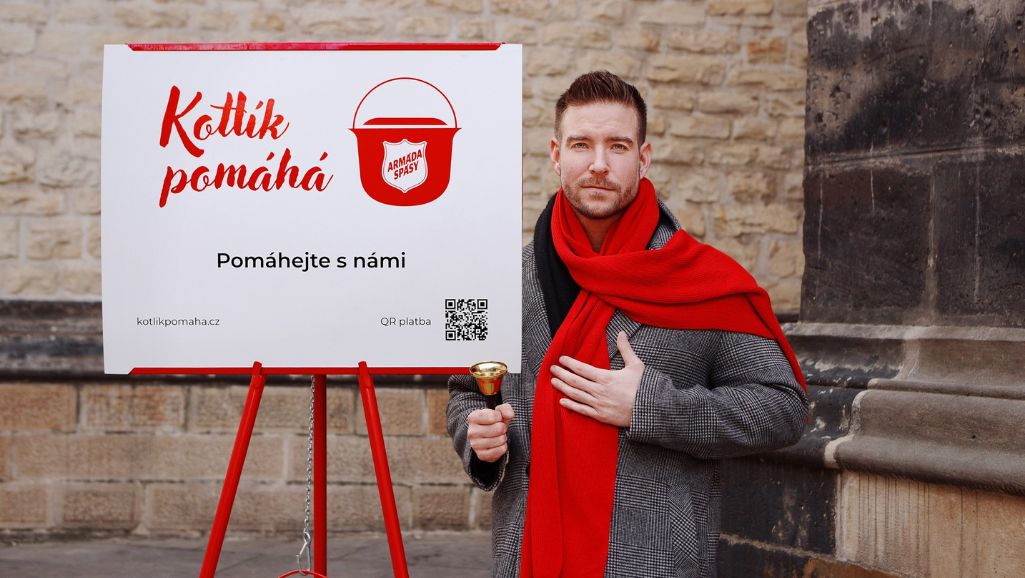
People can donate non-perishable foodstuffs that will then be redistributed to those in need.
Family Brewery Bernard has been awarded the title of the best brewery by the Czech Association of Friends of Beer (Sdružení přátel piva) in 2023. It received the prestigious Pivovar roku award for maintaining consistently high product quality, making strategic investments, and continuously improving production. Pivovar Kamenice secured the second position, while Pivovar Únětice claimed the third spot. The Association of Friends of Beer, comprising the largest Czech breweries, mini-breweries, and industry professionals, determines the best brews and producers through a poll among its 1,500 members. In the mini-breweries category, the top performers were: Pivovar Rampušák Pivovar Volt Pivovar BadFlash Experts also singled out the best beer brands in various categories: Světlé výčepní pivo or “desitka” (beer with an initial wort extractivity of 10 per cent): Hektor, světlé výčepní (Řemeslný pivovar CLOCK) Fabián desítka (Pivovar Hostomice) Bernard desítka (Rodinný pivovar Bernard) Světlý ležák (light lager): Prostě Světlý Ležák (Pivovar BadFlash) Fabián 12%, světlý ležák (Pivovar Hostomice) Muflon, světlý ležák 11° (Pivovar Kunratice) Strong beer (13% and above): Primátor 16 Exkluziv (Pivovar PRIMÁTOR) Dalešické Májové 13% (Pivovar Dalešice) Festpils Konspirátor (Pivovar Ovipistán, Pivní rozjímání a létající sládek Aleš Dvořák) Tmavé and polotmavé pivo (dark and semi-dark beer): Černá Svině...
On November 16, buildings in Prague and across the country will be lit for World Prematurity Day. The list of buildings include the Dancing House in Prague, Špilberk Castle and Mahen Theater in Brno, Nová Karolína shopping mall and the Mining University in Ostrava, the Town Hall in České Budějovice, the New Stage of the JK Tyl Theater in Plzeň, Bečov Chateau, the Karlovy Vary Museum, and the 14|15 Baťa Institute in Zlín. Dancing House in purple. According to the World Health Organization (WHO), every year, an estimated 15 million babies (one in 10) are born preterm (before 37 completed weeks of gestation), and this number is rising. The world health body says preterm birth occurs for a variety of reasons. Most preterm births happen spontaneously, but some are due to early induction of labor or caesarean birth, whether for medical or non-medical reasons. Common causes of preterm birth include multiple pregnancies, infections and chronic conditions such as diabetes and high blood pressure; however, often no cause is identified. There could also be a genetic influence. Babies who survive an early birth can face serious health challenges and are at risk for lifelong disabilities including breathing problems, vision loss, cerebral palsy,...
YouTube has long been setting the scene for popular fads and trends, the newest of which is the PRIME energy drink founded by world-famous YouTubers Logan Paul and Olajide William Olayinka, otherwise known as KSI. The energy drink has been promoted extensively by the original creators, as well as other notable personalities from the sports world, however, its suitability for children and composition has raised concerns. It is not just the high content of caffeine, according to a practitioner, but also the large dose of potassium which poses risks. Excessive intake of it could cause a range of health issues such as heart problems, muscle weakness, and overall fatigue. “A lot of my friends drink it, it is a hit in the classroom and at school,” said twelve-year-old Matouš, who attends secondary school to iDNES. Some children even exchange and sell the cans with one another and others drink the energy drink regularly, “I think it is the most popular energy drink in elementary schools right now” adds Matouš. The reason for the popularity of the drink is evident to Matouš, as the brand is promoted by celebrities with millions of followers, especially children. Sweetened coconut water worth CZK...
The Czech Republic has dropped down the rankings of English proficiency since last year, ranking 26th of 113 countries in EF Education First’s annual English Proficiency Index (EF EPI), down from 23rd in 2022. The Czech Republic is still categorised among countries with ‘very high’ proficiency in the English language, but ranks below all its neighbours; Austria is 3rd, Germany 10th, Poland 13th and Slovakia 18th. Among European countries, the Czech Republic ranks 21st. The Netherlands tops the rankings, as last year. Sabina Wyrob, from the Czech office of EF Education First, said Czech children have far fewer private language lessons than children in other European countries. She said the online teaching during the coronavirus pandemic also affected their English skills, as Czech children did not actively use the language and did not try to communicate. Schools and students are trying to catch up on what was missed, but are still not moving forward. Wyrob pointed out that Slovakia had improved its position in the rankings despite the pandemic, even though English skills in Slovakia had been worse than in the Czech Republic until 2020. 2,400 people were tested in the Czech Republic for this year’s rankings. At the regional...
Czech start-up Bene Meat Technologies is the first to win European Union registration for laboratory-grown meat for use in pet food and plans to boost production to make up to several metric tons per day next year, the company said on Wednesday. A number of firms are racing globally to develop commercially viable lab-grown meat and fish products to appeal to consumers concerned about ethical issues and the environmental impact of livestock farming, a major source of greenhouse gas emissions. In the United States, Upside Foods and Good Meat won regulatory approval in June for their so-called cultivated meat, made from animal cells, for human consumption, a second place after Singapore. But large-scale production is yet to begin. Bene Meat has turned its focus to the pet food sector to deliver a product that can be marketed to global pet food makers as a raw material for inclusion in their final products. The product received certification in the European Feed Materials Register, the company said. Bene Meat next plans to test how the product tastes to animals, while scaling up production at its current Prague lab and at new premises it is looking for. The start-up, set up in 2020...
Don’t have an account? Register
[swpm_registration_form level=”6″]
Already have an account? Log In
How Would You Like to Promote Your Business? PR ArticleDisplay bannersVideo productionNewsletter adsJob ListingsInfluencer Marketing
Your Email
We will come back to you within 24 hours with our proporsal