Czech gastronomy reached a milestone this week when Restaurant Papilio in Vysoké Újezd near Beroun became the first dining spot in the country to earn two Michelin stars. The recognition arrived as the Michelin Guide released its new Czech edition — the first to assess restaurants beyond Prague. The expansion of Michelin’s focus reshaped the national culinary map. Inspectors awarded 9 starred restaurants across the country, while another 18 venues received Bib Gourmand, the guide’s mark for quality food at reasonable prices. Four restaurants were also honored with Green Stars for sustainability, along with several individual awards for service and young talent. Until now, Michelin had concentrated on Prague, where La Degustation Bohême Bourgeoise and Field have long held one star each — and both retained their status. The restaurants Entrée in Olomouc, Vila in Zlín, Essens in Hlohovec in the Břeclav region and the Prague restaurants Levitate, Štangl, Pole, and Casa De Carli each received one star. But the spotlight largely shifted outside the capital for the first time. The biggest attention fell on Papilio, now holding two stars, led by chef Jan Knedla, who previously worked in acclaimed Michelin kitchens worldwide, including the three-star Amber in Hong Kong. Inspectors...
As the Christmas season approaches, Prague has renewed its call for more respectful and humane treatment of carp, a long-standing Czech holiday tradition. The city is not trying to ban the purchase of carp, but rather to highlight the suffering many of these fish endure — from stressful transport to painful deaths in untrained home kitchens. The campaign, visible across Prague until December 23, reminds buyers to avoid placing live carp in chlorinated bathtubs, returning them to rivers or ponds, or killing them at home without proper equipment. Instead, the city encourages people to have the fish humanely slaughtered, gutted, and cut at the point of sale. By doing so, stress and suffering can be minimized, and the resulting meat handled safely. “I believe most people aim to treat animals without causing harm and with compassion. Education and ethics go together,” said the Deputy Mayor for Culture, Tourism and Animal Welfare, stressing that a growing share of the public now recognises the suffering carp undergo when killed unprofessionally. From several thousand carp stalls across the Czech Republic, about 200 are located in Prague. The city notes a gradual rise in the number of customers opting for professional slaughter at the...
Residents across Czechia will have an exceptional chance to watch one of the most reliable meteor showers of the year this Saturday night. One of the year’s most spectacular meteor showers, the Geminids, is set to peak this weekend, offering a dazzling celestial display. These fiery tails, often called “shooting stars,” occur when fast-moving space rocks enter Earth’s atmosphere and burn up. Skygazers could see up to 120 meteors per hour under dark skies during the peak Saturday night into Sunday’s predawn hours, according to NASA. Although the phenomenon occurs every December, this year’s viewing window stands out. According to astronomer Petr Gorálek from the Opava Physics Institute, the Moon will rise late enough that its light will not interfere with visibility during the most active hours. For skywatchers, that means a darker sky and a higher chance of spotting long, bright trails. The ideal period spans midnight to around 4 a.m., when the meteor stream crosses Earth’s orbit at its most intense point. While the Geminids begin appearing from December 4 and continue until roughly December 17, the brief peak offers the greatest density of visible meteors. Astronomers advise heading away from city lights and choosing a spot with a...
A major shift in Central European aviation is underway as Turkey’s Pegasus Airlines begins the formal process to acquire Czech carriers ČSA and Smartwings. The announcement appeared first in a statement from Smartwings spokeswoman Vladimíra Dufková, confirming that negotiations between the parties have progressed to a structured sale procedure. According to Dufková, Prague City Air – the shareholder behind ČSA – reached an agreement with Pegasus to enter a sale process that will culminate in the full transfer of ČSA shares. The timeline depends on clearances from aviation regulators and other required approvals, which the parties expect to resolve within the coming year. Because ČSA owns all Smartwings shares, both carriers would be transferred together under the same transaction. Pegasus later posted a brief note on the X platform stating it had signed an acquisition agreement involving both Smartwings and ČSA. No financial details appeared in the announcement itself, yet Turkish media widely reported that the binding deal is valued at 154 million euros, roughly 3.8 billion CZK. The final amount may be adjusted once the transaction undergoes regulatory review and is fully finalized. LATEST JOBS IN PRAGUE Accounting Assistant with Spanish Active Directory Engineer [Advance/Senior] To execute the acquisition,...
Czech Inn Hotels has introduced an unprecedented program aimed at supporting families while addressing the country’s declining birth rate. The initiative provides a 15,000 CZK voucher for children conceived during stays at any of the company’s 28 hotels. The offer applies to children expected to be born in 2025 and 2026. Parents must have stayed at the hotel 7 to 10 months prior to the child’s birth to qualify. The voucher can be used at Malvík, a Czech company specializing in children’s products. Additionally, families receive a full discount on venue rentals for events such as birthday parties, christenings, weddings, or other celebrations. Jaroslav Svoboda, General Manager of Czech Inn Hotels, explained the motivation behind the initiative: “Hotels are thriving, and society needs more than just investments and work. We already support hospitals, sports, and other activities. Seeing so many happy couples at our hotels made me wonder how many children might have been conceived ‘with the help’ of our rooms. We want to offer financial support to families for these new arrivals.” Families interested in applying for the voucher can contact Czech Inn via [email protected] Would you like us to write about your business? Find out more
European automakers have long dominated the market, but a new wave of competition from China is on the horizon. Following BYD’s entry into Czechia in April, seven more Chinese brands are preparing to follow, targeting both budget-conscious buyers and the premium segment. Their arrival marks a new chapter in the region’s transition to electric mobility. Hongqi: China’s Luxury Answer to Mercedes and BMW Hongqi, which means “Red Flag”, has an illustrious past. Once the exclusive supplier of limousines for Chinese political leaders, the brand has evolved into an ambitious global player. In China, it competes directly with Audi, BMW, and Mercedes-Benz, and now it plans to take on the same rivals in Europe. While Hongqi originally produced combustion models for the elite, it now focuses on electric vehicles. Its flagship model, the E-HS9, is a large electric SUV reminiscent of the Rolls-Royce Cullinan in both size and style. It combines premium materials with strong performance and a range exceeding 500 km. Hongqi has already launched in Norway and Sweden, with plans to enter the UK and other Western European markets in 2026. It aims to win customers through bold design and competitive pricing, though convincing European buyers that a Chinese...
President Petr Pavel will appoint ANO leader Andrej Babiš as prime minister on Tuesday, December 9, after the billionaire announced that he would step away from his business empire Agrofert to resolve a conflict of interest. The move clears the final obstacle following ANO’s victory in October’s parliamentary election and its subsequent coalition deal with the Freedom and Direct Democracy party and Motorists for Themselves. Babiš confirmed the decision in a video message on Thursday evening, saying he would “irrevocably give up” Agrofert and have no contact with the conglomerate going forward. The business group, which includes more than 200 companies and is one of the country’s largest recipients of EU subsidies, has been at the centre of his legal and political battles for years. “Of course, I could have left politics after winning the election and lived a comfortable life,” Babiš told voters. “But I am convinced you would see it as a betrayal. That is why I have decided to give up Agrofert forever. I will not own it again, I will not profit from it, and I will not communicate with it.” According to the plan he outlined, Agrofert’s shares will be moved into an independent trust...
New figures from the Czech Statistical Office (CZSO) show a noticeable shift in Czech eating and drinking habits during 2024. The country consumed 797 kilograms of food per person, while the structure of the average diet continued to change. Consumption of alcohol, sugar and flour declined, whereas dairy products, vegetables and meat increased. One of the most striking year-on-year changes appeared in milk and dairy products. Czechs consumed 260.9 kilograms per person, an increase of six kilograms compared with 2023. Potatoes, pasta and long-life baked goods also recorded moderate growth. At the same time, people ate less fruit overall, dropping to 84.4 kilograms per person. Consumption of fruit grown in temperate climates declined, while fruit from southern regions rose slightly, largely due to higher demand for bananas. The year also brought a measurable shift in vegetable consumption. Czechs ate 91.6 kilograms of vegetables per capita, up 4.5 kilograms from the previous year. Alcohol consumption moved in the opposite direction. The country drank 156 liters of alcoholic beverages per person, a drop of 4.3 liters from 2023. Looking further back, the decline is more pronounced: in 2015, Czechs consumed 172.4 liters, meaning a reduction of 16.4 liters over the past decade....
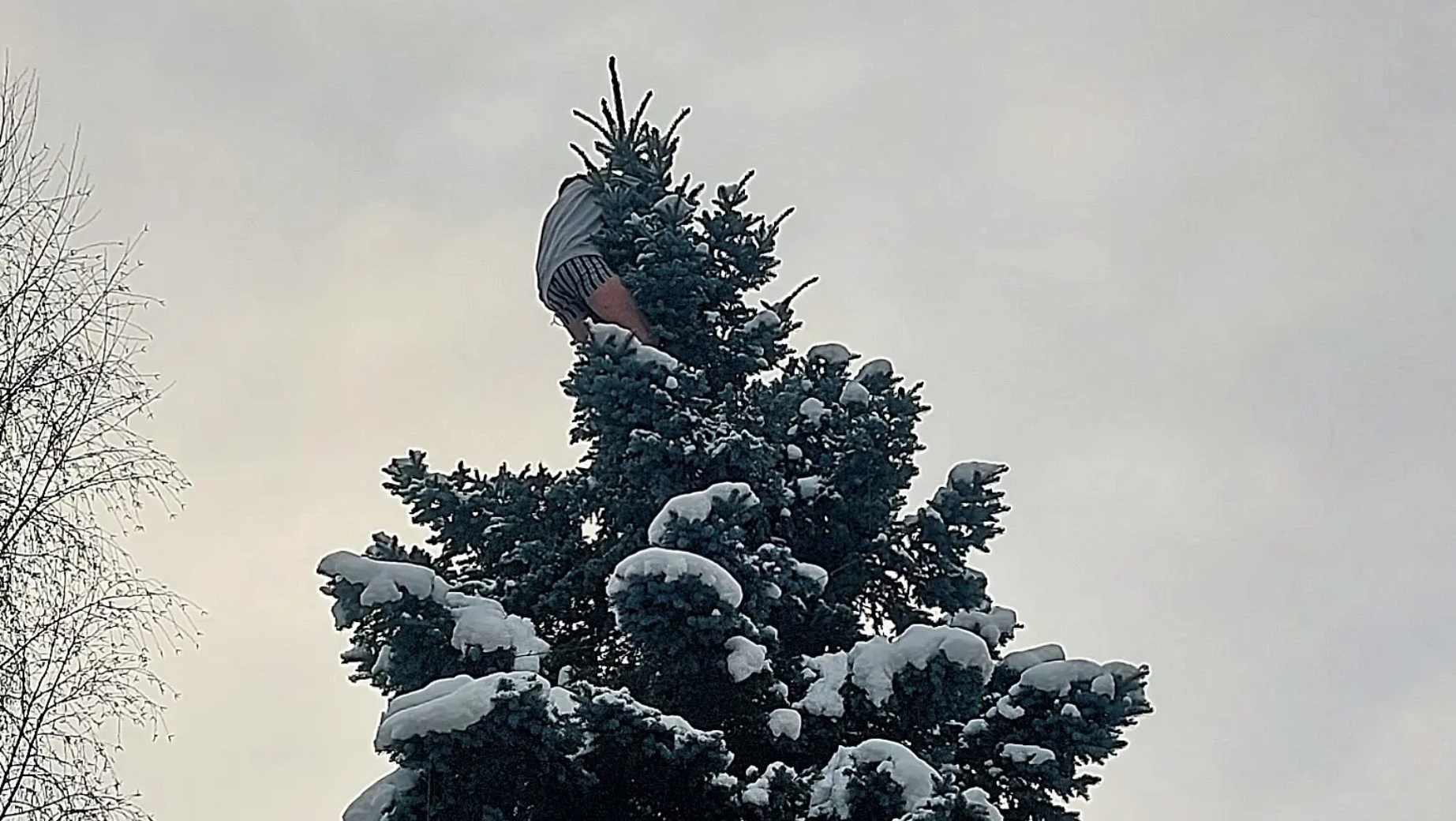
A driver heading to his car in Jihlava early Saturday found something he didn’t expect: blood on his hood, scattered clothes on the ground, and a man in only a T-shirt and underwear clinging to the top of a large spruce. The man, later identified as a 36-year-old, had climbed the tree during the night while under the influence of drugs. He remained there for hours in freezing weather until he was spotted at dawn. Before officers arrived, the driver called line 158, prompting a response from police, firefighters, and paramedics. The tree stood near the football stadium, and the man was several meters above ground, gripping the branches tightly. After the driver called line 158, police, firefighters, and paramedics were dispatched. Police spokeswoman Dana Čírtková said the driver first heard strange sounds and then noticed someone high up in the branches. A police officer joined firefighters in the basket to speak to the man, who was dressed only in underwear and a T-shirt. He did not respond to instructions and moved to thinner branches, complicating the rescue. Firefighters eventually raised the platform above the treetop, allowing a firefighter to descend toward the man using a rope. After several minutes,...
Czech citizens should expect to face tighter restrictions on fireworks this winter. Starting December 1, 2025, a new amendment to the fireworks law will change how and where pyrotechnics can be sold and used. The revisions are intended to increase safety for people, protect animals, and minimize environmental risks tied to explosive devices during holidays. Under the new regulation, only low‑risk fireworks classified as category F1—items like sparklers, which are available to buyers aged 15 and over—will be allowed within 250 meters of certain sensitive locations. These zones include hospitals, retirement homes, shelters, rescue stations, zoos, and animal breeding or care facilities. All other fireworks, especially more powerful rockets or firecrackers, will be prohibited in those areas. The enforcement tightens considerably around animal shelters, farms, and zoos. With rare exceptions for F1 fireworks, detonations near facilities that house or treat animals will be banned altogether. A map with affected zones is published online by the Ministry of Agriculture, though its listings may be updated over time. From December, fireworks sales will move exclusively to brick‑and‑mortar stores. Commercial stands and seasonal markets will be required to shut down, except for F1 products. E‑commerce platforms will also face stricter rules: they will need...
Temperatures across Czechia dropped sharply overnight on Sunday, with some of the coldest readings of the season recorded in the Šumava Mountains and parts of the Ore Mountains. Meteorologists from the Czech Hydrometeorological Institute (ČHMÚ) reported that the temperature in several areas in Šumava fell close to minus 25 degrees Celsius, making it the coldest area in the country on Sunday morning. While western Czechia experienced clear skies and intense freezing, the situation differed in the east. A thick layer of cloud cover left Moravia and Silesia with milder conditions, with morning temperatures most often ranging from minus one to minus six degrees Celsius. The frost was accompanied by ongoing snowfall in the northeast. ČHMÚ had issued a warning a day earlier for Moravia and Silesia, where fresh snow was expected through Sunday. Several districts received five to ten centimeters, while higher elevations of the Beskydy Mountains saw accumulations of up to 15 centimeters. According to meteorologists, the snowfall should ease later in the afternoon. Clear skies in Bohemia contributed to the deep freeze, with most areas dropping to minus six to minus eleven degrees Celsius, and the lowest readings reported in the west. Only isolated patches of freezing fog...
Poland’s Ministry of Foreign Affairs has urged citizens to avoid all travel to the Czech Republic amid the country’s worst hepatitis A epidemic in nearly half a century. The warning follows a surge in infections that has already reached more than four times last year’s total. According to the Czech State Institute of Public Health, 2,597 cases have been recorded since January, compared with just 636 in all of 2024. By Wednesday, iDNES reported that the number had climbed to 2,640, confirming that this year’s epidemic is the largest in 46 years. The virus is spreading across all age groups, though people aged 30 to 45 and children aged five to nine are most commonly affected. Prague remains the epicenter, with 1,108 confirmed cases, followed by the Central Bohemia region with 418. Hospitals have admitted most of those infected, but at least 322 patients could not be hospitalized due to a shortage of beds. Since the start of the year, 29 people have died, mostly men with pre-existing health problems such as chronic liver disease, alcoholism, or drug addiction. Doctors say infections in the capital have now moved well beyond traditional risk groups and are circulating widely in the general...
Don’t have an account? Register
Already have an account? Log In
How Would You Like to Promote Your Business? PR ArticleDisplay bannersVideo productionNewsletter adsJob ListingsInfluencer Marketing
Your Email
We will come back to you within 24 hours with our proporsal