After several unusually mild November days, Czechia is about to experience a rapid shift in weather, with temperatures falling sharply over the weekend following the passage of a cold front. According to the Czech Hydrometeorological Institute (CHMI), a weakening occlusion front from the west is currently shaping the country’s weather. Satellite images show a red cloud band indicating this front, while low inversion clouds and persistent fog dominate lowland regions. Skies are expected to gradually clear from the southwest during Tuesday afternoon and evening. The warm air will peak on Friday, when temperatures could reach up to 16°C, and around 18°C in the lee of the Šumava Mountains. After the weekend, a cold front will bring a noticeable cooling. Friday will mark the culmination of the warm spell. Although fog and cloudiness will still appear in some places, many regions — especially in southern Bohemia — will clear up. Temperatures will range from 12 to 16°C, possibly up to 18°C near Šumava, making it one of the warmest days of the month. The change will come suddenly on Saturday, as a cold front crosses the country. Cloud cover will increase, and rain will spread to several regions, with snowfall expected...
Starting January 2026, all forms of physical punishment of children will be prohibited under Czech law. An amendment to the Civil Code declares corporal punishment unacceptable in any context. Despite the legal change, a study by Charles University found that 40% of Czech parents still consider physical punishment an appropriate disciplinary method. Experts warn that social attitudes may take time to adapt, even after the law comes into effect. The issue extends beyond families into public institutions. Vít Aleksandr Šorm, Deputy Ombudsman and Commissioner for Children’s Rights, reported that during visits to orphanages and educational facilities across the country, he observed humiliating practices and physical punishments still being used. Some children are subjected to forced kneeling and other degrading forms of discipline, practices that violate the Czech Republic’s international obligations to protect children. Investigations by the Ombudsman’s Office and the Commissioner for Children’s Rights are ongoing. Their findings will be made public in the ESO Register’s database, allowing greater transparency and accountability. Over the past decades, many studies have examined the effects of corporal punishment, and not one has found that it has a positive impact on children or their behaviour. In contrast, many have found that it has many...
Monitoring conducted in 2025 confirmed the birth of wolf cubs in several regions, signaling a gradual but steady expansion of the species. New litters have been documented in the Šumava Mountains, Ore Mountains, and Ralsko and Broumov regions. Particularly noteworthy are new births in Kokořínsko and Ralsko, where no successful breeding had been observed in the past five years. Researchers from the Nature Conservation Agency of the Czech Republic have confirmed that wolves are successfully settling in new habitats. In the Ore Mountains, the species has been recorded in three distinct territories, including a newly formed one in the central part of the range, where a wolf pair has established its den. Wolf presence has also been noted in the Lusatian Mountains and along Czechia’s border with Poland, suggesting natural cross-border movement and gradual population growth. Despite this progress, experts caution that roughly two-thirds of wolf cubs do not survive their first year, due to natural causes, accidents, or territorial conflicts. Ecological Impact Their return contributes to restoring ecological balance, as they help regulate populations of deer and other wild ungulates. This, in turn, supports forest regeneration and promotes greater biodiversity in areas that have long been affected by overgrazing....
After more than a decade, the Miss Earth crown has returned to Czechia. Natálie Puškinová triumphed in the 2025 Miss Earth competition, held in the Philippines, becoming only the second Czech winner in the pageant’s 25-year history. The first was Tereza Fajksová, who claimed the title in 2012. According to ABS-CBN, the Philippines’ largest television network, Puškinová stood out among nearly 80 contestants from around the world. In the final round, she surpassed representatives from Chile, Brazil, Ukraine, and the Philippines, securing the crown in front of a global audience. The final ranking placed Iceland as first runner-up, Vietnam as second runner-up, and Thailand in third. Puškinová’s victory adds another major success for Czech beauty pageants, following Krystyna Pyszková’s win at Miss World 2024. “This is another huge success for our country,” said Taťána Pánek Makarenko, president of Miss Czech Republic. “We now have two Grand Slam crowns in just two years — Krystyna at Miss World and Natálie at Miss Earth. I’m extremely proud of Natálie. She worked hard, spoke with confidence, and truly deserves this. Her reign will be exceptional, and I’m glad we’ve brought the title back to Czechia.” Visualizza questo post su Instagram Un...
Every year on November 11, the Czech Republic marks St. Martin’s Day, one of the country’s most cherished autumn traditions. It’s a celebration that blends food, fine wine, and good company – a perfect way to brighten the cold days when autumn slowly turns to winter. At the heart of these festivities is the St. Martin’s goose, a dish so symbolic that restaurants across the country, from Prague to Karlovy Vary, fill their menus with it. Who Was St. Martin? The holiday honors St. Martin of Tours, a Roman soldier born in what is now Hungary. Known for his compassion, he famously cut his cloak in half to share with a freezing beggar. His act of kindness made him one of Christianity’s most beloved saints and a symbol of generosity. St. Martin’s Day falls on November 11 – traditionally the time of post-harvest feasts and the start of Advent preparations. Why a Goose? The story behind the goose dates back to legend. When the humble Martin tried to avoid being appointed bishop, he hid among a flock of geese – but their loud honking gave him away. Since then, the goose has become an inseparable part of the celebration. Historically,...
On Saturday, November 8, more than 2,800 retail stores across the Czech Republic will take part in the national food collection, a major increase from last year’s 2,250. The event, organized by the Czech Federation of Food Banks and the Czech Trade and Tourism Association, will run from 8 a.m. to 6 p.m. Donations will include non-perishable food and personal hygiene items, which will later be distributed to families and individuals in need. Starting Tuesday, people can also contribute through six online retailers, where the food collection will continue for two weeks. Organizers say the number of participating outlets has been steadily growing, showing greater public involvement each year. When the initiative began in 2013, donations could be made at 750 stores. That number rose to 1,050 in 2021, 1,470 in 2022, and 2,000 in 2023. Online platforms now account for about 15% of all collected goods. During last year’s autumn round, 684 tons of food and hygiene products were gathered—34 tons less than the previous year. According to organizers, the lower figure may have resulted from earlier donations made in September, when the public responded to flood relief efforts. The food collection takes place twice a year, in spring...
The Prague Archbishopric announced that Dominik Jaroslav Duka — Cardinal Emeritus of Prague — died in the early hours of Tuesday, November 4. He was 82 years old. According to the announcement, “today, Tuesday, November 4, at three o’clock after midnight, the Lord of Life called Cardinal Duka … to eternity. May the infinitely merciful God open His arms to him and fill him with His love and bliss.” A book of condolences will open in the Archbishop’s Palace from Tuesday at noon. The public may also pay respects in person at the All Saints’ Church on Thursday, November 13 and Friday, November 14, between noon and 18:00. Cardinal Duka will be laid to rest in the Archbishops’ Tomb within the Chapel of St. Vitus at St. Vitus Cathedral in Prague, awaiting the Resurrection. Funeral details will be published Wednesday. The Mass will take place on November 15 at St. Vitus Cathedral. Born April 26, 1943, in Hradec Králové, Duka entered priestly formation at the Cyril and Methodius Theological Faculty in Litoměřice in 1965. He joined the Dominican Order in 1968 and was ordained a priest in June 1970. Shortly afterward, he served in parish ministry for five years, but...
Households in the Czech Republic now pay among the highest electricity rates in Europe, according to data from Eurostat covering 39 countries. Domestic users in Czechia paid approximately €317.9 per MWh (around 7,736 CZK including VAT) for the first half of 2025—placing the country sixth-highest in the ranking. The figure covers all components of consumer electricity bills, including commercial charges, regulated fees, taxes and levies. Czech authorities gather these figures through the Czech Statistical Office, which collects data from major energy suppliers covering over 90 % of small-consumer household customers. Only Germany, Belgium, Denmark, Italy and Ireland recorded higher nominal household electricity prices in that period. At the same time, Czechia’s average exceeds the EU-wide average of about €287.2 per MWh (≈ 6,982 CZK) and approaches the euro-area average of roughly €300.6 per MWh (≈ 7,308 CZK). That said, the comparison covers households of varying sizes and usage types. In Czechia, consumers who rely on electricity for heating and hot water pay a lower rate per MWh than those without those uses. If those households were excluded, Czechia’s ranking would drift down to 13th. In contrast, Austria and Germany make no such distinction in pricing between smaller and larger consumption...
The Czech Republic is seeing a clear divide in public opinion regarding its support for Ukraine, especially when it comes to military assistance. According to different survey data, many Czechs remain in favour of humanitarian and economic support, but opposition is growing toward provisioning weapons and ammo. In one recent survey, approximately 40 percent of respondents said the new Czech government should end supplies of military equipment and ammunition to Ukraine. The same share (around 44 percent) believed that direct financial assistance should be halted. While this specific poll did not publicly detail its methodology, these figures echo broader findings indicating declining support for military aid. At the same time, non-military assistance retains strong backing. Around 70 percent of those polled support continuing to accept Ukrainian refugees into the Czech Republic, and about 76 percent favour sustained diplomatic and economic pressure on Russia. These numbers align with earlier research from the STEM Research Institute, which found that a narrow majority of Czechs believe the country should continue accepting Ukrainian refugees, although many also say the number of arrivals should be limited. Political analysts say the division over military aid has become something of a fault line between voters of parties...
On October 28, 1918, the independence of Czechoslovakia was proclaimed by the Czechoslovak National Council in Prague, following the collapse of the Austro-Hungarian Empire during the First World War. The birth of Czechoslovakia Throughout the 19th century, the rise of nationalist movements, mounting ethnic tensions and repressive religious and ethnic policies, such as the forced Magyarization of Slovaks, pushed the cohesion of the multi-national Austro-Hungarian Empire to its breaking point. Despite cultural differences, the Slovaks shared similar aspirations with the Czechs for independence from the Habsburg state, and by the start of the 20th century, the idea of a “Czecho-Slovak” entity, advocated by Czech and Slovak intellectuals began to emerge. During the First World War, Tomáš Masaryk, Edvard Beneš and Slovak astronomer Milan Rastislav Štefánik founded the Czechoslovak National Council who worked to secure Allied recognition. During that time, more than 90,000 Czech and Slovak volunteers formed the Czechoslovak Legions in Russia, France and Italy, where they fought against the Central Powers. Following the Pittsburgh Agreement of May 1918, which prescribed the intent to create an independent Czechoslovakia, the Czechoslovak Declaration of independence was signed by Masaryk, Štefánik and Beneš on October 18, 1918, in Paris. The independence of Czechoslovakia...
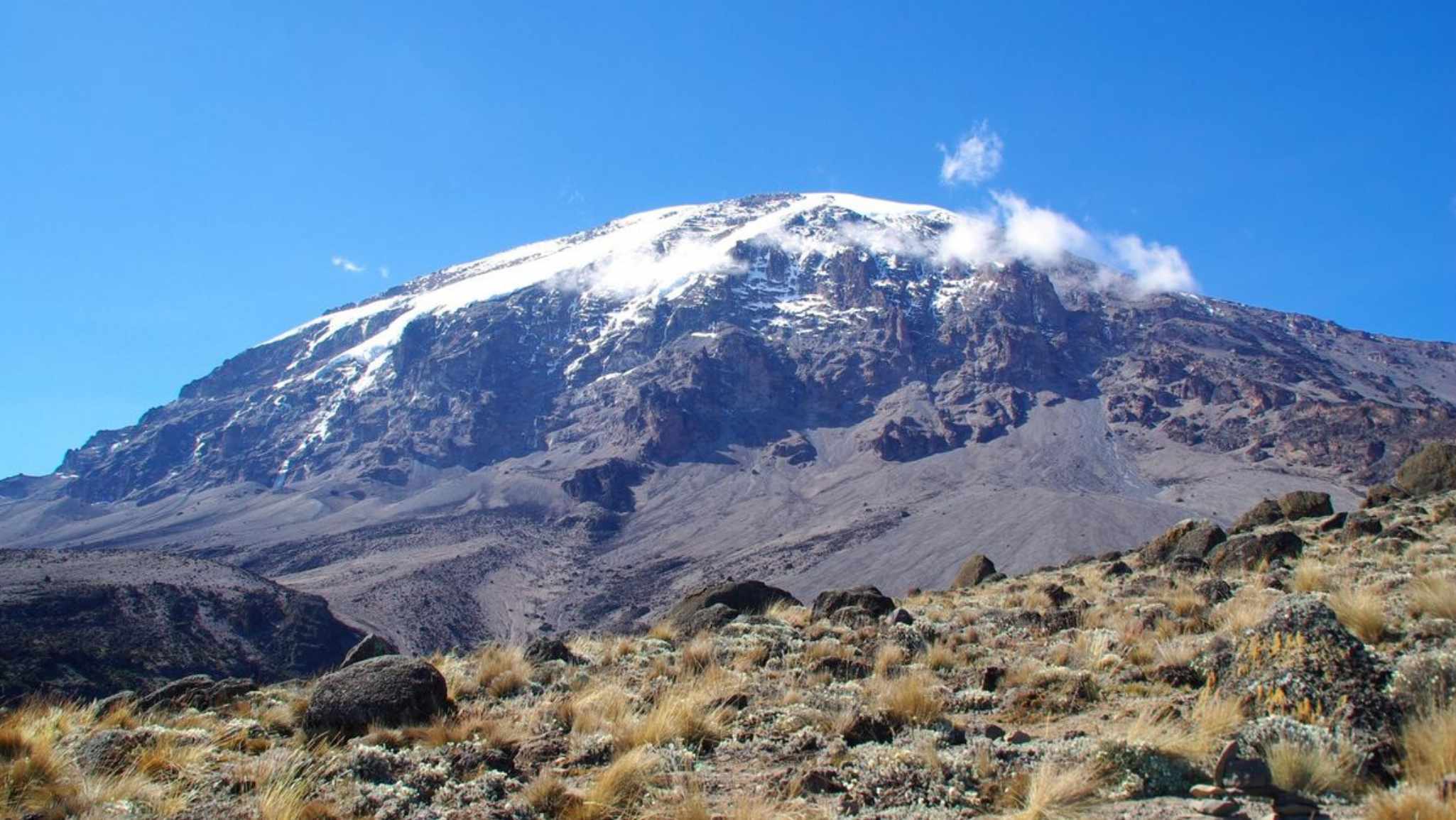
Czechia is bracing for the first snow of the season, with meteorologists warning of strong winds and up to 20 centimeters of snow in some mountain areas starting Monday. According to the Czech Hydrometeorological Institute (ČHMÚ), a cold front will move across the country at the beginning of the week, bringing a sudden drop in temperatures and unstable weather conditions. The warning highlights a combination of heavy, wet snow and powerful gusts that could complicate travel and disrupt power supplies. Forecasters expect the heaviest snowfall at higher elevations — particularly above 900 meters — in the Šumava region, affecting areas near Prachatice, Klatovy, and Sušice. Roads in these regions could be covered with as much as 20 centimeters of snow. Meteorologists cautioned that wet snow could weigh down trees and power lines, increasing the risk of power outages and damage to forested areas. Drivers heading to mountain regions are urged to prepare for dangerous road conditions. “We recommend checking traffic updates before traveling, using full winter equipment, and carrying snow chains,” the ČHMÚ said. “Vehicles should have winter tires with sufficient tread, and in the mountains, drivers should follow the instructions of the Mountain Rescue Service.” The upcoming cold front...
Traces of a 3,000-year-old village were unearthed in Dašice (Pardubice District) during an investigation conducted ahead of a construction project, according to local report. Archaeologist Tomáš Zavoral of the East Bohemian Museum in Pardubice said that the settlement was semicircular in shape, and that it had a small square and a well lined with wood. Excavation of one of the dwellings revealed its possible entrance, columns, and a wall. Zavoral suggests that the structure had been made with coal and plant materials covered with clay. A masonry roof covered the home. Pottery, bones, and soil samples were collected from the site for dating and further analysis of the landscape. Head of research Kateřina Formánková explained that all findings are being thoroughly documented through drawings and photographs. In cases of particular interest, soil samples are collected for washing or laboratory analysis. The team also cooperates with specialists from other fields, such as natural scientists, who examine plant seeds to help determine the age of the site and what the local environment looked like at the time. According to Zavoral, however, the discovery in these locations was to be expected. Archaeologists frequently discover traces of settlement here. Most recently, two years ago,...
Don’t have an account? Register
[swpm_registration_form level=”6″]
Already have an account? Log In
How Would You Like to Promote Your Business? PR ArticleDisplay bannersVideo productionNewsletter adsJob ListingsInfluencer Marketing
Your Email
We will come back to you within 24 hours with our proporsal